
TL;DR: Electric motorsports led by Formula E (Gen3: 350kW, 200mph, 2.8s 0-60, 95% efficiency). Key innovations: city circuits, Attack Mode strategy, 40% energy regeneration. Other series: Extreme E (off-road), MotoE (bikes), ETCR (touring), Electric RX (rallycross). Tech transfers to Jaguar, Porsche, Nissan, BMW road cars. Experience differs from combustion: sci-fi sound, visible energy strategy, clean air, urban access. Future: Gen4 450-500kW, hydrogen racing, NASCAR EV. Sustainable and thrilling—expanding motorsport definition, not replacing it.
Picture this: you’re trackside as sleek, futuristic race cars hurtle past at 174 mph. Their high-pitched whine pierces the air instead of the traditional roar of combustion engines. Welcome to the electrifying world of electric car racing—a sport that’s redefining motorsports for the 21st century.
When Formula E launched in 2014, many motorsport purists scoffed at the idea of electric racing. Fast forward to 2025, and electric motorsports have become one of the fastest-growing categories in racing. They’re attracting major manufacturers, top-tier drivers, and millions of fans worldwide. But what makes electric car racing so compelling? And why are brands like Porsche, Jaguar, and Nissan investing hundreds of millions in battery-powered competition?
In this article, you’ll discover why electric racing is far more than just “EVs going around a track.” We’ll dive into the adrenaline-pumping world of Formula E. We’ll explore other emerging electric motorsport series. You’ll examine the technology pushing these machines to their limits. And you’ll see how this new era of racing influences the electric vehicles you can actually buy. Whether you’re a lifelong racing fan curious about this electric evolution or an EV enthusiast wondering how competition drives innovation, you’re about to see why electric motorsports are genuinely thrilling.
What Is Formula E and Why Does It Matter?
Formula E is the world’s first all-electric international single-seater racing championship. It’s sanctioned by the FIA (Fédération Internationale de l’Automobile). That’s the same organization that governs Formula 1.
Unlike traditional motorsports that race on permanent circuits like Monaco or Silverstone, Formula E brings racing directly to the heart of major cities. These include New York, London, Tokyo, and Rome.
The Origins and Evolution
The series was conceived by former politician and motorsport enthusiast Jean Todt and Spanish businessman Alejandro Agag. They had a clear mission: prove that electric vehicles could be exciting, competitive, and technologically advanced.
That first season in 2014 featured modest cars with swappable batteries. Drivers actually changed cars mid-race because battery technology couldn’t sustain a full event. Today’s Gen3 cars, introduced in the 2022-23 season, are engineering marvels. They complete entire races on a single charge.
Why Formula E Matters Beyond Entertainment
Technology Transfer: Innovations developed for Formula E directly influence road car development. Jaguar’s I-PACE benefited from learnings in battery management and powertrain efficiency gained through Formula E competition.
Manufacturer Commitment: As of 2025, major automotive brands compete in Formula E. These include Porsche, Jaguar, Nissan, Mahindra, DS Automobiles, and newcomer Maserati. They use it as a proving ground for EV technology.
Urban Racing Model: By racing in city centers, Formula E reaches audiences where they live. This makes motorsports more accessible while demonstrating that EVs belong in urban environments.
Sustainability Focus: Formula E is the first sport to achieve net-zero carbon certification since its inception. It’s setting standards for environmental responsibility in motorsports.
Attracting Top Racing Talent
The championship has also attracted serious racing talent. Former Formula 1 drivers like Felipe Massa and Sébastien Buemi have joined the series. They came alongside endurance racing champions. They didn’t join as a retirement league. They came because the competition is genuinely fierce and the technology fascinating.
The Technology Behind Electric Race Cars: Speed Meets Innovation
If you think electric race cars are just oversized golf carts, prepare to have your mind changed. The current Formula E Gen3 car represents the cutting edge of electric vehicle performance. The specifications are genuinely impressive.
Gen3 Technical Specifications
- Power Output: 350 kW (470 hp) in race mode, with an additional 350 kW available during Attack Mode
- Top Speed: 200 mph (322 km/h)—the fastest electric race car in the world
- Acceleration: 0-60 mph in 2.8 seconds
- Weight: Minimum 840 kg (1,852 lbs), significantly lighter than Gen2
- Battery Capacity: 51 kWh usable capacity from a 54 kWh total pack
- Regenerative Braking: 600 kW of regenerative power—40% of the energy used during a race is recovered through braking
- Efficiency: Over 95% energy efficiency from battery to wheels, compared to roughly 40% in combustion engines
What makes these numbers even more remarkable is the constraint-driven innovation. Unlike Formula 1, where teams spend hundreds of millions on incremental advantages, Formula E operates differently. It uses standardized batteries and chassis (supplied by Spark Racing Technology). Meanwhile, manufacturers develop their own powertrains.
This levels the playing field while focusing competition on the most relevant technology for road cars. That includes electric motors, inverters, and energy management systems.
Game-Changing Technologies
Regenerative Braking Mastery: Formula E cars only have a traditional friction brake on the front wheels. The rear braking is entirely regenerative. It converts kinetic energy back into stored electricity.
Drivers can recover up to 40% of their race energy through strategic braking. Imagine if your daily commute could recharge your car battery that efficiently.
Energy Management Strategy: Unlike traditional racing where you simply go as fast as possible, Formula E introduces a chess-like strategic element. Drivers must carefully manage their energy consumption throughout the race.
Push too hard early, and you’ll run out of juice before the checkered flag. Too conservative, and competitors will overtake you. Teams use sophisticated AI and real-time telemetry to optimize this balance lap by lap.
Attack Mode: Strategic Innovation
Here’s where Formula E gets creative. During each race, drivers must activate “Attack Mode” by driving through a designated off-line zone on the track. This intentionally loses time. In exchange, they receive an extra power boost (50 kW) for a limited period.
This strategic element creates exciting overtaking opportunities. It rewards tactical thinking.
Advanced Powertrain Options
All-Wheel Drive Power: Some manufacturers, like Porsche, have developed dual-motor systems providing all-wheel drive. This adds another layer of complexity to energy management. However, it provides superior traction out of corners. That’s a significant advantage on the tight street circuits Formula E races on.
The technology restrictions actually drive more relevant innovation. When you can’t just throw unlimited money at aerodynamics or exotic materials, teams focus on what matters. That includes software algorithms, thermal management, and efficiency. These are exactly the challenges facing mainstream EV manufacturers.
Other Electric Motorsport Series: Beyond Formula E
While Formula E grabs headlines, the electric racing revolution extends across multiple categories. Each pushes different boundaries of EV performance.
Extreme E: Off-Road Electric Adventure
Launched in 2021, Extreme E takes electric racing off the pavement. It ventures into some of Earth’s most challenging and environmentally fragile locations. This SUV racing series features electric off-road vehicles competing in locations affected by climate change. These include Arctic ice caps, deserts, rainforests, and coastlines.
What Makes Extreme E Unique:
Production-Relevant: The ODYSSEY 21 SUV produces 550 hp and weighs 1,780 kg. It’s similar in profile to performance electric SUVs consumers can buy.
Gender Equality: Each team fields one male and one female driver who alternate during the race. This makes it the first major motorsport with mandated gender equality.
Environmental Mission: Beyond racing, each event includes legacy programs addressing local environmental issues. These include reforestation and coastal restoration.
Celebrity Involvement: Teams are owned by racing legends. Lewis Hamilton, Nico Rosberg, and Jenson Button bring star power and credibility.
The racing itself is spectacular. Watching electric SUVs drift sideways across sand dunes at 60 mph is thrilling. Seeing them navigate glacier edges showcases EV capability in extreme conditions most road cars will never face.
MotoE: Two-Wheeled Electric Competition
The FIM Enel MotoE World Cup brings electric racing to motorcycles. It runs as a support series to MotoGP. Using spec bikes built by Energica Motor Company (and Ducati starting in 2023), MotoE demonstrates that electric motorcycles can deliver genuine racing excitement.
MotoE Highlights:
- Power: 150 kW (201 hp) from a standing start, propelling these 260 kg bikes to 60 mph in about 3 seconds
- Sound: While quieter than gas bikes, the sci-fi whine is growing on fans
- Sprint Format: Shorter races (typically 6-8 laps) suit current battery technology while maintaining intensity
- Growing Grid: Multiple manufacturers showing interest as Ducati’s entry legitimizes the series
ETCR and Pure ETCR: Electric Touring Cars
The Electric Touring Car Racing series (now rebranded as Pure ETCR) features production-based electric touring cars. Brands like Hyundai, Cupra, and Romeo Ferraris participate. These cars look closer to what you’d see in a showroom. This makes the technology transfer even more direct.
Pure ETCR Characteristics:
- Real-World Relevance: Cars based on production models (Hyundai Veloster N ETCR, Cupra e-Racer)
- Sprint Racing: Multiple short races with knockout qualifying
- Instant Torque: 500 kW (670 hp) motors deliver devastating acceleration
- Multi-Stage Battles: Quarter-finals, semi-finals, and finals create tournament-style excitement
STARD Electric RX: Rallycross Goes Electric
Rallycross is that wild combination of circuit racing and rally. It features jumps, mixed surfaces, and door-to-door combat. It has also gone electric.
The STARD Electric RX series showcases 560 hp electric rallycross cars. They can leap over obstacles while delivering instant torque to all four wheels.
These competitions prove electric powertrains excel in motorsport disciplines beyond smooth tarmac racing. They handle dirt, gravel, and even ice circuits with aplomb.
The Racing Experience: What’s Different About Watching Electric Motorsports?
Let’s address the elephant in the room: electric race cars sound different. There’s no denying the visceral thrill of a naturally aspirated V10 or V12 screaming past at 18,000 RPM. But after you’ve experienced electric racing firsthand, you realize something important. “Different” doesn’t mean “worse.”
The Sensory Experience
Sound: Instead of a guttural roar, you hear a high-pitched electrical whine. It rises and falls with acceleration. Trackside, you can actually hear tire squeal, aerodynamic whoosh, and the clunk of suspension working. These are sounds completely masked by combustion engines.
Some fans describe it as “futuristic” or “sci-fi,” and there’s something to that. You’re hearing the future of performance.
Smell: No exhaust fumes. At a traditional race, you leave smelling like a mix of racing fuel and burnt rubber. At Formula E, the air is clean. You can actually smell the rubber and brake dust without the overpowering fuel odors.
Enhanced Viewing Experience
Visibility: City-center circuits mean you’re often much closer to the action than at traditional tracks. Many Formula E venues let you walk between buildings to catch different vantage points. This creates a festival atmosphere rather than a remote viewing experience.
Strategy Visibility: Because energy management is transparent (shown on live timing screens and broadcasts), you can actively follow the strategic battles. When a driver activates Attack Mode or you see their energy usage spiking, you understand the tactical decisions in real-time. It adds an intellectual layer to the competition.
Accessibility: Racing in cities like Brooklyn, London, or Vancouver means attending a race doesn’t require traveling to a remote circuit. You can watch qualifying in the afternoon, explore the city, catch dinner, then return for the race.
The Fan Village areas typically include interactive displays. You can sit in cars, meet drivers, and learn about EV technology.
The On-Track Action
Electric racing produces wheel-to-wheel battles that rival any motorsport. The combination of energy management, Attack Mode strategy, and tight street circuits creates multiple overtaking opportunities. Drivers can’t just rely on superior power or aerodynamics. They need racecraft, strategy, and adaptability.
The racing is genuinely unpredictable. In Formula E’s 2023-24 season, seven different drivers won the first seven races. That’s a level of competition that makes every event compelling. You never know who will stand on the podium, and that uncertainty is thrilling.

How Electric Racing Influences Road Cars You Can Buy
Here’s where electric motorsports become more than entertainment. They’re actual proving grounds for the technology in your driveway (or future driveway).
Direct Technology Transfer
Jaguar I-PACE: Jaguar explicitly credits Formula E competition with improving the I-PACE’s battery thermal management system. Racing in extreme temperatures revealed important insights. These ranged from Diriyah, Saudi Arabia (desert heat) to temperate climates. They showed how to keep batteries performing optimally. Those learnings went directly into production vehicles.
Porsche Taycan: Porsche’s Formula E program ran parallel to Taycan development. The 800-volt architecture used in both systems wasn’t coincidental. Racing validated that higher voltages enable faster charging and more efficient power delivery. The Taycan can charge at up to 270 kW thanks partly to lessons learned on track.
BMW iX and i4: BMW competed in Formula E from 2018-2021. Their electric drivetrain expertise directly influenced the iX SUV and i4 sedan. The fifth-generation eDrive technology features integrated motors, transmissions, and power electronics. This is a configuration proven in racing.
Nissan Ariya: Nissan’s Formula E program focuses on dual-motor systems and intelligent energy management. The Ariya’s e-4ORCE all-wheel drive system benefits from algorithms developed to distribute torque optimally in racing conditions. These are adapted for snowy roads and off-pavement scenarios.
Software and Systems Improvements
Energy Management Systems: Perhaps the most significant transfer isn’t hardware but software. The sophisticated energy management algorithms that help race cars complete events on a single charge are being refined. They’re being implemented in production vehicles to maximize range and efficiency.
Regenerative Braking: Formula E cars recover 40% of their energy through regenerative braking. Production EVs typically recover 15-25%. But manufacturers are continuously improving these systems based on racing data. The more efficient regenerative braking becomes, the more real-world range EVs gain.
Durability and Performance
Thermal Management: Keeping batteries, motors, and power electronics at optimal temperatures under extreme racing stress teaches engineers important lessons. They learn how to design better cooling systems for production cars. This means your EV performs consistently whether you’re climbing a mountain pass in summer or accelerating hard on a highway merge.
Fast Charging: Racing requires pit stops to be efficient. While Formula E cars don’t currently fast-charge during races, the development of rapid-charging technology for race scenarios informs production vehicle charging capabilities. Extreme E’s rapid recharge between rounds is a good example.
The feedback loop is real: racing reveals weaknesses, engineers develop solutions under competitive pressure, and those innovations cascade into consumer vehicles. It’s the same principle that made Formula 1 a development platform for road car technology for decades. Now it’s applied to the powertrain of the future.
The Future of Electric Motorsports: What’s Coming Next?
Electric racing is still in its adolescence. The trajectory suggests even more exciting developments ahead.
Formula E Evolution
The Gen4 car, expected around 2026-2027, is already in development. Rumored specifications include:
- More power: Potentially 450-500 kW race mode
- Faster charging: Ultra-rapid pit-stop charging to enable different race strategies
- Lighter weight: Advanced materials to improve power-to-weight ratio
- Enhanced regeneration: Targeting 50% or more energy recovery
Formula E is also exploring expanding from city circuits to include some traditional race tracks. This could add a mix of circuit types while maintaining its urban identity.
Le Mans Hypercar Electrification
The prestigious 24 Hours of Le Mans now features hybrid LMH (Le Mans Hypercar) categories with significant electric assistance. Manufacturers like Ferrari, Porsche, and Toyota compete with hybrid systems. These use electric motors for qualifying pace and efficiency during the endurance race. Full electric categories at Le Mans might arrive by 2030.
NASCAR’s Electric Future
Even NASCAR, the bastion of V8 combustion power, is developing an electric prototype. It’s called the ABB NASCAR EV Prototype. While NASCAR racing won’t go fully electric anytime soon, the development signals acceptance. Even traditionally conservative motorsports recognize that electric racing deserves exploration.
Hydrogen Racing
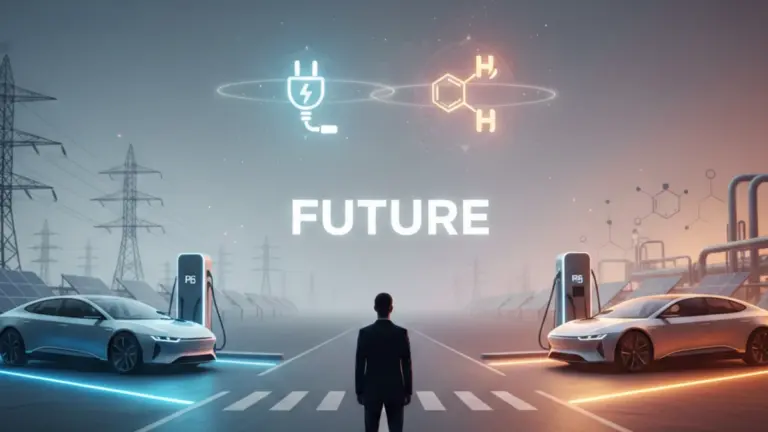
Some series are experimenting with hydrogen fuel cell electric vehicles (FCEVs) as an alternative to battery-electric racing. Extreme E is launching an Extreme H hydrogen racing series. This will explore this technology path alongside battery racing.
Youth Development Programs
Electric karting championships are emerging globally. They’re creating pathways for young drivers to develop racing skills on electric powertrains from the beginning. These programs feed into professional series. They ensure a pipeline of drivers comfortable with EV-specific techniques like energy management and regenerative braking.
Autonomous Racing
Roborace, though currently dormant, pioneered autonomous electric racing. As autonomous driving technology advances, expect to see more AI-driven racing exhibitions. These push the boundaries of vehicle control and machine learning. All lessons learned are applicable to road car safety systems.
Manufacturer Investment
More mainstream manufacturers are entering electric racing. Maserati joined Formula E in 2023. Rumors suggest other premium brands are evaluating entry. As automotive companies commit to electric futures, racing becomes essential for both development and marketing.
The trajectory is clear: electric motorsports will grow in prominence. Technology will advance rapidly. And the lines between racing innovation and production vehicle improvements will blur further.
Getting Involved: How to Experience Electric Racing
Ready to witness electric motorsports yourself? Here’s how to dive in.
Attending Races
- Formula E Calendar: Check fiaformulae.com for the current season schedule. Events typically span a weekend with practice, qualifying, and race day.
- Tickets: Generally more affordable than Formula 1, with paddock access options often available.
- City Events: Because races occur in cities, you can combine race attendance with tourism.
- Fan Zones: Most events feature interactive areas with car displays, simulator experiences, and manufacturer exhibits.
Watching Remotely
- Streaming Services: Formula E broadcasts globally on networks like CBS Sports (USA), Channel 4 (UK), and numerous international partners.
- YouTube Content: Official channels provide highlights, onboard cameras, and behind-the-scenes content.
- Apps: The Formula E app offers live timing, telemetry data, and augmented reality features during races.
Joining the Community
- Social Media: Formula E and individual teams maintain active social media with engaging content.
- Fantasy Leagues: Formula E offers a fantasy racing game where you manage virtual teams.
- Esports: Racing games increasingly feature Formula E and electric racing categories.
Supporting Teams
Many fans choose teams based on their road car preferences. If you drive a Jaguar or Nissan, supporting those manufacturers’ racing efforts creates a connection. It links your vehicle to competition success.
Key Takeaways: Why Electric Racing Matters
As we’ve explored the world of electric motorsports, several critical points emerge:
1. Technology Is Genuinely Impressive: Modern electric race cars match or exceed combustion-powered competitors in acceleration. They compete on speed. And they surpass them dramatically in efficiency. The Gen3 Formula E car’s 200 mph top speed and 2.8-second 0-60 time aren’t gimmicks. They’re serious performance figures.
2. Racing Drives Real Innovation: Unlike marketing exercises, electric motorsports produce tangible technology improvements. These flow into production vehicles. Energy management, thermal systems, and powertrain efficiency all benefit from competitive pressure.
3. The Experience Is Different, Not Inferior: While the sound differs from combustion racing, electric motorsports offer unique attractions. These include strategic depth, closer city-center access, cleaner air, and the ability to hear nuances of competition masked in traditional racing.
4. It’s Growing Rapidly: Manufacturer investment, fan engagement, and technological advancement all trend upward. Electric racing has moved from novelty to legitimate motorsport category in just over a decade.
5. Multiple Formats Showcase Different Strengths: From Formula E’s urban circuits to Extreme E’s off-road adventures, various series demonstrate that electric powertrains excel across racing disciplines. They’re not limited to just one narrow application.
Final Thoughts: The Future Is Electric
The electric racing revolution isn’t asking traditional motorsports to disappear overnight. Instead, it’s expanding the definition of what racing can be. It’s bringing competitions to new audiences. It’s solving new engineering challenges. And it’s proving that sustainable technology can be genuinely thrilling.
Whether you’re a gearhead skeptical about electric performance, an EV owner curious about competition applications, or someone who simply loves racing, electric motorsports deserve your attention. The technology is real. The competition is fierce. And the future is undeniably electrifying.
So next time you hear about a Formula E race coming to a city near you, grab tickets. Experience the high-pitched whine of electric motors at full chat. Feel the instant torque acceleration through your chest. Watch drivers manage energy like chess players executing a complex endgame.
You might just find yourself converted to this new era of racing. It’s one that proves sustainability and excitement aren’t mutually exclusive. They’re powerfully compatible.
The checkered flag is waving, and electric motorsports are just getting started.