You glance at your electric car’s range display before heading out: 280 miles. Perfect for your weekend trip, right? But then you hit the highway, crank up the heat because it’s freezing outside, and suddenly that number starts dropping faster than you expected. Sound familiar? If you’ve ever wondered why your EV’s range seems to have a mind of its own, you’re not alone. Understanding what actually affects your electric car’s mileage is one of the most important aspects of EV ownership—and thankfully, it’s not as mysterious as it might seem.
Let’s dive into the real factors that influence how far you can drive on a single charge, and more importantly, what you can do about them.
Weather: The Silent Range Thief
Here’s something that surprises many new EV owners: temperature matters. A lot. Your electric car’s battery is like Goldilocks—it performs best when conditions are just right, typically between 60°F and 80°F.
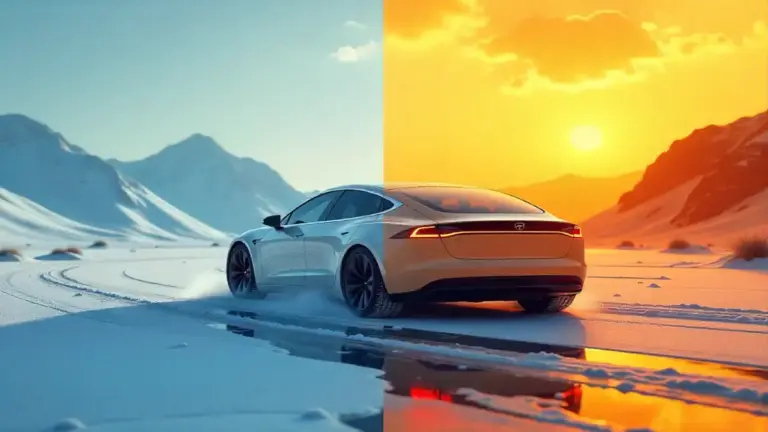
When winter hits and temperatures plummet below freezing, you might notice your range dropping by 20-40%. Why? Cold weather affects the chemical reactions inside your battery, making it less efficient at delivering power. But that’s only part of the story. The real culprit is often your heater. Unlike gas cars that use waste heat from the engine, EVs need to draw power directly from the battery to warm the cabin. Running the heater on full blast can consume 3-5 kW of power—that’s like having a small space heater running constantly while you drive.
Hot weather isn’t much better, though the impact is typically less severe. When temperatures soar above 90°F, your battery management system works overtime to keep things cool, and running the air conditioning adds another power drain. You might see a 10-20% range reduction on scorching summer days.
The good news? Modern EVs come with preconditioning features. If your car is plugged in, you can heat or cool the cabin before you leave—using grid power instead of battery power. It’s a game-changer for preserving range.
Your Driving Style Makes a Bigger Difference Than You Think
Remember learning to drive a stick shift and your instructor constantly reminding you about smooth acceleration? Well, driving an EV efficiently requires similar mindfulness, but with an electric twist.
Aggressive acceleration is thrilling—that instant torque is one of the joys of EV ownership—but it’s also a range killer. Flooring the accelerator from every stoplight can reduce your range by 20-30% compared to gentle, gradual acceleration. Think of your right foot as controlling a faucet: the harder you press, the faster the energy flows out.
Highway driving presents its own challenge. Aerodynamic drag increases exponentially with speed. Driving at 75 mph instead of 65 mph can reduce your range by 15-25%. The wind resistance at higher speeds simply requires more power to overcome. This is why you’ll often see better efficiency on steady, moderate-speed drives compared to interstate cruising.
But here’s where EVs shine: regenerative braking. Every time you lift off the accelerator or tap the brakes, you’re putting energy back into the battery. Experienced EV drivers master “one-pedal driving,” using regenerative braking to slow down instead of the friction brakes. In city driving with lots of stops and starts, you can recover 15-20% of the energy you used during acceleration. It’s like getting a little refund with every stop.
Terrain: What Goes Up Must… Drain Your Battery
If you’ve ever driven through mountains in an EV, you’ve experienced firsthand how terrain affects range. Climbing elevation is energy-intensive, plain and simple. Physics doesn’t care whether you’re driving a Tesla or a Ford F-150 Lightning—moving a 4,000-5,000 pound vehicle uphill requires significant power.
Here’s a rough estimate: for every 1,000 feet of elevation gain, you might use 3-5% of your battery capacity, depending on your vehicle’s weight and efficiency. That mountain pass that gains 2,000 feet? It could cost you 10% of your range or more.
But there’s a silver lining. Unlike gas vehicles that waste most of their energy as heat when going downhill, EVs can recover a substantial amount through regenerative braking. On that same mountain descent, you might recover 30-50% of the energy you used climbing up. Some drivers even report arriving at the bottom with more range than they started with after a long downhill stretch.
Flat terrain is, unsurprisingly, where EVs achieve their best efficiency. If you’re driving across Kansas or Florida, you’ll likely exceed your EPA-rated range on a moderate-speed cruise.
The Little Things That Add Up
Beyond the big three factors, several smaller elements can nibble away at your range:
Vehicle weight plays a role you might not consider. That roof cargo carrier for your camping gear? It creates additional drag and adds weight. Every 100 pounds of extra weight reduces range by about 1-2%. While your EV can certainly handle the load, be aware that a fully packed vehicle with passengers and luggage will use more energy than an empty car.
Tire pressure seems minor, but underinflated tires increase rolling resistance. Studies show that tires inflated 10 psi below the recommended pressure can reduce range by 3-4%. Check your tire pressure monthly—it’s one of the easiest ways to maintain optimal efficiency.
Accessory use matters too. Heated seats and steering wheels are more efficient than cabin heaters, using only 50-100 watts compared to 3,000-5,000 watts for the HVAC system. If you’re trying to maximize range in cold weather, bundle up and use the seat heaters instead of cranking the heat.
Even your wheel and tire choice affects efficiency. Upgrading to larger, wider performance tires might look great, but they typically increase rolling resistance and reduce range by 5-10% compared to the standard eco-focused tires most EVs come with.
Putting It All Together: Real-World Range Expectations
So what does all this mean for your actual driving? Let’s say you have an EV rated for 300 miles of range. In ideal conditions—moderate temperature, gentle driving, flat terrain—you might actually achieve 310-320 miles. But on a cold winter day, driving 75 mph on the highway with the heater blasting? You might see that drop to 200-220 miles.
The key is understanding these factors so you can plan accordingly. Most EV owners report that after a few months, they develop an intuitive sense of how weather and driving conditions will affect their range. The range anxiety that worried them before buying gradually fades as they realize they can easily adapt their driving or charging habits.
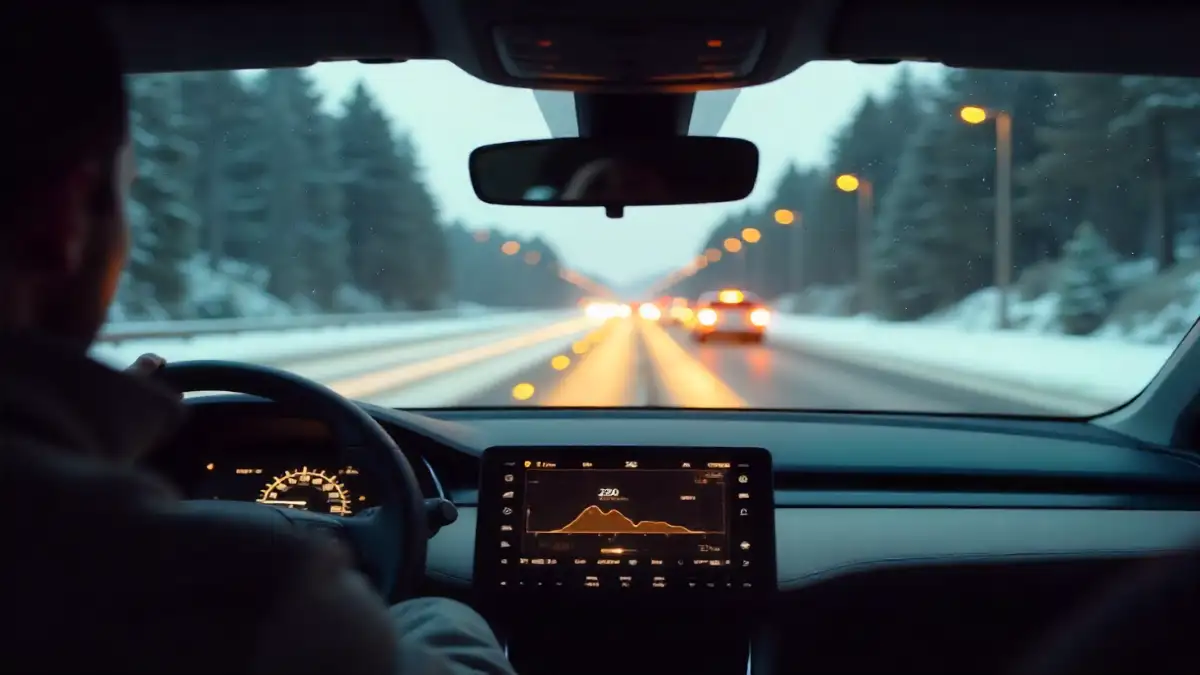
Modern EVs also help by providing real-time energy consumption data. You can see exactly how your driving style or climate control settings are affecting efficiency, allowing you to make informed decisions about whether to ease off the accelerator or adjust the cabin temperature.
Making Peace with Variable Range
Here’s the bottom line: electric car range isn’t a fixed number—it’s a range of possibilities influenced by conditions largely within your control. Yes, you can’t change the weather, but you can precondition your vehicle, moderate your speed, use seat heaters instead of cabin heat, and drive more smoothly.
Think of it like fuel economy in a gas car. Your conventional vehicle’s EPA rating is an estimate too, and your actual mileage varies based on similar factors. The difference is that EV efficiency is more transparent and immediate, which can feel unsettling at first but ultimately gives you more control.
The most successful EV owners are those who embrace this variability rather than fighting it. They plan their charging around their actual range needs, not their EPA rating. They adjust their driving style for efficiency when range matters and enjoy spirited acceleration when it doesn’t.
After all, understanding these factors isn’t about limiting your EV experience—it’s about maximizing it. When you know what affects your range, you can make smart choices that keep you confidently on the road, no matter where you’re headed or what the weather’s doing. And that freedom? That’s what electric driving is really all about.
Roy K. Miller is an EV expert passionate about electric mobility, green technology, and the future of transportation. He helps readers and drivers make smarter choices while sharing insights and updates on the latest developments in the EV world.