Remember when electric cars were those quirky little vehicles you’d occasionally spot in a shopping mall parking lot? Well, if you haven’t looked around lately, you’re in for a surprise. We’re living in a moment where electric mobility isn’t just arriving—it’s already here, reshaping how we think about getting from point A to point B. And honestly? It’s pretty exciting.
As someone who’s watched this transformation unfold over the past few years, I can tell you that 2025 feels different. This isn’t about futuristic promises anymore. It’s about real cars on real roads, charged by increasingly clean energy, and driven by people who’ve discovered that going electric doesn’t mean compromising on anything they care about. Let me walk you through what’s happening right now in the world of sustainable transportation—and why it matters to you.
The Electric Vehicle Revolution Is Accelerating (And It’s Not Just About Cars)
Here’s something that might surprise you: electric vehicles now account for over 18% of global car sales. That’s not a niche market anymore—that’s mainstream adoption. But what’s really fascinating is how diverse this shift has become.
Sure, everyone talks about Tesla, and for good reason. But have you noticed the explosion of options? From the practical Chevrolet Equinox EV starting around $35,000 to luxury options like the Mercedes EQS, there’s genuinely something for everyone now. And it’s not just passenger cars—electric buses are quietly revolutionizing public transit, delivery vans are going electric to meet emissions targets, and even semi-trucks are starting to make the transition.
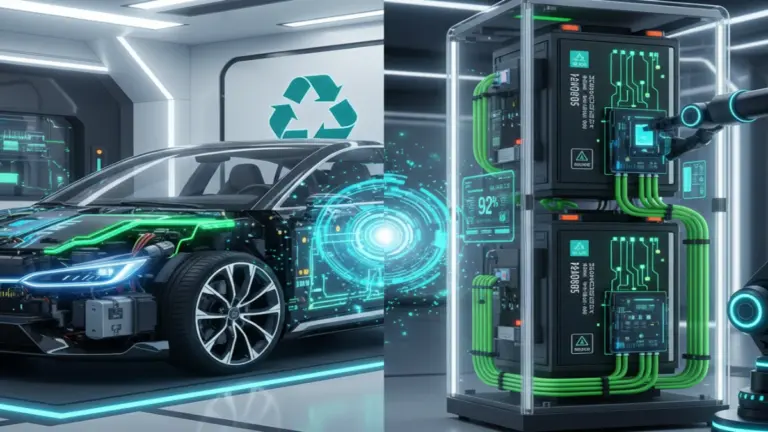
What changed? Three things, really. Battery costs have dropped dramatically—we’re talking about an 89% reduction since 2010. Charging infrastructure has expanded exponentially, with over 3 million public charging points worldwide. And perhaps most importantly, the cars themselves have gotten really, really good. We’re not asking you to sacrifice performance or convenience anymore.
Take range anxiety, for instance. Remember when that was everyone’s biggest concern? Well, many new EVs now offer 300+ miles of range on a single charge. That’s more than enough for your daily commute and that weekend road trip. The Hyundai Ioniq 6 can go up to 361 miles, while the BMW iX xDrive50 pushes past 380 miles. These aren’t limitations—they’re legitimate travel companions.
Renewable Energy: The Power Behind the Wheels
Now, here’s where things get really interesting. What good is an electric car if the electricity charging it comes from coal plants, right? It’s a fair question, and it’s one that’s being addressed faster than most people realize.
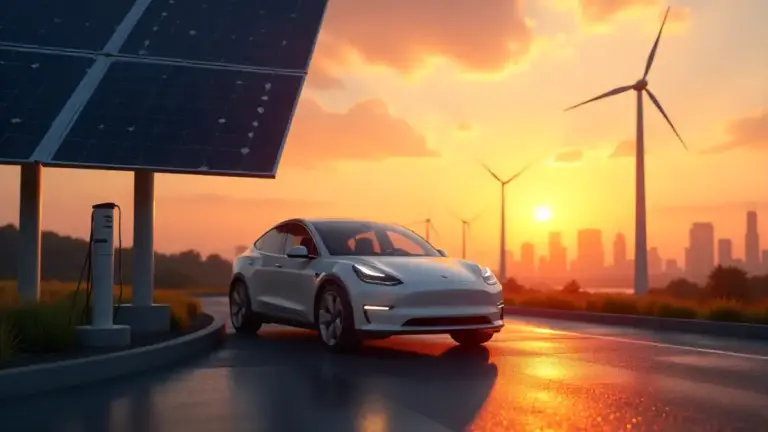
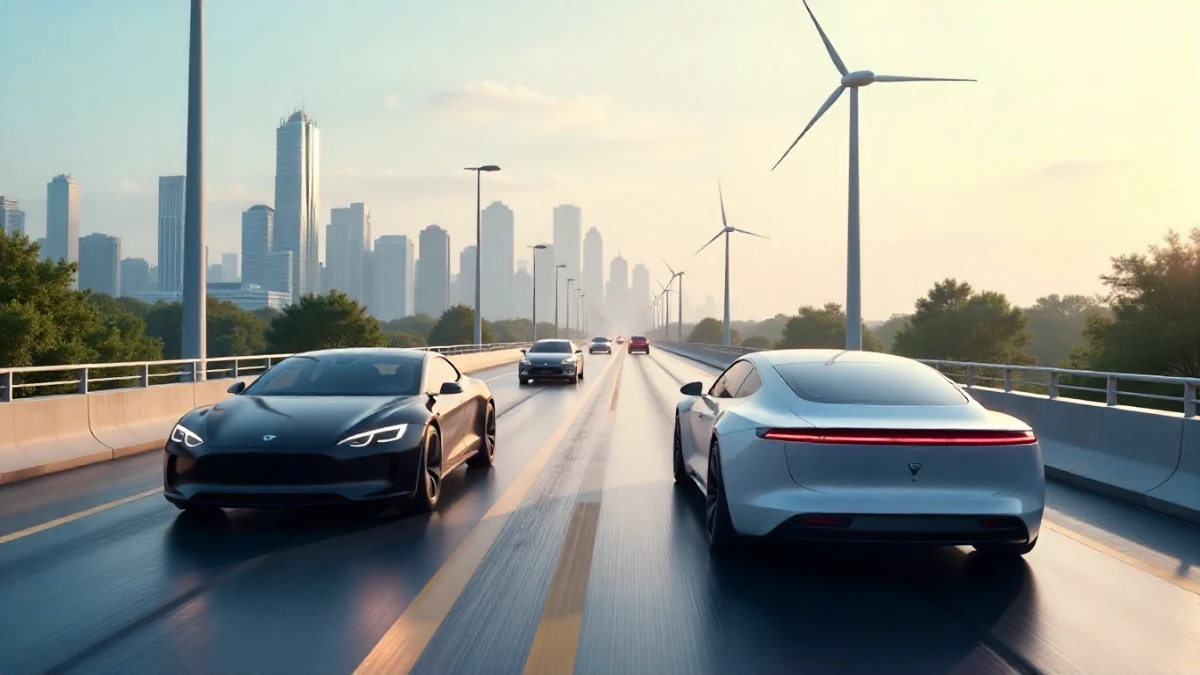
The renewable energy sector is absolutely booming. Solar and wind power aren’t alternative energy sources anymore—they’re often the cheapest sources of new electricity generation. In 2024, renewables accounted for about 30% of global electricity generation, and that number is climbing steadily. Some countries, like Norway and Costa Rica, are already running on nearly 100% renewable electricity.
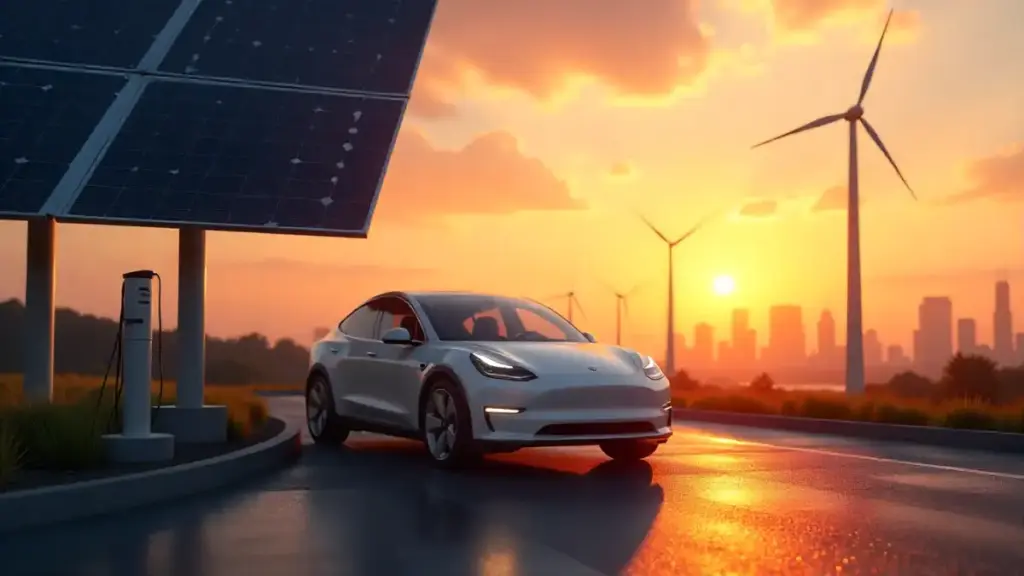
What does this mean for your EV? Think of it this way: every year you own your electric vehicle, it automatically gets “cleaner” as the grid shifts toward renewable sources. It’s like your car’s carbon footprint is on a diet without you doing anything extra. Even today, studies show that driving an EV produces about half the lifetime emissions of a comparable gasoline car—and that gap keeps widening.
And here’s a trend that’s picking up steam: vehicle-to-grid (V2G) technology. Imagine your EV not just drawing power from the grid, but actually feeding power back during peak demand hours. Your car could become a mobile battery, helping stabilize the grid while potentially earning you credits on your electricity bill. Several automakers, including Ford with its F-150 Lightning, are already offering this capability. It’s the kind of innovation that makes you think differently about what a “vehicle” even is.
Smart Charging and Infrastructure: Making It All Work
Let’s talk about something that used to be a real headache: charging. Early EV adopters needed patience and careful planning. But that world is disappearing fast.
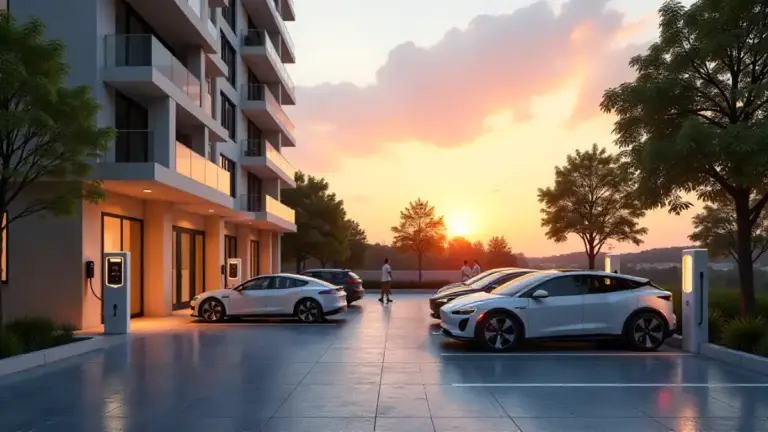
The charging landscape in 2025 is almost unrecognizable from just five years ago. Fast-charging stations that can add 200 miles of range in 15-20 minutes are becoming commonplace. Networks like Electrify America, ChargePoint, and Tesla’s Supercharger network (which is opening to non-Tesla vehicles) have blanketed major highways and urban areas. I recently drove from New York to Boston, and finding a charger was honestly easier than finding a clean restroom.
But here’s what’s really clever: smart charging. Modern EVs and charging systems can communicate with each other and the grid to optimize when and how your car charges. You can set your car to charge during off-peak hours when electricity is cheapest and cleanest. Some utilities even offer special EV rates—my friend in California pays just 9 cents per kilowatt-hour for overnight charging. That’s the equivalent of paying less than a dollar per gallon of gas.
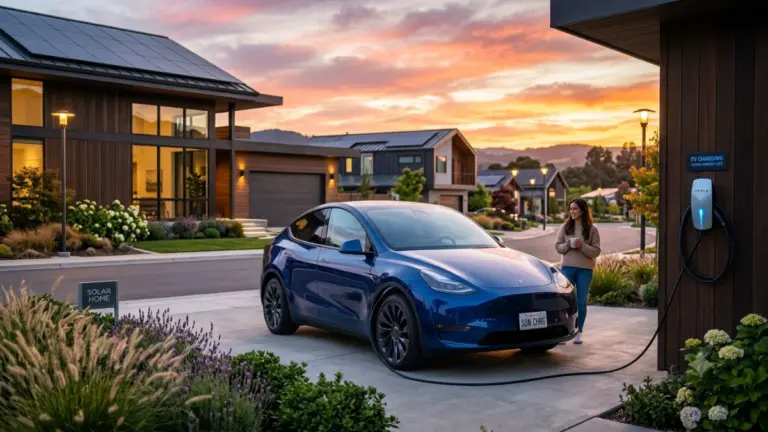
Home charging has become simpler too. Most EV owners install a Level 2 charger in their garage, which fully charges their car overnight. It’s like waking up to a “full tank” every morning without ever visiting a gas station. Once you experience that convenience, it’s hard to go back to the old way of doing things.
The Total Cost of Ownership Story
Okay, let’s address the elephant in the room: price. Yes, EVs often have higher sticker prices than their gasoline counterparts. But here’s what I’ve learned from talking to actual EV owners—the upfront cost is only part of the story.
Electric motors have far fewer moving parts than internal combustion engines. No oil changes, no transmission fluid, no spark plugs, no timing belts. The maintenance is dramatically simpler and cheaper. Over the lifetime of the vehicle, you could save $4,500 to $12,000 on maintenance alone, depending on the model and how long you keep it.
Then there’s the fuel—or rather, electricity—savings. The average American spends about $2,000 annually on gasoline. With an EV, you’re looking at roughly $500 to $700 per year in electricity costs for the same amount of driving. That’s $1,300 to $1,500 back in your pocket every year.
Don’t forget about incentives either. The federal EV tax credit in the U.S. offers up to $7,500 for qualifying vehicles, and many states add their own incentives on top of that. Some areas also offer perks like HOV lane access, free parking, or reduced tolls. When you run the numbers over five to seven years of ownership, many EVs actually cost less than their gasoline equivalents.
Beyond Cars: The Broader Sustainable Transportation Ecosystem
Here’s something I find really inspiring: the shift to electric mobility is sparking innovation across the entire transportation sector.
E-bikes are exploding in popularity, offering a practical solution for short trips and urban commuting. They’re not just for recreation—people are genuinely using them for errands, commuting, and getting around town. In European cities, e-bikes are reshaping urban planning and reducing traffic congestion in ways that seemed impossible a decade ago.
Electric scooters and mopeds are filling the gap for “micro-mobility”—those trips that are too far to walk but too short to justify getting in a car. Companies like Lime and Bird have made shared e-scooters ubiquitous in cities worldwide, and personally-owned electric scooters are becoming a legitimate transportation option.
Even public transportation is going electric. Major cities are transitioning their bus fleets to electric, dramatically reducing urban air pollution. Shenzhen, China, electrified its entire bus fleet of over 16,000 vehicles, and the air quality improvement has been measurable. Los Angeles has committed to a fully electric bus fleet by 2030. These aren’t small changes—they’re transformational shifts that make cities healthier and more livable.
The Environmental Impact: Real Numbers, Real Change
Let’s talk impact, because that’s ultimately what this is all about. Transportation accounts for roughly 27% of global greenhouse gas emissions. Electrifying how we move around is one of the most powerful tools we have to address climate change.
An electric vehicle powered by the average U.S. electricity grid produces about 50% fewer emissions over its lifetime compared to a gasoline vehicle. But in places with cleaner grids—like California or Norway—that difference jumps to 70-80%. And remember, as the grid gets cleaner every year, that gap keeps widening.
The health benefits are massive too. Tailpipe emissions from gasoline cars contribute to air pollution that’s linked to asthma, heart disease, and premature death. Electric vehicles produce zero tailpipe emissions. When cities transition to electric vehicles, particularly buses and delivery trucks, the air quality improvement is dramatic and measurable. We’re talking about real people breathing cleaner air and experiencing fewer health problems.
What Does This Mean for You?
So where does all this leave you? Whether you’re considering your next vehicle purchase or just curious about where we’re headed, here’s what I’d want you to know:
Electric mobility in 2025 isn’t about sacrifice—it’s about better options. Better for your wallet in the long run, better for the air your family breathes, and better for the planet we’re leaving to the next generation. The technology is mature, the infrastructure is in place, and the variety of options means there’s likely an EV that fits your lifestyle.
You don’t have to be an environmental activist or a tech early adopter to benefit from electric transportation. You just need to be someone who appreciates saving money, enjoys instant torque and smooth acceleration, and values not having to stop at gas stations.
The transition to sustainable transportation isn’t some distant future scenario—it’s happening right now, in 2025, on roads all around you. The question isn’t whether this shift will happen; it’s whether you’ll be part of the early wave that gets to enjoy the benefits while the rest of the world catches up.
The future of clean travel is here. And honestly? It’s pretty fun to drive.