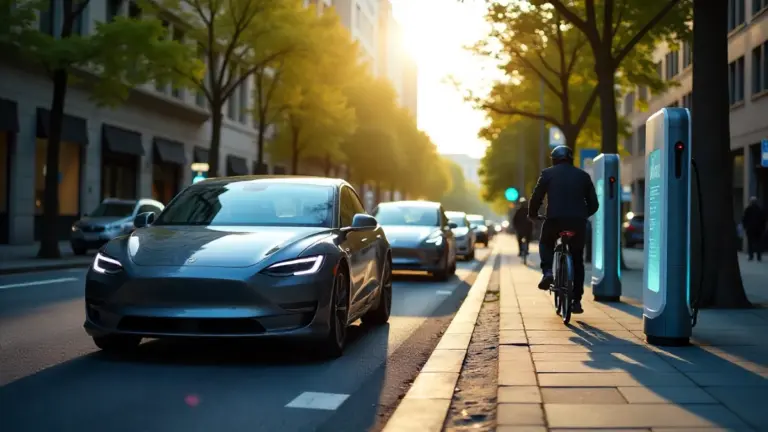
Have you noticed how quickly electric vehicles have gone from futuristic curiosities to everyday sights on our streets? If you’re like most people, you’ve probably seen more EVs in the past year than in the previous five combined. And here’s the thing: 2025 isn’t just another year of gradual change—it’s shaping up to be a pivotal moment when electric mobility transforms from an alternative to the mainstream.
Whether you’re considering your first EV, working in the transportation industry, or simply curious about where we’re headed, understanding the trends reshaping mobility right now matters more than ever. Let me walk you through what’s actually happening in electric transportation, why it matters to you, and what it means for our collective future.
The Electric Revolution Is Accelerating (And It’s Not Just About Cars)
When we talk about electric mobility in 2025, we’re discussing something far bigger than just swapping gas-powered cars for battery-electric ones. The entire transportation ecosystem is being reimagined from the ground up.Think about this for a second: global EV sales reached nearly 1.9 million units in October 2025 alone, marking a 23% increase year-to-date. We’re not talking about a niche market anymore—electric vehicles are set to represent one in four cars sold globally this year. That’s a fundamental shift in how the world moves.
But here’s what really catches my attention: In the United States, EV market share reached 7.4% in the second quarter of 2025, while China’s new energy vehicles exceeded 20% of new car sales, and the first quarter of 2025 saw over 4 million EVs sold worldwide—35% more than in 2024. Different regions are moving at wildly different speeds, and understanding why matters if you’re trying to predict where this industry is headed.
The real story isn’t just about passenger cars, though. Electric buses are transforming public transit in cities worldwide. Electric delivery vans are quietly replacing diesel trucks in urban logistics. E-bikes and electric scooters have become legitimate transportation options for millions of people. When we talk about “electric mobility” in 2025, we’re describing an interconnected ecosystem that’s reshaping everything from how we commute to work to how packages arrive at your door.
Charging Infrastructure: The Nervous System of Electric Transportation
You know what’s interesting? Most people worry about range anxiety when they’re considering an EV, but the real transformation happening right now is in charging infrastructure—and it’s moving faster than most of us realize.
The United States increased its charging stock by 20% in 2024 to just under 200,000 public charging points, while Europe saw its public charging network grow more than 35% in 2024, reaching over 1 million charging points. But those numbers only tell part of the story.
What’s really changing the game is the speed and intelligence of charging technology. In March 2025, BYD introduced its Super-e platform, claiming to deliver around 400 km of range in just 5 minutes, made possible by next-generation silicon carbide power chips, all-liquid-cooling, and a 1,000 V architecture. Think about that—five minutes to add 250 miles of range. That’s faster than most people spend in a convenience store during a road trip.
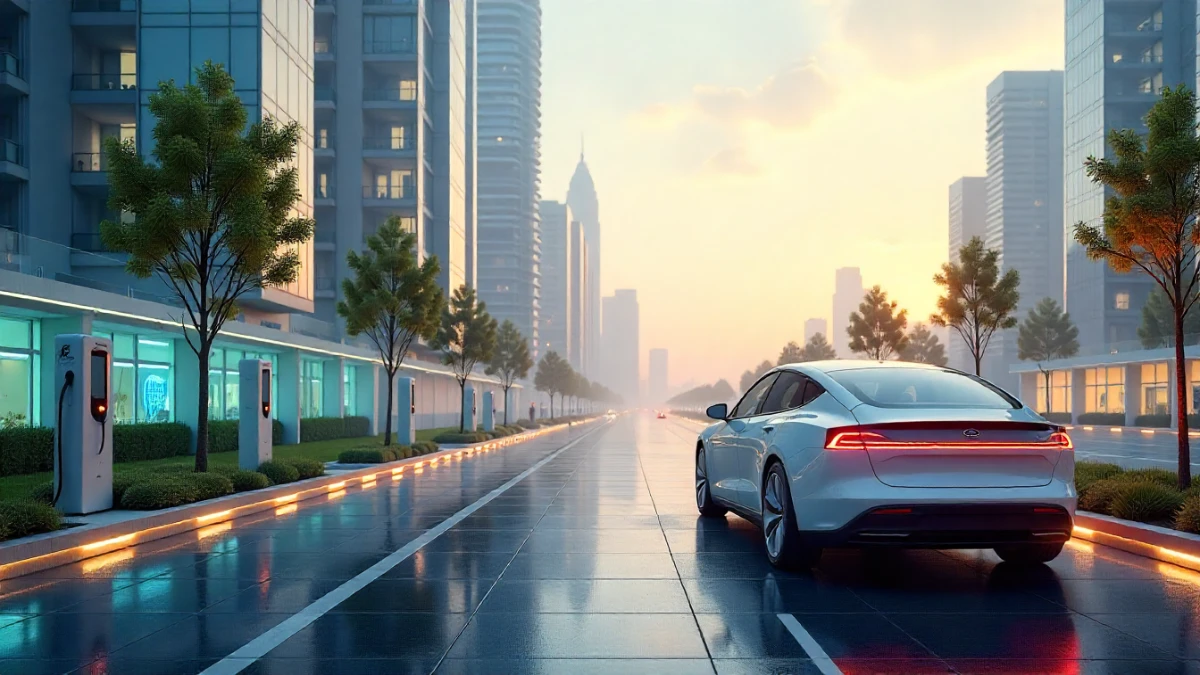
In the second quarter of 2025, the share of ultra-fast 250+ kW chargers rose sharply to 38% of new installations among non-Tesla networks, with 63% of all new ports being ultra-fast. This isn’t just about adding more chargers—it’s about making them powerful enough to actually compete with the refueling experience we’re all used to.
Here’s something that often gets overlooked: the average number of ports per station rose to 5.4 in Q2 2025, up from 4.7 in Q1, as major charging operators standardize around 10-charger, 350-400 kW installations. Larger charging stations mean you’re less likely to arrive and find every stall occupied—a real problem that early EV adopters dealt with constantly.
And if you’re wondering about Tesla’s role in all this, there’s good news: the opening of the Supercharger network to most EV brands over 2025 or in early 2026 represents a major expansion of available fast charging for non-Tesla EVs. That’s potentially game-changing for anyone driving a Ford, GM, or other brand that’s adopted the NACS charging standard.
The Market Reality: Who’s Winning, Who’s Adapting, and What It Means for You
Let’s talk about what’s actually happening in showrooms and driveways across America, because the competitive landscape has shifted dramatically in just the past year.
Tesla’s U.S. EV market share stands at 46% in Q2 2025, down from 49% in 2024, 55% in 2023, and 62% in 2022. Now, before Tesla fans get defensive or skeptics celebrate, let’s understand what this really means: Tesla is still selling more EVs than anyone else in America, but the overall pie is getting bigger, and traditional automakers are finally bringing competitive products to market.
The Chevrolet Equinox EV is proving that affordability and familiarity can drive significant volume, while Hyundai’s Ioniq 5 saw sales surge 90% in Q3 as nearly 22,000 buyers took one home. These aren’t just statistics—they represent real people choosing electric vehicles who might not have considered a Tesla for various reasons: price, brand loyalty, design preferences, or dealer relationships.
What’s fascinating is how quickly the market adapted when policy changed. As federal tax credits for new, used, and leased electric vehicles ended on September 30, 2025, Q3 saw record sales, with September becoming the country’s strongest month of EV sales ever at 14% penetration in the new market. People responded rationally to incentives, which tells us something important: EVs are now compelling enough that even without subsidies, a significant portion of buyers are ready to make the switch.
The Affordability Question: When Does Going Electric Make Financial Sense?
Here’s the conversation I have constantly with friends, family, and people I meet: “Are EVs actually affordable yet?” And honestly, the answer depends entirely on your situation—but it’s becoming more nuanced and interesting.
The average EV range in 2025 has increased 4% over the last year to 293 miles, while fast charging speeds have improved 7%. So you’re getting more capability, but there’s a catch: average vehicle efficiency has dropped by 16% since 2018 as EVs become larger and heavier, meaning larger battery packs are being used to deliver marginal range increases.
What does this mean in practical terms? Manufacturers are building the SUVs and trucks that Americans want to buy, but those vehicles require massive batteries to achieve acceptable range. A compact EV with a smaller battery might be the most economical choice for many drivers, but market demand is pushing automakers toward bigger, more expensive vehicles.
Here’s where it gets interesting on the used market: Used EV pricing has splintered since the end of federal tax credits in September, with inexpensive models getting cheaper and newer models getting more expensive. If you’re shopping for a 3-4 year old EV, you might find incredible deals. But if you want something nearly new with the latest technology, you might not see much savings compared to buying new.
The total cost of ownership equation also continues to evolve. Sure, you’re saving on gas and maintenance—electric motors have fewer moving parts and don’t need oil changes. But you need to factor in your specific electricity costs, whether you can charge at home (which is dramatically cheaper than public charging), and how long you plan to keep the vehicle.
Sustainable Transportation Beyond Personal Vehicles
You know what really excites me about 2025? It’s not just that more people are buying electric cars—it’s that we’re finally seeing electrification spread to every corner of transportation.
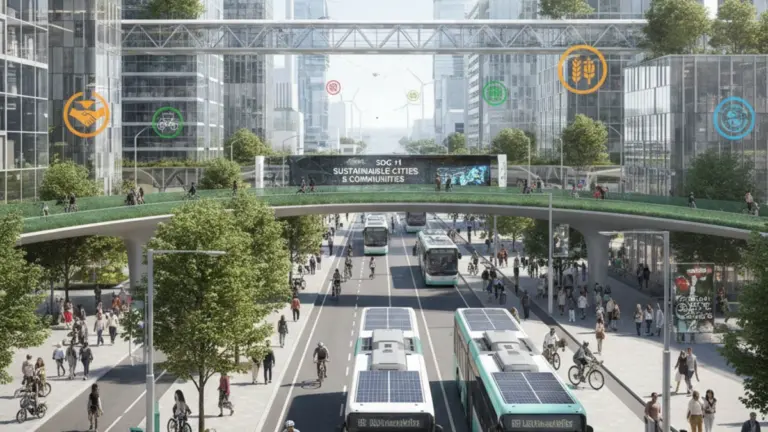
Electric buses are transforming urban transit. Cities worldwide are replacing diesel bus fleets with battery-electric alternatives that reduce both emissions and noise pollution. If you’ve ever stood at a bus stop as a diesel bus pulls up, you know exactly how much of a difference this makes.
Commercial delivery fleets are going electric at an accelerating pace. Those Amazon, UPS, and FedEx vans you see in your neighborhood? More of them are electric every month, driven by companies realizing that the total cost of ownership favors electric for predictable urban routes.
And here’s something that doesn’t get enough attention: electrification is spreading quickly in buses and two- and three-wheelers, which are already reaching very high levels of adoption. In many developing countries, electric motorcycles and three-wheeled vehicles are becoming the primary means of transportation, leapfrogging the traditional gasoline phase entirely.
Even trucks are joining the electric revolution, though more slowly. Battery technology for heavy-duty long-haul trucks still faces challenges, but electric options are emerging for regional hauling and local delivery—applications where they return to a depot for overnight charging.

The Environmental Impact: More Complex Than You Might Think
Let’s address the elephant in the room, because I know some of you are thinking it: “Are electric vehicles really better for the environment?”
The short answer is yes, but the full answer requires understanding a few important nuances. Based on Transport & Environment’s analysis, Europe is set to save 20 million tonnes of CO2 in transport emissions in 2025 thanks to the uptake of EVs. That’s significant—equivalent to taking millions of gasoline cars off the road.
But here’s what matters: even when you account for the electricity generation mix (including coal and natural gas plants), EVs produce fewer lifetime emissions than comparable gasoline vehicles in virtually every market globally. And as electrical grids continue incorporating more renewable energy—which is happening faster than most people realize—that advantage grows every year.
The manufacturing emissions are real, particularly for battery production. Mining lithium, cobalt, and other battery materials has environmental impacts. But the equation increasingly favors EVs because the operational emissions over a vehicle’s lifetime are so much lower. Think of it this way: an EV has higher upfront environmental costs but pays that back through years of cleaner operation.
There’s also an interesting development in how EVs interact with the power grid. Vehicle-to-Grid technology enables energy to be pushed back to the power grid from EV batteries, which becomes especially interesting with the growth of renewable energies as their production tends to fluctuate. Your parked EV could potentially become a grid storage device, helping stabilize power supply when solar and wind production varies.
What This Means for You Right Now
So where does all this leave us as we head into 2026 and beyond? Let me break it down into practical considerations based on where you are in your transportation journey.
If you’re considering buying an EV soon: The market has never offered more choice. You’re not limited to Tesla anymore—there are excellent options from Ford, Hyundai, Chevrolet, Kia, and others at various price points. Charging infrastructure is improving rapidly, making EVs viable for more people, though you should honestly assess your access to home charging. The end of federal tax credits means less immediate savings, but also means you’re not rushing into a purchase just to catch an expiring incentive.
If you’re skeptical about EVs: I get it, and that’s totally reasonable. But the technology has matured significantly. Range is no longer the limitation it once was, with most new EVs offering 250-300+ miles. Charging speeds are improving dramatically. And the used market is developing, meaning you’ll have more affordable options in coming years. Stay informed, maybe test drive a few models, and reassess your position annually—the landscape is changing that fast.
If you work in transportation or logistics: Electrification is coming to your sector whether you’re ready or not. The economics increasingly favor electric for predictable routes with depot charging. Understanding the total cost of ownership, infrastructure requirements, and operational changes will become essential professional knowledge in the next few years.
If you’re interested in the investment and business side: The EV revolution is creating opportunities across multiple sectors: charging infrastructure, battery technology, electrical grid upgrades, software and connectivity, new service models, and more. The companies that win won’t necessarily be the ones making the vehicles—look at where the bottlenecks and pain points exist.
The Road Ahead
Here’s what I find most remarkable about 2025: we’ve crossed an invisible threshold where electric mobility is no longer alternative or experimental. It’s becoming mainstream, normal, expected. The conversations have shifted from “why would anyone buy an electric car?” to “which electric car should I buy?” and “when will my favorite model be available as an EV?”
The challenges remain real. Charging infrastructure needs to expand, especially in rural areas and multi-unit housing. Battery costs need to continue declining. Supply chains need to become more sustainable. And the electrical grid needs upgrades to handle increased demand.
But the momentum is undeniable. Future predictions based on the Stated Policies Scenario suggest that by 2035, using EVs could help avoid 2 Gt of carbon dioxide equivalent of GHG emissions globally. That’s not just a transportation revolution—it’s a cornerstone of addressing climate change.
For those of us passionate about both technology and sustainability, 2025 represents a fascinating inflection point. We’re watching an entire industry transform in real-time, with implications that extend far beyond the vehicles themselves. It’s affecting energy policy, urban planning, international trade, materials science, and how we think about mobility itself.
The electric mobility revolution isn’t coming—it’s here. The only question is how quickly it accelerates from here, and whether the supporting infrastructure, policy frameworks, and market conditions can keep pace with growing consumer adoption.
What role will you play in this transformation? Whether you’re an early adopter, a patient observer, or someone working to build the infrastructure that makes it all possible, we’re all part of this shift toward cleaner, smarter transportation. And honestly? That’s pretty exciting.