You know what’s wild? The battery in your current electric car might seem cutting-edge today, but in five years, it could look as outdated as a flip phone. We’re standing at the edge of a battery revolution that’s about to transform everything we thought we knew about electric vehicles.
I’ve been following EV technology for years, and I can tell you—the innovations happening right now in battery labs around the world aren’t just incremental improvements. They’re game-changers. We’re talking about batteries that charge in minutes instead of hours, packs that weigh half as much while delivering twice the range, and technology that could finally make EVs cheaper than gas cars across the board.
Let’s dive into what’s coming next and why it matters for every driver considering an electric future.
Why Current Lithium-Ion Batteries Are Reaching Their Limits
Here’s something most people don’t realize: the lithium-ion batteries powering today’s EVs are essentially the same technology that’s in your laptop, just scaled up dramatically. They’ve been refined and optimized for decades, and honestly, they’re pretty impressive. A modern Tesla or Ford F-150 Lightning can travel 300+ miles on a single charge, which seemed impossible just ten years ago.
But we’re bumping up against some hard physics. Lithium-ion batteries have three fundamental limitations that engineers can’t completely engineer away. First, they’re relatively heavy—battery packs can account for a quarter of an EV’s total weight. Second, they charge slowly compared to pumping gas, even with today’s fastest DC chargers. Third, they degrade over time, losing capacity with each charge cycle.
And here’s the kicker: they contain liquid electrolytes that can be flammable under certain conditions. That’s why manufacturers build in extensive safety systems, adding weight and complexity. Don’t get me wrong—modern EV batteries are incredibly safe, with far fewer fire incidents than gasoline vehicles. But there’s definitely room for improvement.
The good news? Scientists and engineers have been working on solutions to all these problems, and several breakthrough technologies are moving from labs to production lines faster than most people expected.
Solid-State Batteries: The Holy Grail of EV Power
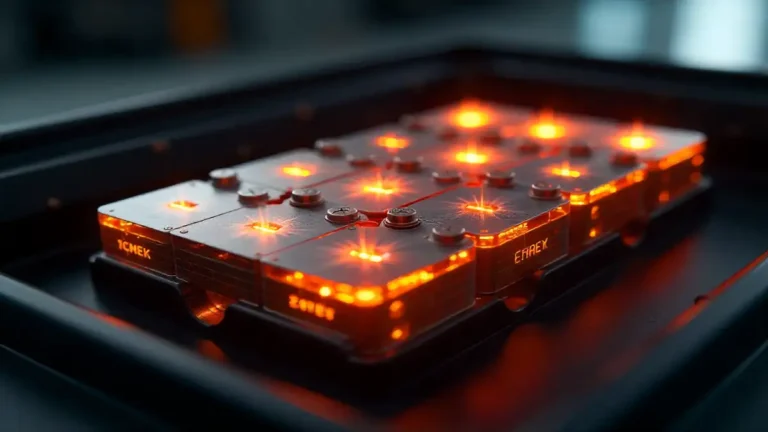
If you’ve read anything about future battery tech, you’ve probably heard about solid-state batteries. They’re being called the “holy grail” of EV technology, and for good reason. Imagine replacing the liquid electrolyte in current batteries with a solid material—ceramic, glass, or specialized polymers. This seemingly simple change unlocks extraordinary benefits.
First, solid-state batteries could store 50-80% more energy in the same space. That means you could either drive much farther on a single charge, or manufacturers could use smaller, lighter battery packs while maintaining current ranges. A car that goes 300 miles today might travel 450-500 miles with solid-state technology, or weigh 500 pounds less while keeping that 300-mile range.
Second, they charge faster—potentially much faster. Some solid-state designs being tested can handle charging rates that would fill 80% of the battery in 10-15 minutes without degrading the cells. That’s approaching the convenience of a gas station stop.
Third, and this is crucial, solid-state batteries are inherently safer. Without flammable liquid electrolytes, the risk of thermal runaway (battery fires) drops dramatically. This safety margin could allow for even more energy-dense designs without additional safety systems.
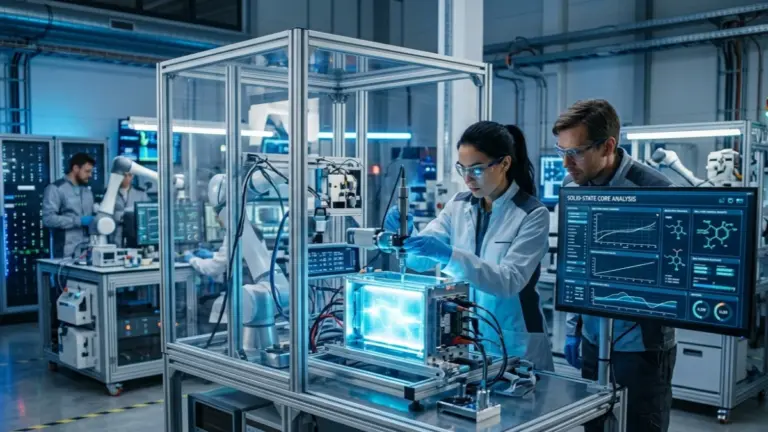
So when can you buy one? Companies like Toyota, Samsung, and QuantumScape are racing to bring solid-state batteries to market. Toyota has announced plans for solid-state EVs by 2027-2028, and they’re not alone. However, manufacturing these batteries at scale remains challenging. The solid electrolyte materials are expensive and difficult to produce consistently, and ensuring long-term durability has proven tricky.
Think of it like the early days of LCD screens replacing CRTs—the technology clearly worked, but getting it cheap and reliable enough for mass production took time. We’re in that transition period now with solid-state batteries.
Lithium-Metal and Silicon Anodes: Evolution, Not Revolution
While solid-state batteries grab headlines, other technologies are quietly advancing and could reach your driveway even sooner. Let’s talk about what’s happening with battery anodes—the negative electrode where lithium ions go during charging.
Current lithium-ion batteries use graphite anodes. They’re reliable and well-understood, but they’re not the most efficient at storing lithium. Researchers have been experimenting with lithium-metal and silicon anodes, which can store significantly more energy. Silicon anodes, in particular, can theoretically hold ten times more lithium than graphite.
The challenge? Silicon expands and contracts dramatically during charging cycles—imagine a sponge that swells to three times its size when wet, then shrinks back down. This mechanical stress causes silicon anodes to crack and fail after relatively few charges.
But here’s where it gets exciting: companies like Sila Nanotechnologies and Amprius have figured out how to engineer silicon at the nanoscale to manage this expansion. Their silicon-based anodes are already appearing in some specialty applications and could increase EV battery capacity by 20-40% within the next few years. Mercedes-Benz has announced plans to use silicon anode technology in their upcoming EVs, potentially delivering over 600 miles of range.
This isn’t science fiction—it’s happening now, and it represents a more incremental path forward while we wait for solid-state batteries to mature.
Sodium-Ion and Alternative Chemistries: The Affordability Play
Here’s a question most EV articles don’t address: what if the future isn’t just about better batteries, but cheaper ones? Lithium isn’t exactly rare, but mining and processing it has environmental and geopolitical implications. Cobalt, used in many battery cathodes, is even more problematic.
Enter sodium-ion batteries. Sodium is one of the most abundant elements on Earth—it’s literally in salt water. Sodium-ion batteries use similar technology to lithium-ion but swap out the lithium for sodium. The result? They’re potentially much cheaper to produce and eliminate dependence on scarce materials.
The tradeoff is energy density. Sodium-ion batteries currently store about 20-30% less energy than comparable lithium-ion cells, which means shorter range for the same weight. But for certain applications—city cars, commercial fleets, budget EVs—that’s perfectly acceptable. Chinese manufacturer CATL has already started producing sodium-ion batteries, and BYD is incorporating them into some vehicle models.
Think of it this way: not everyone needs a car that goes 400 miles on a charge. If you could buy an EV with 200 miles of range for $25,000 instead of $35,000, and you mostly drive around town, wouldn’t that be appealing? Sodium-ion batteries could democratize EV ownership in ways that premium lithium-ion packs never will.
Other alternative chemistries are in development too—lithium-sulfur, aluminum-ion, and even zinc-air batteries. Each has unique advantages for specific applications, and we might see a diverse battery ecosystem emerge rather than one technology ruling them all.
What This Means for You as a Future EV Owner
Okay, so that’s a lot of battery chemistry and physics. But what does it actually mean if you’re considering buying an electric car in the next few years?
First, don’t wait indefinitely for “perfect” batteries. The improvements coming are incremental and will roll out gradually. If you need a car now and an EV makes sense for your driving habits, today’s lithium-ion technology is already excellent. Waiting five years for solid-state batteries means missing five years of not buying gas and enjoying instant torque.
That said, if you’re on the fence, keep an eye on 2026-2028. That’s when we’ll likely see the first wave of production vehicles with significantly advanced battery technology—whether that’s solid-state, high-silicon anodes, or hybrid approaches. These vehicles will probably command premium prices initially, but mainstream adoption should follow within a few years.
For budget-conscious buyers, sodium-ion and other alternative chemistries might make EVs accessible at price points we’ve never seen before. A $20,000-25,000 EV with modest range could arrive sooner than you think, especially in markets outside North America where affordable transportation is the priority.
And here’s something to consider: battery technology improvements benefit existing EV owners too. As better batteries become available, replacement packs will offer more range and longer life. Some manufacturers are already planning upgrade programs where older EVs can receive new battery packs with enhanced capabilities.
The Bigger Picture: Beyond Just Range and Charging Speed
Let’s zoom out for a moment. Better batteries don’t just mean more convenient EVs—they fundamentally change what’s possible in transportation and energy storage.
Imagine a world where electric semi-trucks can haul freight 800 miles without recharging, making them genuinely competitive with diesel for long-haul routes. Picture electric planes for regional flights, or heavy construction equipment that runs emission-free all day. These applications are currently impractical with today’s batteries, but solid-state and other advanced technologies could make them viable.
Better batteries also accelerate the renewable energy transition. One of the biggest challenges with solar and wind power is storing that energy for when the sun isn’t shining or wind isn’t blowing. The same battery innovations improving EVs can create more efficient grid-scale storage systems, making renewable energy more reliable and practical.
And here’s something that doesn’t get discussed enough: as battery technology improves and production scales up, costs will continue falling. This creates a virtuous cycle where EVs become more affordable, which drives more production, which enables more research and development, which leads to even better batteries. We’re already seeing this with lithium-ion—prices have dropped roughly 90% over the past decade.
The Road Ahead: Challenges and Opportunities
I’ll be honest with you—transforming global transportation isn’t simple or quick. While these battery technologies are incredibly promising, each faces real challenges in moving from laboratory prototypes to millions of vehicles on the road.
Manufacturing solid-state batteries at scale requires entirely new production processes and equipment. Silicon anodes need to prove they can last 10-15 years and hundreds of thousands of miles under real-world conditions. Sodium-ion batteries must overcome their energy density limitations for applications beyond city cars and fleet vehicles.
There are also questions about raw materials. Even if we move away from cobalt and reduce lithium dependence, we’ll need enormous quantities of other materials—nickel, manganese, silicon, sodium processing capacity. Building that supply chain responsibly and sustainably is its own massive undertaking.
But here’s what gives me optimism: the amount of money, talent, and urgency flowing into battery research is unprecedented. Every major automaker, tech company, and government recognizes that batteries are the key to both transportation and energy futures. We’re not talking about a handful of startups in garages—this is billions of dollars, thousands of researchers, and some of the smartest minds in science and engineering focused on solving these problems.
Your Electric Future Starts Now
So where does this leave you? Whether you’re already driving electric or still considering that first EV purchase, understanding where battery technology is headed helps you make smarter decisions.
The batteries in today’s EVs will serve most drivers beautifully for years to come. A modern electric car with 250-300 miles of range, decent fast-charging capability, and an eight-year battery warranty is a practical, reliable choice right now. You don’t need to wait for breakthrough technology to go electric.
But if you’re the type who likes being an early adopter, keep your eyes open over the next few years. The vehicles launching in the late 2020s will represent genuine leaps forward in capability, convenience, and potentially affordability. Solid-state batteries, advanced silicon anodes, and alternative chemistries will start appearing in production vehicles, not just concept cars.
And here’s my final thought: the future of EV batteries isn’t just about making electric cars better than they are today. It’s about making them so obviously superior to gas-powered vehicles in every meaningful way—cost, performance, convenience, environmental impact—that the transition to electric becomes inevitable and unstoppable.
That future is closer than you might think. The revolution in your garage might be just a few years away.