The Silent Speed Demon in Your Garage
Remember the first time you floored a gas-powered sports car? That roar, that surge, that feeling of raw power pushing you back into your seat? Now imagine all of that—but instant, silent, and somehow even more intense. That’s what happens when you punch the accelerator in a modern electric vehicle, and it’s an experience that’s converting performance enthusiasts faster than you can say “zero to sixty.”
I’ll be honest: a few years ago, I rolled my eyes when people claimed EVs could match gas-powered cars in performance. “Sure,” I thought, “maybe they’re quick off the line, but what about real driving?” Then I actually drove one. My assumptions didn’t just shift—they evaporated completely. Today, we’re going to dive into how electric cars stack up against their gasoline counterparts when it comes to pure performance, and I think you’ll be as surprised as I was.
Acceleration: The EV’s Party Trick
Let’s start with the most dramatic difference you’ll notice: acceleration. Electric cars don’t just compete with gas cars here—they demolish them in most cases.
Here’s why: electric motors deliver 100% of their torque instantly, from the moment you press the accelerator. There’s no waiting for an engine to rev up, no turbo lag, no hunting for the right gear. You want power? You get power. Right now.
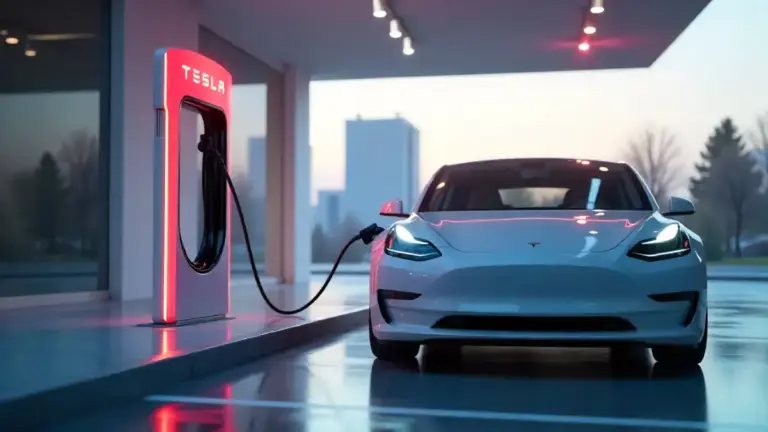
Consider the Tesla Model 3 Performance. It hits 60 mph in just 3.1 seconds. That’s supercar territory, yet it costs less than many luxury sedans. The Porsche Taycan Turbo S? A mind-bending 2.6 seconds. Even more mainstream options like the Hyundai Ioniq 5 N can reach 60 mph in around 3.4 seconds—faster than most “performance” gas cars costing twice as much.
Compare that to a gasoline car. A Honda Civic Si—a well-regarded sporty sedan—takes about 6.8 seconds to hit 60 mph. Even a Ford Mustang GT, with its rumbling V8, needs around 4.3 seconds. The difference is staggering, and you feel every bit of it when you’re behind the wheel.
But here’s what the numbers don’t tell you: the feeling of EV acceleration is different. There’s no drama, no noise, no vibration—just this surreal, relentless push that feels more like being on a roller coaster than driving a car. It’s uncanny at first, maybe even a bit unnerving, but you get addicted to it fast.
Handling and Weight: The Give and Take
Now, let’s talk about where things get more nuanced: handling. This is where electric cars face their biggest challenge, and it all comes down to one thing—weight.
EVs are heavy. Those battery packs add hundreds, sometimes over a thousand pounds compared to equivalent gas cars. The Tesla Model 3 Long Range weighs about 4,048 pounds. A comparable BMW 330i? Around 3,582 pounds. That extra weight means more mass to throw around in corners, more stress on brakes, and more momentum to manage.
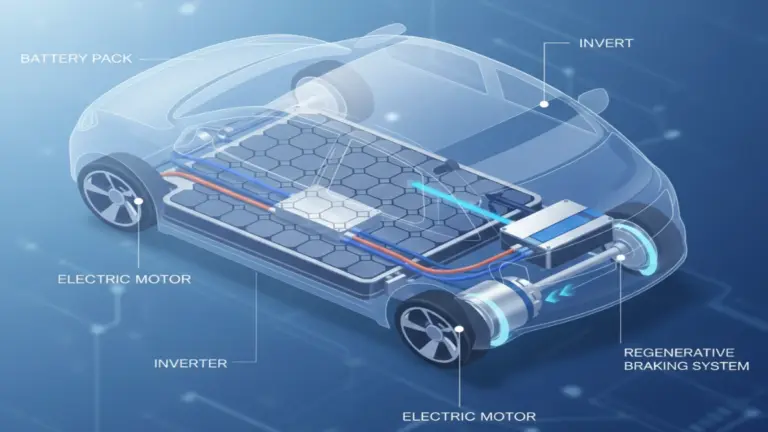
But here’s where it gets interesting: EV engineers have gotten remarkably clever about where they put that weight. The battery pack sits low in the chassis, typically under the floor. This creates an incredibly low center of gravity—lower than almost any gas car can achieve. What does that mean for you? Less body roll in corners, more planted feeling at high speeds, and surprisingly nimble handling despite the extra pounds.
I drove a Porsche Taycan on a tight mountain road last year, and I kept expecting it to feel cumbersome. Instead, it carved through corners with precision that reminded me of much smaller, lighter sports cars. The weight is there—you feel it under hard braking—but the low center of gravity works magic with the car’s balance.
There’s also the matter of weight distribution. Many EVs achieve near-perfect 50/50 weight distribution between front and rear axles, something gas cars often struggle to accomplish. This balance translates to more predictable handling and better traction in varying conditions.
The caveat? Track driving. If you’re planning to do multiple hard laps at a racing circuit, the extra weight does take its toll. Tires wear faster, brakes work harder, and you’ll notice the mass more dramatically. But for spirited driving on your favorite backroad or quick highway merges? The handling is genuinely impressive.
Top Speed and Sustained Performance: Gas Cars Fight Back
Here’s where traditional gasoline cars still hold some advantages. While EVs dominate acceleration, high-speed performance and sustained track driving remain challenging for electric vehicles.
Most EVs have electronically limited top speeds, typically between 130-160 mph. It’s not that the motors can’t go faster—they can—but higher speeds drain the battery exponentially faster. A Porsche Taycan might top out around 161 mph, while its gas-powered 911 counterpart can reach 182 mph or more. For most drivers, this difference is academic (where are you going to safely drive 160 mph anyway?), but it’s worth noting.
The bigger issue is heat management during extended high-performance driving. Push an EV hard for 15-20 minutes straight, and you might trigger thermal management systems that temporarily reduce power to protect the battery and motors. Gas engines can run at high output for longer periods before heat becomes a limiting factor.
That said, EV technology is evolving rapidly. The Porsche Taycan, for instance, features an 800-volt architecture and sophisticated cooling systems that allow for impressive sustained performance. I’ve seen videos of Taycans completing multiple hot laps without significant power reduction—something that would have been impossible just a few years ago.
The Driving Experience: Different, Not Better or Worse
Let’s address the elephant in the room: the lack of engine noise. For some enthusiasts, this is a dealbreaker. There’s something visceral about the sound of a well-tuned engine—the burble of a V8, the scream of a high-revving inline-six. Electric cars are, by comparison, nearly silent. The only sounds you hear are tire noise, wind, and a subtle electric whine at high speeds.
Is this worse? It depends entirely on what you value. What you lose in auditory excitement, you gain in other ways. The cabin is remarkably peaceful, allowing you to hear the stereo with crystal clarity or simply enjoy a conversation without shouting. You notice details you never did before—the quality of the suspension, the precise steering feedback, the grip of the tires.
Some manufacturers are adding artificial sounds to EVs. The Hyundai Ioniq 5 N, for example, offers synthesized engine sounds that change with acceleration. It’s polarizing—purists hate it, while others find it adds engagement. Personally, I tried it once and turned it off, but I appreciate having the option.
There’s also the smoothness factor. No gear shifts, no vibrations from cylinder firings, no jerky transitions. EVs deliver power in this perfectly linear, seamless way that feels incredibly refined. It’s like comparing a traditional watch to a quartz movement—different philosophies, both with their own appeal.
Real-World Performance: Where It Actually Matters
Here’s what I find most compelling about EV performance: it’s usable every single day. That instant torque that beats supercars off the line? You get it merging onto highways, passing slower traffic, or simply accelerating from a stoplight. It makes everyday driving more engaging and, frankly, safer when you need to make quick maneuvers.
My neighbor recently bought a Mustang Mach-E GT. He’s not a “car guy”—he just wanted something practical for his family. But he can’t help smiling every time he accelerates. That performance isn’t locked behind aggressive driving modes or complex launch control procedures. It’s just there, accessible, whenever you want it.
Gas cars often require you to work for their performance. You need to downshift, rev the engine, wait for turbos to spool up. EVs are democratic—the full performance is available instantly, regardless of your driving skill or whether you’re in “sport” mode.
The Bottom Line: A New Definition of Performance
So how does electric car performance compare to gas cars? The honest answer is: they’re different beasts serving different purposes.
If you value pure acceleration, daily usability, and cutting-edge technology, EVs are genuinely superior to most gas cars in their price range. A $50,000 EV will accelerate faster than $100,000+ gas-powered supercars from just a decade ago. That’s remarkable.
If you prioritize exhaust notes, extended track sessions, or the traditional “sports car” experience with manual transmissions and mechanical engagement, gas cars still have unique appeal that EVs can’t replicate—at least not yet.
But here’s what I’ve learned after driving dozens of both: great performance is about more than just numbers or tradition. It’s about how a car makes you feel, how it responds to your inputs, how it fits into your life. Electric cars nail many of these aspects while bringing their own unique character to the table.
The performance conversation has evolved beyond “gas versus electric.” Now it’s about choosing the type of performance that resonates with you. And honestly? That’s a pretty exciting place to be.
What matters most to you in a performance car—raw acceleration, engaging exhaust notes, or something else entirely? The answer might just determine whether your next performance car plugs in or fills up.
Roy K. Miller is an EV expert passionate about electric mobility, green technology, and the future of transportation. He helps readers and drivers make smarter choices while sharing insights and updates on the latest developments in the EV world.