You know what I hear almost every time someone finds out I’m into electric vehicles? “But what happens when you run out of charge in the middle of nowhere?” It’s usually followed by a knowing look, as if they’ve just identified the fatal flaw in the entire EV revolution. And I get it—charging anxiety is real. But here’s the thing: most of what people worry about when it comes to EV charging is based on outdated information or misconceptions that simply don’t match today’s reality. Let’s dig into the most common charging myths and separate fact from fiction, so you can make decisions based on what’s actually true rather than what your neighbor’s cousin heard somewhere online.
Myth 1: “You’ll Get Stranded When Your Battery Dies”
This is the granddaddy of all EV myths—range anxiety in its purest form. The fear is understandable: we’ve all experienced that sinking feeling when our gas light comes on miles from the nearest station. But EVs work fundamentally differently than gas cars, and that changes everything.
First, let’s talk numbers. Modern electric vehicles aren’t rolling around with 80-mile ranges anymore. The average new EV in 2024-2025 offers between 250 and 350 miles of range on a full charge. The Tesla Model 3 Long Range gets about 341 miles, the Hyundai Ioniq 6 pushes past 360 miles, and even more affordable options like the Chevrolet Equinox EV deliver around 319 miles. That’s more than enough for the average American, who drives just 40 miles per day according to the U.S. Department of Transportation.
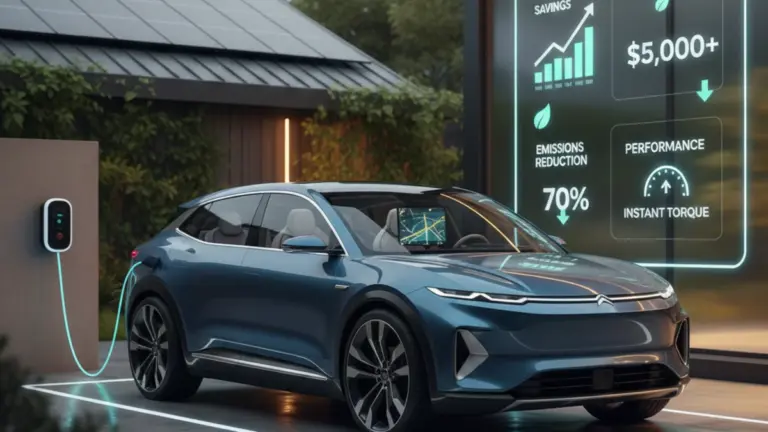
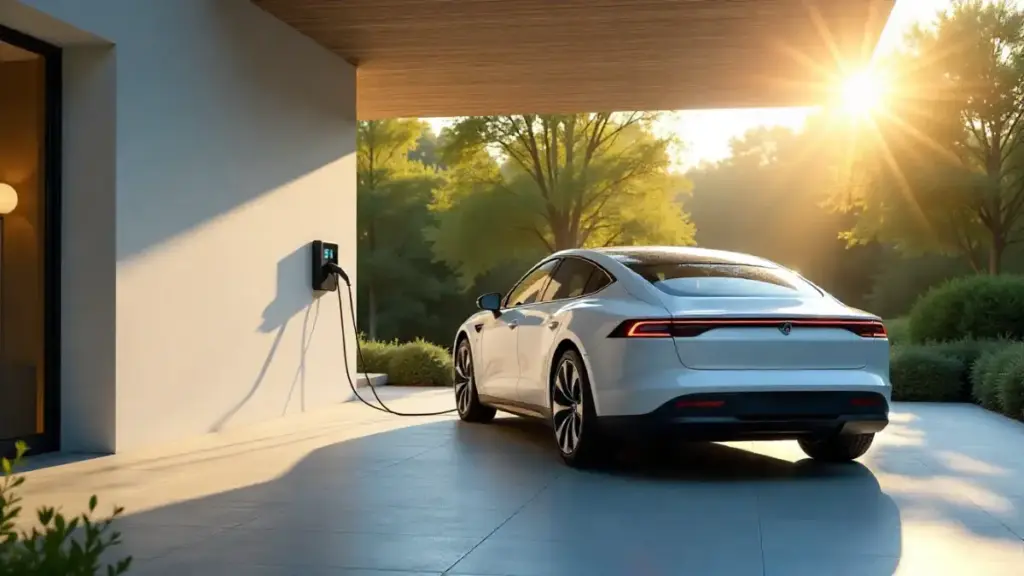
But here’s what really makes range anxiety a myth: you start every day with a “full tank.” Think about it—when was the last time you woke up with a full tank of gas? Probably never, unless you’re the rare person who fills up the night before on principle. With an EV, you plug in at home overnight, and boom—you’ve got maximum range every single morning. It’s like having a personal gas station in your garage that fills your car while you sleep.
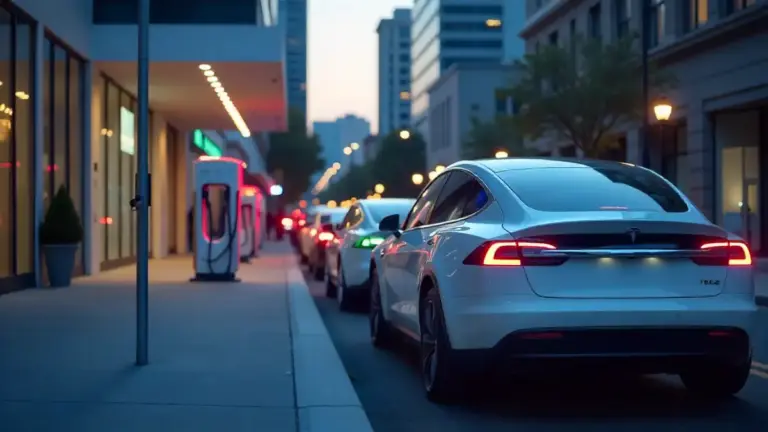
“But what about road trips?” you might ask. Valid question. This is where EV ownership has changed dramatically in the past few years. The charging infrastructure has exploded. There are now over 60,000 public charging stations across the United States, with more than 150,000 individual charging ports. Tesla’s Supercharger network alone has over 17,000 chargers nationwide, and they’re opening up to non-Tesla EVs through adapters. Meanwhile, networks like Electrify America, EVgo, and ChargePoint are expanding rapidly.
And your EV isn’t going to let you get stranded anyway. Modern EVs have sophisticated navigation systems that account for your current charge level, driving conditions, and available charging stations along your route. Your car will literally tell you when and where to charge. It’s like having a hyper-vigilant copilot who won’t let you make a mistake.
Myth 2: “Charging Takes Forever—Who Has Time for That?”
Ah yes, the charging time complaint. I’ve heard variations like “I’m not going to sit around for hours waiting for my car to charge” more times than I can count. Let’s unpack this one, because there’s a fundamental misunderstanding about how EV charging actually works in daily life.
Here’s the reality: most EV charging happens while you’re doing something else. You’re not standing next to your car watching electrons flow into the battery (though if you want to, no judgment). For the vast majority of EV owners—about 80% according to industry data—most charging happens at home overnight. You plug in when you park in your garage or driveway, go inside, have dinner, watch TV, sleep, and wake up to a fully charged car. The actual time you spend “charging” your car is about 10 seconds: 5 seconds to plug it in, and 5 seconds to unplug it in the morning.
Compare that to gas stations. How long does it take you to fill up your gas car when you account for the full experience? You have to drive to the station, wait in line if it’s busy, pump the gas (which takes 5-10 minutes), go inside to pay if you didn’t prepay, and then drive back to your route. That’s easily 15-20 minutes out of your day, and you’re actively involved the entire time. With home charging, you spend 10 seconds and then you’re free to live your life.
“But what about when you’re on the road?” Fair point. DC fast charging has transformed road trip charging from a marathon to a coffee break. Modern fast chargers can add 200 miles of range in just 20-30 minutes. For example, a Tesla Supercharger can deliver up to 200 miles of range in about 15 minutes on newer models. The Hyundai Ioniq 5 and Kia EV6, with their 800-volt architecture, can charge from 10% to 80% in just 18 minutes under ideal conditions.
Here’s how it actually plays out on a road trip: every 3-4 hours of driving, you stop for 20-30 minutes to charge. During that time, you’re probably going to want to use the restroom, grab some food, stretch your legs, or check your phone anyway. The charging time becomes your break time. Many EV owners actually find they arrive at destinations less exhausted because they’re forced to take regular breaks rather than pushing through on caffeine and determination alone.
Myth 3: “There Are No Charging Stations Anywhere”
This myth is particularly stubborn, probably because it was actually true… about a decade ago. But the charging landscape has transformed so dramatically that people operating on old information are in for a pleasant surprise.
Let me throw some numbers at you. In 2015, there were fewer than 10,000 public charging stations in the United States. Today? Over 60,000 stations. That’s a 6x increase in less than 10 years. And the pace is accelerating—major retailers, gas station chains, and dedicated charging companies are all racing to install more chargers.
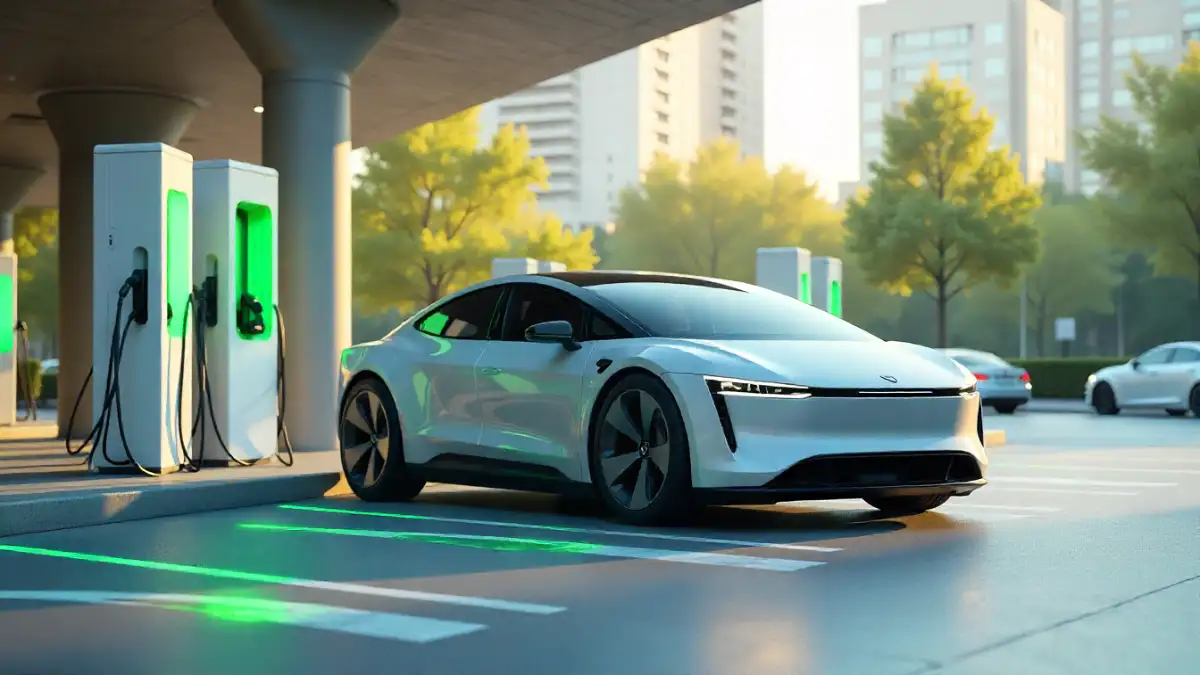
Where are all these chargers? Everywhere you already go. Walmart has been aggressively installing EV chargers at their stores nationwide—they’re planning thousands of fast chargers by 2030. Target, Whole Foods, and many shopping malls have charging stations in their parking lots. Hotels are adding chargers to attract EV-driving guests. Office buildings are installing workplace charging. Many destination locations—national parks, ski resorts, wineries—have EV charging available.
The genius of this setup is that charging becomes something that happens while you’re doing other things. You charge while you shop, while you work, while you eat. It’s fundamentally different from the gas station model, where fueling is its own separate errand.
And if you’re worried about finding chargers, multiple apps make it dead simple. PlugShare, ChargePoint, A Better Routeplanner, and even your car’s built-in navigation system show you every available charger, whether it’s working, how fast it charges, and sometimes even how much it costs. Many apps include real-time availability and user reviews. It’s like Yelp for EV charging.
Regional coverage varies, of course. Urban and suburban areas have excellent charging infrastructure. Interstate highways are well-covered with fast charging stations, especially along major routes. Rural areas are catching up but still have gaps—though this is improving monthly as networks expand into underserved areas.
Myth 4: “Charging Stations Are Always Broken or Occupied”
I’ll be honest with you—this myth has some basis in reality, particularly from the early days of public charging. There have been issues with charger reliability, and yes, sometimes you arrive at a charger and someone else is using it. But context matters, and the situation is vastly better than the horror stories suggest.
Charger reliability has improved significantly. Tesla’s Supercharger network famously maintains a 99%+ uptime rate. Other networks have had more challenges historically, but they’re investing heavily in maintenance and upgrades. Electrify America, for instance, has been replacing older hardware with more reliable units and implementing better monitoring systems to catch issues before they become problems.
When a charger does go down, it’s increasingly reported and fixed quickly. Apps like PlugShare allow users to report issues in real-time, so you’ll know before you arrive if there’s a problem. Many charging networks also have 24/7 customer support to help troubleshoot issues remotely or dispatch technicians for hardware problems.
As for chargers being occupied—yes, this can happen, especially at popular locations during peak times. But here’s what’s different from when you circle a gas station looking for an open pump: most charging locations have multiple chargers. A Tesla Supercharger station typically has 8-12 charging stalls, with many urban locations having 20+ stalls. Even smaller ChargePoint or EVgo locations usually have 4-6 chargers. And remember, you’re not stuck there—you can check availability before you arrive using your car’s navigation or charging apps.
The charging experience is also getting smarter. Some EVs can automatically reroute you to a less crowded charging station if your planned stop is busy. Tesla’s navigation, for example, shows real-time occupancy at Supercharger stations and will suggest alternatives if your intended station is full.
Myth 5: “Charging Kills Your Battery and Ruins Your Car”
This one combines a kernel of truth with a generous helping of misinformation. Yes, how you charge your EV does affect battery longevity—but not in the dramatic, car-destroying way some people claim.
Here’s what actually matters: battery health is primarily affected by how often you charge to 100% and how often you let it drop to near 0%. Think of your EV battery like your smartphone battery. You wouldn’t stress about occasionally charging your phone to 100%, but if you did it every single day and regularly ran it down to 1%, you’d notice degradation over time.
EV manufacturers know this, which is why they build in safeguards. Most EVs let you set a charging limit—typically 80% or 90%—for daily use. You only charge to 100% when you actually need the full range for a long trip. The battery management system also prevents you from truly depleting the battery to 0%; when your car says 0%, there’s still a buffer built in to protect the cells.
Fast charging—this is where people get worried. “Doesn’t DC fast charging destroy the battery?” Not really, no. Modern EV batteries are designed to handle fast charging regularly. Yes, exclusively fast charging every single day could contribute to slightly faster degradation over many years, but the effect is much smaller than most people think. Many EV taxi and ride-share drivers fast charge multiple times daily, and their batteries hold up fine for hundreds of thousands of miles.
The data backs this up. Studies of Tesla vehicles with over 200,000 miles show an average battery degradation of only 10-12%. That means after driving the equivalent of circling the Earth eight times, the battery still holds nearly 90% of its original capacity. Many EVs come with battery warranties covering 8 years or 100,000+ miles, with guarantees that the battery will retain at least 70% of its capacity. Manufacturers wouldn’t offer those warranties if battery degradation was a serious problem.
Temperature management also plays a huge role in battery health, and modern EVs handle this automatically. Your EV preheats or precools the battery before charging to optimize performance and longevity. You don’t have to think about it—the car does the thinking for you.
The Real Story: Charging Is Actually More Convenient
Here’s what I’ve learned after years of following EV development and talking to countless EV owners: once people actually drive an electric vehicle, their perception of charging completely flips. What seemed like a massive inconvenience before becomes one of the favorite aspects of EV ownership.
Why? Because convenience isn’t about speed alone—it’s about fitting into your life seamlessly. Never visiting a gas station in your normal routine is incredibly convenient. Waking up to a “full tank” every morning is convenient. Charging while you shop or eat or work—that’s convenient. Many EV owners joke that they spend less time dealing with “refueling” than they ever did with gas cars because it’s just something that happens in the background of their lives.
Do you need to think a bit more strategically about charging on road trips? Sure. Is it exactly like gas? No—and honestly, in most ways, it’s better for daily life. The infrastructure is growing rapidly, the technology is improving constantly, and the experience is far more user-friendly than the myths suggest.
Your Next Steps: Making an Informed Decision
If you’re considering an EV but charging concerns have held you back, here’s what I recommend:
Do your homework on your specific situation. Can you charge at home? That’s the biggest factor in daily convenience. Do you regularly take road trips that exceed 300 miles? Map out those routes on apps like A Better Routeplanner to see actual charging availability and timing.
Test drive an EV and ask current owners. Nothing beats real-world experience. Most EV owners are enthusiastic about sharing their experiences—reach out to local EV groups or online communities and ask the hard questions about charging.
Start with the numbers. Calculate your actual daily driving. Most people are surprised to find they drive far less than they think, which means charging becomes a non-issue for regular use.
The bottom line? Charging myths persist because they’re based on outdated information and unfamiliarity with how EV ownership actually works. The reality is that for most people, most of the time, charging an EV is easier and more convenient than fueling a gas car. As infrastructure continues to expand and technology improves, the gap will only widen. Don’t let myths and misconceptions keep you from exploring whether an EV might be the right choice for your driving needs.
The future of transportation is electric, and the charging infrastructure is already here to support it. The question isn’t whether EVs are practical—it’s whether you’re ready to experience the difference for yourself.