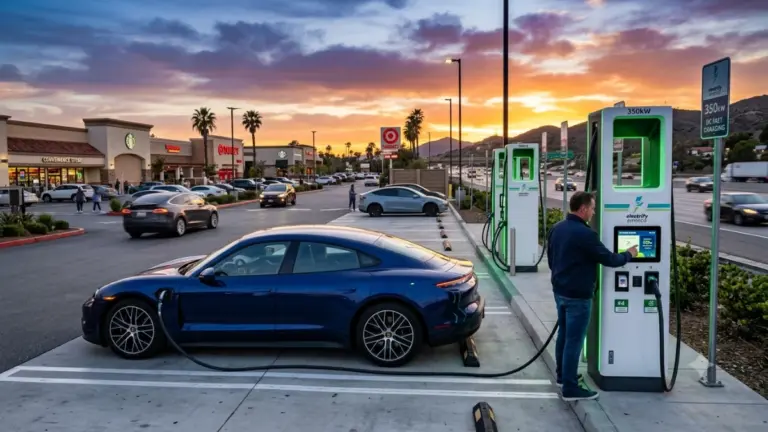
If you’re considering an electric vehicle, understanding the latest EV battery technology is essential. It shapes range, charging time, and long-term performance.
The battery is essentially the heart of any electric vehicle – it determines how far you can drive, how long you’ll wait at charging stations, and how much your car will be worth in five years. But here’s what might surprise you: not all EV batteries are created equal. Different brands use completely different approaches, and understanding these differences can save you thousands of dollars and countless headaches.
Let’s dive into the fascinating world of electric car batteries and see how the major players stack up against each other.
Understanding the Battery Basics: What Actually Matters to You
Before we compare brands, let’s talk about what really affects your daily driving experience. Think of an EV battery like a massive, sophisticated version of your laptop battery – but one that needs to power a 4,000-pound vehicle for hundreds of miles.
Battery Chemistry is like the recipe that determines everything else. Just as different cake recipes produce different results, different battery chemistries offer distinct advantages and trade-offs. The main types you’ll encounter are Lithium Iron Phosphate (LFP), Nickel Cobalt Aluminum (NCA), and Nickel Manganese Cobalt (NMC).
Energy Density determines how much power can be packed into a given space. Higher energy density means more range without making the battery (and your car) heavier. It’s like comparing a dense fruitcake to a light sponge cake – both might be the same size, but one packs a lot more substance.
Thermal Management is crucial because batteries hate extreme temperatures. Ever notice how your phone battery drains faster in winter? EV batteries face the same challenge, but manufacturers have developed sophisticated heating and cooling systems to keep them happy.
Tesla: The Silicon Valley Approach to Battery Innovation
Tesla didn’t just revolutionize electric cars – they fundamentally changed how we think about EV batteries. Their approach combines cutting-edge chemistry with smart software management, creating batteries that often exceed expectations.
Tesla’s Chemistry Strategy: Most Tesla vehicles use NCA (Nickel Cobalt Aluminum) batteries manufactured by Panasonic, though newer Model 3 and Model Y vehicles use LFP batteries for certain configurations. The NCA chemistry provides excellent energy density, which translates to impressive range numbers. A Model S Plaid can travel over 400 miles on a single charge – that’s like driving from New York City to Washington D.C. without stopping.
Charging Performance: Tesla’s batteries are designed to work seamlessly with their Supercharger network. You can add about 200 miles of range in just 15 minutes at a V3 Supercharger. That’s barely enough time to grab a coffee and use the restroom. The battery management system actively preconditions the battery while you’re driving to a Supercharger, ensuring optimal charging speeds when you arrive.
Longevity and Warranty: Tesla offers an 8-year warranty with retention guarantees (typically 70% capacity retention). Real-world data from high-mileage Tesla owners suggests the batteries often exceed these warranties, with many vehicles showing minimal degradation after 200,000+ miles.
What This Means for You: Tesla batteries excel at long road trips and daily convenience. However, you’re locked into Tesla’s ecosystem, which can be limiting if you prefer charging at other networks.
General Motors: The Ultium Platform Revolution
General Motors took a different approach with their Ultium battery platform, creating a flexible system designed to power everything from compact cars to massive trucks. It’s like having a universal battery system that scales to fit different needs.
Chemistry and Design: GM’s Ultium batteries use NMC chemistry with a unique cell design that can be stacked vertically or laid flat. This flexibility allows the same basic battery technology to work in a Chevrolet Bolt, Cadillac Lyriq, or GMC Hummer EV. The cells are larger than traditional designs, which reduces complexity and potentially improves reliability.
Range and Performance: The Ultium platform delivers impressive numbers across different vehicle types. The Cadillac Lyriq achieves over 300 miles of range, while the massive Hummer EV still manages over 380 miles despite weighing as much as a small building.
Charging Capabilities: Ultium batteries support 800-volt architecture in premium applications, enabling DC fast charging rates up to 350 kW. In practical terms, this means adding 100 miles of range in about 10 minutes under optimal conditions.
Warranty and Longevity: GM provides an 8-year/100,000-mile warranty on Ultium batteries. The company has invested heavily in battery testing facilities to ensure long-term reliability, though real-world longevity data is still emerging since the platform is relatively new.
What This Means for You: If you want the latest battery technology with excellent charging speeds and you’re comfortable with a newer platform, Ultium-powered vehicles offer compelling advantages. Just remember that you’re somewhat betting on GM’s execution of this ambitious technology.
Ford: Practical Batteries for Real-World Needs
Ford’s approach to EV batteries reflects their truck-focused heritage – prioritize reliability, capability, and real-world usability over headline-grabbing specifications. They’re like the reliable friend who always shows up when you need help moving.
Battery Strategy: Ford uses NMC chemistry batteries supplied primarily by SK Innovation and CATL. Their focus is on proven, reliable chemistry rather than cutting-edge experimental approaches. The Lightning’s battery, for example, prioritizes consistent power delivery for towing and work applications.
Range and Real-World Performance: The Mustang Mach-E achieves up to 314 miles of EPA range, while the F-150 Lightning offers up to 320 miles. More importantly, Ford’s batteries maintain their performance well in cold weather and under heavy loads – crucial considerations if you live in Minnesota or regularly tow a boat.
Charging Infrastructure: Ford has partnered with multiple charging networks and recently gained access to Tesla’s Supercharger network. This gives Ford owners more charging options than almost any other brand. The Lightning also offers unique features like powering your house during outages – something that could be incredibly valuable during storm season.
Warranty and Support: Ford provides an 8-year/100,000-mile warranty and leverages their extensive dealer network for service. This means you can likely get battery service at a nearby Ford dealer rather than traveling to a specialized EV service center.
What This Means for You: Ford batteries are designed for people who need their vehicles to work reliably in various conditions. If you prioritize proven technology and widespread service availability over cutting-edge performance, Ford’s approach makes sense.
BMW: German Engineering Meets Electric Innovation
BMW brings their traditional focus on driving dynamics and build quality to electric vehicle batteries. Their approach emphasizes balanced performance, premium features, and long-term reliability.
Chemistry and Construction: BMW uses NMC batteries with sophisticated thermal management systems. Their batteries are designed to maintain consistent performance across a wide temperature range, which is particularly important for their global customer base. The construction quality reflects BMW’s premium positioning – these batteries are built to last.
Performance Characteristics: The iX achieves over 380 miles of range, while the smaller i4 still manages over 270 miles. BMW’s batteries prioritize consistent power delivery, ensuring that the driving experience remains engaging even as the battery charge drops. This attention to dynamic performance sets BMW apart from brands that focus purely on efficiency.
Charging Technology: BMW supports both 400V and 800V charging architectures depending on the model. The iX can charge at rates up to 195 kW, adding about 90 miles of range in 10 minutes. BMW also offers comprehensive charging solutions, including home installation services and access to multiple charging networks.
Longevity and Service: BMW provides an 8-year warranty and has developed extensive battery testing protocols. Their service network is well-established globally, and they offer battery health monitoring through their connected services.
What This Means for You: If you value premium build quality, consistent performance, and comprehensive service support, BMW’s battery technology offers a compelling package. You’ll pay more upfront, but you’re getting German engineering applied to EV technology.
Comparing the Key Metrics That Matter to You
Let’s break down how these brands actually compare in the areas that affect your daily life:
Real-World Range: Tesla generally leads in EPA range figures, but Ford and BMW often deliver range that closely matches their estimates in real-world conditions. GM’s Ultium platform is showing promising results but needs more real-world data.
Charging Speed: All these brands support DC fast charging, but there are differences. Tesla’s integration with Superchargers provides the most seamless experience. GM’s 800V architecture offers the highest theoretical charging speeds. Ford’s multi-network approach provides the most charging options.
Cold Weather Performance: BMW and Ford have invested heavily in thermal management systems that maintain performance in winter conditions. Tesla’s performance can vary more significantly with temperature, though their battery preconditioning helps. GM’s Ultium platform shows promise but needs more winter testing data.
Battery Longevity: Tesla has the most real-world longevity data, generally showing excellent long-term performance. The other brands offer similar warranties but have less historical data due to their newer EV programs.
Cost of Ownership: Tesla’s batteries generally hold their value well, but replacement costs can be high. Ford offers the advantage of widespread dealer service. BMW provides premium service but at premium prices. GM’s Ultium platform costs are still being established.
Making the Right Choice for Your Needs
Choosing the right EV battery technology isn’t just about specifications – it’s about matching the technology to your lifestyle and priorities.
Choose Tesla if: You frequently take long road trips, want the most mature EV technology, and are comfortable with Tesla’s ecosystem approach. Their batteries offer excellent performance and longevity, but you’re somewhat locked into their charging and service network.
Choose GM Ultium if: You want cutting-edge battery technology and are comfortable being an early adopter. The platform shows tremendous promise, but you’re betting on GM’s execution of a relatively new system.
Choose Ford if: You need a reliable workhorse that performs well in various conditions. Ford’s batteries prioritize real-world usability over impressive specifications, making them ideal for people who need their vehicle to work consistently.
Choose BMW if: You value premium build quality and balanced performance. BMW’s batteries offer excellent overall capability with the support of a well-established luxury brand.
The Future Is Already Here
The fascinating thing about EV battery technology is how rapidly it’s advancing. What seemed impossible just five years ago – 400+ mile range, 10-minute charging sessions, million-mile battery life – is becoming routine today.
As you consider your next vehicle purchase, remember that you’re not just buying a car – you’re investing in a rapidly evolving technology. The battery technology available today is dramatically better than what was available even three years ago, and the improvements show no signs of slowing down.
Whether you choose Tesla’s proven approach, GM’s innovative platform, Ford’s practical reliability, or BMW’s premium engineering, you’re getting battery technology that would have seemed like science fiction just a decade ago. The key is choosing the approach that best matches your driving habits, charging preferences, and long-term plans.
The electric future is here, and it’s powered by some truly remarkable battery technology. Your biggest challenge won’t be finding a good EV battery – it’ll be choosing which excellent option works best for your life.