If you’re running a business and have been eyeing electric vehicles for your company fleet, I’ve got some exciting news for you. The government is practically rolling out the red carpet with incentives that can save your business serious money while helping you go green. And honestly? It’s about time we talk about this, because many business owners have no idea just how much financial support is available when they make the switch to electric.
Let me walk you through everything you need to know about electric car incentives for businesses—from tax credits that can slash your upfront costs to rebates for installing charging stations at your workplace. Trust me, by the end of this article, you’ll be wondering why you didn’t explore these options sooner.
The Commercial Clean Vehicle Credit: Your Business’s Best Friend
Here’s where things get really interesting. The federal government offers a Commercial Clean Vehicle Credit that can put up to $7,500 back in your pocket for each qualifying electric vehicle under 14,000 pounds, and up to $40,000 for heavier commercial vehicles. Yes, you read that right—$40,000 per vehicle for larger trucks and vans.
Unlike the consumer tax credit, which has gotten pretty complicated with income limits and manufacturing requirements, the commercial credit is refreshingly straightforward. If your business purchases a new or used EV primarily for business use, you’re likely eligible. And here’s the kicker: there are no income restrictions, no battery component sourcing requirements, and no final assembly restrictions. The government basically wants to make it as easy as possible for businesses to electrify their fleets.
What qualifies as “business use”? Think delivery vans, service vehicles, company cars for sales teams, rideshare vehicles, or any automobile used in your trade or business. Even if you’re a sole proprietor with one vehicle that’s used 75% for business and 25% for personal trips, you can claim a proportional credit. The flexibility here is remarkable.
The credit applies to both new and used commercial EVs, though used vehicles are capped at $4,000. This opens up opportunities for smaller businesses or startups that aren’t ready to invest in brand-new vehicles. A two-year-old Nissan Leaf or Chevy Bolt for your local delivery service? You could qualify for that $4,000 credit and get a reliable EV at a fraction of the new car price.
State and Local Incentives: The Hidden Goldmine
While the federal credit is fantastic, don’t stop there. Many states and local utilities are practically throwing money at businesses willing to go electric. It’s like finding money in your coat pocket, except it’s thousands of dollars instead of a crumpled twenty.
California, for instance, offers the Hybrid and Zero-Emission Truck and Bus Voucher Incentive Project (HVIP), which provides vouchers up to $180,000 for heavy-duty electric trucks. Colorado offers rebates up to $8,500 for electric cargo bikes and vans. New York has the Truck Voucher Incentive Program with rebates up to $185,000 for Class 8 electric trucks. These programs stack beautifully with federal incentives, creating a powerful financial package.
Your local utility company might also want to help. Many utilities offer special commercial EV rates, rebates for purchasing electric vehicles, or grants for installing charging infrastructure. For example, Pacific Gas & Electric offers rebates for commercial EV chargers, while Con Edison in New York provides substantial incentives for fleet charging installations.
The key here? Do your homework. Visit your state’s energy office website, call your utility provider, and check with your local economic development office. These incentives change regularly, and new programs pop up all the time as states compete to accelerate the transition to electric transportation.
Workplace Charging Stations: An Investment That Pays Off
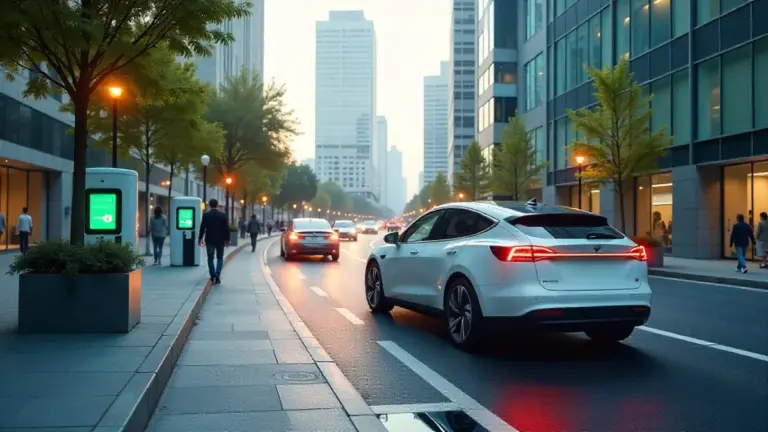
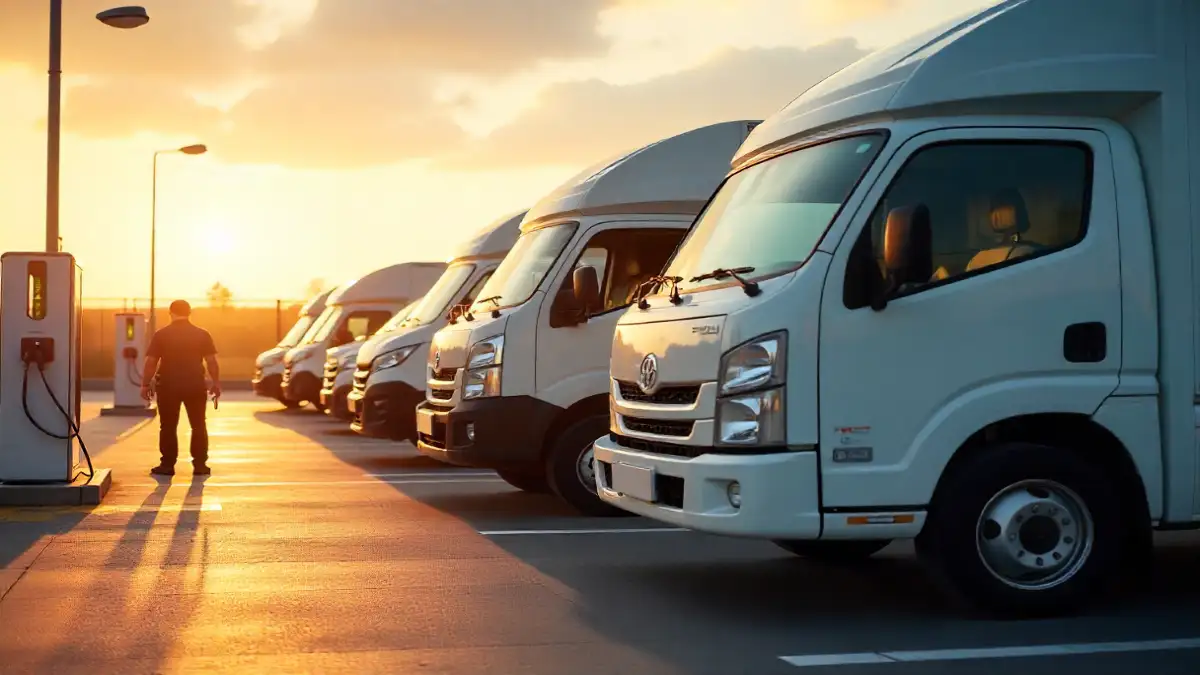
Now, let’s talk about something that might seem like just an added expense but is actually an incredible opportunity: workplace charging stations. Not only do they make running an electric fleet practical, but installing them comes with its own set of juicy incentives.
The federal government offers a tax credit of up to 30% of the cost of purchasing and installing EV charging equipment, with a maximum of $100,000 per location for commercial projects. That’s not pocket change—if you’re installing a robust charging setup for your fleet or offering charging to employees and customers, this credit can significantly offset your costs.
But here’s where it gets even better: many states sweeten the deal further. California offers rebates through programs like CALeVIP that can cover 75-100% of charging infrastructure costs in certain areas. Massachusetts, Colorado, New York, and other states have similar programs. Some utilities will even install and maintain charging stations at little to no cost to your business.
Think about the bigger picture too. Installing charging stations can be a powerful employee benefit. Imagine telling prospective employees, “By the way, you can charge your EV for free while you work.” In today’s competitive job market, that’s the kind of perk that makes people choose your company over the one down the street. Plus, if you open your charging stations to the public during off-hours, you can generate additional revenue and position your business as a community leader in sustainability.

The Depreciation Bonus: Section 179 and Bonus Depreciation
Here’s something your accountant will love: electric vehicles qualify for accelerated depreciation under Section 179 of the tax code. This allows businesses to deduct the full purchase price of qualifying equipment and vehicles purchased or financed during the tax year, up to certain limits.
For 2024, the Section 179 deduction limit is $1,220,000, with a phase-out threshold of $3,050,000. What does this mean in plain English? If you buy a $60,000 electric delivery van, you might be able to deduct the entire amount (minus any credits claimed) in the first year, rather than depreciating it over five or six years.
Additionally, bonus depreciation—though being phased down—still allows you to write off a significant percentage of qualifying property in the first year. For 2024, that’s 60% of the cost. Combine this with the commercial EV credit, and your effective cost for that electric van drops dramatically.
Let’s do some quick math: Say you purchase a $60,000 electric van for your business. You claim the $7,500 commercial clean vehicle credit, reducing your net cost to $52,500. Then you take a Section 179 deduction on that $52,500. If you’re in the 25% tax bracket, that saves you another $13,125 in taxes. Your effective out-of-pocket cost? Around $39,375 for a $60,000 vehicle. Suddenly, that EV doesn’t seem so expensive, does it?
Lower Operating Costs: The Gift That Keeps Giving
While we’re talking about incentives, we can’t ignore the ongoing operational savings that electric vehicles provide. These aren’t one-time credits—they’re savings that compound year after year.
Electric vehicles cost about 60-70% less to fuel than their gas-powered counterparts. For a business running multiple vehicles daily, that adds up fast. A delivery company running ten vans could easily save $15,000-$20,000 annually on fuel alone. Over five years, that’s $75,000-$100,000 back in your business’s pocket.
Maintenance costs drop too. No oil changes, no transmission repairs, no exhaust system replacements. EVs have fewer moving parts and require less frequent service. Fleet managers consistently report 30-40% lower maintenance costs for electric vehicles compared to traditional ones. For businesses where vehicle downtime equals lost revenue, this is huge.
And here’s something many business owners overlook: total cost of ownership. Yes, EVs typically have higher upfront costs, but when you factor in incentives, lower fuel costs, reduced maintenance, and longer vehicle lifespans, the math tilts heavily in favor of electric. For businesses making long-term investments, this is the kind of financial sense that keeps accountants smiling.
Real-World Success Stories: Businesses Making the Switch
Let me share a few examples that might inspire you. Amazon has committed to purchasing 100,000 electric delivery vans from Rivian and is already deploying them across the country. FedEx plans to electrify its entire parcel pickup and delivery fleet by 2040, with substantial electrification happening much sooner in key markets.
But it’s not just the giants. Small and medium-sized businesses are reaping rewards too. A plumbing company in Portland replaced three service trucks with electric vans and reported saving over $8,000 in annual fuel costs while claiming over $22,000 in combined federal and state incentives. A landscaping business in Colorado purchased electric pickups and utility vehicles, qualifying for state rebates that covered nearly 40% of the purchase price.
These aren’t isolated cases. Businesses across every sector—from food delivery to home healthcare, from real estate to construction—are discovering that electric vehicles aren’t just environmentally responsible; they’re financially smart.
How to Take Advantage: Your Action Plan
So, what should you do next? Here’s your practical roadmap:
First, assess your fleet needs. Which vehicles are due for replacement? Which routes are most predictable and would work well with current EV ranges? Start with the low-hanging fruit—vehicles that return to a central location daily and drive predictable distances.
Second, research available incentives. Check the federal Commercial Clean Vehicle Credit requirements, visit your state energy office website, contact your utility provider, and explore local programs. Make a spreadsheet of every incentive you qualify for—you might be surprised at the total.
Third, run the numbers. Calculate your total cost of ownership over five years, including purchase price, incentives, fuel savings, maintenance reductions, and potential resale value. Compare this to your current gasoline or diesel vehicles. In many cases, EVs come out ahead within 2-3 years.
Fourth, consider infrastructure. Will you need workplace charging stations? Can your electrical system handle the load, or will you need upgrades? Factor in charging infrastructure costs and available incentives for installation.
Finally, consult with professionals. Talk to your accountant about maximizing tax benefits, speak with fleet managers who’ve made the transition, and work with EV dealers who understand commercial applications. This isn’t a decision to rush, but it’s also not one to postpone indefinitely.
The Bottom Line: Now Is the Time
Electric vehicle incentives for businesses have never been better. Between federal tax credits, state and local rebates, utility incentives, accelerated depreciation, and ongoing operational savings, the financial case for business EVs is compelling—and in many cases, overwhelmingly favorable.
The transition to electric mobility isn’t some distant future scenario. It’s happening right now, and businesses that move early are positioning themselves for long-term competitive advantages: lower costs, enhanced sustainability credentials, improved employee satisfaction, and resilience against volatile fuel prices.
Are electric vehicles right for every business and every application? Not yet. If you’re running long-haul trucks across the country or operating in extremely remote areas, the infrastructure might not be there. But for the vast majority of business applications—especially urban and suburban fleets that return to base daily—the technology is ready, the infrastructure is expanding rapidly, and the incentives are too good to ignore.
The question isn’t whether to consider electric vehicles for your business. The question is: can you afford not to? With the amount of money on the table right now, the real cost might be in waiting.