By Roy K. Miller
Let’s be honest: when you hear “electric vehicle,” your mind probably doesn’t immediately jump to “affordable option for families on a tight budget.” For years, EVs have carried this reputation as luxury toys for the wealthy—sleek Teslas in Silicon Valley driveways, high price tags that make your wallet weep. But here’s the thing: that narrative is changing, and it’s changing fast.
If you’re a low-income buyer who’s been watching the EV revolution from the sidelines, thinking it’s not for you, I’ve got news that might surprise you. There’s a growing network of incentives, programs, and initiatives specifically designed to put electric vehicles within reach of people who need them most—families struggling with gas prices, workers with long commutes, communities breathing polluted air. The question isn’t whether you can afford an EV anymore. It’s whether you know where to look for help.
Why Low-Income EV Incentives Matter
Before we dive into the programs themselves, let’s talk about why this matters. You might be thinking, “Roy, I’m just trying to keep my current car running. Why would I even consider an EV?”
Here’s why: transportation costs eat up a disproportionate chunk of low-income household budgets. We’re talking about families spending 15-20% or more of their income just getting to work, school, and the grocery store. Gas prices fluctuate wildly, maintenance on older gas cars adds up, and you’re stuck in this cycle where your car is both essential and financially draining.
Electric vehicles flip that script. Lower fuel costs (electricity is cheaper than gas), fewer maintenance needs (no oil changes, fewer brake replacements), and impressive reliability mean that over time, an EV can actually save you money. The catch has always been that upfront cost. That’s exactly what these incentive programs are designed to tackle.
Plus, there’s an environmental justice angle here that’s impossible to ignore. Low-income communities and communities of color disproportionately live near highways, industrial areas, and other sources of air pollution. More EVs in these neighborhoods means cleaner air for the people who’ve been breathing the worst of it for decades.
Federal Incentives That Break Down Barriers
Let’s start at the top with federal programs, because these apply no matter where you live in the United States.
The Clean Vehicle Credit: Now Available at Point of Sale
The federal Clean Vehicle Credit offers up to $7,500 for new EVs and $4,000 for used EVs. But here’s what changed in 2024 that makes this a game-changer for low-income buyers: you can now transfer this credit to the dealer at the point of sale.
Think about what that means. Instead of paying full price and waiting to claim the credit on your taxes next year (which doesn’t help if you don’t owe that much in taxes anyway), you get the discount immediately. The dealer applies it right there, knocking thousands off your purchase price. For a family that doesn’t have extra cash sitting around, this is the difference between “maybe someday” and “we can do this.”
There are income limits, but they’re surprisingly generous. For the new vehicle credit, you qualify if your modified adjusted gross income is under $150,000 for joint filers, $112,500 for heads of household, or $75,000 for single filers. The used vehicle credit has lower thresholds: $150,000, $112,500, and $75,000 respectively—wait, no, actually it’s the same. What matters is that these limits are high enough that many working-class and middle-class families qualify.
The used EV credit is particularly interesting for low-income buyers. You can get up to $4,000 or 30% of the sale price (whichever is less) on a used EV that costs $25,000 or less. There are good used EVs in that range now—older Nissan Leafs, Chevy Bolts, even some used Teslas. And unlike the new vehicle credit, the used credit has lower income limits that are more targeted: $150,000 for joint filers, $112,500 for heads of household, and $75,000 for singles.
State Programs That Go the Extra Mile
While federal incentives are great, some states have decided they’re not enough. They’ve created their own programs specifically targeting low-income buyers, and some of these are genuinely impressive.
California’s Clean Vehicle Assistance Program
California, as you might expect, leads the pack here. The Clean Vehicle Assistance Program (CVA Program) and the Clean Cars 4 All program are specifically designed for low-income buyers.
Here’s what makes CVA special: it provides up to $7,500 in grants (that’s free money, not a tax credit) for low-income Californians to purchase or lease new or used plug-in hybrid or battery electric vehicles. You can combine this with other incentives, meaning you could potentially stack $7,500 from CVA, $7,500 from the federal credit, and local utility rebates.
Clean Cars 4 All takes a different approach. It’s a retire-and-replace program. If you have an old, polluting car, you can retire it and get up to $9,500 toward a used EV or up to $7,500 toward a new one. The program prioritizes people in disadvantaged communities, which makes sense given the air quality issues I mentioned earlier.
To qualify, you generally need to be at or below 400% of the federal poverty level, which works out to about $120,000 for a family of four. That’s not just helping people in extreme poverty—it’s helping working-class families who are one car repair away from financial crisis.
Colorado’s EV Tax Credits with Income Tiers
Colorado has taken the approach of tiering their incentives based on income. Lower-income buyers get larger credits. For 2024, if you’re at or below 300% of the federal poverty level, you can get an additional $5,000 state tax credit on top of the federal credit.
What I appreciate about Colorado’s approach is the recognition that even middle-income families can struggle with EV affordability. They don’t just draw a hard line and say “poor enough” or “too rich.” They graduate the support.
New York’s Drive Clean Rebate
New York offers up to $2,000 in rebates for new EV purchases, but they’ve also created a special Used Clean Vehicle Rebate of up to $2,000. Combined with federal incentives, a low-income New Yorker could potentially get $6,000 off a used EV. In a state where car costs are already high, that’s meaningful.
Utility Company Programs You Might Not Know About
Here’s something people often overlook: your local electric utility might have EV incentives too, and these can be substantial.
Many utilities offer rebates for installing home charging equipment, which can cost $500-$2,000. Some offer special EV electricity rates that make charging even cheaper. A few forward-thinking utilities have created specific programs for low-income customers.
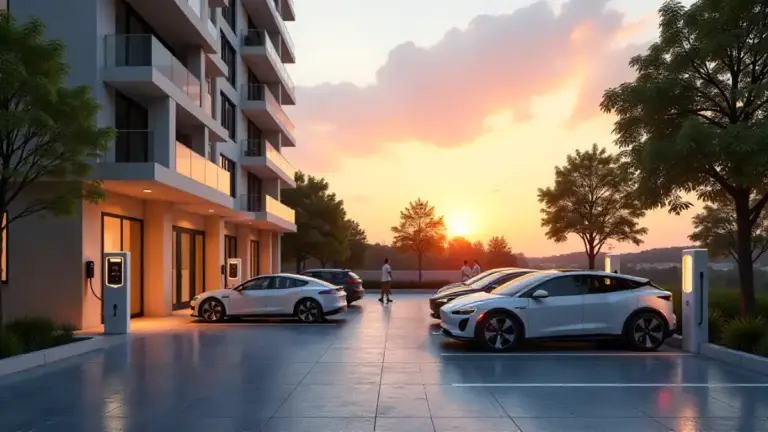
Southern California Edison, for example, has a Charge Ready program that installs charging infrastructure in multi-family affordable housing properties. If you live in an apartment or condo in their service area, you might get access to chargers you couldn’t otherwise install yourself.
Pacific Gas & Electric offers the EV Charge Network program, which includes support for charging in disadvantaged communities. Sacramento Municipal Utility District (SMUD) has an EV Equity Pilot that provides used EVs at reduced cost to income-qualified customers.
The key here is to call your utility and ask. These programs aren’t always well-publicized, and you might discover help you didn’t know existed.
Local and Community Programs Making a Difference
Beyond state and federal governments, some cities and community organizations have gotten creative about making EVs accessible.
Community Choice Aggregation (CCA) Programs
In several states, CCAs—which are local government-run electricity providers—have created their own EV incentives. These can include rebates for EV purchases, discounted charging rates, or even free charging at certain locations.
Non-Profit Initiatives
Organizations like Acterra (in California) run programs that help low-income families access EVs. The EV Loan Fund, for instance, provides low-interest loans specifically for EV purchases by low-income buyers. Some environmental justice organizations have even piloted programs that provide EVs to families free of charge in heavily polluted communities.
Car-Sharing Programs
While not ownership, some cities have launched or supported EV car-sharing programs in low-income neighborhoods. These give families access to electric vehicles when they need them without the burden of ownership costs.
Navigating the Application Process
Okay, so there are all these programs. How do you actually access them?
First, start with a checklist of where you might qualify:
- Federal Clean Vehicle Credit (both new and used)
- Your state’s incentive programs
- Your utility company rebates
- Local city or county programs
- Community organization initiatives
For federal credits, work with your dealer. They should be able to transfer the credit at point of sale. Make sure they’re familiar with the process—not all dealers are up to speed yet.
For state programs, visit your state’s clean vehicle or environmental quality website. California has Drive Clean, Colorado has the Colorado Energy Office, New York has Drive Clean NY. These portals consolidate information and often have online application systems.
For utility programs, call the customer service number on your electric bill and ask specifically about EV incentives and low-income programs.
Keep documentation ready. Most programs require proof of income (tax returns, pay stubs), proof of residency, and sometimes proof of existing vehicle ownership if it’s a retire-and-replace program.
The Real-World Math
Let’s look at a concrete example. Imagine you’re a single parent in California earning $45,000 a year. You find a used 2020 Chevy Bolt for $18,000.
- Federal used EV credit: $4,000 (applied at purchase)
- California CVA Program grant: $5,000
- Local utility rebate for home charging: $500
- Total assistance: $9,500
Your actual cost: $8,500 for the vehicle, plus maybe $1,000 for a basic home charger (after rebate). You’re into a reliable EV for under $10,000.
Compare that to buying a used gas car for $12,000 that’ll need regular maintenance and gas that costs $4+ per gallon. Over five years of ownership, the EV could save you thousands more in operating costs.
This isn’t fantasy. This is actually possible right now with existing programs.
What Still Needs to Improve
I’d be lying if I said the system is perfect. There are real barriers that still need addressing.
Many programs require tax liability to claim credits, which doesn’t help families who don’t owe much in taxes. The shift to point-of-sale credits helps, but not all programs have made this change.
The used EV market, while growing, still has limited inventory in some areas. And not all used EVs qualify for federal credits—they need to meet age, price, and seller requirements.
Charging access remains a challenge. If you live in an apartment without charging, an EV is much harder to own. More investment in public charging in low-income neighborhoods is essential.
And frankly, awareness is a huge issue. Many people who would qualify for these programs have no idea they exist.
Taking the Next Step
If you’ve read this far and you’re thinking, “Maybe an EV actually is possible for me,” here’s what to do next:
- Research your eligibility: Check income limits for federal and state programs. Most are surprisingly inclusive.
- Calculate total incentives: Add up everything you might qualify for. The number might shock you.
- Explore vehicle options: Look at both new EVs (some base models like the Nissan Leaf or Chevy Equinox EV are reasonably priced) and used EVs in the $15,000-$25,000 range.
- Test drive: Seriously, go drive an EV. It’ll change your perspective on what’s possible.
- Talk to dealers and program administrators: Ask questions. Find dealers who are knowledgeable about applying incentives.
- Consider total cost of ownership: Factor in fuel and maintenance savings over 5-10 years, not just purchase price.
The electric vehicle transition doesn’t have to leave anyone behind. With the right combination of incentives, low-income buyers can not only afford EVs—they can actually benefit most from the long-term savings they provide. The programs are out there, waiting to be used. The question is: are you ready to explore them?
Your next car might just plug in. And it might be more affordable than you ever imagined.