
Imagine driving your electric car on a highway and watching your battery percentage increase instead of decrease. Sounds like science fiction, right? Well, electric roads—also called dynamic wireless charging systems—are turning this futuristic dream into reality. These innovative roadways can charge your EV while you’re cruising down the street, potentially eliminating range anxiety and the need for lengthy charging stops altogether.
But how exactly does pavement transfer electricity to a moving vehicle? And could this technology genuinely reshape how we think about electric transportation? Let’s dive into the fascinating world of electric roads and explore how they work, where they’re being tested, and whether they might actually change the way we drive in the coming decades.
The Basic Concept: Charging on the Go
At its core, an electric road works through a process called inductive charging—the same technology that powers your wireless phone charger, just scaled up dramatically. Instead of placing your phone on a charging pad, imagine your entire car becoming the “phone” and the road surface becoming a massive charging pad stretching for miles.
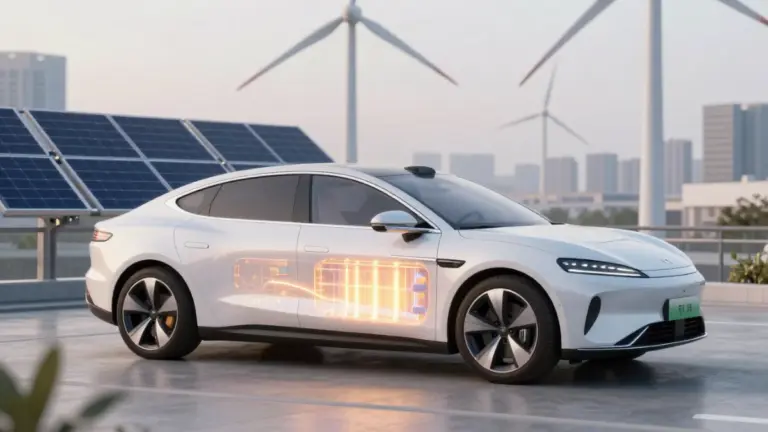
Here’s the simple version: special equipment installed in or on the road generates an electromagnetic field. When an EV equipped with a receiver coil drives over this section of road, the electromagnetic field induces an electric current in the vehicle’s receiver, which then charges the battery. No plugs, no cables, no stopping required—just seamless energy transfer while you drive.
Think of it like those automatic toll collection systems where you drive through without stopping. Except instead of paying a toll, you’re collecting energy. Pretty neat, isn’t it?
The beauty of this system is that it could fundamentally change the EV equation. Right now, electric vehicles need large, heavy, expensive batteries to achieve acceptable driving ranges. With electric roads, you could potentially drive indefinitely on much smaller batteries, since you’d be constantly topping up while traveling on major routes.
The Three Main Technologies: Different Approaches to the Same Goal
Not all electric roads are created equal. Engineers around the world have developed three primary approaches, each with its own advantages and challenges.
Inductive Charging: The Wireless Wonder
This is the most popular and widely tested technology. Inductive charging uses copper coils embedded beneath the road surface. When electricity flows through these coils, they create an alternating magnetic field. Your EV needs a special receiver coil mounted underneath, which captures this magnetic field and converts it back into electricity.
The Swedish company Elonroad and Israel’s Electreon are leading innovators here. In trials conducted in Sweden and Israel, vehicles have successfully charged while driving at highway speeds with efficiency rates between 80-95%. That’s actually comparable to plugging into a standard charging station!
The main challenge? Installing those coils requires digging up roads, which is expensive and disruptive. We’re talking about costs ranging from $1-2 million per mile of roadway. However, engineers argue that when you factor in reduced battery costs for vehicles and decreased infrastructure needs for stationary charging stations, the economics start to make more sense.
Conductive Charging: The Contact Approach
If inductive charging seems too indirect for you, conductive systems take a more straightforward approach. Think of it like a slot car track from your childhood—except much more sophisticated.
Conductive electric roads use electrified rails or strips embedded in the road surface. Your vehicle has a movable arm or contact shoe that physically touches these rails while driving, creating a direct electrical connection. Germany’s eRoadArlanda project tested this concept with electric trucks on a stretch of highway near Stockholm Airport.
The advantage? Higher efficiency—we’re talking near 100% energy transfer since there’s direct contact. The system can also deliver more power more quickly than inductive methods.
The downside? Those contact points wear out and require maintenance. There are also legitimate concerns about exposed electrical elements on roads where weather, debris, and accidents happen. How do you keep rain, ice, and road salt from interfering with the electrical connection? It’s an engineering puzzle that’s still being solved.
Overhead Catenary Systems: The Train Approach
The third option borrows directly from electric trains and trolleybuses: overhead wires. You’ve probably seen these in cities with electric public transit—those overhead cables that trams and trolleys connect to with extending arms.
For electric roads, the concept is similar. Trucks and buses (typically, not passenger cars) use pantographs—mechanical arms that reach up to contact overhead power lines. As they drive, they draw electricity directly from these lines.
Germany has been the pioneer here, testing overhead catenary systems on several highway sections dedicated to freight trucks. The “eHighway” projects in Hessen and Schleswig-Holstein have trucks running on regular diesel/electric hybrid powertrains. When they’re under the overhead wires, they switch to electric mode and can even recharge their batteries while moving.
Why focus on trucks? Well, heavy freight vehicles consume enormous amounts of energy, and fitting them with batteries large enough for long-haul routes would be prohibitively expensive and heavy. Overhead systems offer a practical middle ground—trucks can run electrically on equipped highways and switch to battery or diesel for the last miles to their destinations.
The limitation is obvious: this really only works for tall vehicles, and it requires significant infrastructure along highways. You won’t see your Tesla sedan sprouting a pantograph anytime soon.
Real-World Testing: Where Electric Roads Are Already Operating
This isn’t just theoretical—electric roads are being tested right now across multiple countries, and the results are genuinely promising.
Sweden has emerged as the global testing ground for electric road technology. The country has committed to achieving fossil-fuel-free transport by 2030, and electric roads are a key part of that strategy. On the island of Gotland, a 1.6-kilometer stretch of road equipped with Elonroad’s inductive system has been successfully charging vehicles since 2020. Meanwhile, the eRoadArlanda conductive system has been operating on a public road near Stockholm, primarily charging electric trucks.
Israel is another hotspot for this innovation. Electreon has installed inductive charging systems in several locations, including a bus route in Tel Aviv where electric buses charge wirelessly at bus stops and while driving on equipped road segments. The technology is also being tested on a highway section to validate its effectiveness for passenger vehicles at higher speeds.
Germany, as mentioned, is investing heavily in overhead catenary systems for trucks. The three eHighway test projects have demonstrated that hybrid trucks can operate efficiently on electrified highways, reducing emissions and fuel consumption substantially.
Even the United States is getting in on the action. Detroit, Michigan—Motor City itself—is planning to install an electric road system along a stretch of Michigan Avenue. The project, developed by Electreon, will allow EVs and buses to charge while driving or parked. If successful, it could become a blueprint for other American cities.
France is testing electric roads for buses in the city of Versailles, while Italy has pilot projects in the works as well. South Korea even tested an electric road system for buses in Gumi City as far back as 2013, proving that this technology has been in development longer than many people realize.
The Advantages: Why Electric Roads Could Be Game-Changing
So why should we care about electric roads? What makes them potentially transformative rather than just a cool gimmick?
Smaller, Cheaper, Lighter Batteries: This is the big one. Current EVs need massive battery packs to achieve 300+ mile ranges. Batteries are expensive (often 30-40% of an EV’s total cost), heavy (reducing efficiency), and resource-intensive to produce. If major highways offered continuous charging, vehicles could operate with much smaller batteries—perhaps just enough for 50-100 miles. This would make EVs significantly cheaper, lighter, and more efficient.
Range Anxiety Eliminated: The #1 concern for potential EV buyers is range anxiety—the fear of running out of charge far from a charging station. With electric roads on major routes, this worry essentially disappears. You’d charge continuously while traveling and only need to worry about battery range for the final leg of your journey.
Reduced Charging Infrastructure: Building out charging stations is expensive and challenging, especially fast-charging stations that require substantial electrical grid upgrades. Electric roads could reduce the need for charging infrastructure along major routes, concentrating stationary chargers where they’re most needed—in cities and neighborhoods.
Commercial Vehicle Revolution: For trucks, buses, and delivery vehicles that travel predictable routes with high mileage, electric roads make enormous economic sense. A freight truck could operate on much smaller batteries, reducing weight and increasing cargo capacity, while staying charged on electrified highway corridors.
Grid Flexibility: Some proposed systems could work bidirectionally, meaning vehicles could theoretically feed electricity back to the grid during peak demand periods. Your car becomes not just a consumer of energy, but a mobile storage unit that helps stabilize the electrical grid.
The Challenges: What’s Holding Electric Roads Back
Of course, if electric roads were easy and economical, they’d already be everywhere. Several significant hurdles stand between today’s pilot projects and widespread implementation.
Cost: This is the elephant in the room. Retrofitting roads with charging infrastructure is enormously expensive. Estimates range from $1-2 million per mile for inductive systems, and that doesn’t include ongoing maintenance. Multiply that by thousands of miles of highway, and you’re looking at investments in the hundreds of billions. Who pays for this—governments, private companies, tolls charged to users? The funding model isn’t clear yet.
Standardization: Right now, different companies are developing incompatible systems. An EV equipped with one company’s receiver won’t work with another company’s road system. The industry needs universal standards—similar to how USB became the standard charging port—before widespread adoption is feasible. Without standardization, we risk creating a fragmented mess where your car can only charge on certain roads.
Efficiency Questions: While inductive systems are getting better, there’s still energy loss in the wireless transfer process. Critics argue that it might be more efficient to simply charge larger batteries with wired connections rather than lose 10-20% of energy in wireless transfer. Of course, proponents counter that the efficiency gains from smaller, lighter batteries offset these losses.
Installation Disruption: Tearing up roads to install charging infrastructure causes traffic nightmares and economic disruption. The work is also weather-dependent and time-consuming. This logistical challenge makes cities and highway authorities hesitant to commit.
Maintenance and Durability: Roads take a beating from weather, traffic, salt, and time. How long will embedded charging equipment last before needing replacement? What happens when a section fails—does the whole lane shut down? These reliability questions need answers before mass deployment.
Vehicle Modifications: Your current EV can’t use electric roads without retrofitting a receiver coil and associated equipment. This means either building new standards into future vehicles (which takes years) or retrofitting existing ones (which is expensive and complicated).

The Economics: Could This Actually Be Affordable?
Let’s talk money, because that’s ultimately what will determine whether electric roads become reality or remain a fascinating experiment.
The upfront costs are staggering, no question. But consider this perspective: countries spend hundreds of billions maintaining and upgrading road networks anyway. What if a portion of that regular infrastructure investment went toward electrification instead of just repaving?
There’s also the battery cost equation. If electric roads allowed vehicles to operate with 50 kWh batteries instead of 100 kWh batteries, that’s roughly $5,000-$8,000 in savings per vehicle. Multiply that by millions of vehicles, and you’re generating substantial economic value that could help offset infrastructure costs.
Some pilot projects are exploring toll-based models where commercial vehicles pay per kilowatt-hour consumed while driving on electric roads. For freight companies, this could be cheaper than diesel fuel and more convenient than stopping to charge. The recurring revenue could help pay down the infrastructure investment over time.
Governments are also considering this through a climate lens. If electric roads accelerate the transition away from fossil fuels and help countries meet climate commitments, the environmental and health benefits might justify the costs—similar to how society has invested in highways, bridges, and railways as public goods.
What Needs to Happen Next
For electric roads to move from interesting pilots to mainstream reality, several things need to fall into place.
International Standards: Industry groups, governments, and manufacturers need to agree on universal technical standards. Which frequency should inductive systems use? What safety requirements must receivers meet? How should systems handle billing and authentication? These questions need coordinated answers.
Strategic Deployment: Rather than trying to electrify everything at once, smart deployment would focus on high-impact corridors first—major freight routes, bus lines, and heavily trafficked highways where the benefits are most clear and the economics most favorable.
Vehicle Integration: Automakers need to start building receiver technology into new EVs as standard equipment, or at least as an affordable option. This chicken-and-egg problem—roads need equipped vehicles, vehicles need equipped roads—requires coordination between infrastructure developers and car manufacturers.
Pilot Expansion: Current pilots need to scale up from kilometers to meaningful distances—perhaps 50-100 mile stretches—to truly validate the technology at scale and work out operational issues that only emerge with longer-term, higher-volume use.
Public-Private Partnerships: Governments probably can’t afford to do this alone, and private companies won’t invest without revenue models. Creative partnerships that share costs, risks, and benefits will likely be essential.
The Verdict: Are Electric Roads Our Future?
So, will you be charging your EV wirelessly on your morning commute ten years from now? The honest answer is: maybe, but probably not everywhere.
Electric roads are unlikely to become universal pavement technology covering every street and highway. That would be neither economically feasible nor necessary. Instead, we’ll probably see strategic deployment on specific corridors where they make the most sense—major highways, freight routes, and possibly city bus lanes.
Think of it like HOV lanes or toll roads: specialized infrastructure that serves specific purposes rather than universal coverage. You might charge wirelessly during your highway commute, then rely on home charging or public stations for local driving.
The technology works. That’s been proven in multiple countries across different systems. The engineering challenges, while significant, aren’t insurmountable. What remains uncertain is whether society will invest the resources needed to deploy this technology widely, and whether the economics will favor electric roads over alternatives like better batteries and more charging stations.
My take? Electric roads will likely find their sweet spot with commercial vehicles first—buses and trucks that follow predictable routes with high mileage. If those implementations prove successful and economically viable, passenger vehicle adoption could follow gradually over the next 15-20 years.
Your Role in This Future
Here’s what you can do if you’re intrigued by this technology:
Stay Informed: Follow developments in your region. Is your state or city considering electric road pilots? Understanding the local context helps you participate in public discussions about these investments.
Consider the Trade-offs: When buying your next EV, think about your driving patterns. Do you mostly drive locally (where home charging works great) or do you frequently travel long distances (where electric roads could be valuable)?
Support Smart Policy: Advocate for policies that encourage innovation while requiring standardization and interoperability. The last thing we need is a dozen incompatible electric road systems.
Keep an Open Mind: New technologies often seem impractical or expensive at first. Remember that people once thought paving dirt roads was an absurd expense, and now we can’t imagine transportation without pavement.
Electric roads represent one vision of our electric future—one where charging becomes invisible, automatic, and continuous. Whether that vision becomes reality depends on technology, economics, policy, and ultimately, whether we collectively decide it’s worth pursuing.
For now, those of us excited about electric mobility can watch these pilot projects with genuine curiosity. The road ahead—electric or otherwise—is going to be fascinating.