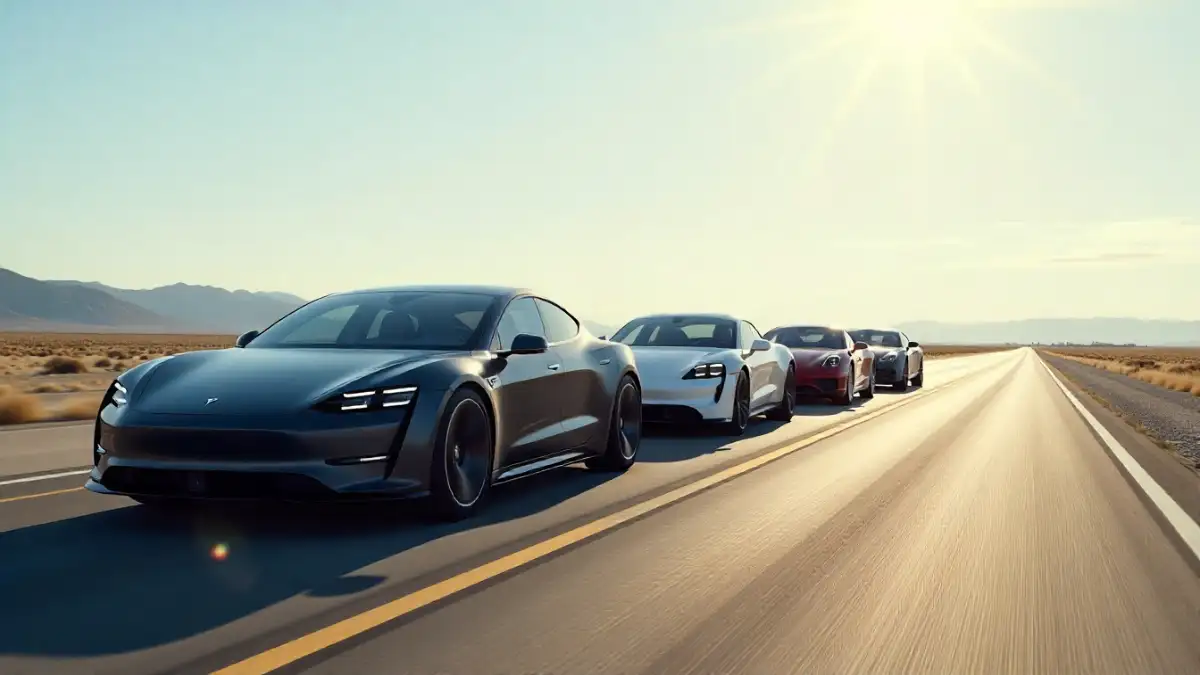
So you’re thinking about going electric, but you’re overwhelmed by the choices? I get it. Walk into any dealership today, and you’ll find yourself staring at a lineup of EVs that all look impressive on paper. But here’s the thing: not all electric cars are created equal. Some are built for blistering speed, others prioritize efficiency, and a few try to do it all. Let me help you cut through the marketing hype and understand what really sets these vehicles apart.
The Speed Demons: Performance-First EVs
Let’s talk about the cars that make your heart race. If you’re coming from a sports car background, you might think going electric means sacrificing thrills. Think again.
Tesla Model S Plaid is the poster child for “electric doesn’t mean boring.” With a jaw-dropping 0-60 mph time of just 1.99 seconds, this sedan can outrun most supercars. It’s powered by a tri-motor setup delivering over 1,020 horsepower. But here’s what the spec sheets don’t tell you: that acceleration pins you to your seat in a way that feels almost supernatural because there’s no gear shifting, no engine revving—just instant, linear power.
The trade-off? At full throttle, the Plaid’s 396-mile EPA range drops dramatically. Plus, it’ll set you back over $108,000. You’re paying for bragging rights and that addictive acceleration, but your daily commute probably doesn’t need this much firepower.
Then there’s the Porsche Taycan Turbo S, which approaches performance from a different angle. While its 0-60 time of 2.6 seconds is slightly slower than the Plaid, the Taycan offers something Tesla owners often envy: exceptional handling and build quality. Porsche engineered this car to feel like, well, a Porsche. The two-speed transmission (rare in EVs) helps maintain power at higher speeds, making it phenomenal on the track. The downside? Range anxiety is real here—you’re looking at about 227 miles on a full charge, and the price tag starts around $185,000.
What they do well: These cars prove EVs can be genuinely exciting to drive. The instant torque delivery creates acceleration that’s honestly hard to fully appreciate until you experience it.
Where they fall short: Range takes a backseat to performance, and both are priced out of reach for most buyers. They’re also overkill for anyone who just wants reliable, efficient transportation.
The Balanced Performers: Daily Driver Champions
Most of us don’t need to hit 60 mph in under three seconds. We need a car that handles the school run, the grocery haul, and the weekend road trip without drama. That’s where these models shine.
Tesla Model 3 Long Range has become the default recommendation for good reason. It offers a compelling package: 358 miles of range, 0-60 mph in 4.2 seconds (still quick enough to put a smile on your face), and a price around $47,740. The cabin is minimalist—maybe too much so if you prefer traditional buttons—but the tech integration is seamless. Over-the-air updates mean your car actually improves over time, something that still feels futuristic.
The real-world driving experience? It’s smooth, quiet, and confidence-inspiring. The regenerative braking takes about a week to feel natural, but once you adjust, you’ll rarely touch the brake pedal in city driving. One caveat: build quality can be inconsistent, and the stiff ride might bother you on rough roads.
Ford Mustang Mach-E GT represents Ford’s serious entry into performance EVs. With 480 horsepower and a 0-60 time of 3.5 seconds, it’s genuinely quick. But what impressed me most is how Ford balanced sportiness with comfort. The ride quality is noticeably better than the Model 3, and the interior feels more conventional—which depending on your perspective is either reassuring or boring.
Range sits at 270 miles for the GT version, which is adequate but not leading the pack. The MagneRide damping system adapts to road conditions beautifully, making this one of the more comfortable performance EVs. At around $63,000, it’s positioned between mainstream and premium.
Hyundai Ioniq 6 Limited might not turn heads like a Tesla, but don’t overlook it. This aerodynamic sedan offers 361 miles of range, 0-60 mph in 4.5 seconds with the dual-motor setup, and starts around $45,500. The efficiency is remarkable—you’ll consistently get more miles per kWh than almost anything else on the road. The interior is surprisingly upscale with quality materials and a user-friendly infotainment system.
What they do well: These cars nail the everyday experience without breaking the bank. They offer enough performance to feel engaging while prioritizing range and practicality.
Where they fall short: None of them will win beauty contests (except maybe the Mach-E). They’re sensible choices, which means they lack the “wow factor” of more extreme options.
The Efficiency Champions: Maximum Miles, Minimum Fuss
If range anxiety keeps you up at night, or if you’re trying to minimize charging stops on road trips, these are your vehicles.
Mercedes EQS 450+ approaches electric mobility as luxury first, with a remarkable 453-mile range. The single-motor rear-wheel-drive configuration isn’t setting any acceleration records (0-60 in 5.5 seconds), but that’s not the point. This car is about gliding effortlessly from point A to point B in absolute comfort. The Hyperscreen interface spanning the entire dashboard is either the future or overwhelming, depending on who you ask.
What makes the EQS special is its refinement. The cabin is whisper-quiet, the ride is pillowy smooth, and the range means you’re rarely thinking about charging. The catch? It starts at $104,400, and the efficiency comes partly from its massive 107.8 kWh battery pack—which means longer charging times even on fast chargers.
Lucid Air Pure deserves attention for achieving 420 miles of range at a relatively attainable $69,900. Lucid’s focus on efficiency is evident—this car uses less energy per mile than almost any other EV, thanks to exceptional aerodynamics and a highly efficient powertrain. The interior space feels more expansive than the exterior suggests, and the minimalist design has a calming quality.
Performance is still respectable at 0-60 mph in 4.5 seconds, but again, that’s not what you buy this car for. You buy it because you want to travel far without constantly planning your route around charging stations.
What they do well: These cars eliminate range anxiety and offer incredible comfort for long-distance cruising. They prove EVs can genuinely replace gas cars for road trips.
Where they fall short: The efficiency champions tend to be expensive, and their focus on range means they’re heavier, which affects handling dynamics.
The Practical All-Rounders: SUVs That Do Everything
Let’s be honest: most Americans want an SUV. Whether that’s rational or not is beside the point. Here’s how the electric SUVs stack up.
Rivian R1S is the adventure vehicle that can actually back up its rugged looks. With a 0-60 time of 3.0 seconds in Quad-Motor form, it’s shockingly quick for a three-row SUV. The real party trick? It’s genuinely capable off-road, with adjustable air suspension, a wade depth of over three feet, and enough torque to crawl over obstacles that would stop most vehicles.
Range sits at 321 miles for the Large Pack, which is competitive for something this big and heavy. The interior is thoughtful, with quality materials and clever storage solutions. At $74,900 for the base model, it’s not cheap, but you’re getting a unique package that Tesla can’t match.
The downside? Rivian is still a young company, and service network availability can be spotty. Plus, efficiency takes a hit if you’re actually using the off-road capabilities.
Kia EV9 represents the practical family hauler approach. It’s not the quickest (0-60 in 5.2 seconds for the dual-motor GT-Line), but with three rows of actual usable seating, up to 304 miles of range, and a starting price around $54,900, it makes sense for a lot of families. The cabin is spacious and well-designed, and Kia’s warranty (10 years/100,000 miles on the battery) provides peace of mind.
What surprised me about the EV9 is how refined it feels. This doesn’t drive like a budget option—the suspension soaks up bumps, the cabin is quiet, and the tech features rival luxury brands.
What they do well: These SUVs prove you don’t have to sacrifice space, capability, or practicality to go electric. They handle family duties without complaint.
Where they fall short: Physics is undefeated—bigger, heavier vehicles use more energy, which means more frequent charging stops. Neither is particularly sporty despite decent acceleration numbers.
Real-World Performance Factors Nobody Talks About
Here’s what matters beyond the spec sheet:
Cold weather performance: All EVs lose range in winter, but some handle it better. Teslas with heat pumps (newer models) fare better than older ones. The Porsche Taycan’s sophisticated thermal management keeps performance consistent even in freezing temperatures.
Charging speed: Peak charging rates sound impressive, but sustained charging matters more. The Hyundai Ioniq 6 and Kia EV9 (with 800V architecture) can add 200+ miles in about 18 minutes on a 350kW charger. Compare that to older 400V systems that take twice as long.
Software experience: Tesla still leads here. Their navigation automatically routes you through Superchargers, preconditions the battery for faster charging, and generally requires less thought. Others are catching up, but the integration isn’t quite as seamless yet.
Regenerative braking: One-pedal driving becomes second nature, but implementation varies. Some cars (like the Chevy Bolt) offer aggressive regen that brings you to a complete stop. Others (like the Porsche Taycan) blend traditional and regen braking so smoothly you barely notice.
Making Your Choice: What Actually Matters?
After comparing all these models, here’s my honest advice: stop obsessing over 0-60 times unless you’re actually buying a performance car. For 95% of drivers, any modern EV is quick enough. Instead, focus on these questions:
How far do you typically drive? If your daily commute is under 50 miles and you can charge at home, almost any EV works. Planning regular road trips? Prioritize range and charging speed.
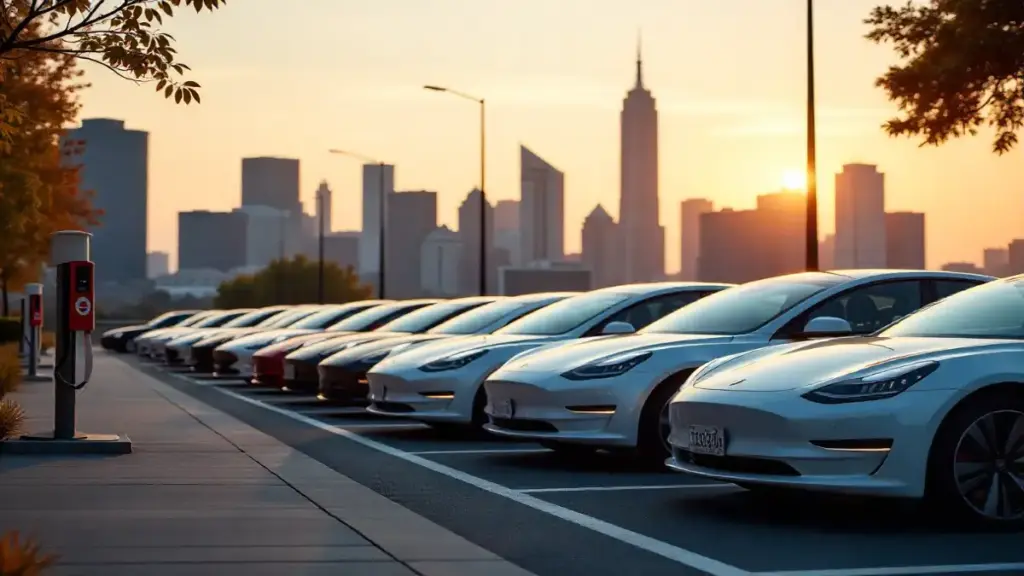
What’s your charging situation? Home charging changes everything. If you’re relying primarily on public charging, you want a car with fast charging speeds and access to reliable networks (Tesla’s Supercharger advantage is real).
What’s your budget—really? The Model 3 and Ioniq 6 offer the best performance-per-dollar ratio. If budget isn’t a constraint, the EQS and Taycan deliver unmatched refinement.
What features matter most? Some people need three rows. Others want cutting-edge tech. A few prioritize driving dynamics above all else. Be honest about your priorities rather than trying to find a car that does everything perfectly.
The Bottom Line
The electric car market has matured to the point where there’s genuinely something for everyone. The Tesla Model S Plaid will embarrass supercars at the stoplight. The Mercedes EQS will pamper you for 450 miles straight. The Rivian R1S will take your family into the wilderness. And the Hyundai Ioniq 6 will save you money while doing everything you actually need a car to do.
The “best” electric car is the one that aligns with your actual driving needs, not the one with the most impressive spec sheet. Test drive a few, live with them for a day if possible, and pay attention to how they fit into your life rather than how they perform on a track you’ll never visit.
The future of transportation is electric—but it’s also diverse, practical, and more accessible than ever. Whatever you’re looking for in a car, there’s now an electric version that does it well. The question isn’t whether to go electric anymore; it’s which electric car fits you best.