
Remember when electric cars were quirky science experiments that barely made it around the block? Those days are long gone. We’re now standing at the edge of something much bigger—a complete reimagining of how we move through our world. And here’s the thing: the next five years aren’t just going to be important. They’re going to be absolutely defining.
Think about it. Right now, somewhere in the world, a battery scientist is cracking the code on faster charging. A city planner is drawing up bike lanes that’ll replace parking lots. A teenager is test-riding an e-scooter that costs less than a monthly transit pass. These aren’t isolated moments—they’re threads in a larger story about how electric mobility is becoming not just viable, but inevitable.
Let me take you through what’s actually happening out there, beyond the headlines and the hype.
The Battery Breakthrough We’ve Been Waiting For
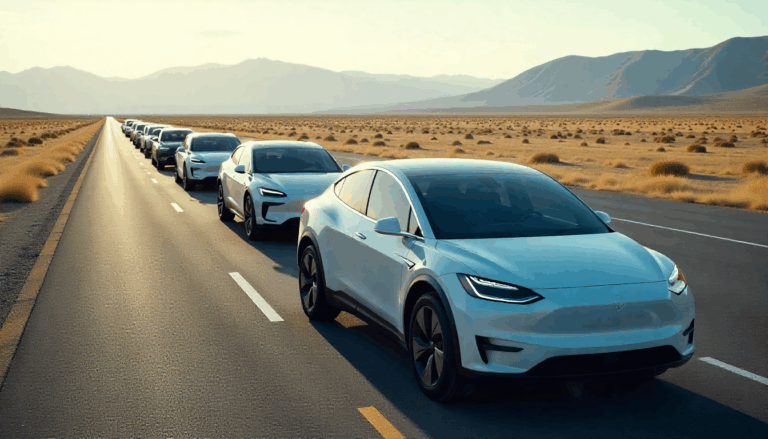
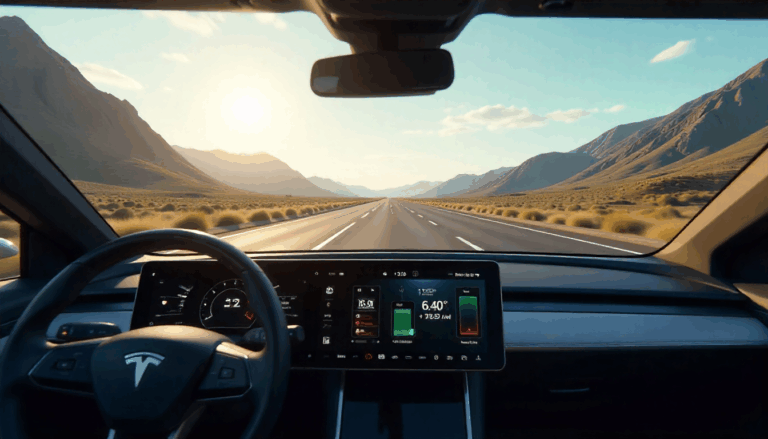
You know what’s held electric vehicles back more than anything else? It’s not the cars themselves—it’s that nagging anxiety about running out of juice in the middle of nowhere. But 2025 is bringing us closer to the end of that worry than ever before.
Solid-state batteries are finally making the leap from lab curiosities to production reality. Toyota, QuantumScape, and Solid Power are all racing toward commercial rollout, and the numbers are genuinely exciting. We’re talking 700-800 miles on a single charge—further than most of us drive in a week. And charging? Ten minutes to get back to 80%. That’s barely longer than a coffee stop.
But here’s what really gets me excited: sodium-ion batteries. These things use salt—yes, the stuff we sprinkle on fries—instead of expensive lithium. Chinese manufacturers like CATL and BYD are already putting them in affordable EVs. They don’t match lithium’s range, but they cost 30-40% less and they’re far more sustainable to produce. For millions of people in developing countries, this could be their ticket into electric mobility.
The ripple effects are everywhere. Battery costs have dropped 90% since 2010, and they’re still falling. By 2030, experts predict EVs will achieve full price parity with gas cars—no subsidies needed. That’s the tipping point where everything changes.
Infrastructure: Finally Catching Up to the Cars
Let’s be honest—charging infrastructure has been the awkward teenager of the EV revolution. Clunky, unreliable, and never quite where you need it. But it’s growing up fast.
In Europe, the EU is mandating fast-charging stations every 60 kilometers along major highways by 2026. China already has over 2 million public charging points—more than the rest of the world combined. Even in the United States, where infrastructure moves at a glacial pace, the National Electric Vehicle Infrastructure (NEVI) program is pumping $7.5 billion into building out a coast-to-coast charging network.
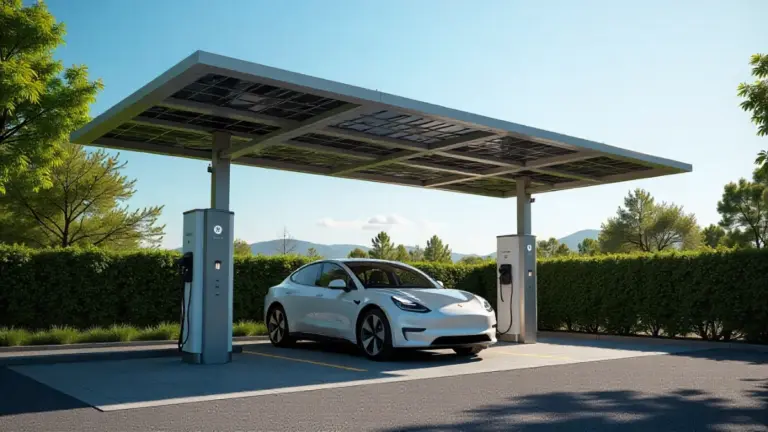
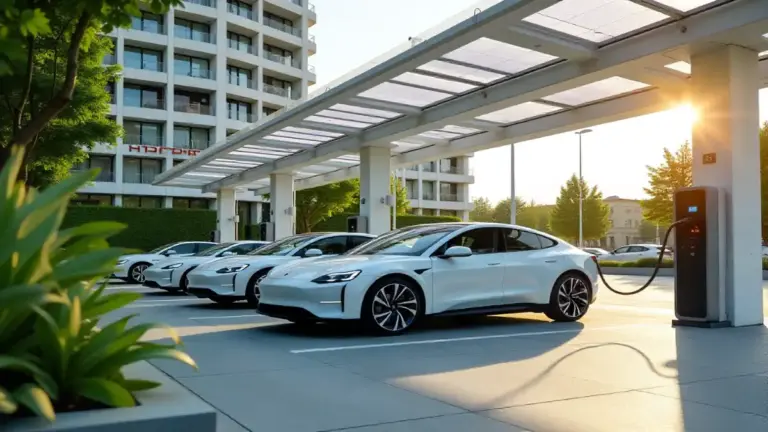
What’s really clever is how we’re rethinking the whole charging concept. Instead of just copying gas stations, we’re putting chargers where cars actually sit: grocery store parking lots, office buildings, apartment complexes. Vehicle-to-grid (V2G) technology is turning parked EVs into mobile power banks that can feed electricity back to the grid during peak hours. Your car becomes part of the solution to energy storage.
And here’s a peek into the near future: wireless charging roads. Sweden is testing roads that charge EVs while they drive, and Israel’s ElectReon technology is already powering electric buses in Tel Aviv and Detroit. Imagine never having to “plug in” again.
Beyond Cars: The Micromobility Explosion
Here’s something that doesn’t get nearly enough attention: the real electric mobility revolution isn’t just about cars. It’s about everything else.
E-bikes have absolutely exploded. Global sales hit 50 million units in 2023 and they’re projected to double by 2028. In cities like Amsterdam, Copenhagen, and even Portland, e-bikes are replacing second cars entirely. They’re faster than cars in urban traffic, cost a fraction to own, and get you exercise without arriving drenched in sweat.
E-scooters, despite their messy early rollout, are finding their place too. Improved regulations and better-built vehicles mean they’re becoming legitimate last-mile solutions. In Paris, where e-scooter rentals were temporarily banned due to safety concerns, the city’s bringing them back with stricter rules and dedicated infrastructure.
And then there are electric cargo bikes—the unsung heroes of urban logistics. Companies like DHL and UPS are deploying fleets of e-cargo bikes for deliveries in dense city centers. They’re faster than vans in traffic, don’t need parking, and produce zero emissions. In places like Utrecht, Netherlands, cargo bikes are handling up to 30% of urban freight.
What ties all this together? These aren’t fringe solutions anymore. They’re becoming the practical choice.
Policy: When Governments Finally Mean Business
You can’t talk about electric mobility without talking about policy, because this is where the rubber meets the road—literally.
The European Union’s 2035 ban on new combustion engine sales isn’t just talk anymore. It’s law. The UK, Canada, and several U.S. states have similar deadlines. China, the world’s largest auto market, is pushing for 45% EV sales by 2027. These aren’t suggestions; they’re mandates with teeth.
But smart policy goes beyond bans. Norway, which leads the world with 89% of new car sales being electric in 2024, didn’t get there through bans alone. They made EVs irresistible: no purchase tax, no tolls, free parking, access to bus lanes. They made the right choice the easy choice.
California’s Advanced Clean Cars II rule requires 35% of new vehicles sold to be zero-emission by 2026, scaling up to 100% by 2035. Multiple states are adopting the same standards, creating a de facto national policy despite federal gridlock.
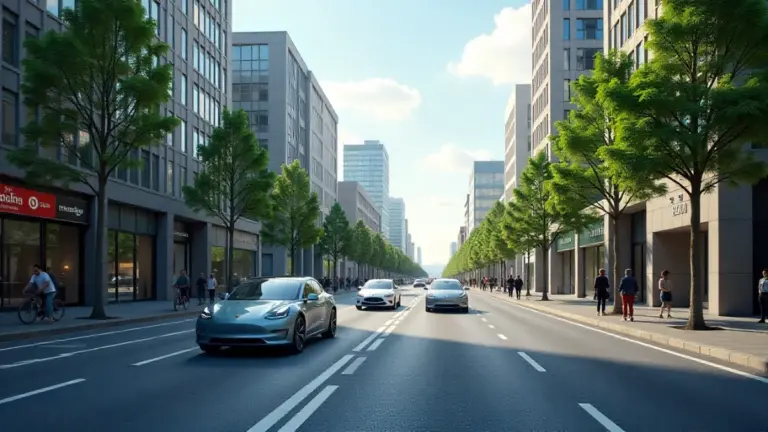
And it’s not just about cars. Paris is transforming itself into a “15-minute city” where everything you need is within a short walk or bike ride. Barcelona’s “superblocks” program closes entire neighborhoods to through traffic, prioritizing pedestrians, cyclists, and public transport. These are radical reimaginings of urban space, and they’re working.

The Human Factor: Are We Really Ready?
Here’s the uncomfortable question nobody wants to ask: Is all this technology and policy moving faster than people are ready to adopt it?
The answer is complicated. In wealthy, urban areas with good infrastructure, electric mobility is already normal. But in rural areas, developing nations, and communities without reliable electricity grids, it’s a different story.
Range anxiety is still real for many people, even as ranges improve. Apartment dwellers without home charging face genuine challenges. Older drivers and technophobes feel left behind by the digitization of everything. And let’s be honest: there’s still a cultural attachment to internal combustion engines that runs deep, especially in places like the United States where car culture is identity.
But here’s what gives me hope: adoption curves are accelerating, not linearizing. Norway went from 5% EV market share to 89% in just over a decade. China went from having virtually no charging infrastructure to leading the world in five years. When the right combination of technology, price, and infrastructure clicks into place, change happens shockingly fast.
The key is ensuring that transition is equitable. We need robust used EV markets so lower-income families aren’t priced out. We need charging infrastructure in underserved communities, not just wealthy suburbs. We need to support workers transitioning from fossil fuel industries to electric ones.
What the Next Five Years Will Decide
So why are 2025-2030 so crucial? Because this is when electric mobility either becomes universal or remains a premium option for the privileged few.
By 2030, we’ll have:
- 150-200 million electric vehicles on roads globally (up from about 40 million today)
- Battery costs below $60/kWh, making EVs cheaper than combustion cars without subsidies
- 10-minute charging as the standard for long-distance travel
- Complete charging networks across Europe, China, and major U.S. corridors
- Mature second-hand EV markets making electric mobility accessible to everyone
But we’ll also face critical tests:
- Can grids handle the electricity demand from millions of EVs?
- Will we secure ethical, sustainable supply chains for battery minerals?
- Can we build enough renewable energy to keep this truly clean?
- Will developing nations get the support they need to electrify?
These aren’t hypotheticals. They’re the challenges we need to solve right now.
The Road Ahead (Pun Intended)
Here’s what I keep coming back to: This isn’t just about swapping gas engines for electric motors. It’s about rethinking our entire relationship with mobility.
Imagine cities where the dominant sound isn’t traffic but conversation. Where kids can bike safely to school without parents worrying about SUVs. Where deliveries arrive silently on cargo bikes instead of rumbling diesel trucks. Where your car doubles as your home battery during power outages. Where hopping on an e-scooter for a two-mile trip is as natural as checking your phone.
That’s not utopian fantasy. It’s what’s already happening in pockets around the world. The question is whether we’ll scale it up fast enough.
The next five years will tell us whether electric mobility becomes what it promises to be: cleaner, quieter, more efficient, more equitable transportation for everyone. Not just for early adopters and enthusiasts, but for your neighbor, your parents, and that teenager down the street riding an e-bike to their first job.
We’ve got the technology. We’ve got the infrastructure roadmap. We’ve got policies finally pushing in the right direction. Now we need the will—personal, political, and collective—to see it through.
So here’s my challenge to you: Don’t just watch this revolution happen. Be part of it. Whether that means buying an EV, advocating for bike lanes, or just spreading the word that electric mobility isn’t the future anymore—it’s the present—your voice matters.
Because ultimately, this transformation isn’t being driven by car companies or governments. It’s being driven by millions of people making millions of small choices that add up to something revolutionary.
And that’s the most exciting part of all.