
The Transportation Revolution You’re Living Through Right Now
Remember when electric cars were those quirky golf cart-looking things that couldn’t make it to the grocery store and back? Well, if you blinked, you missed one of the fastest transformations in automotive history. Here we are in 2025, and electric mobility isn’t just knocking on the door anymore—it’s redecorating the entire house.
I’ll be honest: when I first started following the EV industry, I thought the hype was just that—hype. But watching a Tesla Plaid accelerate from 0-60 in under two seconds changed my perspective faster than, well, a Plaid. The shift toward sustainable transportation isn’t just about swapping gas stations for charging ports. It’s about reimagining how we move through our cities, how we design our communities, and how we think about personal mobility itself.
So what’s actually happening in 2025? Let’s pull back the curtain on the trends, technologies, and innovations that are reshaping transportation as we know it.
The EV Adoption Curve: From Trickle to Flood
If you’ve been paying attention to parking lots lately, you’ve probably noticed more electric vehicles than ever before. That’s not your imagination—EV adoption has hit an inflection point that even skeptics can’t ignore.The numbers tell a compelling story: global sales of electric cars surpassed 20 million in 2025, accounting for over a quarter of cars sold worldwide. That’s right—one in four new cars rolling off dealers’ lots this year is electric. Just six years ago, EVs represented less than 10% of the market.
But here’s what makes this even more interesting: the growth isn’t uniform across the globe. China reached a watershed moment in 2025, with new energy vehicles hitting 50% of new sales, overtaking traditional combustion engines for the first time. Meanwhile, Europe is pushing toward 26.2% market share in 2025, driven by stricter emissions standards and government incentives. The U.S.? We’re lagging a bit at around 10%, though that’s still growth from where we were.
What’s driving this acceleration? It’s not just environmental consciousness (though that helps). The economics are finally making sense. In China, two-thirds of electric cars are now cheaper than their gas equivalents—without subsidies. And even where EVs cost more upfront, operating costs tell a different story. Your electricity bill will thank you compared to what you’d spend at the pump.
Charging Infrastructure: The Backbone of Electric Mobility
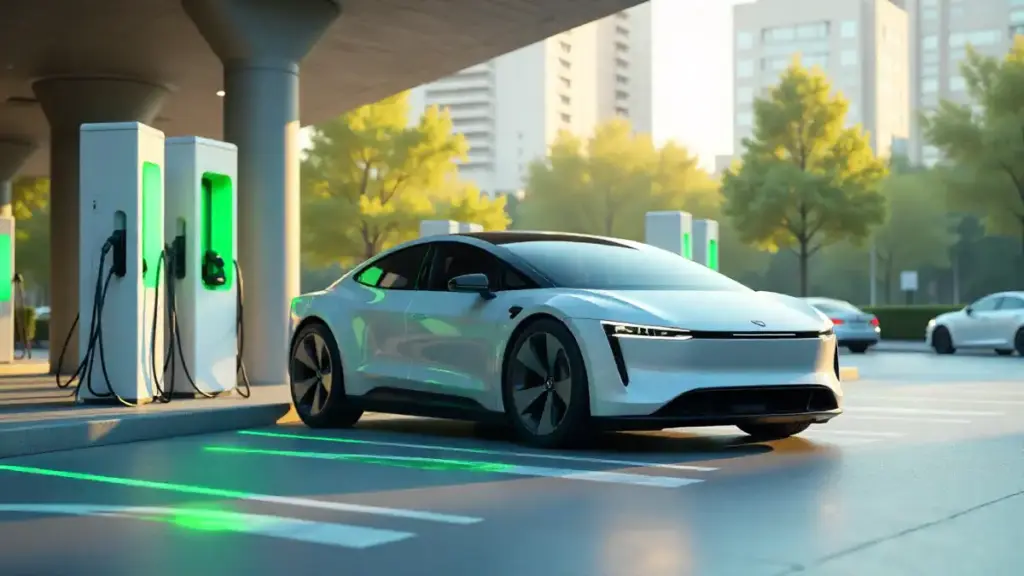
Let’s talk about the elephant in the room—or rather, the charging station on the corner. Range anxiety used to be a legitimate concern. Today? It’s becoming less about “Can I find a charger?” and more about “Which charger should I use?”The infrastructure expansion is nothing short of remarkable. The total number of public charge points grew by more than 30% from 3.8 million at the end of 2023 to more than 5 million by the end of 2024. And we’re just getting started—global EV charging ports are projected to reach 206.6 million by 2040, with annual spending hitting $300 billion.
What’s particularly interesting is the mix of charging types evolving to match real-world needs. While ultra-fast DC chargers grab headlines with their ability to add hundreds of miles of range in minutes, residential Level 2 charging remains the workhorse of the industry. Think about it—most of us park our cars at home for hours every night. Why not wake up to a “full tank” every morning?
France’s “Charge France” association committed to investing EUR 4 billion to expand ultra-fast charging points from over 17,000 to 40,000 by 2028. These aren’t just numbers on a spreadsheet—they represent real infrastructure that lets you take that spontaneous road trip without spreadsheet planning your charging stops.
China leads the pack here, too, accounting for about 65% of global charging infrastructure. But other regions are catching up fast. The U.S. is working toward 500,000 chargers by 2030 under the Bipartisan Infrastructure Law, with over 200,000 already operational. Europe’s expanding its network by 35% year-over-year, and even emerging markets like Indonesia and Brazil are seeing explosive growth.
Battery Technology: The Heart of the Electric Revolution
If electric mobility were a house, battery technology would be the foundation. And let me tell you, engineers have been renovating that foundation with incredible results.Remember when range anxiety was the dealbreaker for EVs? Battery innovations are systematically dismantling that concern. Solid-state batteries are expected to surpass 400 Wh/kg energy density by 2025, compared to traditional lithium-ion batteries’ 250-300 Wh/kg. That’s not just incremental improvement—it’s a leap forward that translates directly into longer range and faster charging times.
But solid-state batteries are just one piece of the puzzle. Tesla’s 4680 battery with silicon-carbon negative electrodes exceeds 300Wh/kg single energy density, giving the Model Y over 700km range. Meanwhile, sodium-ion batteries are emerging as a cost-effective alternative for certain applications, with energy density reaching 180-200Wh/kg at only 0.4-0.5 yuan/Wh.
Perhaps most exciting is the progress in recycling. American Battery Technology Company won the 2025 Recycling Technology Solution award for its feedstock-agnostic system, recovering 95% of lithium, cobalt, and nickel for reuse. This isn’t just good environmental stewardship—it’s critical for securing supply chains and reducing costs.
The bottom line? Today’s EV batteries charge faster, last longer, and perform better than ever before. And they’re only getting better.
Shared Mobility & Smart Cities: Rethinking Urban Transportation
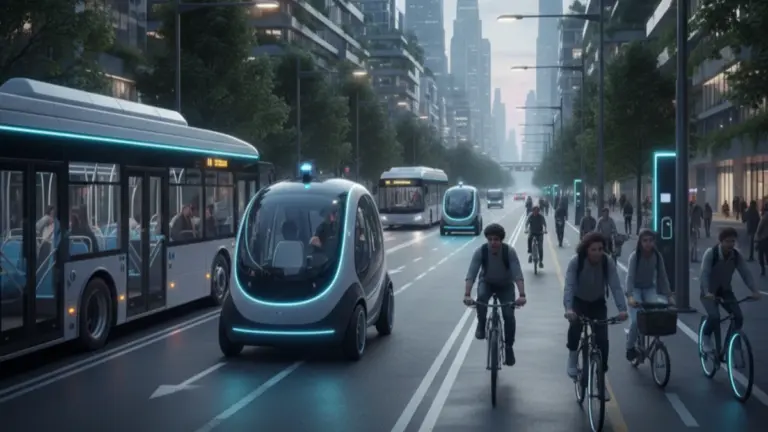
Here’s a thought experiment: What if your city had fewer cars but better transportation? That’s not a dystopian future—it’s the promise of shared mobility integrated with smart city infrastructure.The rise of Mobility-as-a-Service (MaaS) platforms is transforming how we think about transportation. By 2025, real-time mobility data allows users to plan journeys seamlessly while giving cities insights needed to manage traffic, reduce emissions, and enhance user experience. Instead of owning a car that sits idle 95% of the time, imagine accessing whatever mode of transportation makes sense for your journey—an e-scooter for quick trips, a shared electric car for errands, or public transit for your commute—all through a single app.
Uber announced plans to make its entire U.S. fleet 100% electric by 2030, with over 25% of trips already powered by electric vehicles in 2025. Meanwhile, car-sharing platforms are booming, with the segment expected to contribute over USD 21 billion in 2025. Even micro-mobility—those ubiquitous e-scooters and bike shares—is becoming big business at $7.5 billion.
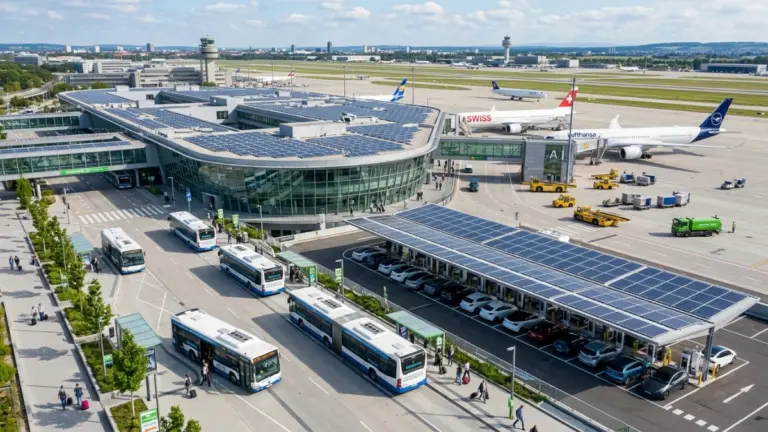
Smart city infrastructure ties it all together. Vehicle-to-everything (V2X) communication enables cars to talk to traffic lights, parking systems, and each other, optimizing traffic flow in real-time. Cities like Hamburg are testing roboshuttles for underutilized routes. Others are implementing dynamic pricing that charges vehicles fairly for road use, congestion, and curb space.
The vision? A transportation system where the focus shifts from moving vehicles to moving people efficiently, sustainably, and equitably.
Industry Strategies: How Automakers Are Navigating the Transition
While we consumers see the shiny new EVs and fancy charging stations, there’s a fascinating chess game happening behind the scenes among automakers, tech companies, and energy providers.BYD sold 4.27 million new-energy vehicles in 2024, up roughly 41% year over year—more than double Tesla’s total. Let that sink in. The company that many dismissed as “just another Chinese carmaker” is now the world’s largest EV producer by volume.
What makes BYD so formidable? Vertical integration taken to an extreme. BYD controls everything from battery cells to semiconductors to electric motors, giving it end-to-end control few automakers can match. This integration translates directly into cost advantages and manufacturing speed. BYD has slashed model development times to two years or less—about half the industry average—allowing it to launch 17 SUV models from 2020 through 2025.
Tesla, meanwhile, faces a different challenge. The Model 3 is now in its eighth year, and analysts warn that Tesla hasn’t fully redesigned any model in two decades. The company’s strategy is betting heavily on autonomy and the upcoming Cybertruck, rather than refreshing its aging lineup with new designs.
Legacy automakers? They’re caught in an uncomfortable middle ground. They’re investing billions in EV development while trying to protect their combustion engine investments. Tesla saw its first-ever sales drop in the United States in 2024, while other manufacturers collectively increased sales by 20%, suggesting the market is opening up beyond the early Tesla dominance.
The strategic battleground has shifted from “who can build EVs” to “who can build them profitably at scale while innovating fast enough to stay relevant.”
The Road Ahead: Challenges and Opportunities
So where does all this leave us? If you’re expecting me to paint a picture of smooth sailing from here to electric utopia, buckle up—the road ahead has some interesting curves.Grid infrastructure remains a significant hurdle. Current utility practices lead to an 18-month (and sometimes longer) turnaround for high-powered chargers to be connected to the electric grid. That’s not just inconvenient—it’s a bottleneck that could slow deployment of critical fast-charging infrastructure.
The challenge intensifies in rural areas, where grid infrastructure may be less robust, requiring upgrades like the addition of three-phase power service and installation of transformers at DCFC sites, adding substantial costs and time. Even neighborhood transformers can become strained—fully charging an EV battery requires the same amount of electricity needed to power a home during peak energy use times.
Supply chain vulnerabilities persist, particularly around critical minerals. Despite massive investments in domestic manufacturing, challenges remain around sourcing lithium, cobalt, and other essential materials. Trade policies, tariffs, and geopolitical tensions add layers of complexity and uncertainty.
But here’s where it gets interesting: these challenges are driving innovation. Vehicle-to-grid (V2G) technology could turn EVs into mobile energy storage, helping balance grid demand. Smart charging systems can shift electricity demand to off-peak hours. Advanced battery recycling is creating circular supply chains that reduce dependence on virgin materials.
The opportunities are equally compelling. The electric mobility transition is creating entirely new industries—from charging network operators to battery recyclers to software companies managing fleet electrification. It’s estimated that global investment in electrified transport reached $757.4 billion in 2024, and that’s just the beginning.
Your Role in the Electric Future
So where does all this leave you, the person reading this article? Whether you’re considering your first EV purchase, working in the automotive industry, or simply curious about where transportation is heading, the message is clear: electric mobility isn’t coming—it’s here.
The transition won’t be perfectly smooth. There will be setbacks, surprises, and stumbles along the way. Policy shifts, market fluctuations, and technological hiccups are inevitable. But the fundamental momentum is undeniable.
By the end of this decade, it’s projected that more than two in five cars sold will be electric. That’s not a distant future—it’s less than five years away. The infrastructure is expanding, batteries are getting better and cheaper, and automakers are committing billions to electrification.
The question isn’t whether electric mobility will dominate transportation—it’s how quickly we’ll get there and who will lead the way. Chinese manufacturers like BYD are proving that rapid innovation and vertical integration can disrupt established players. Tesla showed the world that EVs could be desirable, not just practical. Legacy automakers are finally committing serious resources to the transition.
Meanwhile, smart cities are reimagining urban mobility around shared, electric, connected vehicles. Battery technology is advancing faster than most predicted. And the charging infrastructure that seemed impossibly inadequate just a few years ago is expanding at a remarkable pace.
The electric mobility revolution of 2025 isn’t just about swapping one type of vehicle for another. It’s about fundamentally rethinking how we move, how we power our transportation, and how we design our cities and communities around cleaner, smarter, more sustainable mobility.
And honestly? That’s pretty exciting. The future of transportation is being written right now, in factories in China, engineering labs in California, policy offices in Europe, and charging stations appearing on street corners worldwide. You’re not just watching it happen—you’re part of it.