You know what’s fascinating? We’re living through one of those rare moments in history when everything about how we move from point A to point B is changing—and I mean everything. Just a decade ago, electric cars were quirky curiosities you’d see once in a blue moon. Today? They’re reshaping entire industries, cities, and the way we think about transportation itself.
If you’ve been curious about where electric mobility is headed, you’re in the right place. Let me walk you through what’s happening right now in 2025, what innovations are genuinely exciting (versus just hype), and how sustainable transportation is evolving beyond just swapping gas tanks for batteries. Whether you’re considering an EV, working in transportation, or simply fascinated by technological change, there’s plenty to unpack here.
The Electric Vehicle Revolution: Where We Stand Right Now
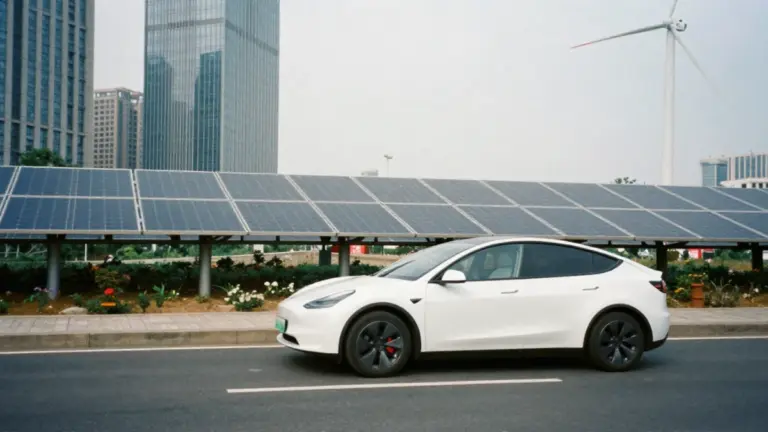
Let’s start with the numbers, because they tell a compelling story. Electric vehicle sales have been climbing steadily, and we’re now at a tipping point that economists call “critical mass.” In many markets, EVs aren’t alternative vehicles anymore—they’re becoming the default choice.Here’s what the data tells us: In 2024, global EV sales reached 17.1 million units with EVs accounting for one in five cars sold worldwide, and projections for 2025 expect 22.1 million sales representing roughly 24% market share. Think about that—roughly one in four new cars sold globally this year will be electric. That’s not some distant future scenario; it’s happening now.
But here’s where it gets really interesting: the growth isn’t uniform. China reached 50% market share for new energy vehicles in 2025, overtaking traditional combustion engine vehicles for the first time. Meanwhile, Norway leads with over 80% of new car sales being battery electric. The contrast is stark—some countries are all-in, while others are still testing the waters.
What’s driving this explosive growth? It’s not just one factor. Government policies, falling battery costs, expanding model choices, and shifting consumer attitudes are all converging. Over 150 brands now compete globally in the EV space, which means you’ve got options ranging from affordable city cars to luxury SUVs that would make any traditional premium vehicle jealous.
Beyond Cars: The Broader Sustainable Transportation Revolution
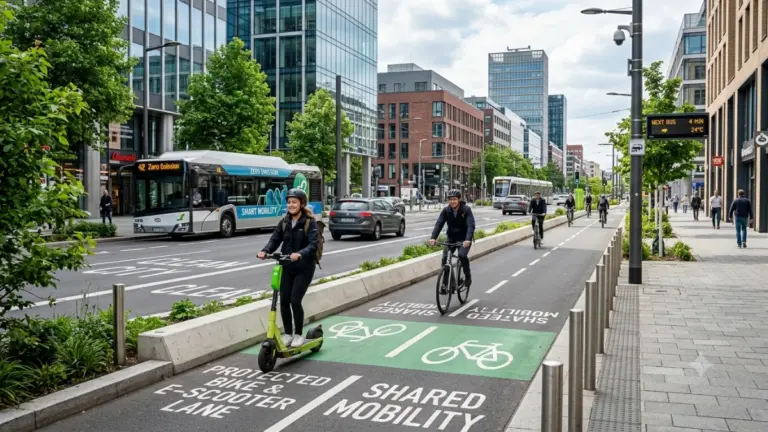
Now, while electric cars grab most headlines, they’re actually just one piece of a much larger puzzle. Sustainable transportation isn’t simply about replacing your gas tank with a battery—it’s about rethinking how we move people and goods entirely.Think about micro-mobility for a moment. E-scooters, shared bikes, and e-bikes are expanding beyond short trips in 2025, with cities investing in dedicated lanes to accommodate longer distance travel. It’s not just about getting from the subway to your office anymore—these lightweight vehicles are becoming legitimate transportation options for substantial portions of daily commuting.
And here’s what’s really clever: Mobility-as-a-Service platforms are integrating public transit, ride-sharing, micromobility, and on-demand services into single apps. Instead of juggling multiple apps and payment systems, you plan your entire journey—train, bike share, perhaps an electric scooter for the last half-mile—all in one place. Studies suggest MaaS can reduce private car usage in cities by nearly 30%, which is huge for congestion and air quality.
Public transit itself is getting smarter too. AI and data analytics enable dynamic route planning and real-time service adjustments, meaning buses and trains can actually adapt to demand patterns throughout the day. Remember waiting 30 minutes for a bus that was supposedly coming “soon”? That experience is increasingly becoming a thing of the past in forward-thinking cities.
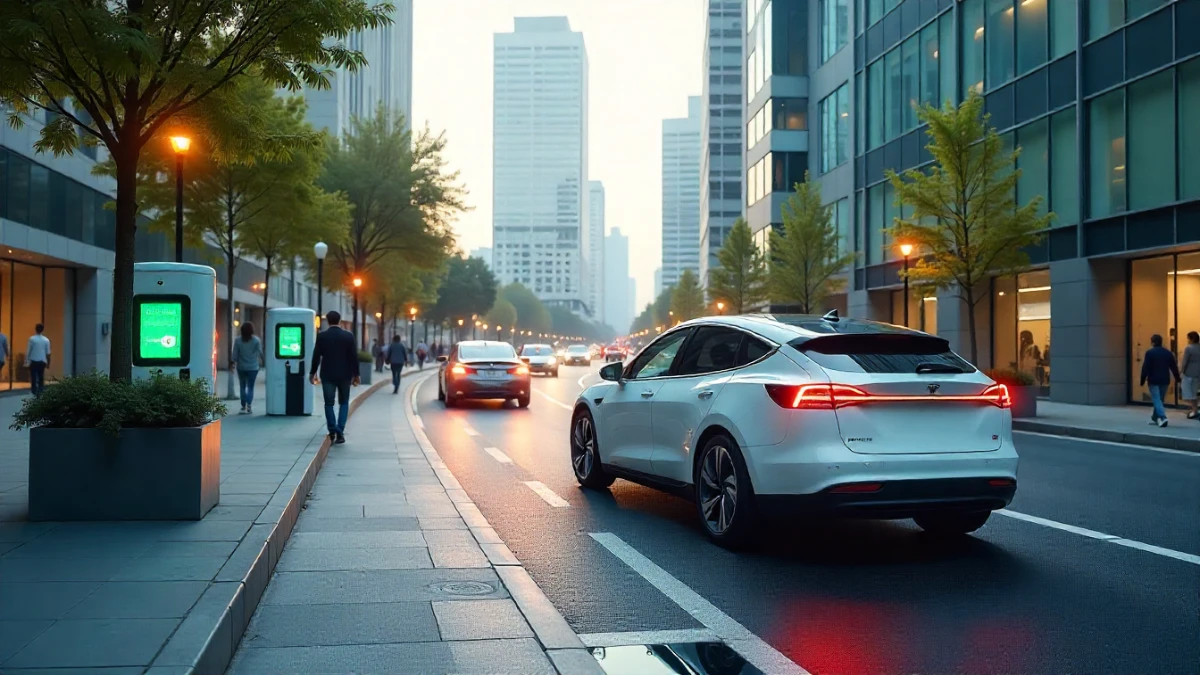
Charging Infrastructure: The Backbone Nobody Talks About EnoughHere’s something that doesn’t get enough attention: you can have the best electric vehicles in the world, but without convenient charging, they’re just expensive paperweights with wheels. The good news? Infrastructure is expanding rapidly—but not everywhere equally.
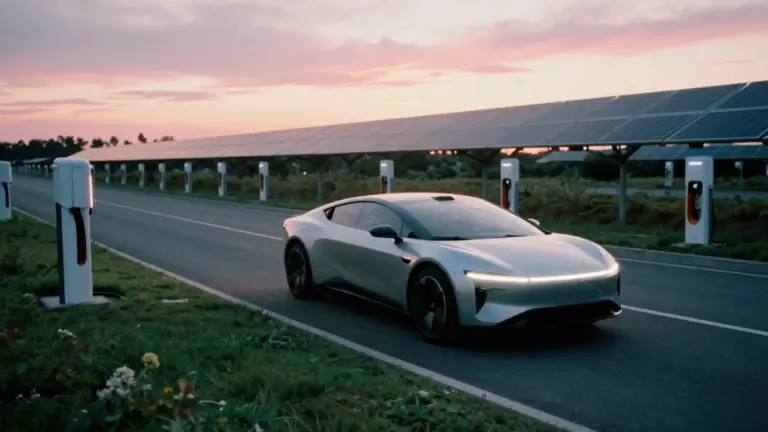
The number of public EV charging ports in the US has grown more than sixfold over the last decade, from about 30,000 in 2016 to nearly 196,000 in January 2025. That’s impressive growth. Forecasts suggest 16,700 new fast-charging ports will open in the US in 2025 alone, which would be 2.4 times as many as just three years earlier.
Globally, the numbers are even more dramatic. EV charging ports worldwide are projected to increase at 12.3% annually from 2026-2040, reaching 206.6 million ports globally by 2040. And it’s not just quantity—quality matters too. The share of high-capacity 250+ kW chargers is rising sharply, reaching 38% of non-Tesla infrastructure from just 24% previously, which means faster charging times that feel more like refueling a gas car than waiting around.
But—and this is important—the infrastructure story isn’t all sunshine. In Europe, 11 out of 27 EU countries saw their public charging stock increase by more than 50% in 2024, but coverage remains patchy in many regions. You still have charging deserts in rural areas, and urban hotspots where congestion is becoming a real issue during peak times.
The Innovation Wave: What’s Actually Changing the GameLet’s talk about what’s genuinely exciting in battery technology, because this is where the future is being written right now. Solid-state batteries—you’ve probably heard the buzz—are no longer just lab experiments.
Industry roadmaps indicate actual prototype solid-state battery demonstrations in vehicles by 2027 with large-scale commercialization targeted for 2030. The benefits are compelling: These batteries promise faster charging and longer range thanks to increased energy density, and they’re inherently safer because they eliminate the flammable liquid electrolyte.
Real-world tests are already happening. In September 2025, a Mercedes EQS prototype equipped with Factorial Energy’s solid-state battery drove 749 miles on a single charge from Germany to Sweden, arriving with 85 miles still remaining. Think about that—over 800 miles of total potential range. That’s better than many gas cars!
Chery Automobile recently unveiled a prototype solid-state battery with 600 Wh/Kg energy density, double that of most current EV batteries, which theoretically could enable real-world driving ranges exceeding 800 miles. We’re talking about EVs where range anxiety becomes completely obsolete.
The charging speeds are equally impressive. Rimac Technology’s solid-state battery can charge from 10% to 80% in just six and a half minutes. Imagine pulling into a charging station and having enough juice for hundreds of miles before you’ve finished grabbing coffee.
The Real-World Challenges: Let’s Be HonestI’d be doing you a disservice if I painted everything as rosy. There are real, substantial challenges that need solving before electric mobility truly becomes universal.
Affordability remains a major hurdle. Only 3% of EVs in the US are priced below $37,000, compared with more than half of gas-powered or hybrid vehicles. Even with falling battery costs, manufacturers are unlikely to achieve price parity with internal combustion engine vehicles until 2028 or later. That’s a problem when cost remains the most significant global barrier to EV adoption, cited by 60% of consumers.
Grid capacity is another genuine concern. Many local distribution grids were not designed to accommodate the heightened and irregular power demands of EV charging, potentially causing transformer overloads, voltage imbalances, and congestion during peak periods. The infrastructure exists to generate enough power, but getting it to neighborhoods where everyone’s charging their cars simultaneously? That’s trickier.
Analysis suggests that by 2030, certain substation banks could experience EV load growth consuming 50 percent or more of their currently available capacity. Managed charging programs—where utilities incentivize off-peak charging—can help significantly, but they require coordination and smart technology deployment.
And here’s something that doesn’t get discussed enough: Consumer concerns vary dramatically by market, with German buyers primarily worried about limited travel range while Chinese and Indian consumers focus on charging time. One-size-fits-all solutions won’t work.
Looking Ahead: What 2026 and Beyond Hold
So where does all this lead? The trajectory is clear even if the timeline has some uncertainty. We’re witnessing a fundamental restructuring of how humans move around—the biggest transformation in transportation since the automobile replaced the horse over a century ago.
Several trends seem nearly certain:
Continued rapid EV sales growth, particularly in China and Europe where policy support remains strong. The US market faces more headwinds from policy uncertainty and affordability challenges, but the overall global trend points unmistakably toward electrification.
Infrastructure will keep expanding, though perhaps more strategically. The focus is shifting from raw numbers of chargers to optimized placement, faster charging speeds, and better integration with renewable energy sources.
Battery technology breakthroughs are transitioning from lab to production. Solid-state batteries will likely debut in premium vehicles within the next few years, gradually trickling down to mass-market models by the early 2030s. This will effectively eliminate range anxiety as a concern.
Transportation becomes multimodal in cities. The future isn’t just EVs—it’s EVs plus micro-mobility plus enhanced public transit plus ride-sharing, all seamlessly integrated through digital platforms. Car ownership itself may decline in urban areas as these alternatives become more convenient and cost-effective.
V2G (Vehicle-to-Grid) technology will mature, allowing EVs to serve as distributed energy storage, helping stabilize grids with high renewable penetration. Your car becomes not just transportation but part of the energy infrastructure.
The Bottom Line: An Exciting, Messy, Inevitable Transition
Here’s my honest take after watching this space closely: we’re in the middle of something genuinely transformative, but it’s messier and more complicated than the headlines suggest. Electric mobility isn’t just happening—it’s accelerating—but the pace varies wildly by region and faces real obstacles.
The technology is largely solved. Modern EVs are excellent vehicles—fun to drive, increasingly affordable, and improving constantly. Charging infrastructure is expanding rapidly. Battery innovations promise to solve the remaining limitations around range and charging speed.
What remains are mostly solvable problems: policy consistency, infrastructure investment, grid modernization, and continued cost reduction through scale. These aren’t trivial, but they’re the kind of challenges humans are actually pretty good at addressing when we decide they’re priorities.
The most fascinating aspect? This transition touches everything—energy policy, urban planning, manufacturing, geopolitics, even how we think about personal transportation. It’s forcing us to reimagine systems that have been basically unchanged for decades.
So if you’re wondering whether to go electric with your next vehicle, or you’re simply curious about where all this is heading—the answer is that 2025 marks a genuine inflection point. We’re past the early-adopter phase. Electric mobility is entering the mainstream, bringing sustainable transportation from aspirational concept to everyday reality.
The revolution is here. It’s just getting started.