Electric scooters are transforming urban mobility by helping people complete short trips and connect with public transit more efficiently. While they can reduce some car journeys and ease congestion, their impact depends on infrastructure, safety measures, and city regulations. When integrated into broader transportation networks, e-scooters offer a practical, affordable, and lower-emission option for navigating modern cities.
If you’ve walked down a city sidewalk in the last few years, you’ve probably had to dodge one: a rider zipping past on an electric scooter, weaving through pedestrians and bike lanes alike. Electric scooters have gone from a novelty to a genuine transportation option in cities around the world, and the question on a lot of people’s minds is simple — do they actually make urban mobility better, or are they just adding to the chaos?
The short answer: when they’re implemented well, electric scooters can meaningfully reduce short car trips, ease congestion, and give people a faster, cheaper way to cover that awkward “last mile” between transit and their destination. But they come with real growing pains — safety concerns, sidewalk clutter, and inconsistent regulation.
In this article, I’ll walk you through how electric scooters fit into the bigger urban mobility picture, what the data actually shows, the practical tradeoffs riders and cities are dealing with, and where this is all headed.
Why Electric Scooters Took Off in Cities
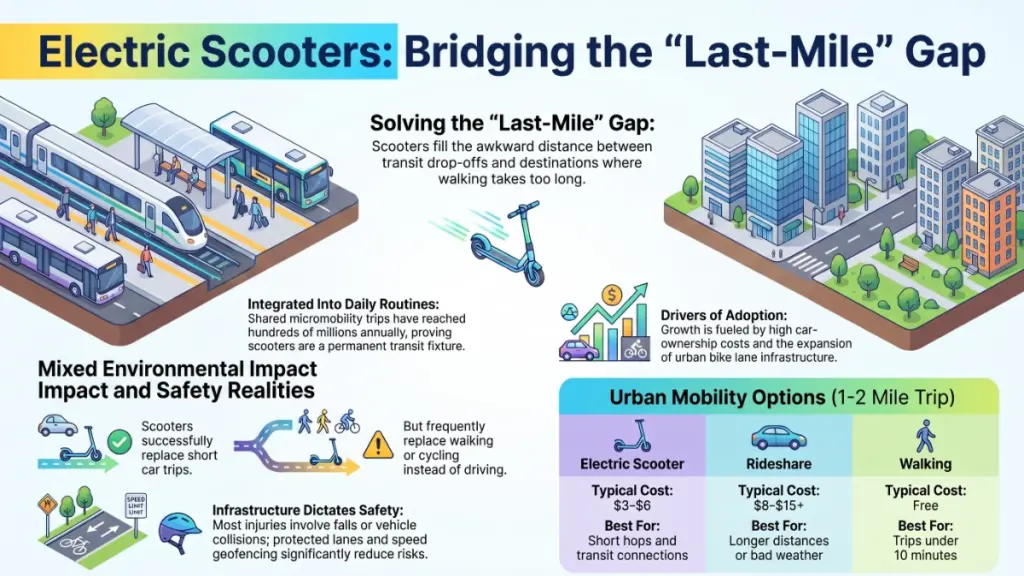
Electric scooters solve a very specific problem: the “last mile.” That’s the gap between where public transit drops you off and where you actually need to be. Walking it takes too long, driving feels absurd for half a mile, and calling a rideshare for such a short trip is a waste of money.
A scooter fills that gap perfectly. You unlock it with an app, ride for ten minutes, and leave it at your destination. No parking, no fuel, no ownership responsibility.
A few factors accelerated their adoption:
- Dense urban populations where car ownership is expensive or impractical
- Rising rideshare costs, which made short car trips feel less economical
- Growing bike lane infrastructure in many cities, which scooters could piggyback on
- App-based rental models that removed the friction of ownership
Shared micromobility trips in the U.S. — which includes both scooters and bikes — have grown into the hundreds of millions annually, a scale that would have seemed unlikely a decade ago. That growth tells you something important: people aren’t just trying scooters once out of curiosity. They’re building them into how they actually get around.
Do Electric Scooters Actually Reduce Car Trips?
This is the question cities care about most, and the honest answer is: it’s mixed.
Studies on shared scooter usage have found that a meaningful share of scooter trips replace what would otherwise have been a car trip, rideshare ride, or taxi — particularly for trips under two miles. That’s a genuine win for congestion and emissions in dense downtown cores.
But here’s the catch: research has also found that a significant portion of scooter trips replace walking or cycling, not driving. In other words, some riders aren’t ditching their car — they’re just choosing a scooter over a ten-minute walk they would have taken anyway.
What this means practically:
- Scooters are most impactful in cities with strong public transit, where they extend the reach of existing trains and buses
- They’re less impactful as a standalone climate solution when they simply replace walking
- Their real value is often as a connector, not a replacement, for other transit modes
Think of it like a bridge rather than a destination. A scooter alone won’t fix a city’s congestion, but paired with buses, subways, and bike lanes, it closes gaps that would otherwise push people back into cars.
The Safety Conversation Nobody Can Ignore
I’d be doing you a disservice if I glossed over this part. Scooter safety is a real, ongoing issue, and it’s one of the biggest reasons cities have been cautious about full-scale rollouts.
Emergency room visits related to e-scooter injuries rose sharply in the years following their introduction in major U.S. cities, according to data compiled by the U.S. Consumer Product Safety Commission. Most injuries involve falls, and a smaller but serious share involve collisions with vehicles.
Common contributing factors:
- Riding without a helmet (the norm, not the exception, for rentals)
- Riding on sidewalks where pedestrian collisions occur
- Poor road infrastructure that forces scooters into vehicle traffic
- Inexperienced or intoxicated riding, particularly at night
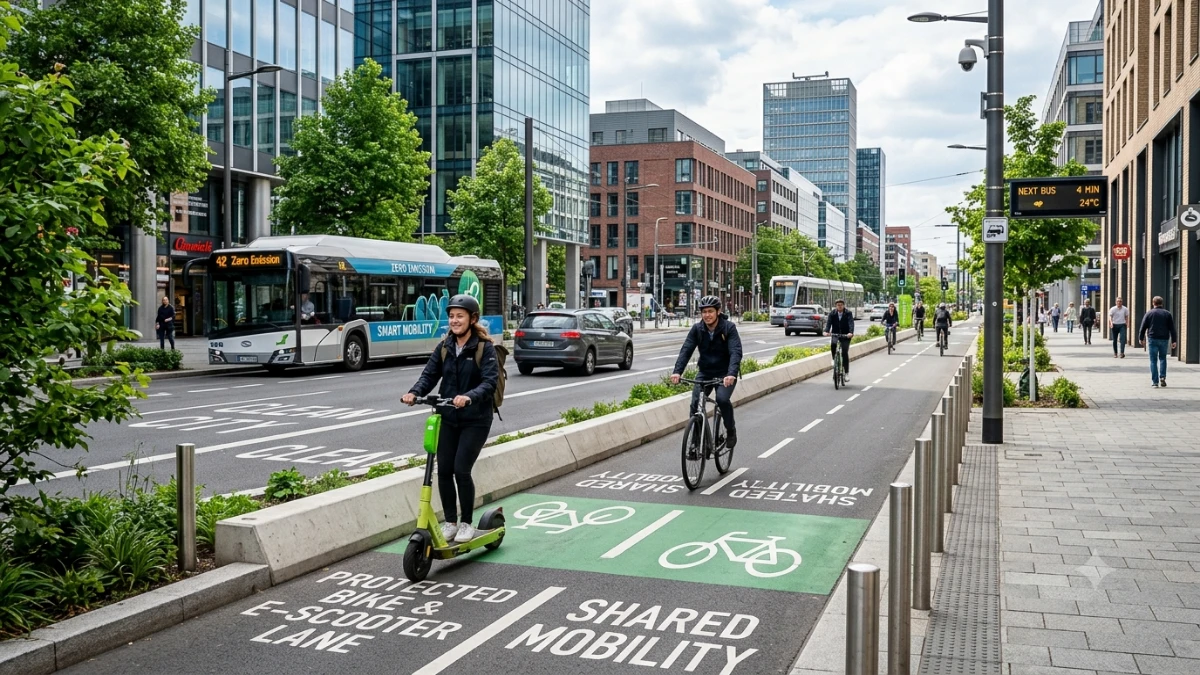
Cities that have seen the best safety outcomes tend to share a few traits: protected bike lanes, speed caps in pedestrian-heavy zones, and geofencing technology that automatically slows scooters down in restricted areas. This isn’t a coincidence — infrastructure and rider education matter far more than most people assume.
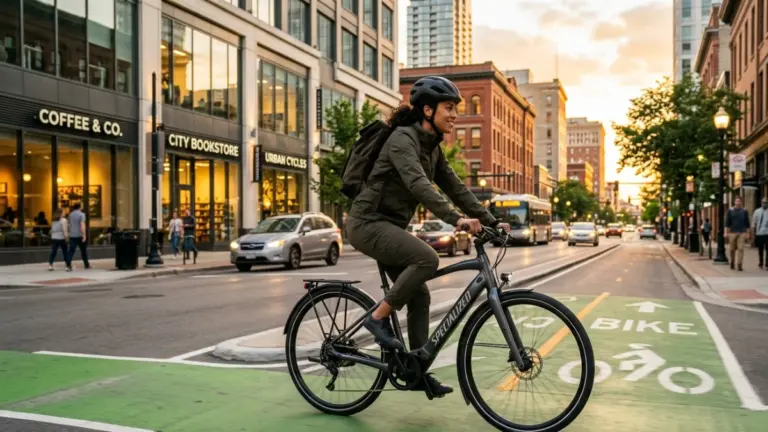
[Image suggestion: A photo of a protected bike lane with a scooter rider using it safely, illustrating well-designed infrastructure.]
Comparing Your Options: Scooter vs. Bike Share vs. Rideshare vs. Walking
If you’re deciding how to get somewhere in a city, it helps to see the tradeoffs side by side.
| Mode | Typical Cost (1-2 mile trip) | Speed | Physical Effort | Best For |
|---|---|---|---|---|
| Electric Scooter | $3–$6 | Fast (10-15 mph) | Low | Last-mile connections, short hops |
| Bike Share | $2–$5 | Moderate | Moderate | Slightly longer trips, exercise-minded riders |
| Rideshare | $8–$15+ | Fastest | None | Longer distances, bad weather, luggage |
| Walking | Free | Slowest | Highest | Trips under 10 minutes, no cost tolerance |
Notice where the scooter sits: it’s the sweet spot between “too far to walk” and “too short to justify a car.” That positioning is exactly why it’s carved out a lasting niche rather than being a passing trend.
What Cities Are Doing to Make This Work Better
Regulation has evolved a lot since scooters first appeared without warning on city sidewalks. Early rollouts were chaotic — companies dropped thousands of scooters overnight with little coordination with local governments, and cities scrambled to catch up.
Now, most major cities operate under permit systems that govern scooter deployment. Common regulatory approaches include:
- Capping the number of scooters a company can operate per zone
- Requiring geofenced no-ride and no-parking zones near transit stations and pedestrian areas
- Setting speed limits that automatically throttle scooters in dense areas
- Mandating data-sharing so cities can study usage patterns and improve infrastructure planning
- Designating parking corrals to reduce sidewalk clutter
Cities like Paris took a more dramatic step, holding a public referendum in 2023 where residents voted to ban shared rental scooters entirely, citing safety and clutter concerns — while still allowing privately owned scooters. It’s a useful reminder that public buy-in matters just as much as the technology itself. A scooter program can only succeed long-term if residents feel it improves their city rather than degrading it.
Is an Electric Scooter Right for Your Commute?
Here’s where it gets personal. Whether scooters make sense for you depends on a few honest questions:
- How far is your trip? Under 3 miles is the scooter sweet spot. Beyond that, battery range and rider fatigue become real factors.
- What’s your city’s infrastructure like? Protected bike lanes make a huge difference in both safety and comfort. Riding in mixed traffic without them is a different experience entirely.
- Are you commuting or running errands? Scooters work well for one-way trips where you don’t need to carry much. They’re less practical with groceries or a laptop bag full of gear.
- What’s the weather like where you live? Rain, snow, and extreme heat all meaningfully limit scooter usability compared to a car or transit.
If you’re weighing a shared scooter against owning one, shared models remove maintenance headaches but cost more over time for frequent riders. If you’re commuting daily, a personally owned e-scooter — often in the $400–$900 range for a reliable model — pays for itself within a few months compared to daily rental fees.
The Road Ahead for Micromobility
Electric scooters aren’t going anywhere, but the version of them we’ll see in five years will likely look different from what’s on the streets today. A few trends worth watching:
- Better battery swap systems that reduce the need for trucks to collect and recharge scooters overnight, cutting operational emissions
- Improved geofencing accuracy that can enforce speed and parking rules more precisely
- Deeper integration with transit apps, allowing riders to plan multi-modal trips (train + scooter) in a single booking
- More durable, theft-resistant designs as companies move away from the disposable-feeling scooters of the early rollout era
The cities that get the most value out of scooters going forward will likely be the ones that treat them as one piece of a connected transit system, not a standalone solution dropped onto existing streets and left to sort itself out.
Key Takeaways
- Electric scooters are most effective as a last-mile connector to public transit, not a full car replacement
- A real share of scooter trips do replace car and rideshare trips, but many also simply replace walking
- Safety outcomes improve dramatically with protected infrastructure and sensible speed regulation
- Cities are shifting from chaotic early rollouts toward structured permit systems and data-driven planning
- Whether a scooter fits your routine depends on trip distance, local infrastructure, and weather
If you’re curious whether scooters make sense for your daily routine, the best way to find out is simple: try a shared scooter for a short trip you’d normally walk or drive, and see how it actually feels in your city’s traffic and infrastructure. That real-world test will tell you more than any statistic can.