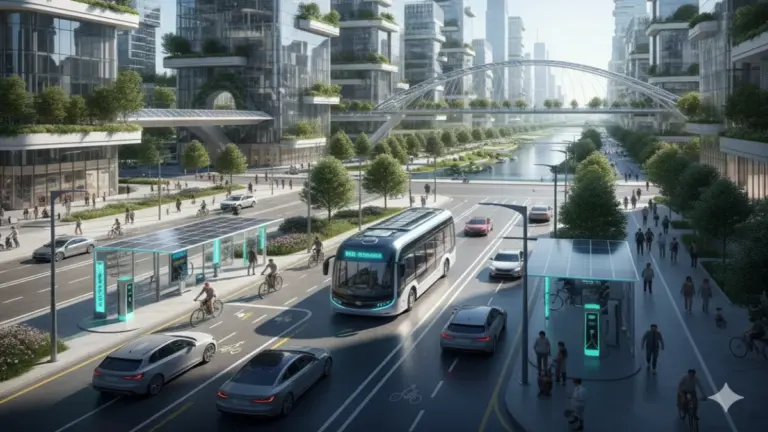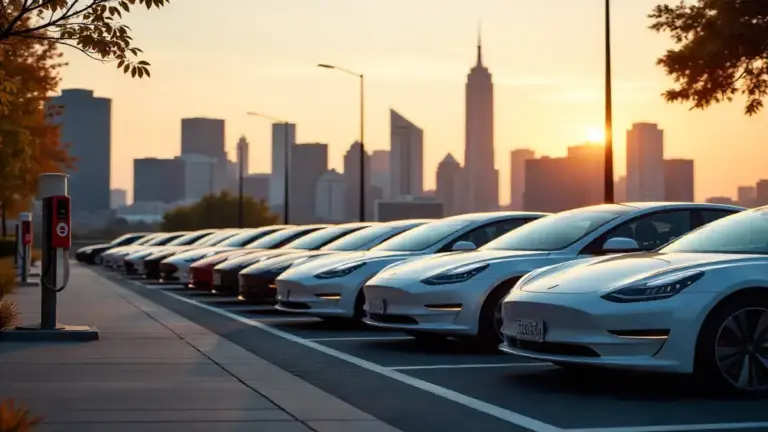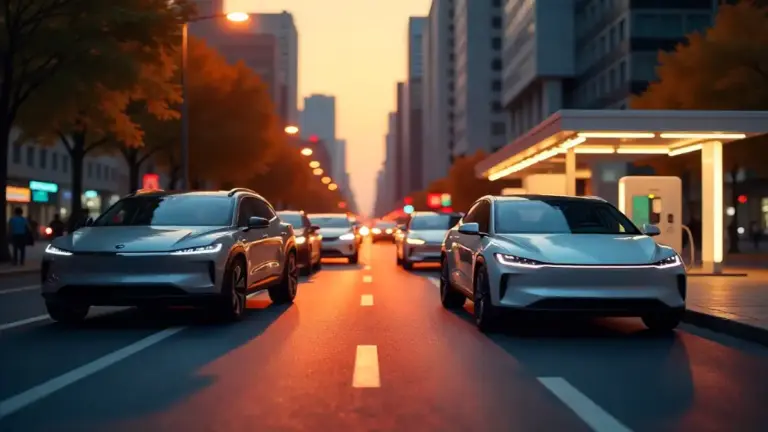
Picture this: you’re scrolling through your favorite online community, and everyone’s buzzing about the latest electric vehicle that costs less than your morning coffee habit (okay, slight exaggeration). Or maybe you’ve noticed your city suddenly sprouting zero-emission zones like urban gardens. Welcome to 2025, where electric mobility isn’t just changing—it’s exploding with possibilities that real people are actually talking about, testing, and championing.
I’ve been tracking conversations across Reddit, LinkedIn, and industry forums, and let me tell you, the chatter reveals some fascinating trends that go way beyond the typical tech announcements. These are the topics keeping EV enthusiasts awake at night, the questions popping up in city planning discussions, and the innovations that are genuinely reshaping how we think about getting from point A to point B.
The Small EV Revolution: Finally, Electric Cars We Can Actually Afford
Remember when electric vehicles seemed like toys for the wealthy? Those days are rapidly fading into the rearview mirror. The conversation around affordable small EVs has reached fever pitch in 2025, and for good reason.
Emerging markets are experiencing a dramatic shift in the EV landscape thanks to more affordable electric cars and supportive local policies. We’re talking about vehicles hitting the market at genuinely accessible price points. Models like the Dacia Spring, Renault 5, and Citroën ë-C3 are positioned under €25,000, offering adequate interior space, modern features, and reduced running costs.
What’s driving this accessibility wave? Battery costs are dropping like never before. Here’s something that might surprise you: batteries currently make up roughly 40% of an EV’s total cost, but as technology advances and manufacturing scales up, we’re seeing prices tumble while ranges extend. In the United States, the Nissan Leaf starts at around $29,990, making it the cheapest electric car available, while still offering an EPA-estimated range of 303 miles.
The real game-changer? These aren’t stripped-down economy boxes. The Renault 5 was named Small Electric Car of the Year at the 2025 What Car? Awards, impressing with its funky design, comfortable interior, easy-to-use technology, and longer range than most rivals. People in online forums are raving about how these compact EVs don’t feel like compromises—they’re genuinely delightful to drive.
And here’s where it gets interesting for those of us watching global markets: Malaysian manufacturer Perodua will start producing its first electric car at the end of 2025, priced at approximately $18,000. That’s not a typo. We’re entering an era where electric mobility is becoming a realistic option for millions more people worldwide.
Zero-Emission Zones: Cities Drawing Lines in the Sand (for Our Lungs)
If you’ve been following urban planning discussions on LinkedIn or Reddit’s city subreddits, you’ve probably noticed zero-emission zones (ZEZs) becoming a hot-button topic. And honestly? The implementation is happening faster than most people realize.
Over 320 active low-emission zones exist across Europe as of 2022, with projections exceeding 500 by 2025, and 35 zero-emission zones are expected to be introduced by 2030. Cities aren’t just talking about cleaner air anymore—they’re literally redrawing the rules for what vehicles can enter their centers.
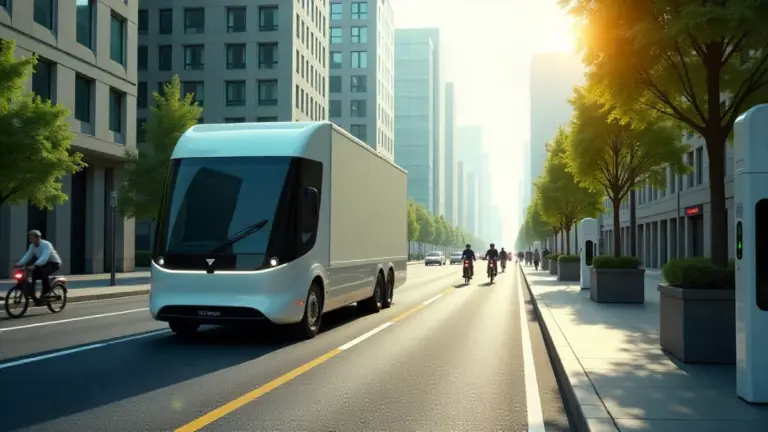
Here’s the thing that’s got delivery companies and logistics firms buzzing: A Dutch law has made zero-emission zones for freight mandatory by 2025 in the 30-40 largest cities. That’s not a suggestion or a pilot program—it’s the law. Companies like DHL, UPS, and local delivery services are scrambling to electrify their fleets, and the conversations in industry forums reveal both challenges and surprising opportunities.
What makes this trend so community-driven is how it’s spreading through practical example rather than top-down mandates alone. Rotterdam was among the first cities to set up a local business alliance for clean logistics, and the success of this collaborative work inspired others like Brussels and Vienna to follow suit. When businesses see it working in neighboring cities, skepticism transforms into strategic planning.
The impact? Research shows that zero-emission zones could reduce nitrogen dioxide levels by 91-95% compared to baseline scenarios in cities like Milan, Paris, and Brussels. Those aren’t abstract numbers—that’s the difference between a child wheezing their way through a school day and breathing freely. Forums for urban parents are lighting up with enthusiasm about these zones, even as some express concerns about implementation fairness.
Charging Innovation: When Your Car Talks to the Grid (and Makes You Money)
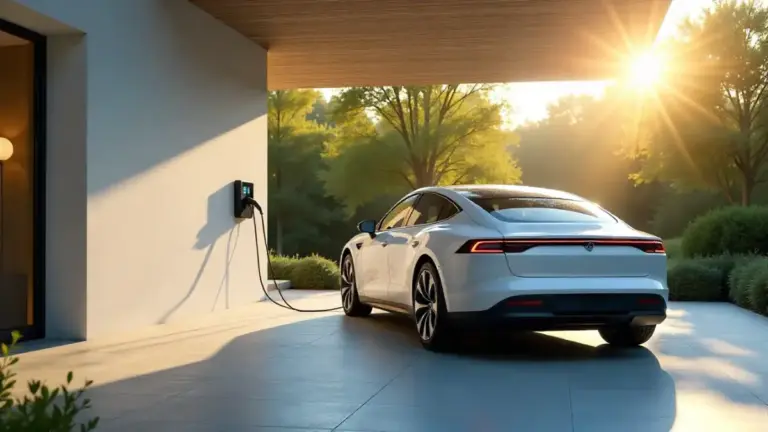
Now here’s where things get really fascinating. Flip through any EV owner forum, and you’ll find heated discussions about Vehicle-to-Grid (V2G) technology. It’s one of those concepts that sounds like science fiction until you realize it’s already happening in your neighbor’s driveway.
In November 2025, the German Bundestag passed a major legal change that removes the double charging of electricity in bidirectional charging, making V2G financially attractive for the first time. This is huge. Previously, if you stored electricity in your EV and fed it back to the grid, you’d be charged twice—once for taking it, once for giving it back. Talk about a buzzkill for innovation.
Think of V2G like this: your electric car becomes a mobile power bank that can supply electricity back to your home or the grid when demand (and prices) are high. Major automakers including GM will make V2G standard in all their EVs by 2026, with Tesla supporting bidirectional charging functionality by 2025. We’re not talking about a niche feature anymore—this is becoming standard equipment.
The community conversations reveal both excitement and reasonable skepticism. One common concern? Battery wear. But here’s what the research actually shows: A study conducted by the University of Warwick suggests that V2G may not harm an EV battery’s performance at all, and in certain circumstances, transferring energy back to the grid could even improve battery life. When discharged thoughtfully within certain parameters, the battery degradation concerns appear largely overblown.
Now, battery swapping—that’s where the debates really heat up. The battery swapping market is projected to reach $22.72 billion by 2035, from $1.46 billion in 2025, demonstrating remarkable growth. Companies like NIO in China and Gogoro in Taiwan are proving the model works, with NIO having performed 20 million swaps, with 60% of their 300,000 vehicle owners having used swap stations.
The appeal is obvious: drive into a station, get a fresh battery in under five minutes, and roll out with full range. No waiting around for charging. The skeptics point to standardization challenges and infrastructure costs, but the enthusiasts counter with real-world success stories. It’s classic online debate territory—and both sides have valid points.
The Micromobility Explosion: Small Wheels, Big Impact
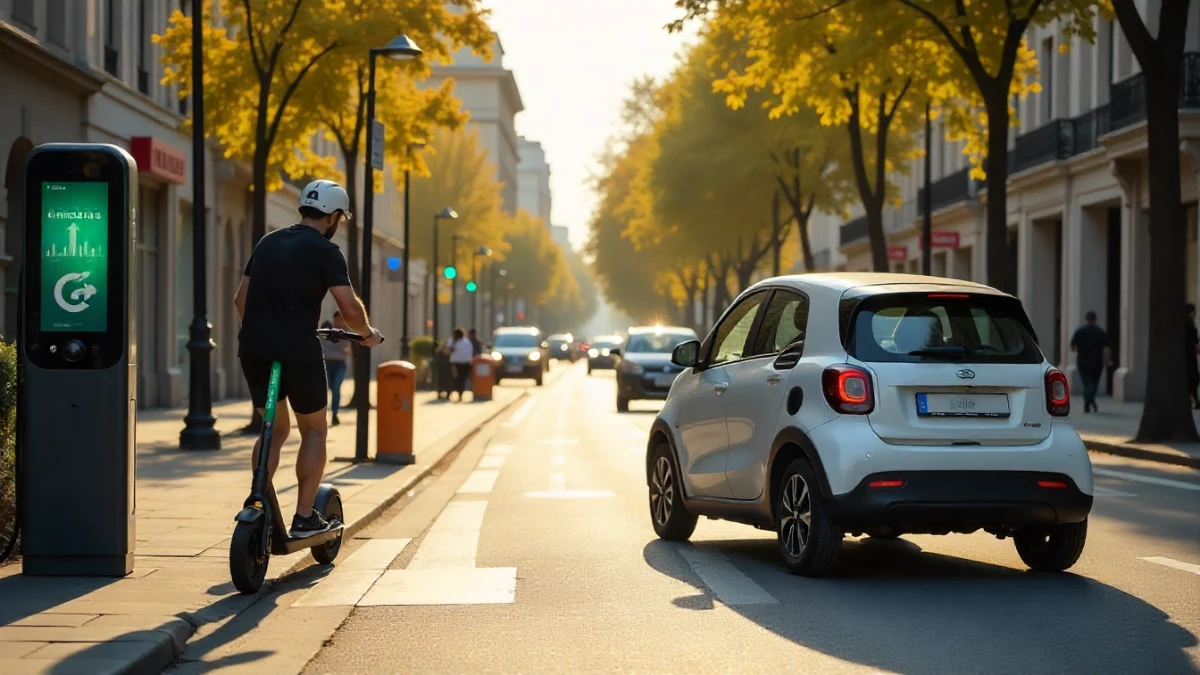
Walk through any major city in 2025, and you’ll spot them everywhere: e-scooters, e-bikes, and electric skateboards zipping through bike lanes and clustered at street corners. The micromobility movement has graduated from novelty to necessity, and the numbers tell a compelling story.
The global micro-mobility market is poised to reach $91.2 billion by 2030, maintaining a robust CAGR of 14.5% from 2025 to 2030. That’s not just growth—that’s an explosion. And it’s driven by something simple: people want quick, affordable ways to cover the first and last miles of their commutes without dealing with parking headaches or car ownership costs.
Here’s what’s really interesting from community discussions: Chicago reported over 11 million shared bike-and-scooter trips in 2024, a new annual high, while Philadelphia’s bike-share hit a record 1.3 million rides in 2024. These aren’t just numbers on a spreadsheet—each one represents someone who chose not to drive, reducing congestion and emissions in the process.
The technology keeps getting better, too. New lithium-ion battery technologies are increasing range by up to 25%, enabling e-scooters and e-bikes to cover more distance on a single charge. Translation? Fewer dead scooters littering sidewalks, fewer maintenance headaches for operators, and more reliable options for riders.
Safety remains a hot topic in Reddit threads and local community forums. E-bicycle injuries mostly doubled every year from 2017 to 2022, while e-scooter injuries rose by 45 percent each year. These statistics spark intense discussions about helmet laws, speed limits, and infrastructure needs. The consensus forming in many communities? Better bike lanes and clear regulations beat blanket bans every time.
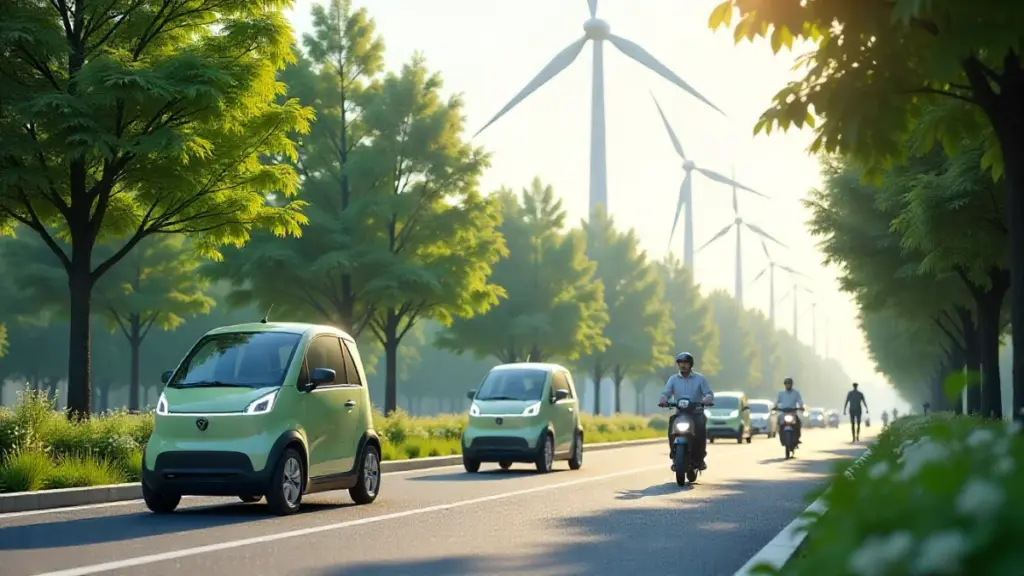
What’s particularly fascinating is how micromobility is democratizing urban transportation. Forty percent of Veo riders don’t have access to a car at all, and 28% don’t even hold a driver’s license—for them, shared micromobility is a necessity, not a trend. When you read personal stories on forums from people who’ve gained independence through e-bikes or found affordable commuting solutions through shared scooters, the human impact becomes crystal clear.
The Startup Struggle: Innovation Meets Reality
Here’s where the rubber meets the road (pun absolutely intended). Browse through startup pitch decks on LinkedIn or founder forums, and you’ll see a landscape that’s both thrilling and terrifying for sustainable mobility innovators.
The funding picture tells a complex story. Global funding for automotive startups has reached approximately $170.8 billion, exhibiting a compound annual growth rate of 23% from 2009 to 2025. That sounds fantastic, right? But dig deeper into founder discussions, and you’ll find the challenges are very real.
The innovation is happening at breakneck speed. In 2024, over 16 million EVs were sold worldwide, marking a 25% increase in EV adoption, with an estimated 85 million EVs in use worldwide by the end of 2025. This creates enormous opportunities for startups developing charging solutions, fleet management software, battery technologies, and mobility-as-a-service platforms.
But here’s the catch that keeps coming up in founder communities: scaling is brutal. You need massive infrastructure investments before you can prove the model works at scale. You’re competing against established automakers with deep pockets. And you’re navigating a patchwork of regulations that vary wildly by city, region, and country.
Take the micromobility space as an example. Five of the top 10 shared e-scooter players in Europe have reached profitability on an adjusted EBITDA basis, with that number expected to continue increasing. That’s encouraging! But it took years of burning through capital, dealing with vandalism, managing complex city permit processes, and weathering public skepticism to get there.
The startups getting traction are the ones solving real, specific problems. Battery management systems that extend vehicle life. AI-powered fleet optimization that reduces operational costs. Modular charging solutions that work in diverse urban environments. The conversations in accelerator programs and pitch competitions reveal a shift from “change the world” visions to “solve this specific painful problem” pragmatism.
What This All Means for You (Yes, You)
So what should you take away from all these trends? Whether you’re considering your next vehicle purchase, watching how your city evolves, or just trying to understand where mobility is heading, here are the key insights:
The affordable EV wave is real. If you’ve been waiting for electric vehicles to hit price points that make sense for your budget, 2025 is delivering options. Don’t assume EVs are still luxury items—some models now cost less than mid-range gas vehicles and offer lower total ownership costs.
Cities are getting serious about clean air. Zero-emission zones aren’t theoretical anymore. If you own a business that relies on urban deliveries or frequently drive into city centers, electrification isn’t just good PR—it’s becoming a practical necessity.
Your car might become an asset. V2G technology transforms your EV from a depreciating machine into a potential revenue generator. As the technology matures and regulations catch up, early adopters could benefit financially while supporting grid stability.
Small wheels, big opportunities. If you’re making short urban trips, honestly assess whether you need a full-sized vehicle. E-bikes and e-scooters might save you money, time, and parking headaches while keeping you just as mobile for most daily tasks.
Innovation is accelerating. The startup ecosystem in sustainable mobility is vibrant, well-funded, and producing solutions that address real problems. Whether you’re an investor, a potential employee, or just someone who cares about where transportation is headed, this is a space worth watching.
The beautiful thing about these trends? They’re not dictated from corporate boardrooms or government offices alone. They’re being shaped by real communities—riders sharing experiences in forums, cities learning from each other’s successes and failures, and millions of individual decisions adding up to a massive collective shift.
We’re living through a transportation revolution, and unlike previous automotive transformations, this one is more democratic, more connected, and more responsive to what people actually want and need. The conversations happening in online communities aren’t just commentary on the future—they’re actively shaping it.
So the next time you see someone zip past on an e-scooter, spot a small EV charging at a street corner, or hear about your city considering zero-emission zones, remember: you’re watching the future arrive, one community-driven innovation at a time. And honestly? It’s arriving faster than any of us expected.
What are your thoughts on these electric mobility trends? Have you experienced any of these changes in your city? I’d love to hear about your experiences—the shift to sustainable transportation is a story we’re all writing together.