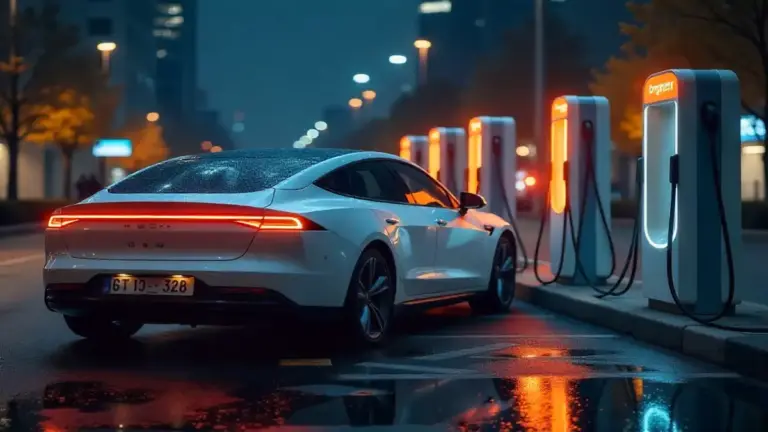
Have you noticed how many silent vehicles are gliding past you on the streets lately? That’s electric mobility in action—and it’s reshaping how we think about getting from point A to point B. Whether you’re considering an electric car, curious about e-bikes, or just wondering what all the buzz is about, you’re in the right place.
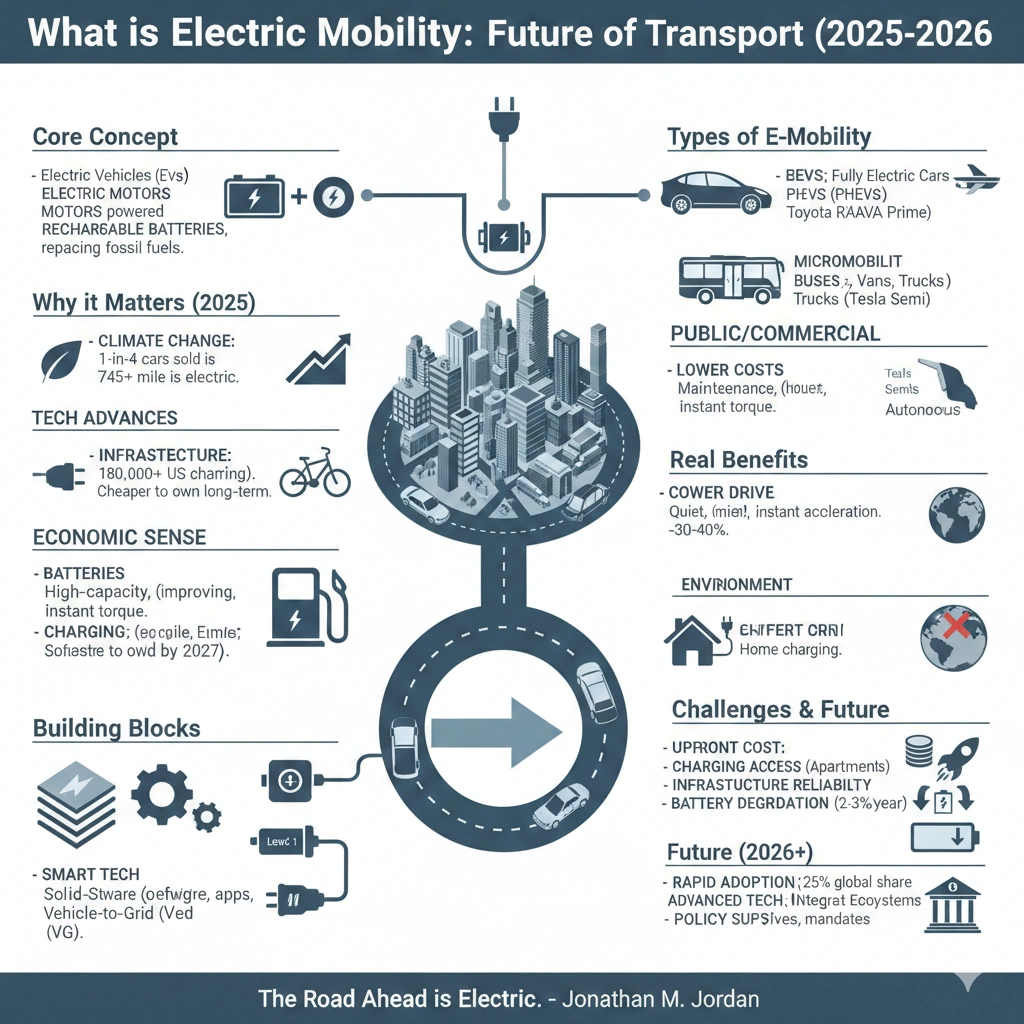
Electric mobility is the use of electrically powered vehicles and transportation systems instead of traditional fossil fuel-powered options. This includes everything from electric cars and buses to e-scooters, electric bikes, and even electric boats and planes. At its core, electric mobility represents a fundamental shift in how we power our movement—swapping out combustion engines for electric motors powered by rechargeable batteries.
In this guide, you’ll discover what makes electric mobility different, why it’s gaining momentum worldwide, the types of electric vehicles transforming our roads, and what this shift means for your daily life. Let’s dive in.
Understanding Electric Mobility: More Than Just Electric Cars
When most people hear “electric mobility,” they picture a Tesla zooming down the highway. But the concept is much broader and more exciting than that.
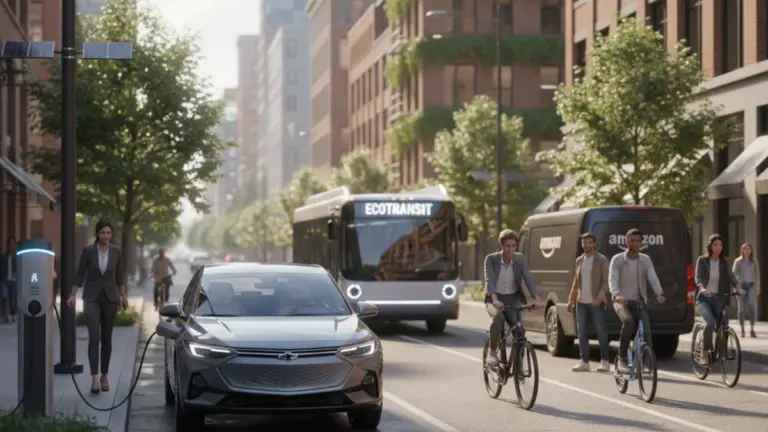
Electric mobility encompasses any form of transportation powered by electricity. This includes:
- Personal vehicles: Electric cars (EVs), motorcycles, and scooters
- Micromobility: E-bikes, electric scooters, and electric skateboards
- Public transportation: Electric buses, trams, and subway systems
- Commercial transport: Electric delivery vans, trucks, and fleet vehicles
- Emerging tech: Electric aircraft, boats, and autonomous vehicles
What ties all these together? They use electric motors and rechargeable battery systems instead of internal combustion engines. Think of it like the difference between your smartphone and an old landline—electric mobility is the smart, connected, cleaner version of traditional transport.
The beauty of this system is its simplicity. Instead of burning gasoline or diesel to create thousands of small explosions that move pistons (yes, that’s how traditional cars work), electric motors convert stored electrical energy directly into motion. It’s quieter, more efficient, and produces zero tailpipe emissions.
Why Electric Mobility Matters Now
You might be wondering: “Why is everyone talking about this now?” Great question. Several factors have converged to make 2025 a turning point for electric mobility.
Climate Change Urgency
Transportation accounts for about 27% of global greenhouse gas emissions, with the majority coming from road vehicles. As countries work toward net-zero emissions targets, electrifying transportation has become non-negotiable. Unlike vehicles that burn fossil fuels, electric vehicles produce zero direct emissions—and when charged with renewable energy, they become truly clean transport.
Technology Has Finally Caught Up
Remember when electric cars could barely make it 80 miles on a charge? Those days are long gone. Modern EVs routinely achieve 300-400 miles of range, with some models exceeding 500 miles. Battery technology has improved dramatically, with energy density increasing while costs have plummeted—dropping by nearly 90% since 2010 according to BloombergNEF data.
The Infrastructure Is Here
Range anxiety used to be a legitimate concern. Not anymore. As of 2025, the United States alone has over 180,000 public charging stations, with fast-charging networks along major highways making long-distance travel practical. Europe and China have built even more extensive charging infrastructure, making electric mobility increasingly convenient.
It Makes Economic Sense
Here’s something that surprises many people: electric vehicles are often cheaper to own over their lifetime than gas-powered cars. While the upfront cost might be higher, you’ll save significantly on fuel (electricity costs about one-third the price of gasoline per mile) and maintenance (no oil changes, fewer brake replacements, simpler drivetrains). Many regions also offer tax incentives, rebates, and reduced registration fees for electric vehicles.
The Building Blocks of Electric Mobility
To truly understand electric mobility, let’s break down the key components that make it work.
Battery Technology
The heart of any electric vehicle is its battery pack—typically lithium-ion batteries similar to what powers your laptop, just much, much larger. These batteries store electrical energy that powers the electric motor. Modern EV batteries are:
- High-capacity: Ranging from 40 kWh in smaller cars to 100+ kWh in luxury vehicles
- Durable: Most manufacturers warranty them for 8-10 years or 100,000+ miles
- Improving rapidly: Solid-state batteries and new chemistries promise even better performance soon
Electric Motors
Unlike combustion engines with hundreds of moving parts, electric motors are elegantly simple. They provide instant torque (that thrilling acceleration electric cars are known for) and operate efficiently across a wide range of speeds. Most EVs use either AC induction motors or permanent magnet motors—both are incredibly reliable and require minimal maintenance.
Charging Infrastructure
Think of EV charging like phone charging, but scaled up. There are three main levels:
- Level 1 (120V home outlet): Slow, adds 3-5 miles per hour of charging
- Level 2 (240V, like a clothes dryer): Moderate, adds 20-30 miles per hour—most common for home and workplace charging
- DC Fast Charging: Rapid, can add 150-200 miles in 20-30 minutes—found along highways
Most EV owners do about 80% of their charging at home overnight, making daily charging as simple as plugging in your phone.
Smart Technology Integration
Electric mobility isn’t just about propulsion—it’s deeply connected to digital technology. Modern electric vehicles feature:
- Over-the-air software updates that improve performance and add features
- Smartphone apps for remote climate control, charging management, and vehicle monitoring
- Advanced driver assistance systems enabled by electric platforms
- Vehicle-to-grid (V2G) capabilities that let EVs support the electrical grid during peak demand
Types of Electric Mobility Solutions
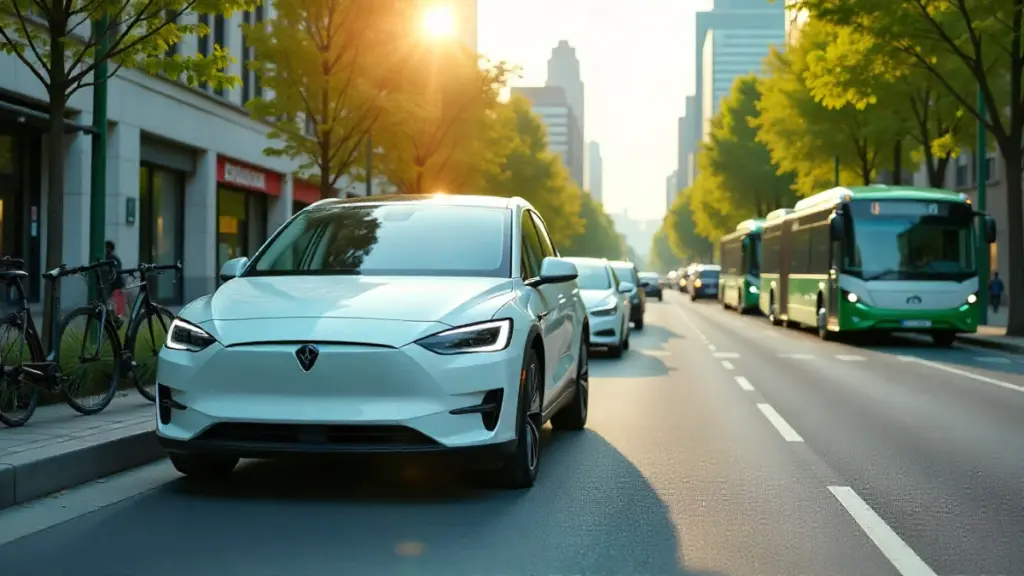
Electric mobility shows up in various forms, each suited to different needs and use cases.
Battery Electric Vehicles (BEVs)
These are fully electric vehicles with no gasoline engine at all—cars like the Tesla Model 3, Ford F-150 Lightning, or Hyundai Ioniq 6. They run entirely on battery power and produce zero emissions. BEVs represent the purest form of electric mobility and are ideal for daily driving, commuting, and increasingly for long road trips thanks to expanding charging networks.
Plug-in Hybrid Electric Vehicles (PHEVs)
Think of these as a bridge technology. PHEVs combine a smaller battery pack with a traditional gasoline engine, offering typically 20-50 miles of electric-only range before the gas engine kicks in. They’re great for people who want electric driving for daily commutes but need the flexibility of gasoline for longer trips. Models like the Toyota RAV4 Prime or BMW X5 xDrive45e exemplify this category.
Micromobility Solutions
Not everyone needs a car for every trip. Electric micromobility has exploded in popularity:
- E-bikes: Offering pedal assistance that makes cycling accessible to more people, with ranges of 20-80 miles
- Electric scooters: Both personal and shared models have transformed urban short-distance travel
- Electric skateboards and one-wheels: Niche but growing options for enthusiasts
These alternatives reduce congestion, require minimal charging infrastructure, and cost a fraction of a car to purchase and operate.
Public and Commercial Electric Transport
Cities worldwide are electrifying their bus fleets, with electric buses now operating in major metropolitan areas from Los Angeles to London to Beijing. Electric delivery vans are becoming standard for companies like Amazon, UPS, and FedEx. Electric trucks are entering the market, with vehicles like the Tesla Semi and Volvo VNR Electric promising to revolutionize freight transport.
Real-World Benefits You’ll Actually Experience
Let’s get practical. What does electric mobility mean for you, day to day?
Lower Operating Costs
Electricity costs roughly $0.04-0.06 per mile compared to $0.12-0.15 per mile for gasoline (as of 2025). If you drive 12,000 miles annually, that’s saving approximately $1,000-1,300 per year on fuel alone. Maintenance costs drop by about 30-40% since there’s no oil to change, no transmission fluid, simpler braking systems (regenerative braking does much of the work), and far fewer parts to break.
Better Driving Experience
Here’s something that surprises first-time EV drivers: they’re genuinely fun to drive. The instant torque creates smooth, powerful acceleration. The low center of gravity (batteries are typically mounted in the floor) makes handling sharp and stable. And the near-silent operation creates a serene driving environment—you can actually hear your music or conversation without engine noise.
Convenience of Home Charging
Imagine never stopping at a gas station again for your daily driving. You plug in when you get home, and wake up to a “full tank” every morning. For most people, this charging pattern works seamlessly—your car charges while you sleep, just like your phone.
Environmental Impact
Even when accounting for electricity generation, electric vehicles produce significantly fewer emissions over their lifetime than gasoline vehicles. As electrical grids incorporate more renewable energy (wind, solar), EVs become cleaner throughout their operational life. You’re directly contributing to cleaner air in your community and reduced greenhouse gas emissions globally.
Challenges and Considerations
I’d be painting an incomplete picture if I didn’t address the current limitations and challenges of electric mobility.
Upfront Cost
Despite decreasing prices, many electric vehicles still cost more than their gasoline counterparts—typically $5,000-10,000 more for comparable models. However, federal and state incentives can offset much of this difference, and the lower operating costs mean EVs often reach cost parity within 5-7 years of ownership.
Charging Time and Range Anxiety
While modern EVs offer impressive range, refueling still takes longer than filling a gas tank. Even with fast charging, you’re looking at 20-40 minutes for a significant charge. For daily driving, this rarely matters since you charge overnight. But for long road trips, it requires planning and patience. That said, charging infrastructure is expanding rapidly, and for many people, range anxiety proves to be more psychological than practical once they make the switch.
Apartment and Rental Challenges
If you don’t have a garage or dedicated parking spot with electrical access, home charging becomes complicated. While workplace charging and public charging stations help, this remains a significant barrier for renters and urban apartment dwellers. Cities and property managers are slowly addressing this, but it’s an ongoing challenge.
Battery Degradation and Replacement
Batteries do lose capacity over time—typically 2-3% per year in the first few years, then slowing. Most EVs retain 70-80% of their original capacity after 8-10 years, which is still plenty for daily driving. Battery replacement can cost $5,000-15,000, though warranties typically cover significant degradation, and battery costs continue to decline.
The Future of Electric Mobility
So where is all this headed? The trajectory is clear: electric mobility is becoming the mainstream, not the alternative.
Rapid Adoption Rates
In 2025, electric vehicles represent about 18% of global new car sales, up from just 3% in 2020. Norway leads with over 90% of new car sales being electric, while countries like China, Germany, and the United States are seeing double-digit adoption rates. Most major automakers have committed to phasing out gasoline vehicles entirely by 2030-2040.
Technology Advances on the Horizon
The next generation of electric mobility promises even better performance:
- Solid-state batteries: Offering 50% more range, faster charging, and improved safety—expected in production vehicles by 2027-2028
- Ultra-fast charging: Technology capable of adding 200 miles in under 10 minutes is already in testing
- Wireless charging: Drive over a charging pad and power up automatically—pilot programs are underway
- Vehicle-to-everything (V2X): EVs communicating with the grid, your home, and other vehicles to optimize energy use
Integrated Mobility Ecosystems
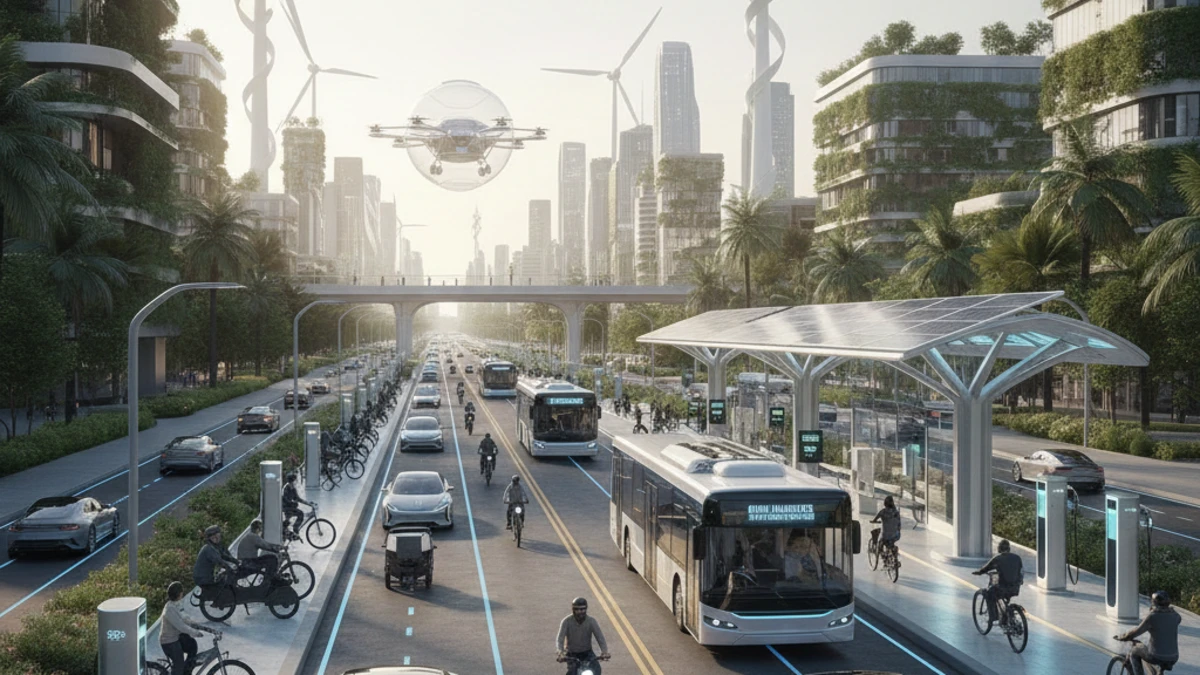
The future isn’t just about electric cars—it’s about integrated mobility systems where various electric transportation options work together seamlessly. Imagine: using an e-bike for your commute, summoning an autonomous electric shuttle for longer trips, and having your personal EV available when you need it, all managed through a single app.
Policy and Infrastructure Support
Governments worldwide are accelerating electric mobility through:
- Increasingly strict emissions regulations
- Extended purchase incentives and tax credits
- Massive investments in charging infrastructure
- Gas vehicle phase-out dates (many countries targeting 2030-2040)
This policy support ensures that electric mobility will only become more accessible and convenient.
Making Electric Mobility Work for You
If you’re considering joining the electric mobility revolution, here’s how to approach it.
Assess Your Driving Patterns
Track your typical daily driving distance for a week. Most people drive less than 40 miles per day, which is well within the range of even the most basic EVs. If you have predictable daily routines, an electric vehicle is likely an excellent fit.
Evaluate Your Charging Options
Do you have access to home charging? That’s the ideal scenario. If not, check workplace charging availability and public charging density in your area. Apps like PlugShare show real-time charging station availability and can help you understand if charging access will work for your situation.
Consider Your Budget and Incentives
Research federal, state, and local incentives. The federal EV tax credit can be worth up to $7,500, and many states offer additional rebates. Calculate your total cost of ownership including fuel savings and reduced maintenance over 5-10 years—you might be surprised how competitive EVs become.
Start Small If Needed
Not ready for a full EV? Consider an e-bike for short trips, or a plug-in hybrid that gives you electric driving for daily use with gasoline backup for road trips. Many people find that experiencing electric mobility in any form builds confidence and enthusiasm for going fully electric.
Key Takeaways
Let’s recap what matters most about electric mobility:
Electric mobility is here and growing rapidly. It’s not a future concept—millions of people worldwide are already driving electric vehicles daily, and the infrastructure and technology continue improving rapidly.
It offers real financial benefits. Lower fuel costs, reduced maintenance, and improving purchase prices make electric vehicles increasingly economical, especially when considering total cost of ownership.
The technology works for most people’s needs today. Modern EVs provide ample range for daily driving, and charging infrastructure has reached a tipping point where long-distance travel is practical for most routes.
Environmental benefits are substantial and improving. Electric mobility significantly reduces emissions and air pollution, with benefits increasing as electrical grids incorporate more renewable energy.
Challenges remain but are being addressed. Upfront costs, charging access, and range considerations are legitimate concerns, but they’re diminishing as technology advances and infrastructure expands.
Electric mobility represents more than just a new way to power vehicles—it’s a fundamental reimagining of transportation that’s cleaner, smarter, and increasingly more practical. Whether you dive in with a fully electric vehicle tomorrow or start with an e-bike for weekend rides, you’re participating in one of the most significant technological transitions of our time.
The question isn’t really whether electric mobility will become dominant—it’s how quickly we’ll get there, and how you’ll be part of that journey. The road ahead is electric, and it’s surprisingly smooth, quiet, and exciting to travel.