You’ve probably noticed more Teslas in your local grocery store parking lot lately. Maybe your neighbor just installed a charging station. Perhaps you’ve seen those bright electric scooters multiplying on city sidewalks. What you’re witnessing isn’t hype—it’s the electric mobility revolution unfolding in real-time. 2025 is shaping up to be the year it goes mainstream.
Electric mobility in 2025 extends far beyond passenger cars. We’re experiencing a fundamental shift in how people and goods move through cities and across countries. This movement is powered increasingly by batteries instead of fossil fuels. From electric trucks delivering your Amazon packages to electric buses shuttling kids to school, this transformation touches nearly every aspect of transportation. In this article, you’ll discover the key trends defining electric mobility this year. You’ll learn what they mean for your daily life. You’ll also understand why industry experts believe we’ve finally reached the tipping point everyone’s been talking about.
The Numbers Tell the Story: Electric Mobility Goes Mainstream
Let’s start with what the data actually shows. The growth is staggering.
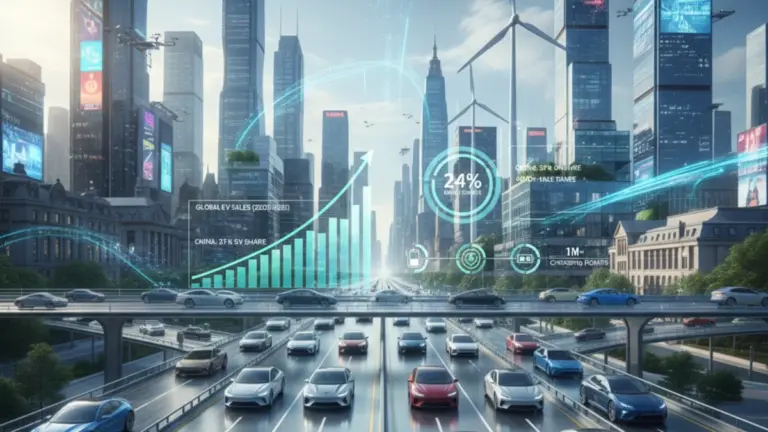
Global electric vehicle sales hit approximately 14 million units in 2024. That represents about 18% of all new car sales worldwide. But here’s what makes 2025 different: we’re on track to cross the 20% threshold. This is both a psychological and practical milestone. It marks the transition from “early adopter territory” to genuine mass market acceptance.
Key statistics shaping 2025:
- Battery costs have dropped to around $80 per kilowatt-hour, down from over $1,200 in 2010
- This makes EVs increasingly price-competitive with gas vehicles
- Charging infrastructure has expanded to over 3 million public charging points globally
- The U.S. alone adds roughly 1,000 new charging stations monthly
- Range anxiety is becoming obsolete as average EV ranges now exceed 300 miles
- Many models hit 400+ miles on a single charge
- Electric truck and van sales grew by 90% year-over-year in 2024
- This signals commercial fleet transformation
What This Means for You
If you’ve been sitting on the fence about electric mobility, 2025 is pivotal. The infrastructure, technology, and economics finally align. This makes it a genuinely practical choice for most people. You don’t need to be a tech enthusiast or environmental crusader anymore.
Trend 1: Affordable EVs Finally Arrive (And They’re Actually Good)
Remember when electric cars meant either a $100,000+ Tesla or a limited-range economy car? Those days are over.
The sub-$30,000 EV segment has exploded in 2025. Compelling options now come from both legacy automakers and new players. Chinese manufacturers like BYD have pushed global prices down. They offer well-equipped models at surprisingly competitive prices. This forces everyone else to follow suit. Meanwhile, American and European brands have responded. They’ve launched their own affordable offerings that don’t feel like compromises.
Price Points That Actually Work
The Chevrolet Equinox EV starts around $35,000 with a 300-mile range. This was previously unthinkable at this price point. Volkswagen’s ID.2 and updated ID.3 models offer European buyers genuine alternatives to traditional compact cars. Even more exciting? Several manufacturers have announced models launching in late 2025. These will break the $25,000 barrier while maintaining ranges above 250 miles.
These aren’t stripped-down economy boxes, either. Standard features now include advanced driver assistance systems. You also get over-the-air software updates. Smartphone integration that would have been considered luxury options just three years ago comes standard. You’re getting technology that makes your daily commute safer and more convenient. All wrapped in packages that look and feel like the cars you’re already familiar with.
Total Cost of Ownership Changes Everything
The affordability trend extends beyond purchase price, too. Total cost of ownership calculations increasingly favor electric vehicles. This especially applies to people driving 12,000+ miles annually. Electricity costs roughly the equivalent of $1-2 per gallon. Maintenance requirements are drastically reduced. You don’t need oil changes. Brake replacements happen less frequently. Drivetrains are simpler. The five-year ownership costs often undercut comparable gas vehicles by $5,000-10,000.
Trend 2: Charging Infrastructure Becomes Invisible (In a Good Way)
Here’s a truth about electric mobility that doesn’t get enough attention: charging infrastructure isn’t just about quantity anymore. It’s about seamless integration into your existing routine.
In 2025, charging is becoming something you barely think about. It’s much like you don’t actively worry about where the nearest gas station is. The difference? You’re “filling up” while your car sits in places you’re already going. Work parking lots. Shopping centers. Restaurants. Even on residential streets in forward-thinking cities.
The Network Effect Takes Hold
Tesla’s Supercharger network has opened to other manufacturers through adapters. This instantly gives non-Tesla EVs access to North America’s most reliable fast-charging network. That’s over 40,000 charging stalls. This was a game-changer announced in 2024. It’s fully realized in 2025. It effectively ends the “charging network anxiety” that plagued early EV buyers.
Electrify America, EVgo, and ChargePoint have collectively added thousands of 350kW ultra-fast chargers. These can add 200 miles of range in roughly 15 minutes. That’s about as long as it takes to grab a coffee and use the restroom during a road trip. The technology has gotten reliable enough that experienced EV drivers now plan charging stops the same way gas car drivers do. The difference? They’re often multitasking (having lunch, making business calls) while charging happens in the background.
Home and Workplace Charging Dominate
Workplace and residential charging has quietly become the backbone of the system. Approximately 85% of EV charging happens at home or work. Cars sit for hours in these locations anyway. Many utilities now offer time-of-use rates. These make overnight home charging incredibly cheap. I’m talking $0.08-0.12 per kilowatt-hour during off-peak hours. This translates to under $10 to fully charge most EVs.
For apartment dwellers and condo residents, 2025 marks a turning point. Regulations in many states now require new multi-unit developments to include EV charging capacity. Retrofit programs are bringing charging to existing buildings. This finally addresses what was arguably the biggest barrier to urban EV adoption.
Trend 3: Electric Trucks and Vans Transform Commercial Fleets
This might be the most underreported electric mobility story of 2025. Commercial fleet electrification is accelerating faster than passenger cars in some segments.
Why? Simple economics. Businesses ruthlessly calculate total cost of ownership. Electric trucks and vans are winning that calculation decisively for specific use cases. This particularly applies to urban delivery routes and predictable short-to-medium range operations.
The Business Case Is Compelling
Amazon has deployed over 15,000 Rivian electric delivery vans across U.S. cities. Plans call for reaching 100,000 by 2030. UPS, FedEx, and DHL have all placed massive orders for electric delivery vehicles from multiple manufacturers. These aren’t publicity stunts. These companies are saving substantial money on fuel and maintenance. They’re meeting sustainability commitments that increasingly matter to both investors and consumers.
The Ford F-150 Lightning and Chevrolet Silverado EV have proven that electric trucks can do actual work. They don’t just look rugged. With capabilities like bidirectional charging (your truck can power your house during outages), these vehicles offer real utility. They provide massive torque for towing. Operating costs are surprisingly low. These vehicles are converting traditional truck buyers. These are people who care more about capability than environmental statements.
Municipal Fleets Lead the Way
Municipal fleets are electrifying rapidly. Electric buses now represent over 40% of new bus purchases in major U.S. cities. Some cities are committing to 100% electric bus fleets by 2030. Electric garbage trucks are rolling out. Street sweepers are going electric. Utility vehicles are making the switch across forward-thinking municipalities. These governments recognize the dual benefits: lower emissions in residential areas and reduced noise pollution during early morning operations.
Why Commercial Adoption Matters to You
The commercial segment matters to you even if you’re not buying a commercial vehicle. It’s proving the technology at high utilization rates. These vehicles operate in demanding conditions. When a delivery van drives 100+ miles daily in stop-and-go traffic and still proves economically superior to diesel alternatives, that’s meaningful validation. That carries weight for consumer adoption.
Trend 4: Battery Technology Makes the Leap Everyone Expected
Battery technology in 2025 isn’t just incrementally better. It’s qualitatively different in ways that eliminate several longtime objections to EVs.
Lithium iron phosphate (LFP) batteries have become the standard for affordable EVs. They offer excellent longevity. Many manufacturers now guarantee 300,000+ miles before significant degradation. They provide improved safety, though with slightly lower energy density than traditional lithium-ion chemistries. These batteries are cobalt-free. This addresses ethical concerns about mining practices. They’re cheaper to produce.
Simultaneously, next-generation high-nickel batteries are pushing premium EVs past 400-mile ranges. They don’t require massive, heavy battery packs. The Mercedes EQS and BMW iX can genuinely travel over 400 miles in real-world highway driving. That’s not just on optimistic EPA test cycles.
Solid-State Batteries Arrive
Solid-state batteries have been “five years away” for a decade. They’re finally entering limited production in 2025. While not yet widespread, several manufacturers are beginning to deliver vehicles with early solid-state technology. Toyota and QuantumScape-powered vehicles are among them. These promise faster charging, higher energy density, and improved safety. These early versions aren’t perfect. But they represent the beginning of the next battery revolution. They’re no longer perpetual vaporware.
Charging Speed Improvements
Battery charging speeds have improved dramatically. The “charging takes too long” argument is becoming dated. The latest EVs using 800-volt architectures can charge from 10% to 80% in 18-20 minutes. That’s under ideal conditions at ultra-fast charging stations. That’s not quite gas-pump speed. But it’s fast enough that most drivers find it acceptable for the occasional road trip. Daily charging happens at home anyway.
Perhaps most importantly, battery production capacity has scaled dramatically. Supply constraints plagued the industry in 2022-2023. Those have largely resolved. Manufacturers can actually produce EVs in volume now. Battery shortages aren’t creating artificial scarcity and inflated prices anymore.
Trend 5: Micromobility and Two-Wheelers Electrify Cities
Electric mobility in 2025 extends far beyond four wheels. Some of the most dramatic transformations are happening in urban environments on two wheels and smaller vehicles.
Electric bikes have evolved from novelty items to legitimate transportation alternatives. In cities with established bike infrastructure, e-bike sales now exceed traditional bicycle sales. Commuters are discovering that electric pedal-assist makes 5-10 mile commutes feasible. This works even when arriving sweaty isn’t an option. The market has segmented into distinct categories. Cargo e-bikes replace second cars for urban families. Performance e-bikes serve enthusiasts. Practical commuter models have become as common as Subarus in Portland or Seattle.
The Numbers Behind Micromobility
- E-bike sales in the U.S. reached approximately 1.5 million units in 2024
- 2025 is tracking even higher
- Electric scooter sharing programs operate in over 600 cities globally
- Many are achieving profitability as unit economics improve
- Electric motorcycles and mopeds are rapidly gaining market share
- This is particularly true in Asia and Europe where two-wheelers dominate urban transport
Infrastructure Adapts
Cities are adapting infrastructure accordingly. Protected bike lanes have expanded in many cities. This partially accommodates the higher speeds of e-bikes. These are becoming standard features of urban planning. Parking regulations increasingly include secure bike parking with charging capability. Several European cities have implemented incentive programs. These subsidize e-bike purchases. Cities recognize their role in reducing car dependency and urban congestion.
The Practical Case for E-Bikes
The practical implications are significant. An e-bike costing $1,500-3,000 can genuinely replace many car trips. It offers door-to-door convenience that beats driving in congested urban cores. Operating costs are measured in pennies per ride. For families, cargo e-bikes capable of hauling kids and groceries represent a lifestyle shift. This would have seemed impractical a decade ago.
Trend 6: Smart Integration and Connected Mobility Ecosystems
Electric vehicles in 2025 aren’t just electrified—they’re intelligent. They’re connected nodes in broader mobility ecosystems. This integration creates value beyond simple transportation.
Vehicle-to-grid (V2G) technology is transitioning from concept to reality. Several utilities now offer programs where EV owners can earn money. They allow their parked vehicles to feed electricity back to the grid during peak demand periods. Your car’s battery essentially becomes a distributed energy storage system. It helps stabilize the electrical grid. You earn $500-1,000 annually depending on your participation level.
The Connected Experience
Modern EVs integrate seamlessly with smartphones and smart home systems. You can precondition your car’s cabin temperature while it’s still plugged in. This optimizes comfort without using battery range. Route planning automatically identifies charging stops. It uses real-time availability data and your vehicle’s current charge state. Some systems even learn your driving patterns. They proactively suggest charging based on your schedule.
Bidirectional charging capability is becoming standard rather than optional. During power outages, your EV can power your entire home for several days. We saw this technology prove invaluable during Texas’s 2024 winter storm. California’s rolling blackouts demonstrated it too. The Ford F-150 Lightning’s standard home backup capability attracted buyers. Many never considered themselves “EV people.” They appreciated energy security.
Autonomous Features Advance
Autonomous driving features continue advancing. Level 2+ driver assistance is now standard on most EVs. Fully autonomous vehicles remain limited to specific test programs. But the enhanced safety features have become expected rather than luxury add-ons. Automatic emergency braking. Adaptive cruise control. Lane centering. These are standard because EVs’ electronic architectures make these systems easier to implement than in traditional vehicles.
Trend 7: Policy and Incentives Create Momentum
Government policies in 2025 are amplifying market trends rather than fighting against them. This creates a supportive environment that accelerates electric mobility adoption.
The U.S. Inflation Reduction Act’s tax credits remain influential. You can get up to $7,500 for new EVs. Used EVs meeting specific criteria qualify for $4,000. Eligibility requirements around domestic manufacturing and battery sourcing have reshaped which vehicles qualify. The policy has successfully incentivized domestic manufacturing. Numerous new battery factories and EV assembly plants are opening across the U.S.
Global Policy Landscape
- The European Union maintains its 2035 ban on new internal combustion engine vehicle sales
- This creates urgency for manufacturers to transition their lineups
- California’s Advanced Clean Cars II regulations require 35% of new vehicle sales to be zero-emission by 2026
- This rises to 100% by 2035, with several other states adopting identical standards
- China continues offering purchase incentives and license plate preferences for EVs in major cities
- It maintains its position as the world’s largest EV market
Corporate Mandates Drive Adoption
Corporate fleet mandates are proving particularly effective. Requirements that government agencies transition their fleets create guaranteed demand. Large corporations face similar mandates. This supports infrastructure investment and manufacturing scale-up. This “demand certainty” has enabled the massive capital investments in battery factories and charging networks. These make consumer adoption more practical.
Importantly, 2025 sees a shift toward infrastructure investment rather than just purchase incentives. Federal funding through programs like the National Electric Vehicle Infrastructure (NEVI) Formula Program is building out fast-charging corridors. These follow major highways. This addresses range anxiety for rural and long-distance travel that was previously a legitimate concern.
What This Means for Your Next Vehicle Purchase
If you’re considering a new vehicle in 2025, the electric mobility landscape offers compelling options. This applies regardless of your specific needs or budget. Here’s the practical reality: for most drivers, EVs now match or exceed gas vehicles. They win on the criteria that actually matter—cost, convenience, performance, and reliability.
Assess Your Driving Patterns
Start by honestly assessing your driving patterns. Do you drive less than 250 miles per day? That covers 99%+ of daily driving for most people. Do you have access to home or workplace charging? If yes to both, an EV will likely save you money and hassle compared to a gas equivalent. The “but what about road trips?” concern is valid but overblown. Most EV owners report that road trips require slightly more planning initially. They become routine quickly. Charging stops actually provide welcome breaks.
Calculate Total Cost of Ownership
Consider total cost of ownership, not just sticker price. Several online calculators let you compare specific models. They factor in your driving patterns, local electricity rates, and available incentives. In many cases, an EV with a higher purchase price ends up cheaper over three-to-five years. Factor in fuel savings, reduced maintenance, and tax credits.
Test Drive Before Deciding
Test drive before deciding. Electric vehicles drive differently. The instant torque and smooth acceleration feel unusual at first. They quickly become addictive. Most dealerships now have adequate EV inventory for test drives. This is unlike the supply-constrained situation of 2022-2023. Spend time in the vehicle. Experiment with the regenerative braking. Understand the charging interface.
The Infrastructure Question: Are We Ready?
The honest answer? It depends on where you live and how you drive. But the infrastructure situation has improved dramatically. It continues accelerating.
Home Charging Solves Most Needs
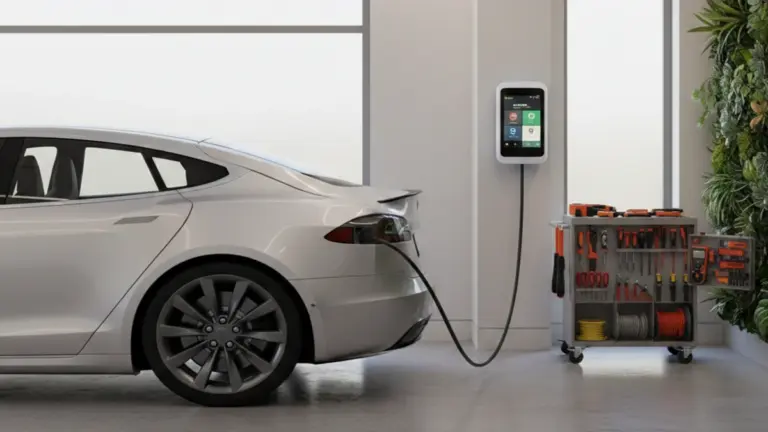
If you own a home with a garage or driveway, installing a Level 2 charging station is straightforward. 240 volts adds 25-30 miles of range per hour. Installation costs $500-1,500 depending on your electrical setup. Most EV owners find this completely solves their charging needs. You plug in overnight like you charge your phone. You wake up to a “full tank” every morning. This alone eliminates 90%+ of charging concerns for suburban and rural homeowners.
Urban Charging Improves Rapidly
For apartment and condo dwellers, the situation varies significantly by location. Many newer buildings include EV charging as standard amenity. Older buildings present challenges. Legislation in many states now prevents HOAs from prohibiting charging station installation. Various incentive programs subsidize multi-unit dwelling charging installations.
Public charging for daily use is becoming increasingly viable in urban areas. Cities like Los Angeles, San Francisco, Seattle, and New York have dense public charging networks. These make EV ownership practical even without home charging. It requires more planning and typically costs more than home charging.
Road Trips Are Feasible
The road trip infrastructure has reached adequacy in most regions. Tesla’s Supercharger network covers all major U.S. highways. Adapters are now available for non-Tesla EVs. This massive network is accessible to everyone. Other networks like Electrify America have built out sufficient fast-charging corridors. Cross-country travel is feasible. It’s not quite as thoughtless as with gas vehicles, but it works.
Looking Ahead: What’s Next for Electric Mobility
While this article focuses on 2025’s current trends, it’s worth glimpsing what’s emerging on the horizon. These developments will shape the market you’ll be buying into over the next few years.
Next-Generation Batteries
Battery technology continues evolving rapidly. Solid-state batteries entering production in 2025 will likely become mainstream by 2027-2028. They potentially offer 500+ mile ranges and 10-minute charging times. Sodium-ion batteries are emerging as an even cheaper alternative for budget EVs. They work well for energy storage applications too. This reduces dependence on lithium supplies.
Autonomous and Electric Converge
Autonomous technology and electric powertrains are converging. Most autonomous vehicle prototypes are electric. The electronic architecture required for autonomous systems integrates naturally with EV platforms. Full autonomy remains years away for consumer vehicles. But the gradual enhancement of driver assistance features will likely accelerate in EVs compared to traditional vehicles.
The Used EV Market Matures
The used EV market is maturing. Early electric vehicles are now 10-12 years old. This creates a secondary market with sufficient data on long-term reliability. Battery degradation data is now available. Most evidence suggests batteries degrade less than initially feared. Many 10-year-old Tesla Model S vehicles retain 85-90% of original range. Comprehensive warranties on newer EVs (often 8 years/100,000 miles for batteries) reduce risk.
Beyond Cars
Electric mobility is expanding beyond personal transportation. Electric aircraft for short regional routes are in testing. Certification is expected within 2-3 years. Electric boats are gaining traction in recreational and commercial fishing markets. Even agricultural equipment and construction machinery are beginning to electrify. These markets move more slowly due to unique duty cycles and requirements.
Key Takeaways: The 2025 Electric Mobility Reality
Let me bring this full circle with what actually matters for you right now:
Electric mobility in 2025 has crossed from “interesting alternative” to “practical choice for most people.” The convergence of improving technology, expanding infrastructure, competitive pricing, and supportive policies is clear. EVs now work for the majority of drivers. They’re not just for early adopters willing to accept compromises.
The charging infrastructure challenge is largely solved for daily driving. If you can charge at home or work, range anxiety is a non-issue for typical daily use. Road trips require slightly more planning. They’re entirely feasible with current fast-charging networks.
Total cost of ownership increasingly favors electric vehicles. This especially applies to people driving above-average annual mileage. Factor in fuel savings, reduced maintenance, and available incentives. Many EVs are now cheaper to own than comparable gas vehicles.
The market has diversified beyond early luxury offerings. Affordable EVs with genuine capability are now available. More are arriving throughout 2025. Whether you need a compact car, family SUV, or work truck, there’s likely an electric option that meets your needs.
Commercial and fleet adoption validates the technology. When businesses making cold economic calculations choose electric vehicles, it signals maturity. The technology is proven—not experimental or niche.
The Bottom Line
The electric mobility revolution isn’t coming—it’s here. It’s happening in your neighborhood right now. The question isn’t whether electric vehicles will become mainstream. It’s whether you’ll be an early adopter benefiting from current incentives and gaining experience with the technology. Or will you wait a few more years as the transition accelerates around you?
For most people reading this in 2025, the answer is increasingly clear. If you’re buying a vehicle in the next 12-24 months, you should seriously consider electric. Not because you’re an environmental activist or tech enthusiast. Simply because EVs now offer better economics, more convenience, and comparable or superior capabilities for most use cases. That’s not a prediction about the future—it’s the reality of 2025.
Your Next Step
Test drive an EV. Experience the instant torque, the quiet operation, and the different driving dynamics. Calculate your specific total cost of ownership. Research charging options for your living situation. Talk to actual EV owners about their experiences. You’ll likely be surprised by how positive most are. Even those who initially had reservations feel this way.
The electric mobility trend isn’t about saving the planet (though that’s a nice side benefit). It’s about practical transportation that increasingly makes more sense than the alternative. In 2025, that transition is finally, undeniably, happening at scale.