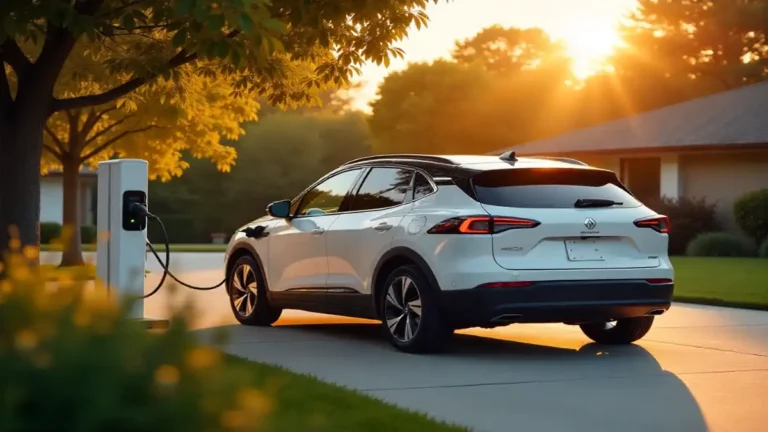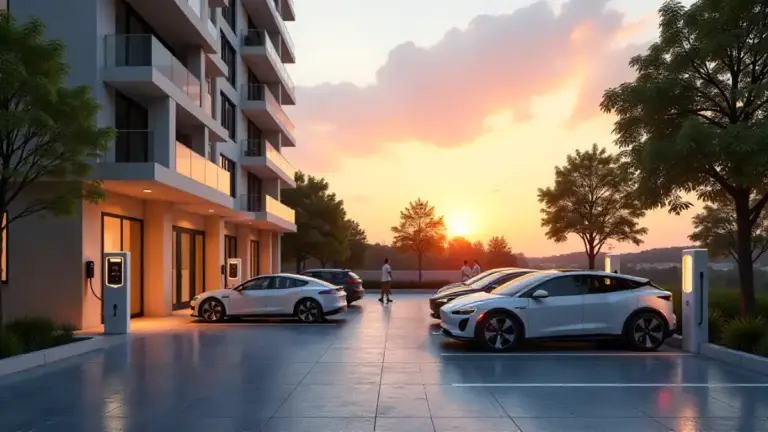
Electric vehicles in 2026 are practical, cost-efficient, and increasingly mainstream. With lower fuel and maintenance costs, improving battery tech, and expanding charging networks, EVs suit most daily drivers. Range anxiety is largely outdated, especially with home charging. While upfront prices remain higher, incentives and long-term savings balance the equation. EVs aren’t perfect environmentally, but they’re significantly cleaner than gasoline cars and improving rapidly.
You’ve probably noticed them more than ever — silently gliding past at traffic lights, filling up at charging stations outside your local grocery store, and dominating automotive headlines every other week. Electric vehicles are no longer a niche curiosity reserved for tech enthusiasts and early adopters. They’re mainstream, they’re multiplying fast, and they might just be your next car.
But here’s the question most people actually want answered: Is an EV actually worth it for me — my life, my budget, my daily drive?
That’s exactly what this guide is built to answer. I’ve spent years following the EV market closely, talking to real owners, and digging into the data — and I’m going to give you a clear, honest picture of where electric vehicles stand in 2026 . No hype, no greenwashing, just the straight facts and practical insights you need to make a smart decision.
Here’s what we’ll cover:
- How EVs actually work and what makes them different
- Real costs — buying, charging, and maintaining one
- The truth about range anxiety (it’s not what most people think)
- The best electric vehicles on the market right now
- Who should — and who shouldn’t — go electric today
How Electric Vehicles Actually Work
Before you can decide if an EV is right for you, it helps to understand what you’re actually buying. At its core, an electric vehicle replaces the internal combustion engine (ICE) with one or more electric motors powered by a large battery pack — typically mounted flat along the vehicle’s floor (called a “skateboard” platform).
When you press the accelerator, electricity flows from the battery to the motor, which converts it into rotational force — and you move. There’s no gearbox in the traditional sense, no exhaust pipe, and no need for oil changes. That simplicity is one of EVs’ biggest hidden advantages.
The Battery: The Heart of Every EV
Think of the battery pack like the fuel tank of a conventional car — except it stores electricity instead of gasoline, and it’s far more sophisticated. Modern EV batteries use lithium-ion chemistry, similar to your smartphone but orders of magnitude larger. A typical EV battery today stores between 50 and 100+ kilowatt-hours (kWh) of energy, with flagship models like the Mercedes EQS offering up to 118 kWh.
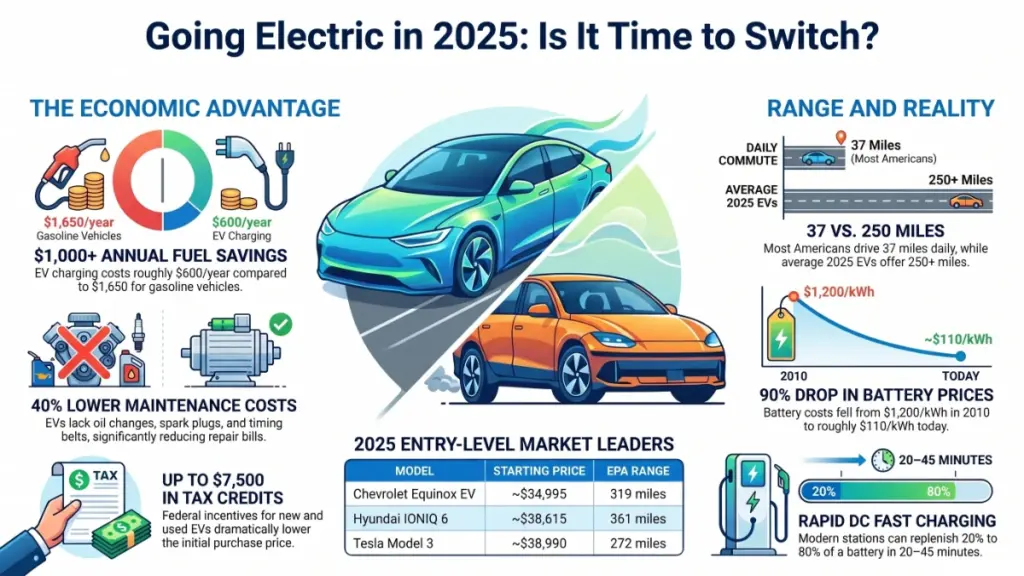
Battery technology is improving rapidly. According to BloombergNEF, battery pack prices have fallen over 90% in the last decade — from around $1,200 per kWh in 2010 to roughly $110–$130 per kWh by 2026 . This is the single biggest reason EVs are becoming more affordable each year.
Regenerative Braking: Getting Energy Back
One clever feature unique to electric drivetrains is regenerative braking. When you lift off the accelerator or brake gently, the motor runs in reverse — acting as a generator to recapture kinetic energy and send it back to the battery. In stop-and-go city driving, this can recover a meaningful chunk of energy, extending your range beyond what you’d expect from the battery size alone.
The Real Cost of Owning an Electric Vehicle
This is where most people have either overblown fears or unrealistic optimism. Let’s cut through both.
Purchase Price: The Gap Is Closing
Yes, EVs still carry a higher sticker price on average than their gasoline equivalents. But the gap is narrowing quickly — and once you factor in incentives and running costs, the math often shifts dramatically.
In the U.S., the Inflation Reduction Act offers up to $7,500 in federal tax credits for eligible new EVs and up to $4,000 for qualifying used EVs, subject to income limits and vehicle price caps. Many states add their own rebates on top of that.
Here’s a quick look at popular models and their 2026 starting prices (before incentives):
| Model | Starting Price (Before Incentives) | EPA Range | Charging Speed (DC Fast) |
|---|---|---|---|
| Tesla Model 3 (RWD) | ~$38,990 | 272 miles | Up to 170 kW |
| Chevrolet Equinox EV | ~$34,995 | 319 miles | Up to 150 kW |
| Ford Mustang Mach-E | ~$39,995 | 247–312 miles | Up to 150 kW |
| Hyundai IONIQ 6 (RWD) | ~$38,615 | 361 miles | Up to 220 kW |
| Rivian R1T (Standard) | ~$69,900 | 270 miles | Up to 220 kW |
| BMW iX (xDrive50) | ~$87,100 | 324 miles | Up to 195 kW |
Prices are approximate 2026 MSRP. Always confirm current pricing and incentive eligibility with your dealer or at fueleconomy.gov.
Charging Costs vs. Gasoline: The Numbers Are Striking
This is where EV ownership really starts to make financial sense. According to the U.S. Department of Energy, the average American pays the equivalent of about $1.00–$1.50 per gallon when charging an EV at home — compared to gasoline prices that fluctuated between $3.00 and $3.50 per gallon nationally in early 2026 .
Running the numbers on a typical 15,000-mile year:
- Gasoline car (30 MPG at $3.30/gal): ~$1,650/year in fuel
- EV charged at home (~$0.14/kWh, 3.5 miles/kWh): ~$600/year in electricity
That’s roughly $1,000+ in annual fuel savings — and that’s before factoring in the significantly lower maintenance costs.
Maintenance: Where EVs Really Shine
Electric motors have far fewer moving parts than combustion engines. No spark plugs, no timing belts, no oil changes, no transmission fluid. A 2020 study by Consumer Reports found that EV owners spend roughly 40% less on maintenance and repairs over the life of the vehicle compared to ICE car owners.
What you will need to budget for:
- Tires (EVs are heavier, so they wear tires faster)
- Brake pads (though regenerative braking extends their life significantly)
- Cabin air filters
- Battery coolant (checked periodically, not frequently replaced)
Range Anxiety: Is It Still a Real Problem?
Let’s be direct: range anxiety is real, but it’s far more manageable in 2026 than it was even three years ago. And for the vast majority of drivers, it’s barely a concern at all.
The average American drives about 37 miles per day, according to the Federal Highway Administration. Meanwhile, the average new EV sold in 2026 offers well over 250 miles of EPA-rated range — meaning most people could go nearly a week without charging if they’re topping up at home each night.
Think of it like this: when was the last time you ran your phone completely dead? Most people plug in at night without thinking about it. Home charging works the same way — you wake up every morning with a “full tank.”
The Charging Network Is Growing Fast
The U.S. public charging network has expanded dramatically. As of early 2026 :
- There are over 170,000 public charging stations across the country (U.S. DOE)
- Tesla’s Supercharger network — now open to non-Tesla vehicles — offers some of the fastest and most reliable charging available
- The National Electric Vehicle Infrastructure (NEVI) program is deploying fast chargers along every major U.S. highway corridor
DC Fast Charging (Level 3) can replenish most EVs from 20% to 80% in 20–45 minutes — comfortably within a lunch or coffee break on a road trip.
When Range Anxiety Is Legitimate
That said, it’s worth being honest: if you live in a rural area without home charging access, or regularly drive 200+ miles daily without predictable stops, today’s EV infrastructure may not fully serve your needs yet. For those situations, a plug-in hybrid (PHEV) can be an excellent bridge — giving you 30–50 miles of electric range for daily driving with a gasoline engine as backup.
The Environmental Picture: How Green Are EVs, Really?
This is a nuanced conversation, and I think it deserves honesty rather than cheerleading.
Yes, EVs produce zero direct tailpipe emissions — which is genuinely significant for urban air quality. But a complete environmental picture includes:
- Grid electricity source: An EV charged on coal-heavy electricity has a larger carbon footprint than one charged on renewable energy. That said, even on the average U.S. grid (which is cleaner than it’s ever been), EVs produce significantly fewer lifecycle emissions than gasoline cars.
- Battery manufacturing: Producing a large lithium-ion battery has an upfront carbon cost — typically offset within 1–3 years of driving.
- Battery recycling: This is an area the industry is actively working to improve, with companies like Redwood Materials building large-scale recycling infrastructure in the U.S.
The Union of Concerned Scientists found that in 2024, an EV driven in the U.S. produces less than half the lifetime greenhouse gas emissions of the average new gasoline car — and that advantage grows as the grid gets cleaner.
Bottom line: EVs aren’t perfect, but they are meaningfully better for the climate in almost every real-world scenario, and they’re improving as the grid decarbonizes.
The Best Electric Vehicles to Consider in 2026
After years of tracking this market closely, here are the EVs I’d point people toward across different needs and budgets:
Best Value Overall: Chevrolet Equinox EV
Starting around $35,000 (before incentives), the Equinox EV offers over 300 miles of range, a spacious interior, and wide availability. It’s the EV that finally brings competitive pricing to the mainstream SUV segment.
Best Long Range: Hyundai IONIQ 6 (RWD)
With up to 361 miles of EPA-rated range and blazing-fast 800V charging architecture, the IONIQ 6 is a genuine road-trip machine. Its aerodynamic design is functional, not just stylish — contributing directly to that impressive efficiency.
Best Performance: Tesla Model S Plaid
This one’s in a different price bracket (~$89,990), but it’s worth mentioning because it redefines what “fast” means. 0–60 mph in under 2 seconds. In a sedan. With four seats. It’s genuinely remarkable technology.
Best for Families: Kia EV9
A three-row electric SUV with up to 304 miles of range, the EV9 brought practical family hauling to the EV world in a big way. It also features Kia and Hyundai’s excellent 800V charging system.
Best Truck: Ford F-150 Lightning
For those who need truck capability, the Lightning delivers — with real towing capacity, a massive frunk, and the ability to power your home during an outage (with the optional Intelligent Backup Power system).
Is an EV Right for You? Honest Questions to Ask Yourself
Rather than telling everyone to go buy an EV tomorrow, here’s a practical decision framework:
You’re likely a great EV candidate if you:
- Drive less than 200 miles per day in typical usage
- Have access to home or workplace charging
- Do most of your driving in or around a metro area
- Are looking to reduce long-term fuel and maintenance costs
- Plan to own the vehicle for 4+ years
You may want to wait or consider a PHEV if you:
- Frequently tow heavy loads over long distances
- Have no access to home charging and live far from public chargers
- Drive extremely high annual mileage on unpredictable rural routes
- Aren’t in a financial position to absorb a higher upfront cost
The sweet spot is most American households: a second car (or primary commuter car) driven 30–80 miles per day with overnight home charging. For that use case, an EV is almost always cheaper to operate and more convenient than gasoline over a 5-year period.
The Road Ahead: What’s Coming for Electric Vehicles
The EV industry in 2026 is accelerating faster than most people realize. Here’s what to watch in the next 2–3 years:
- Solid-state batteries: Several manufacturers — including Toyota and QuantumScape — are targeting commercialization by 2027–2028, promising faster charging, greater energy density, and improved safety over liquid-electrolyte lithium-ion cells.
- Bidirectional charging (V2H/V2G): More vehicles will be able to power your home during outages or feed electricity back to the grid during peak demand — turning your car into a mobile energy asset.
- Sub-$25,000 EVs: With battery costs falling and more manufacturers targeting the budget segment, genuinely affordable EVs are approaching reality in the U.S. market.
- Faster charging: Ultra-fast charging infrastructure (350 kW+) is expanding, with some vehicles already capable of adding 200 miles in under 15 minutes.
Key Takeaways
If there’s one thing I want you to walk away with, it’s this: electric vehicles have crossed the threshold from “interesting technology” to “genuinely practical choice” for most American drivers. The range is sufficient, the charging network is expanding rapidly, and the long-term economics are compelling.
Here are the five things to remember:
- The real-world cost of EV ownership is often lower than gasoline once fuel and maintenance savings are factored in over 4–5 years.
- Range anxiety is mostly a myth for daily driving — average Americans drive far less than what even budget EVs can handle on a single charge.
- Home charging is the game-changer — the convenience of waking up to a “full tank” every day genuinely transforms the ownership experience.
- Federal and state incentives can significantly reduce the purchase price — always check your eligibility before buying.
- The technology is improving fast — if today’s options don’t fully suit your needs, the 2026–2027 model years may well change that.
The best way to decide? Spend a weekend with a rental EV or test drive a few models. Nothing overcomes hesitation like experience. You might be surprised how quickly it changes your thinking.
Sources & Further Reading:
- U.S. Department of Energy – Alternative Fuels Data Center: afdc.energy.gov
- Federal Highway Administration – National Household Travel Survey
- BloombergNEF – Electric Vehicle Outlook 2024
- Union of Concerned Scientists – Driving Cleaner Report
- Consumer Reports – EV Ownership Survey
- U.S. EPA – fueleconomy.gov
- U.S. DOE – NEVI Program Updates