You know what stops most people from buying an electric car? It’s not the price tag anymore. It’s not even range anxiety, though that’s still a close second. It’s the nagging worry about charging: “What if I can’t find a charger when I need one?”
I get it. The idea of swapping a five-minute gas station stop for… what, exactly? That uncertainty feels risky. But here’s the thing: the electric car charging landscape has transformed dramatically over the past few years, and the reality is both better and more complicated than most people realize. Let me walk you through what’s actually happening out there on the roads and in parking lots across the country.
The Three Types of Charging You Need to Understand
Let’s start with the basics, because not all charging is created equal. Think of it like this: charging an EV is less like filling a gas tank and more like charging your phone—you’ve got different speeds for different situations.
Level 1 charging is your standard household outlet. Yes, the same one you plug your phone charger into. It’s painfully slow—we’re talking about 3 to 5 miles of range per hour of charging. That means if your EV has a 250-mile range and you completely drain it, you’re looking at two full days to charge it completely. Sounds terrible, right? But here’s the twist: most people never use their full range in a single day. If you drive 30 miles round-trip to work, you can replenish that overnight with just six hours plugged in. For many EV owners, Level 1 charging is perfectly adequate for daily use.
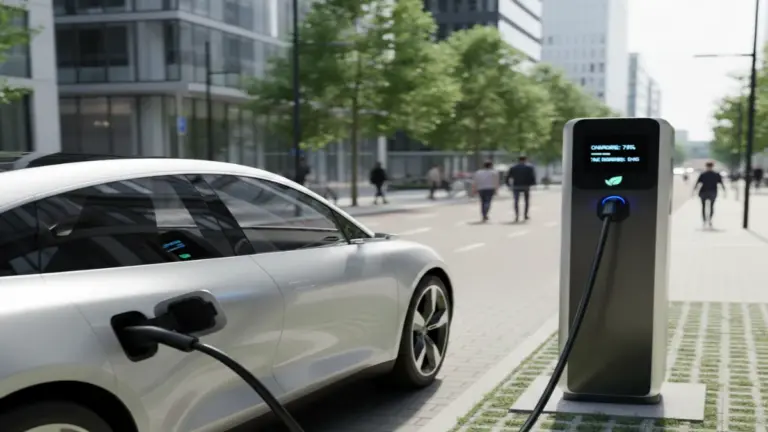
Level 2 charging is where things get practical. These chargers operate on 240 volts—the same power that runs your electric dryer. You’ll find them at homes (installed by an electrician), workplaces, shopping centers, and hotels. They deliver 12 to 80 miles of range per hour depending on the charger and your vehicle. This is the sweet spot for most EV owners. Install one in your garage, and your car is fully charged every morning without you thinking about it. Park at a Level 2 charger while you grab groceries or watch a movie, and you’ll add 50-60 miles easily.
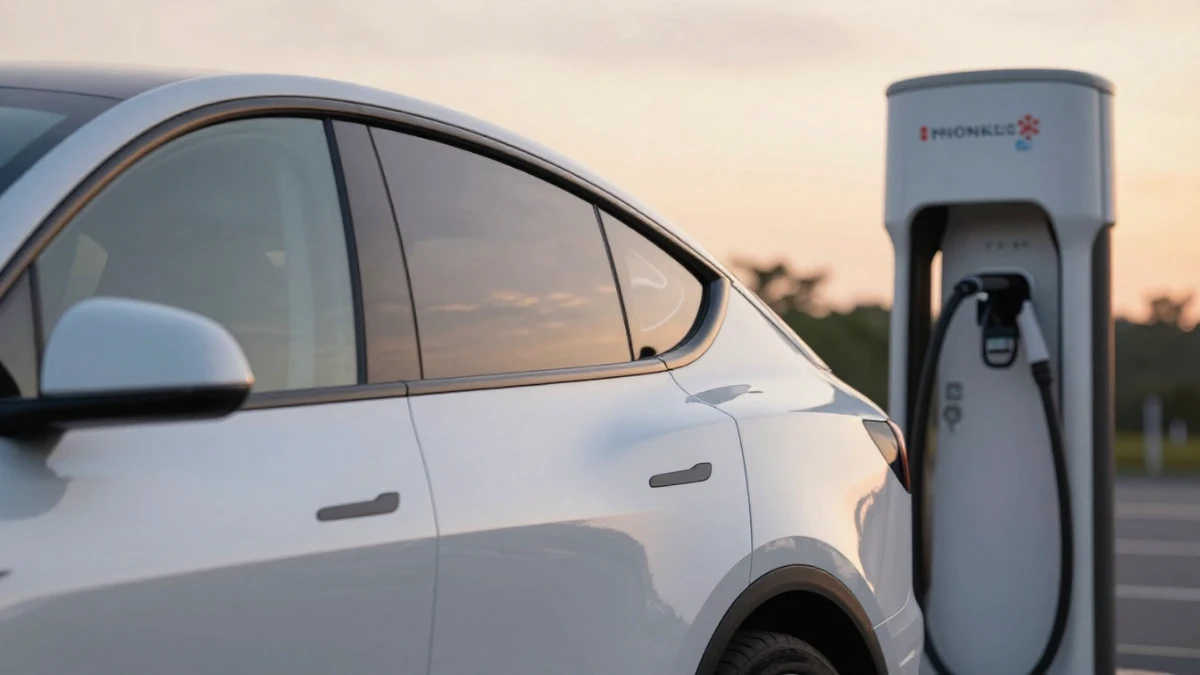
DC Fast Charging is the headline-grabber. These are the high-powered stations that can add 100 to 200 miles of range in just 20 to 30 minutes. You’ll find them along highways and major travel corridors. Networks like Tesla’s Supercharger, Electrify America, EVgo, and ChargePoint operate these stations. This is your road trip solution—pull in, grab a coffee, stretch your legs, and you’re back on the road.
Where Charging Infrastructure Actually Stands Today
Let me give you the numbers, because they matter. As of late 2024, the United States has over 60,000 public charging stations with more than 160,000 individual charging ports. For context, there are roughly 150,000 gas stations in the U.S., but each gas station has multiple pumps, so we’re still playing catch-up.
But distribution is everything. If you live in California, you’re spoiled for choice—the state has nearly 15,000 public charging stations. Colorado, Florida, New York, and Texas are also well-covered. But drive through rural Montana or Wyoming? You’ll need to plan more carefully. The infrastructure follows population density and EV adoption rates, which creates a bit of a chicken-and-egg problem in some regions.
The good news? Growth is accelerating. The federal government’s Infrastructure Investment and Jobs Act allocated $7.5 billion specifically for EV charging infrastructure, with a goal of building 500,000 public chargers by 2030. Major automakers are investing heavily too. General Motors partnered with EVgo to build thousands of fast chargers. Ford, BMW, and Honda are collaborating on charging networks. Even gas station chains like Shell and BP are adding EV chargers to their locations.
Tesla deserves special mention here. Their Supercharger network—with over 50,000 chargers globally and more than 20,000 in North America—was once exclusive to Tesla owners. But starting in 2024, Tesla began opening these stations to other EVs through adapters. This is a game-changer, essentially doubling or tripling the available fast charging options for non-Tesla EVs in many areas.
The Home Charging Advantage Nobody Talks About Enough
Here’s something that took me a while to fully appreciate: for most EV owners, public charging infrastructure is actually secondary. The primary “gas station” is their home garage.
Think about it differently. When you own a gas car, you start every week with an empty tank and you have to visit a gas station. With an EV, you start every single day with a “full tank” if you charge at home overnight. You never need to make a dedicated trip to refuel during your normal routine. Your car charges while you sleep, while you eat dinner, while you binge-watch your favorite show.
About 80% of EV charging happens at home. This fundamentally changes the refueling experience. That 20-minute charge time at a DC fast charger? It only matters on road trips or unusual days when you’ve driven way more than typical. For the average American who drives 40 miles per day, home charging covers everything.
The cost is compelling too. Charging at home typically costs $0.10 to $0.15 per kilowatt-hour, depending on your electricity rates. For a vehicle that gets 3-4 miles per kWh, that’s roughly $3 to $5 to drive 100 miles. Compare that to a gas car getting 30 mpg with $3.50/gallon gas—you’d spend about $11.67 to drive the same distance. Over a year of driving 12,000 miles, that’s potentially $800-1,000 in savings.
Of course, home charging isn’t universal. If you live in an apartment or condo without dedicated parking, this advantage disappears. This is actually one of the biggest infrastructure challenges we face—making charging accessible to people who rent or live in multi-unit dwellings. Some states are passing “right to charge” laws, and we’re seeing more apartment complexes add chargers, but it’s slow going.
The Public Charging Experience: Better Than You Think, Still Imperfect
Let me be honest: public charging isn’t always seamless. I’d love to paint a perfect picture, but you deserve the truth.
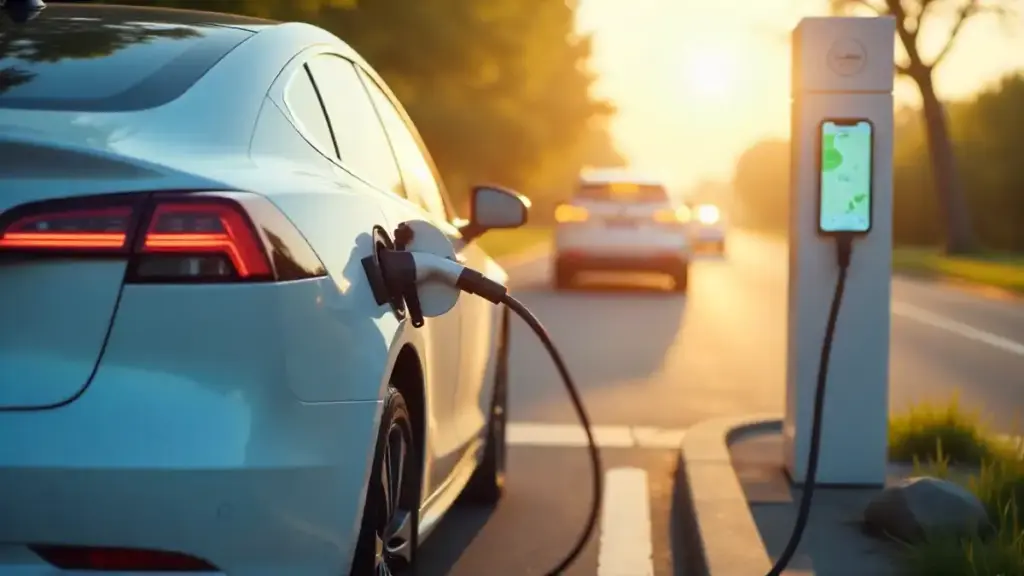
The best experiences are genuinely impressive. Pull up to a Tesla Supercharger in a Tesla, and it’s automatic—the car recognizes the stall, you plug in, it charges, and billing happens in the background. No apps, no cards, no hassle. Some newer Electrify America stations offer a similarly smooth experience with plug-and-charge capability for compatible vehicles.
But other times? You might arrive at a charging station only to find it’s occupied, or worse, broken. Reliability has been a legitimate problem. Studies have found that roughly 25-30% of DC fast charging attempts result in some kind of failure—the charger won’t initiate, it charges slower than advertised, or the payment system doesn’t work. This is frustrating and unacceptable, but the good news is that operators are aware and investing heavily in maintenance and reliability improvements.
The payment situation is improving but still fragmented. You often need multiple apps on your phone—one for Electrify America, another for EVgo, another for ChargePoint. Some stations accept credit cards directly, others don’t. It’s like if every gas station required a different membership card. The industry is moving toward more universal payment options and plug-and-charge technology, but we’re not quite there yet.
Charging speed varies too. A DC fast charger might advertise 350 kW capability, but your vehicle might only accept 150 kW, and even then, it only charges at peak speed when the battery is between 10-80%. That last 20% slows down considerably to protect battery health. This is why experienced EV drivers rarely charge to 100% on road trips—it’s more time-efficient to charge to 80% and stop again later.
What About Road Trips?
This is the big question, isn’t it? Can you actually take an electric car on a cross-country drive?
The answer is increasingly yes, with caveats. Major interstate highways—I-5 on the West Coast, I-95 on the East Coast, I-10 across the South, and I-80 cutting through the middle—all have reasonably good fast charging coverage. Apps like PlugShare, A Better Route Planner, and even the navigation systems in most EVs will map out charging stops for you.
The experience looks different than a gas road trip. Instead of driving 400 miles, stopping for five minutes to fill up, and driving another 400 miles, you’ll drive 200-250 miles, stop for 20-30 minutes to charge while you eat lunch or use the restroom, then drive another 200-250 miles. For many people, this isn’t actually a big change—most of us were stopping every few hours anyway. You’re just coordinating your stops with charging.
But certain routes remain challenging. If you want to drive through rural North Dakota or explore national parks in remote areas, you’ll need to plan carefully or choose a long-range EV. The Tesla Model S Long Range can go 400+ miles on a charge, which helps tremendously. But a shorter-range EV might require more strategic planning.
Weather affects things too. Cold temperatures reduce battery efficiency by 20-40%, meaning winter road trips require more frequent charging stops. Most EVs have battery heating systems to mitigate this, but it’s a real consideration if you live in Minnesota or Maine.
The Workplace and Destination Charging Revolution
One of the quieter success stories in charging infrastructure is destination charging. Many employers now offer free or low-cost Level 2 charging as an employee benefit. You’re already at work for eight hours—why not charge while you’re there?
Hotels are catching on too. Major chains like Marriott, Hilton, and Hyatt are installing chargers at their properties. It’s becoming a competitive amenity, like free Wi-Fi. Shopping centers and entertainment venues see it similarly—anything that keeps customers on-site longer is valuable. The Mall of America in Minnesota has over 100 EV charging spots. Some movie theaters offer free charging while you watch a film.
This distributed charging approach might actually be more important than massive highway charging plazas. If your car is adding range while you’re doing things you’d do anyway—working, shopping, eating, sleeping—then dedicated charging trips become rare.
What’s Coming Next?
The charging infrastructure is evolving faster than most people realize. Here’s what’s on the horizon that genuinely excites me:
Faster charging technology is arriving. New EVs are starting to support 350 kW charging speeds, and batteries are improving to handle these speeds safely. Imagine adding 200 miles of range in just 10 minutes—that’s not science fiction, it’s happening now with vehicles like the Porsche Taycan and Hyundai Ioniq 5.
Wireless charging is moving from concept to reality. Companies are developing systems where you simply park over a charging pad and your car charges automatically—no cables. It’ll likely appear first in commercial fleets and luxury vehicles before trickling down to mainstream cars.
Vehicle-to-grid (V2G) technology could let your EV act as a battery for your home or even feed power back to the grid during peak demand, earning you money. Ford’s F-150 Lightning already offers home backup power capability.
Battery swapping is being tried again. Chinese company NIO has hundreds of battery swap stations where robots remove your depleted battery and install a fresh one in under five minutes. It hasn’t caught on in the U.S. yet, but it’s an interesting alternative model.
So, Is the Infrastructure Good Enough Today?
Here’s my honest assessment: if you can charge at home and do most of your driving within 200 miles of home, the charging infrastructure is absolutely good enough today. You’ll rarely think about public charging.
If you frequently take long road trips, especially on less-traveled routes, the infrastructure is workable but requires more planning than you’re used to with a gas car. It’s getting better every month.
If you can’t charge at home—you live in an apartment without charging access, or you park on the street—the infrastructure isn’t quite there yet in most places. This is the biggest gap we need to solve.
The trajectory is clear, though. Five years ago, long-distance EV travel was genuinely difficult outside of California and a few other states. Today, it’s entirely feasible across most of the country. Five years from now, I expect it’ll be as convenient as driving a gas car for the vast majority of people.
Making Your Own Decision
If you’re considering an electric car, here’s my advice: map out your actual driving patterns. Where do you drive regularly? Can you install a home charger? What’s your longest typical trip?
Use apps like PlugShare to see what charging options exist along your regular routes. Look at specific EV models you’re interested in and their real-world range (not just the EPA rating). Talk to EV owners in your area about their experiences.
The charging infrastructure isn’t perfect, and I won’t pretend it is. But for most people, in most situations, it’s better than the stories and fears suggest. The fundamentals are in place, and the momentum is undeniable. We’re past the early adopter phase—we’re now in the “early majority” stage where the infrastructure is genuinely practical for mainstream drivers.
Your mileage, quite literally, may vary based on where you live and how you drive. But the electric future isn’t coming—it’s already here, and it’s more accessible than you might think.