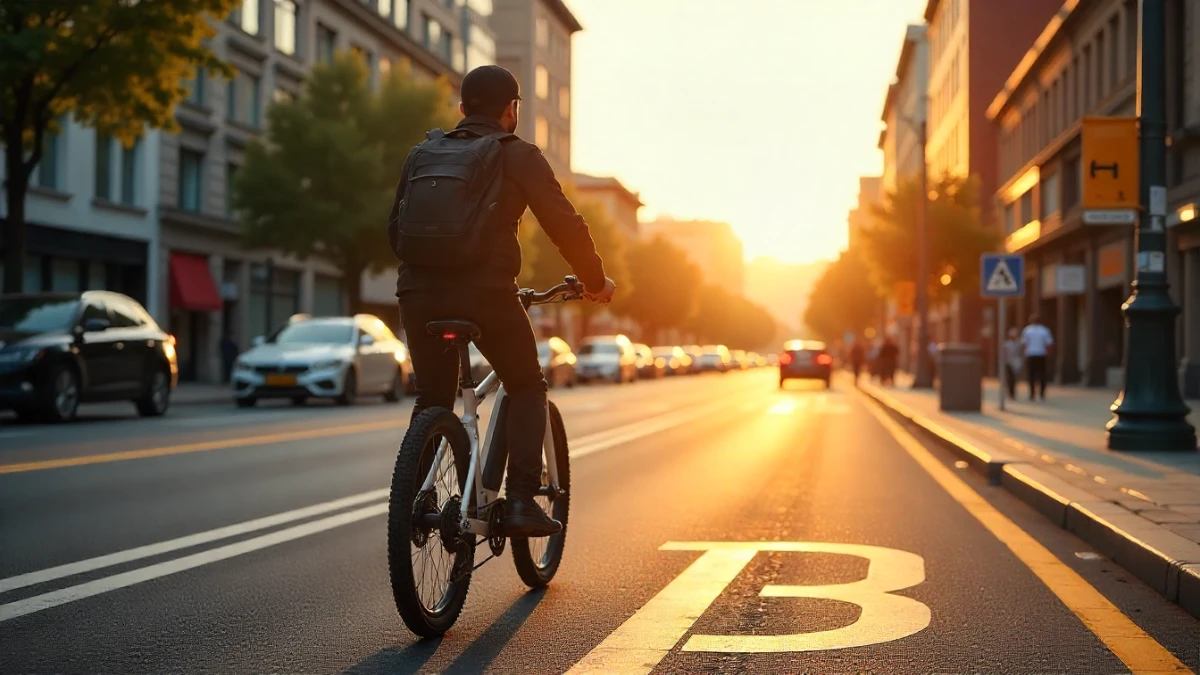
Picture this: You’re gliding down your city’s bike lane on a warm spring morning. No traffic jams. No parking headaches. No gas station stops. Instead, you’re enjoying the open road with a smooth electric boost propelling you effortlessly past gridlocked cars. Welcome to the e-bike revolution.
Electric bicycles aren’t just a trendy gadget. In fact, they’re transforming how millions of people move through their daily lives. The global e-bike market reached $38 billion in 2025. Furthermore, projections show it will hit $120 billion by 2030. Over 49 million units are expected to be sold worldwide in 2025 alone. Meanwhile, in the United States, e-bike sales have surged by 240% since 2019. That growth shows no signs of slowing down.
Perhaps you’re a daily commuter tired of sitting in traffic. Or maybe you’re a fitness enthusiast looking for low-impact exercise. You might even be someone who wants to reduce their carbon footprint without sacrificing convenience. Whatever your situation, e-bikes offer something genuinely remarkable. But what exactly makes these pedal-assist machines so appealing? After researching the latest data and industry trends, I’ve compiled the most compelling advantages that are driving this two-wheeled revolution.
In this comprehensive guide, you’ll discover why e-bikes are becoming the transportation choice for urban dwellers. Additionally, you’ll learn how they can save you thousands of dollars annually. Moreover, you’ll see why they might just be the smartest investment you make this year. Let’s explore the advantages that are making electric bicycles one of the fastest-growing transportation solutions on the planet.
1. Massive Cost Savings: Your Wallet Will Thank You
Let’s talk money. One of the most compelling reasons people switch to e-bikes is the dramatic reduction in transportation costs. Consider what you currently spend on your car: gas, insurance, maintenance, parking, registration fees. The list goes on. Now imagine slashing most of those expenses.
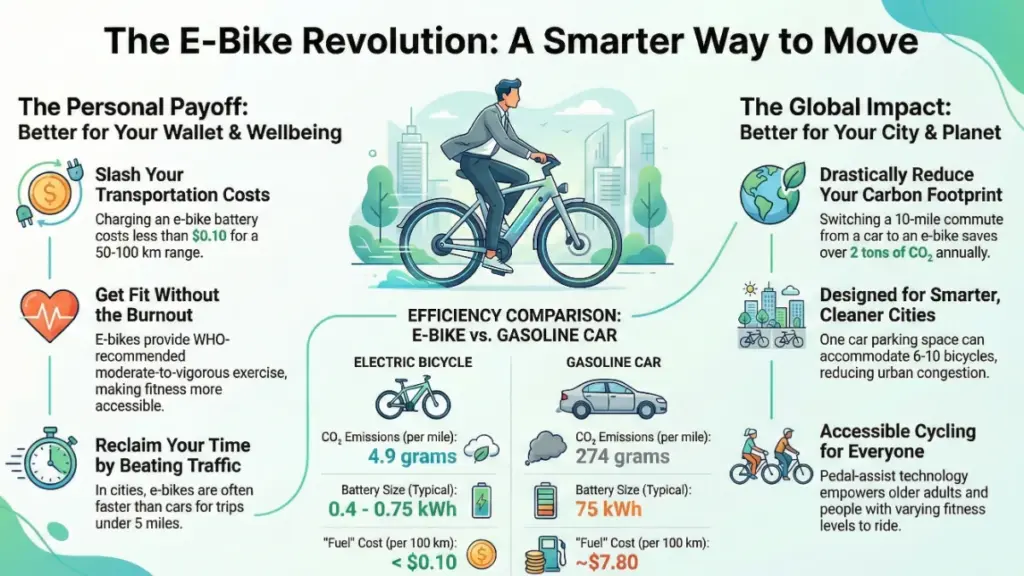
Currently, average U.S. gas prices sit at $3.12 per gallon in early 2025. Meanwhile, the typical American spends over $2,000 annually on fuel alone. As a result, the economics of e-bikes become crystal clear. Charging an e-bike costs pennies—typically less than $0.10 to fully charge a battery. That battery can take you 50-100 kilometers. In comparison, that’s roughly equivalent to getting 3,000 miles per gallon.
However, the savings don’t stop at fuel. Insurance for an e-bike costs a fraction of car insurance. In fact, you might not even need it. Maintenance is equally minimal. There are no oil changes, no transmission repairs, no expensive engine work. Instead, you’ll need occasional brake adjustments and tire replacements. That’s about it.
For delivery riders and gig workers, e-bikes are a game-changer. Studies show that using an e-bike for food delivery can increase earnings by reducing downtime and fuel costs. Consequently, you can complete more deliveries per hour without the physical exhaustion that comes with traditional cycling. Best of all, you’re pocketing the money you’d otherwise spend on gas.
2. Environmental Impact: Ride Green, Live Green
Climate change isn’t just a future problem—it’s happening right now. Transportation accounts for a significant portion of global greenhouse gas emissions. Moreover, personal vehicles are among the biggest culprits. Fortunately, e-bikes offer a practical way for individuals to make a real environmental difference.
The numbers are striking. E-bikes emit just 4.9 grams of CO₂ per mile. In contrast, gasoline-powered cars emit 274 grams. Over the course of a year, one e-bike can prevent approximately 225 kilograms of CO₂ emissions. For example, if you commute 10 miles each way to work five days a week, switching from a car to an e-bike could reduce your carbon footprint by over 2 tons annually.
Beyond carbon emissions, e-bikes don’t contribute to air pollution. There are no exhaust fumes, no particulate matter, no smog. As a result, cities that embrace e-bike infrastructure see measurable improvements in air quality. This makes them healthier places to live for everyone—not just riders.
Additionally, e-bikes have a significantly smaller manufacturing footprint than electric cars. They require fewer raw materials and less energy to produce. Their batteries are also much smaller. While a Tesla Model 3 uses a 75 kWh battery, most e-bikes use batteries between 0.4 and 0.75 kWh. That’s about 100 times less battery capacity for similar short-range transportation needs.
3. Health and Fitness Benefits: Get Fit Without the Burnout
Here’s a common misconception: e-bikes don’t provide a real workout. However, the reality is quite different. Research consistently shows that e-bike riders get substantial exercise. In fact, they often get more than traditional cyclists because they ride more frequently and for longer distances.
A 2017 study compared e-bikes with walking and traditional bicycles. The findings revealed that e-bikes provide moderate physical activity on flat and downhill segments. Meanwhile, they deliver vigorous physical activity on uphill segments. Furthermore, a 2021 study examined a 3-mile e-bike commute. It confirmed that the ride met the intensity level of healthy physical activity recommended by the World Health Organization.
What’s the key advantage? Pedal-assist technology removes the intimidating barrier that keeps many people from cycling regularly. Worried about arriving at work drenched in sweat? The motor assist helps you maintain a comfortable pace. Concerned about tackling that steep hill on your route home? The boost makes it manageable. Ultimately, this accessibility means people actually use their e-bikes consistently, building cycling into their daily routines.
The health benefits extend beyond cardiovascular fitness. Specifically, regular e-bike riding can:
- Improve cardiovascular health and reduce risks of heart disease
- Strengthen muscles throughout your body
- Reduce stress and combat depression through outdoor activity
- Improve cognitive functioning and boost immune system strength
- Provide low-impact exercise that’s easier on joints than running
For older adults and people with physical limitations, e-bikes are particularly transformative. They enable individuals who might struggle with traditional cycling to stay active, independent, and mobile well into their later years. Moreover, the pedal-assist feature allows riders to control their level of exertion. This makes exercise adaptable to current energy levels and health conditions.
4. Time Efficiency: Beat the Traffic, Reclaim Your Life
Time is money, and e-bikes save you both. In congested urban areas, e-bikes can actually be faster than cars for trips under 5 miles. While drivers sit idling in traffic or circle endlessly searching for parking, e-bike riders zip through bike lanes. They take shortcuts unavailable to cars. Then they park right at their destination.
Consider a typical urban commute scenario. A 5-mile drive might take 25-30 minutes in rush hour traffic. Add another 10 minutes for finding and walking from parking. In contrast, that same 5-mile distance on an e-bike takes about 15-20 minutes, door-to-door. As a result, you’ll arrive faster, less stressed, and ready to start your day.
E-bikes typically assist speeds up to 20-28 mph, depending on local regulations and class. This is the sweet spot for urban transportation. It’s fast enough to keep pace with city traffic yet controlled enough to remain safe in bike lanes and shared spaces. Consequently, this speed advantage transforms how far you can realistically travel by bike. Your practical range expands from a couple of miles to 10-15 miles or more.
For multi-modal commuters, e-bikes solve the ‘last mile’ problem beautifully. Combining an e-bike with public transit extends your reach significantly. First, ride to the subway station. Next, fold your bike if you have a folding model. Then take the train. Finally, ride from the station to your final destination. This integrated approach often beats driving in both time and convenience.
5. Parking Paradise: Never Circle the Block Again
Anyone who lives in a major city knows the parking nightmare all too well. You spend 20 minutes circling the block. Or you pay $30 for garage parking. Worse yet, you get ticketed for overstaying a meter. Fortunately, e-bikes eliminate this headache entirely.
Most businesses, office buildings, and public spaces provide bike racks or designated bike parking areas. Therefore, you can secure your e-bike right at your destination. Often, this is closer to the entrance than you could ever park a car. In cities like New York and San Francisco, parking can cost $25-50 per day. As a result, the annual savings from bike parking alone can cover the cost of your e-bike within a year or two.
Studies show that parking availability significantly impacts urban congestion. E-bikes require minimal space and offer flexible parking options in bicycle-friendly areas. Consequently, they help ease the overall congestion burden in cities. Some progressive cities are even converting car parking spaces into bike parking corrals. They recognize that one car parking spot can accommodate 6-10 bicycles.
6. Accessibility and Inclusivity: Cycling for Everyone
Traditional cycling can be physically demanding. This excludes many people who would otherwise enjoy two-wheeled transportation. However, e-bikes change this equation dramatically. They make cycling accessible to older adults, people recovering from injuries, individuals with varying fitness levels, and parents carrying children or cargo. Additionally, they help commuters who need to arrive fresh and professional.
The pedal-assist technology essentially levels the playing field. For instance, a 65-year-old grandmother can ride alongside her 30-year-old son without either feeling held back or rushed. Similarly, someone just beginning their fitness journey can keep pace with experienced cyclists. Ultimately, this inclusivity creates opportunities for social cycling that wouldn’t otherwise exist.
Research from UCLA found that e-bikes enable people of all fitness levels to engage in active transportation. Specifically, they can ride for longer periods and greater distances. As a result, this democratization of cycling is helping build more diverse, active communities around the world.
7. Urban Infrastructure Compatibility: Designed for City Life
E-bikes seamlessly integrate with existing urban infrastructure in ways that cars simply can’t. They’re perfectly sized for bike lanes, protected cycle tracks, and multi-use paths. Meanwhile, many cities are investing heavily in cycling infrastructure. For example, the European Union allocated nearly $3.6 billion to cycling projects between 2021-2027. Similarly, U.S. cities are following suit.
E-bikes can legally access bike lanes and restricted pathways in most jurisdictions. This allows riders to navigate through areas off-limits to cars. This advantage becomes especially pronounced in historic city centers, pedestrian zones, and congestion-priced areas. In these locations, car access is limited or expensive.
The compact size makes e-bikes ideal for running errands and short commutes. Cities like Portland, Copenhagen, and Amsterdam have demonstrated how prioritizing bike infrastructure reduces overall traffic congestion. At the same time, it improves quality of life. In the U.S., programs like New York’s Citi Bike have integrated e-bikes into public bike-share systems. Notably, 40% of bikes are now electric in some European systems like Paris’ Vélib’.
8. Technology Integration: Smart Features for Modern Riders
Modern e-bikes aren’t just bicycles with motors. Rather, they’re sophisticated pieces of technology. They feature GPS tracking, smartphone connectivity, anti-theft mechanisms, and automatic transmission systems. Additionally, they include integrated lighting and fitness tracking capabilities. Leading manufacturers like Bosch have introduced cloud-based data transmission capabilities. Furthermore, companies like Giant unveiled 2026 models featuring automatic hubs and radar systems for enhanced safety.
Battery technology continues improving rapidly. Modern lithium-ion batteries offer ranges of 50-100+ kilometers per charge. Moreover, innovations in sodium-ion and solid-state batteries promise even better performance. They deliver faster charging times and longer lifespans.
9. Versatility: One Bike, Many Uses
E-bikes come in an impressive variety of configurations. Commuter e-bikes are designed for daily urban transportation. Cargo e-bikes can transport groceries or children. Mountain e-bikes excel in off-road adventures. Folding e-bikes are perfect for storage and multi-modal commuting. Road e-bikes handle longer distances with ease. Consequently, this versatility means you can find an e-bike perfectly suited to your lifestyle.
The cargo segment is experiencing remarkable growth. Global sales hit $2.1 billion in 2023. Cities are recognizing that cargo e-bikes can replace delivery vans for last-mile logistics. In fact, studies show 40% cost savings over traditional vans. At the same time, they significantly reduce emissions and traffic congestion.
10. Government Incentives: Financial Support for Your Purchase
Governments worldwide are recognizing e-bikes as crucial tools for sustainable transportation. As a result, they’re offering substantial financial incentives. States like California and New York offer rebates up to $1,750. Meanwhile, France provides up to €4,000 in incentives. Poland allocated 300 million PLN in subsidies. Similarly, Canada invested $400 million CAD in e-bike infrastructure and subsidies.
Many employers are also getting involved. Corporate leasing schemes and salary-sacrifice programs in Europe allow employees to purchase e-bikes with pre-tax income. This significantly reduces the effective cost. Additionally, some U.S. companies offer commuter stipends that can be applied to e-bike purchases.
These incentive programs reflect governments’ commitment to sustainable transportation and climate goals. With climate neutrality targets driving policy, we can expect these programs to expand rather than contract in coming years.
11. Social and Community Benefits: Building Better Cities
The advantages of e-bikes extend beyond individual benefits to create positive social change. Cities with high e-bike adoption rates experience reduced traffic congestion and quieter streets. They also see improved air quality, stronger local economies, and enhanced social equity. Moreover, e-bikes provide affordable transportation for people who can’t afford cars. This makes them accessible to more communities.
For immigrant delivery riders and gig workers facing financial hurdles, e-bikes offer economic opportunity. Services like Whizz provide rental programs that don’t require a social security number. Therefore, this makes e-bikes accessible to more people who need them to earn a living.
Cities worldwide are seeing this social transformation. Hangzhou, China operates one of the world’s largest bike-share systems. It has over 116,000 bikes and 250,000 daily rentals. Portland’s Biketown has successfully integrated e-bikes into the city’s transportation network. Paris’ Vélib’ system—Europe’s largest—now features 8,000 electric bikes among its 20,000-bike fleet.
The Bottom Line: E-Bikes Are Here to Stay
The electric bicycle revolution isn’t coming—it’s already here. Global sales are projected to reach 80 million units annually by 2030. Market valuations are approaching $120 billion. Clearly, e-bikes have moved from novelty to necessity in urban transportation.
The advantages are clear and compelling. They include massive cost savings, significant environmental benefits, and improved health and fitness. Add time efficiency, parking convenience, and accessibility for all ages and abilities. Then consider seamless urban integration, cutting-edge technology, and remarkable versatility. Finally, there’s government support and positive social impact. That’s a lot of wins in one two-wheeled package.
Are e-bikes perfect? Of course not. They require an upfront investment, though incentives help. Batteries need eventual replacement. They’re heavier than traditional bikes. However, for millions of people around the world, these minor drawbacks pale in comparison to the transformative benefits.
Whether you’re considering your first e-bike or contemplating upgrading from a traditional bicycle, the timing has never been better. Technology is improving. Prices are becoming more accessible through competition and incentives. Infrastructure is expanding. The community of riders is growing exponentially.
The future of urban transportation is electric, efficient, and empowering. And it might just be waiting for you at your local bike shop.
Ready to join the e-bike revolution?
Research local incentive programs and visit dealers for test rides. Discover which e-bike is right for your lifestyle. The road to a more sustainable, healthier, and enjoyable commute starts with a single pedal stroke—assisted by a little electric boost, of course.