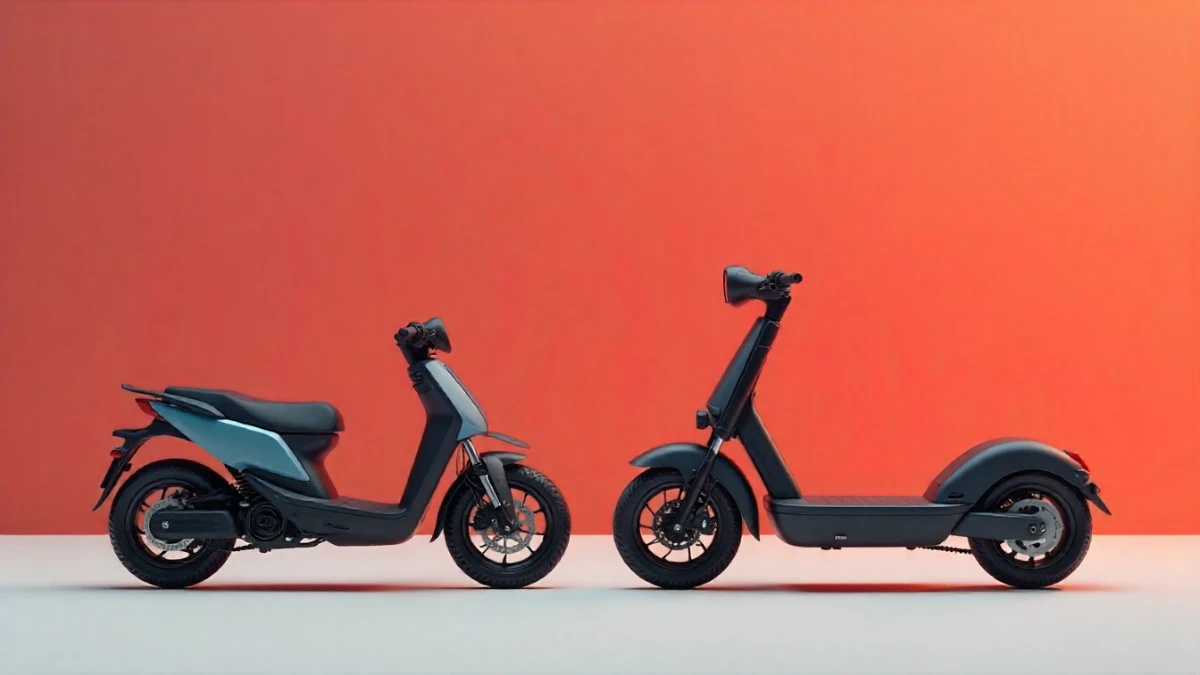
Here’s a question I get asked all the time: “Roy, should I get an electric bike or an electric scooter?” And honestly? It’s like asking whether you should get a coffee maker or a French press—both make great coffee, but the right choice depends entirely on how you live your life.
I’ve spent the last few years testing both e-bikes and e-scooters around New York, and I’ve learned something important: the “best” option isn’t about which vehicle has better specs on paper. It’s about which one actually fits into your daily routine without making you wish you’d chosen differently.
So let’s break this down together. Whether you’re trying to ditch your car for short trips, make your commute less soul-crushing, or just want a fun way to get around town, I’ll help you figure out which electric ride makes sense for you.
Understanding What You’re Actually Getting
Before we dive into comparisons, let’s get clear on what we’re talking about here.
Electric bikes are basically regular bicycles with a motor and battery that assist your pedaling. Most can go 20-28 mph depending on the model and local regulations. You’re still pedaling—the motor just makes it feel like you’ve got a constant tailwind. Think of it as cycling with superpowers.
Electric scooters are stand-up scooters with motors, typically hitting speeds of 15-25 mph. You’re standing on a deck, holding handlebars, and controlling your speed with a thumb throttle. No pedaling required—just stand and go.
Both are electric, both get you from A to B without gas, and both will make your friends ask if they can try. But that’s where the similarities end.
The Daily Commute Reality Check
Let’s talk about the most common use case: your daily commute. This is where the differences really start to matter.
E-Bikes: The Workout That Doesn’t Feel Like Work
I’ve been commuting on an e-bike for two years now, and here’s what surprised me: I actually arrive at work less sweaty than when I took the subway. Sounds backwards, right? But the motor assistance means you’re getting exercise without turning your commute into an Olympic training session.
E-bikes shine when you’re covering 5-15 miles. That’s the sweet spot where they’re faster than walking or taking the bus, but you’re not so far that battery anxiety kicks in. My typical 8-mile commute through Queens takes about 30 minutes—faster than driving during rush hour, and way more enjoyable.
The pedaling aspect matters more than you might think. Even with motor assistance, you’re engaging your muscles, which means you’re burning calories and getting your blood flowing before you even sit down at your desk. I’ve noticed I’m more alert in morning meetings, and my doctor is thrilled with my cholesterol numbers.
But here’s the trade-off: e-bikes are heavier. Mine weighs about 50 pounds, which is fine when you’re riding but a genuine workout when you’re carrying it up subway stairs or hoisting it onto a bike rack.
E-Scooters: The Urban Ninja’s Choice
Electric scooters are all about convenience and portability. My friend Sarah swears by her foldable scooter for her multi-modal commute—she rides it to the train station, folds it up in about 10 seconds, carries it on the subway, then unfolds it again for the last mile to her office.
For distances under 5 miles, scooters are hard to beat. They’re nimble, quick to accelerate, and perfect for darting through city traffic. Plus, most models fold down to something you can reasonably carry or store under your desk. Try doing that with an e-bike.
The standing position works great for short trips. But after about 20 minutes, your feet start asking questions you don’t want to answer. It’s not uncomfortable exactly, but it’s not relaxing either. You’re constantly balancing, and on rough pavement, your joints feel every bump.
The Money Talk Nobody Wants to Have (But We Need To)
Let’s be real about costs, because this matters.
Entry-level e-bikes start around $800-$1,200 for something decent. You can find cheaper ones, but I’ve watched too many people buy a $400 e-bike only to replace it six months later. Quality e-bikes from brands like Rad Power Bikes or Ride1Up range from $1,200-$2,500. If you want something truly premium—think Specialized or Trek—you’re looking at $3,000-$5,000 or more.
Electric scooters have a friendlier entry point. A solid commuter scooter like the Xiaomi Mi Pro 2 runs about $500-$600. Mid-range options from brands like Segway or Unagi sit in the $700-$1,200 range. High-performance scooters can reach $2,000-$3,000, but most people don’t need that much power.
But here’s what nobody tells you: the initial purchase is just the beginning.
E-bike maintenance includes tire replacements, brake adjustments, chain lubrication, and eventual battery replacement (usually after 3-5 years). Budget about $100-$200 per year if you’re doing basic maintenance yourself, more if you’re paying a shop.
E-scooters have fewer moving parts, but those solid or pneumatic tires wear down, especially if you’re riding daily. The smaller wheels mean more frequent replacements. I’ve also seen more scooter brake systems fail than e-bike brakes, possibly because people underestimate how much stress those tiny components handle.
Insurance and theft protection? Both are targets for thieves, but e-bikes generally cost more to replace. Invest in a serious lock—I’m talking $100+ for a quality U-lock and chain combo. It seems expensive until the first time you see someone else’s cut lock on the ground.
Weather, Terrain, and Other Fun Challenges
Here’s where things get interesting, and where your local environment really matters.
Hills and Rough Roads
E-bikes handle hills like they’re barely there. I’ve ridden mine up some genuinely steep Brooklyn hills that would have me gasping on a regular bike, and the motor assistance makes it feel like a gentle slope. The bigger wheels and better suspension also mean potholes and rough pavement are annoying rather than dangerous.
E-scooters struggle with steep inclines. The smaller wheels and motors aren’t designed for serious hill climbing. Anything more than a moderate slope, and you’ll feel the speed dropping. I’ve watched experienced scooter riders get off and walk up hills that an e-bike would cruise up effortlessly.
Those tiny scooter wheels—usually 8-10 inches compared to a bike’s 26-28 inches—make every crack in the sidewalk feel like a trap designed specifically for you. Hitting a pothole on a scooter gets your attention real quick. You need to stay hyper-aware of the road surface, which is mentally exhausting on longer rides.
Rain, Snow, and Everything In Between
Neither e-bikes nor e-scooters love rain, but e-bikes tolerate it better. The sitting position keeps more of you above the splash zone, and the bigger tires maintain better traction. I’ve ridden my e-bike in light rain plenty of times—you get wet, but you stay upright.
Scooters in rain? That’s asking for trouble. The standing position means less stability, smaller wheels mean less grip, and those rear fender brakes become disturbingly unreliable when wet. Most scooter manufacturers explicitly warn against riding in rain, and I’ve learned to take those warnings seriously after watching someone slide out in a light drizzle.
Winter riding depends on where you live. In New York, I store my e-bike from December through March because ice and snow make cycling genuinely dangerous. But if you’re somewhere like California or Texas with mild winters, an e-bike becomes year-round transportation. Scooters are even less practical in snow—those tiny wheels might as well be ice skates.
Range Anxiety Is Real (And Different for Each)
Battery range is where manufacturers play fast and loose with the truth.
Most e-bikes claim 20-50 miles per charge, but that assumes you’re a 150-pound person riding on flat ground at moderate speed with minimal motor assistance. In reality, expect about 60-70% of the advertised range. My e-bike is rated for 45 miles but gives me a realistic 30-35 miles depending on how much I use the throttle and how many hills I’m climbing.
E-scooters typically advertise 15-30 miles per charge, with the same caveats about ideal conditions. Realistically, you’re looking at 10-20 miles. That’s fine for neighborhood trips but limiting for longer commutes.
Here’s the key difference: e-bikes have removable batteries that you can charge at your desk. My battery detaches in about 15 seconds, weighs around 7 pounds, and charges in 4-6 hours. I can charge it while I work, then pop it back in for the ride home.
Many scooters have integrated batteries, which means if you can’t bring your scooter inside to charge, you’re out of luck. I’ve seen people running extension cords out of their office windows to charge scooters locked up outside—creative, but not exactly practical.
Battery replacement is another consideration. E-bike batteries typically cost $400-$700 to replace after 3-5 years. Scooter batteries are cheaper at $200-$400, but some models have proprietary batteries that are difficult or impossible to replace yourself.
Safety: Let’s Have the Uncomfortable Conversation
I don’t want to be dramatic, but we need to talk about safety because the statistics aren’t pretty.
E-scooter accident rates are genuinely concerning. Studies show e-scooter riders have significantly higher injury rates than cyclists, with head injuries being particularly common. Part of this is because scooter riders are less likely to wear helmets—it’s easy to forget when you’re just “hopping on for a quick ride.”
The standing position on a scooter means any unexpected obstacle can send you flying forward. I’ve seen (and experienced) more close calls on scooters than e-bikes. When you hit something on a bike, you’ve got more mass and stability working in your favor. On a scooter, you’re basically a falling stick figure.
E-bikes aren’t without risks, obviously. They’re heavier and faster than regular bikes, which means more momentum if something goes wrong. But the sitting position gives you more control and better visibility to cars around you.
Visibility to others matters more than you think. Cars see e-bikes more readily because they look like normal bicycles and occupy more space on the road. Scooters are smaller and lower to the ground, making them easier to overlook—especially dangerous at intersections.
My strong recommendation: wear a helmet on both. I know it messes up your hair. I know it’s not as convenient. But I’ve crashed on both an e-bike and a scooter, and both times my helmet earned its keep.
Storage and Portability: The Reality of Daily Life
Let’s talk about what happens when you’re not riding, because that’s actually a huge part of ownership.
Storing an E-Bike: E-bikes are big. My apartment building has a bike room in the basement, which works great. But many of my friends who live in walk-ups are basically living with a 50-pound roommate that never pays rent. If you don’t have dedicated bike storage, think carefully about whether you want to navigate stairs daily or give up a chunk of your living space.
At work, you need either a secure outdoor bike rack or indoor storage. I’m lucky—my office building has a bike room. But I know people who’ve had to find alternate solutions, including keeping their e-bike at their desk (check with your boss first).
Storing a Scooter: Scooters fold. That’s their superpower. Most folding scooters collapse to roughly the size of a small suitcase—about 43 x 20 x 15 inches. You can store them under your desk, in a closet, or even in your car trunk. The portability is genuinely game-changing if you have limited space or need to combine your scooter with public transit.
But here’s what the marketing materials don’t emphasize: even folded scooters are awkward to carry. They’re usually 25-40 pounds of odd-shaped metal that you’re either dragging behind you on tiny wheels or awkwardly carrying. The folding mechanism also wears out over time, getting looser and rattlier as the months pass.
The Lifestyle Fit: Which One Matches How You Actually Live?
This is where we get to the heart of the decision. Forget specs for a minute and think about your actual life.
Choose an e-bike if you:
- Commute 5-15 miles each way
- Want the health benefits of cycling without arriving drenched in sweat
- Deal with hills or rough roads regularly
- Have reliable storage at home and work
- Want something that works in various weather conditions
- Don’t mind doing basic maintenance
- Value comfort on longer rides
- Want to carry cargo occasionally (many e-bikes have racks)
Choose an e-scooter if you:
- Travel mostly 1-5 miles per trip
- Need to combine your ride with public transit
- Have limited storage space at home or work
- Live somewhere with smooth, flat roads
- Prioritize portability and convenience
- Want the quickest, simplest option for short hops
- Don’t plan to ride in rain or challenging weather
- Value the ability to store your vehicle indoors easily
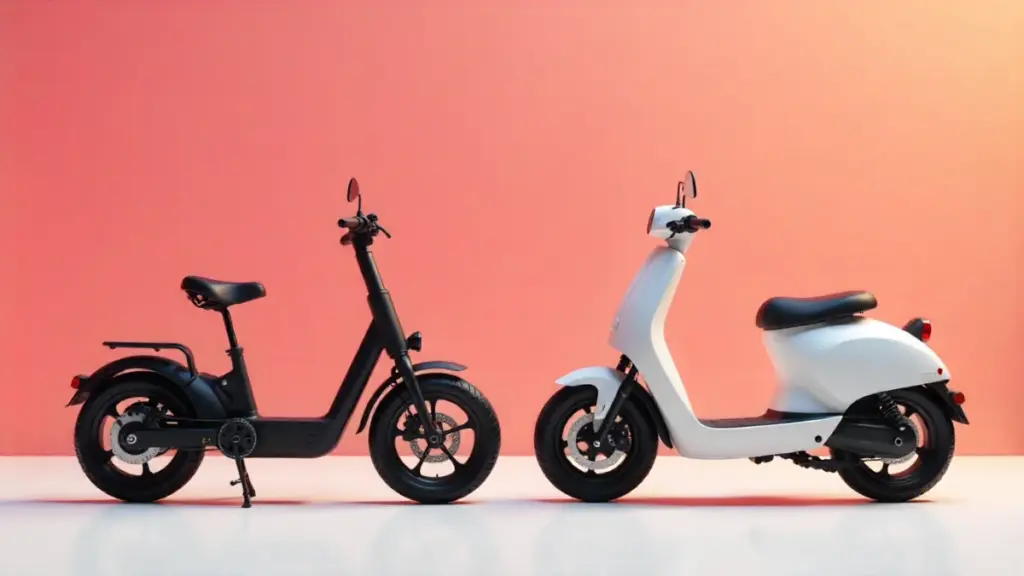
My Personal Take After Years of Both
I own both an e-bike and an e-scooter, and I use each for different purposes. That probably seems excessive, but hear me out.
My e-bike is my primary commuter. It’s comfortable, capable, and reliable for my 8-mile daily ride. I use it for grocery runs, meeting friends across town, and weekend exploration. It’s replaced probably 80% of my short car trips and made me genuinely enjoy commuting for the first time in my adult life.
My e-scooter is for last-mile situations and quick errands. When I’m running to the corner store, meeting someone for coffee a few blocks away, or need to catch a train across the city and want a ride from the station to my final destination, the scooter is perfect. It lives in my office, and I’ve used it to grab lunch or run errands on my break more times than I can count.
If I could only have one? I’d choose the e-bike without hesitation. It’s more versatile, more comfortable, and more capable for the diverse range of situations I encounter. But the scooter fills a specific niche that the e-bike can’t match—true portability and convenience for those spontaneous, short trips.
The Bottom Line: Make Your Choice Based on Reality, Not Fantasy
Here’s the trap most people fall into: they buy based on their aspirational lifestyle rather than their actual one. Don’t be the person who buys an e-bike imagining daily 15-mile commutes when you really just need to get to the train station half a mile away. And don’t buy a scooter dreaming of car-free living when you actually need to travel 10 miles across town regularly.
Think honestly about:
- How far do you actually travel most days?
- What’s the terrain actually like where you live?
- Where will you store this thing realistically?
- What’s your weather like most of the year?
- How important is portability versus comfort?
Both e-bikes and e-scooters are transforming urban transportation in exciting ways. They’re reducing car dependence, cutting emissions, and making cities more livable. But the right choice depends entirely on your specific needs and circumstances.
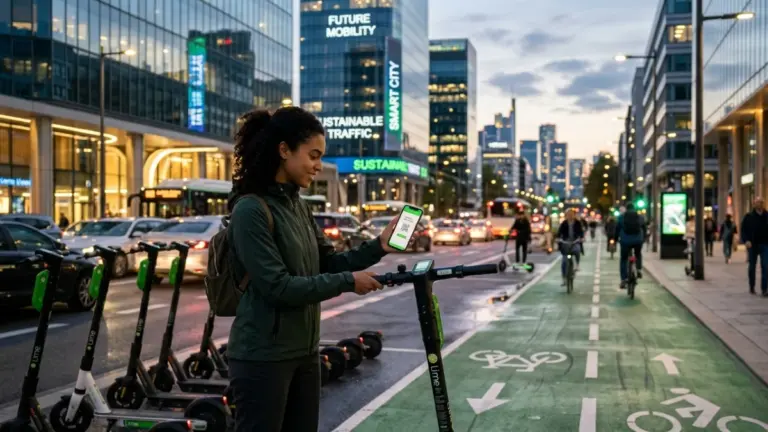
My advice? If you can, rent or borrow both for a week before buying. Most cities now have e-bike and e-scooter sharing services. Try them for your actual commute, in your actual weather, dealing with your actual hills and roads. The right answer will become obvious pretty quickly.
And whatever you choose, wear a helmet, follow traffic laws, and remember: you’re not just buying a vehicle—you’re changing how you move through the world. Make it a change you’ll actually embrace rather than one that ends up collecting dust in your garage.
Ready to go electric? The future of urban mobility is here, and it’s yours to claim—whether that’s on two wheels or two wheels with a deck. Choose wisely, ride safely, and welcome to the electric revolution.