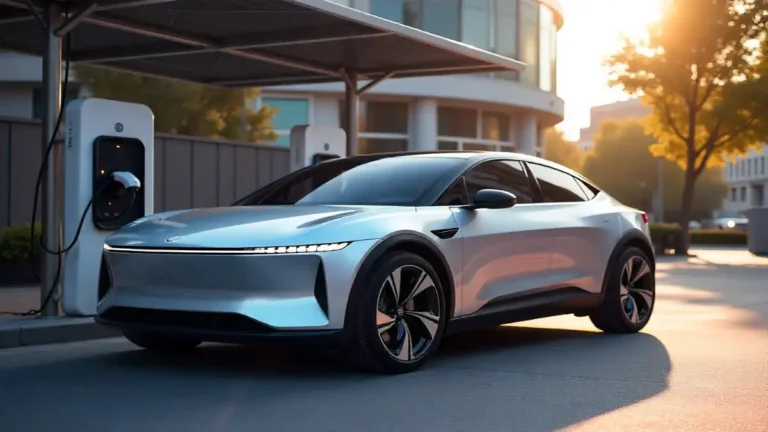
“So, how much does it really cost to charge that thing?”
It’s the question I get asked most often when people see me plugging in my Tesla at the grocery store. And honestly, it’s a great question – one that deserves a much better answer than the typical “way less than gas” response most EV enthusiasts give.
The truth is, the cost of charging an electric car varies dramatically depending on where you live, how you charge, and when you plug in. It’s like asking “how much does it cost to heat your home?” – the answer depends on whether you’re using natural gas or electricity, live in Alaska or Arizona, and whether you’re smart about managing your usage.
But here’s what I can tell you with confidence: once you understand the factors that influence charging costs, you’ll not only save money but also gain the kind of energy independence that makes every former gas station visit feel like a victory lap. Let’s break down the real numbers so you can make informed decisions about your electric future.
Understanding Electricity Rates: The Foundation of Charging Costs
Before we dive into specific charging costs, you need to understand how electricity is priced because this forms the backbone of every calculation we’ll make.
The Basics of Electricity Pricing: Electricity is sold by the kilowatt-hour (kWh), which is simply a measure of energy consumption. Think of it like buying gas by the gallon, except instead of gallons of gasoline, you’re buying units of electrical energy.
As of 2024, the average residential electricity rate in the United States is about $0.16 per kWh, but this number varies wildly by location. If you live in Louisiana, you might pay as little as $0.10 per kWh. Live in Hawaii? You could be looking at $0.30+ per kWh. California, Connecticut, and Massachusetts also tend to have higher rates, while states like Washington, Idaho, and West Virginia often enjoy some of the lowest rates in the country.
Time-of-Use Rates: Your Secret Weapon Here’s where things get interesting – and potentially much cheaper. Many utility companies offer time-of-use (TOU) rates, where electricity costs different amounts depending on when you use it. It’s like happy hour for electricity.
During off-peak hours (usually late evening through early morning), rates can drop to $0.08-$0.12 per kWh, even in expensive markets. Peak hours (typically late afternoon when everyone’s running air conditioning) might see rates spike to $0.25-$0.40 per kWh.
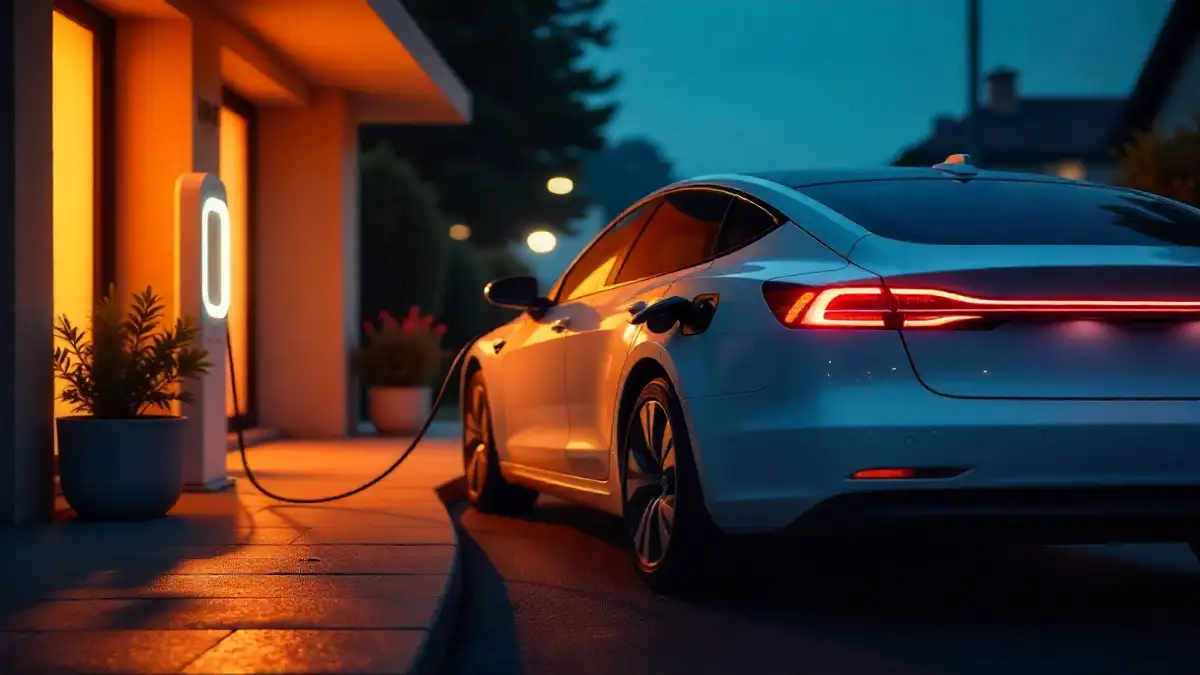
Smart EV owners take advantage of this by scheduling their charging during off-peak hours. Most electric cars let you set charging schedules, so you can plug in when you get home but have the car wait until midnight to actually start charging.
My neighbor Lisa in San Diego pays $0.47 per kWh during peak hours but only $0.23 per kWh overnight. By simply scheduling her Chevy Bolt to charge between 11 PM and 6 AM, she cuts her charging costs in half. That’s the difference between spending $15 or $30 to fully charge her car – real money that adds up quickly.
Home Charging Costs: Running the Numbers
Now let’s get into the meat and potatoes – what does it actually cost to charge your EV at home?
The Basic Calculation: The formula is straightforward: Battery size (in kWh) × Electricity rate = Cost to charge from empty to full.
Let’s use some popular EVs as examples, assuming the national average rate of $0.16 per kWh:
- Tesla Model 3 Long Range (75 kWh battery): 75 × $0.16 = $12.00 for a full charge
- Chevrolet Bolt EV (65 kWh battery): 65 × $0.16 = $10.40 for a full charge
- Ford Mustang Mach-E (88 kWh battery): 88 × $0.16 = $14.08 for a full charge
- Nissan Leaf (40 kWh battery): 40 × $0.16 = $6.40 for a full charge
Real-World Efficiency Considerations: But wait – there’s a catch. These calculations assume perfect efficiency, and the real world is messier than that. You’ll lose about 10-15% of energy to charging losses (the conversion from AC to DC power, battery heat, etc.), so add roughly 10-15% to these costs for a more realistic estimate.
Using our Tesla Model 3 example: $12.00 + 15% = $13.80 for a realistic full charge cost.
Breaking It Down by Miles: Most people think in terms of cost per mile rather than cost per full charge. Using the EPA ratings and our efficiency adjustments:
- Tesla Model 3 Long Range: 334 miles range ÷ $13.80 = $0.041 per mile
- Chevrolet Bolt EV: 259 miles range ÷ $11.96 = $0.046 per mile
- Ford Mustang Mach-E: 312 miles range ÷ $16.19 = $0.052 per mile
- Nissan Leaf: 149 miles range ÷ $7.36 = $0.049 per mile
Compare this to a gas car getting 30 mpg with $3.50/gallon gas: that’s $0.117 per mile. Even in expensive electricity markets, you’re typically looking at less than half the cost of gasoline.
Monthly and Annual Costs: Let’s make this even more practical. The average American drives about 1,000 miles per month. Using our Tesla Model 3 example at $0.041 per mile:
- Monthly charging cost: 1,000 miles × $0.041 = $41
- Annual charging cost: 12,000 miles × $0.041 = $492
Compare that to the same distance in a 30 mpg gas car at $3.50/gallon:
- Monthly gas cost: 1,000 miles ÷ 30 mpg × $3.50 = $117
- Annual gas cost: 12,000 miles ÷ 30 mpg × $3.50 = $1,400
That’s a savings of about $908 per year, or $76 per month. Suddenly, that monthly car payment difference between an EV and a gas car doesn’t look quite as daunting, does it?
Installation Costs: The One-Time Investment
If you’re charging at home with Level 2 charging (which most EV owners prefer), you’ll likely need to install a 240V outlet or dedicated charging station. This is typically a one-time cost, but it’s worth understanding what you’re looking at.
Basic 240V Outlet Installation: If you’re going the simple route and just want a 240V outlet (like what your dryer uses), costs typically range from $300 to $800. This depends on:
- Distance from your electrical panel to the charging location
- Whether you need electrical panel upgrades
- Local labor costs and permit requirements
- Any trenching or conduit work needed
Dedicated EV Charging Station Installation: For a proper EVSE (Electric Vehicle Supply Equipment) installation, you’re typically looking at $500 to $1,500 total cost. This includes:
- The charging station itself ($300-$700 for most home units)
- Professional installation ($200-$800)
- Any necessary electrical upgrades
- Permits and inspections
When Electrical Panel Upgrades Are Needed: Here’s where costs can escalate. If your home’s electrical panel doesn’t have sufficient capacity for EV charging, you might need an upgrade. Panel upgrades typically cost $1,500 to $4,000, depending on complexity.
However, most homes built after 1990 have adequate electrical capacity for Level 2 EV charging. A qualified electrician can assess your situation during a consultation that usually costs $100-$200 but often gets applied to the installation cost if you hire them.
Federal and State Incentives: Don’t forget about incentives! The federal tax credit covers 30% of installation costs up to $1,000 (for installations completed through 2032). Many states and utilities offer additional rebates. California, for example, offers rebates up to $500, while some utilities provide free installation or significant discounts.
My friend Tom in Colorado paid $1,200 for his ChargePoint Home installation but received $400 in federal tax credits plus a $300 utility rebate, bringing his actual cost down to $500.
Public Charging Costs: When You’re Away from Home
While home charging handles 80-90% of most people’s needs, you’ll occasionally need public charging. Understanding these costs helps you budget and plan routes effectively.
Level 2 Public Charging: You’ll find these at shopping centers, workplaces, and destinations where you’ll be parked for a while. Costs vary widely:
- Free charging: Many retailers, hotels, and workplaces still offer this as an amenity
- Paid charging: Typically $1-$3 per hour or $0.20-$0.30 per kWh
- Network membership: Some networks offer monthly plans ($4-$10/month) for reduced rates
DC Fast Charging: This is where costs can add up quickly, but it’s also where you get the most value when you need speed:
- Tesla Superchargers: $0.25-$0.50 per kWh (varies by location and time)
- Electrify America: $0.31-$0.43 per kWh for non-members, lower with monthly plans
- ChargePoint/EVgo: $0.20-$0.40 per kWh, depending on location and membership
Real-World Fast Charging Costs: Let’s say you’re on a road trip and need to fast-charge your Tesla Model 3 from 20% to 80% (about 45 kWh). At $0.35 per kWh, that’s $15.75. Compare this to filling up a gas car for a similar distance – you’re still coming out ahead, especially considering the speed and convenience.
However, if you relied entirely on fast charging, your costs would be roughly double what you’d pay at home. This is why most EV owners use fast charging strategically rather than as their primary charging method.
Strategies to Minimize Charging Costs
Now that you understand the cost structure, let’s talk about proven strategies to keep your charging expenses as low as possible.
Optimize Your Home Charging:
- Switch to a time-of-use rate plan: This single change can cut your charging costs by 30-50%
- Charge during off-peak hours: Even if you’re not on a TOU plan, some utilities offer lower overnight rates
- Install solar panels: If you’re considering solar anyway, adding EV charging to your calculations often improves the payback period
Take Advantage of Free Public Charging: Many destinations still offer free Level 2 charging as an amenity. Apps like PlugShare help you find these locations. I regularly charge for free while grocery shopping, at the mall, or during my daughter’s soccer practice.
Use Charging Network Memberships Wisely: If you fast-charge more than once or twice per month, membership plans often save money. Electrify America’s Pass+ plan costs $4/month but reduces per-kWh costs by $0.05-$0.10.
Plan Road Trips Strategically: Use apps like A Better Routeplanner to find the most cost-effective charging stops. Sometimes driving an extra 10 miles to a cheaper charging network saves $5-$10 per stop.
Workplace Charging: If your employer offers charging, even paid charging at work is usually cheaper than public DC fast charging and often competitive with home rates.
The Complete Cost Picture: Comparing EVs to Gas Cars
Let’s put this all together with a comprehensive comparison. I’ll use realistic numbers based on the average American driver covering 12,000 miles annually.
Electric Vehicle (Tesla Model 3 example):
- Home charging (90% of miles): 10,800 miles × $0.041 = $443
- Public charging (10% of miles): 1,200 miles × $0.08 = $96
- Annual charging cost: $539
Gasoline Vehicle (30 mpg average):
- 12,000 miles ÷ 30 mpg × $3.50/gallon = $1,400
Annual savings: $861
Over five years, that’s $4,305 in fuel savings alone – enough to cover most home charging installation costs several times over.
But Wait, There’s More: These savings don’t even include the reduced maintenance costs of EVs (no oil changes, fewer moving parts, regenerative braking extends brake life), which typically save another $400-$600 annually.
Making Charging Costs Work for Your Budget
The key to successful EV ownership is understanding that charging costs are highly controllable. Unlike gas prices, which fluctuate based on global markets and local competition, you have significant influence over your electricity costs through smart charging practices.
Start by calling your utility company and asking about EV-specific rate plans. Many utilities are eager to support EV adoption and offer special rates or rebates you might not know about.
Consider your driving patterns honestly. If you drive 50+ miles daily, investing in home Level 2 charging pays for itself quickly. If you drive less, you might be perfectly happy with Level 1 home charging supplemented by occasional public charging.
Remember that charging costs are just one piece of the total cost of ownership puzzle. When you factor in lower maintenance costs, potential tax incentives, HOV lane access, and the convenience of never visiting gas stations, the financial case for EVs becomes even more compelling.
The bottom line? For most drivers, switching to an electric vehicle results in significant savings – typically $800-$1,200 annually just on fuel costs. And unlike the early days of EVs when charging infrastructure was limited and expensive, today’s charging landscape offers multiple options to keep your costs low while maintaining the convenience and performance you expect from your vehicle.
The question isn’t whether EVs save money – it’s how much you’ll save and how quickly you’ll start seeing those savings add up in your bank account.