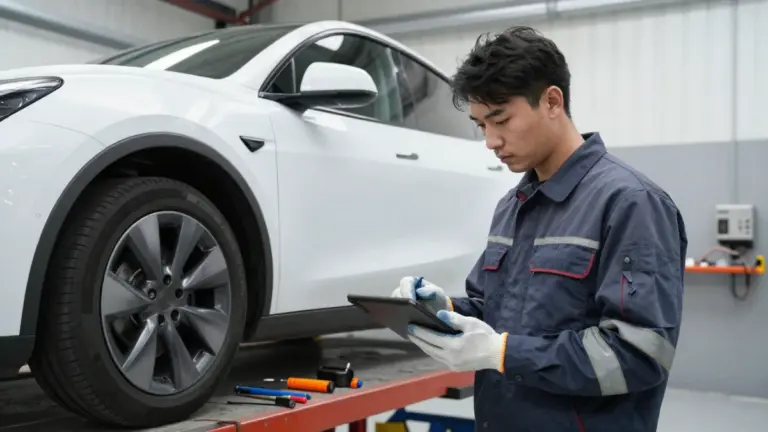
Picture this: you’re six months into owning your first electric vehicle, and it’s time for your first “oil change” appointment. You pull into the service bay, and the technician looks at you with a puzzled expression. “Oil change? Sir, this is a Tesla.” That moment of realization – when it hits you that electric cars really are fundamentally different – is both liberating and slightly terrifying. What exactly are you supposed to maintain in a vehicle that doesn’t have an engine?
If you’re considering making the switch to electric or you’ve recently joined the EV club, you’re probably wondering what lies ahead in terms of maintenance costs. The good news? Your relationship with your mechanic is about to get a lot less expensive and a lot less frequent. The potentially concerning news? When something does go wrong, it might involve components you’ve never heard of before.
Let me walk you through what you can realistically expect over the long haul, because understanding these costs upfront will help you make better decisions and budget more effectively for your electric future.
The Beautiful Simplicity: What Electric Cars Don’t Need
Before we dive into what you will spend money on, let’s celebrate what you won’t. Traditional gas engines are mechanical marvels with thousands of moving parts, all requiring regular attention. Your electric vehicle? It’s refreshingly simple by comparison.
Gone are the oil changes every 3,000 to 5,000 miles. That alone saves the average driver $400-600 annually. No more air filter replacements, spark plug changes, timing belt services, or transmission fluid flushes. The regenerative braking system means your brake pads can last 100,000+ miles instead of the typical 25,000-40,000 miles in gas vehicles.
I recently spoke with Maria, a Tesla Model S owner who’s had her car for five years. “My biggest maintenance expense in the first four years was replacing the cabin air filter for $50,” she told me, laughing. “My Honda Accord used to cost me over $1,000 a year just in routine maintenance.”
The electric motor itself is a marvel of reliability. Unlike internal combustion engines with their explosions, heat cycles, and complex timing systems, electric motors have about 20 moving parts compared to roughly 2,000 in a gas engine. Most manufacturers warranty their electric drivetrains for 8-10 years precisely because they’re so dependable.
The Reality Check: What You Will Maintain
While electric vehicles are maintenance-light, they’re not maintenance-free. Let’s break down what you should budget for over the long term.
Tires: Your Biggest Regular Expense Here’s something that might surprise you: electric vehicles can be harder on tires than gas cars. The instant torque delivery that makes EVs so fun to drive also puts more stress on your tires during acceleration. Plus, the additional weight from battery packs means tires work harder overall.
Expect to replace tires every 25,000-40,000 miles, similar to or slightly more frequent than gas cars. A set of quality tires for a mid-size electric SUV runs $800-1,200. However, many EV owners report that proper tire pressure maintenance (which affects range) and smooth driving habits can extend tire life significantly.
Battery Health: The Eight-Hundred-Pound Gorilla Let’s address the elephant in the room: battery replacement costs. This is probably your biggest concern, and rightfully so. A full battery replacement can cost $15,000-20,000, depending on your vehicle model. But before you panic, let’s put this in perspective.
Modern electric vehicle batteries are engineered to last. Most manufacturers warranty their batteries for 8-10 years or 100,000-150,000 miles, and real-world data suggests they often last much longer. Tesla’s own data shows their Model S and Model X batteries retain about 90% of their capacity after 200,000 miles.
Think of it like this: in a gas car, you might spend $15,000-20,000 on engine rebuilds, transmission replacements, and major repairs over 200,000 miles. The battery replacement cost, when it eventually comes, replaces many of these major expenses.
Brake Systems: Surprisingly Low-Maintenance Thanks to regenerative braking, your traditional brakes do much less work in an electric vehicle. Instead of friction brakes slowing you down, the electric motor reverses direction and captures energy to recharge the battery. This means brake pads and rotors last dramatically longer.
Most EV owners report brake pad replacements at 80,000-120,000 miles instead of the typical 25,000-40,000 miles for gas vehicles. When you do need brake service, expect to pay $300-600 for pads and rotors – the same as any vehicle, just much less frequently.
Year-by-Year Maintenance Expectations
Years 1-3: The Honeymoon Period Your maintenance costs will be minimal – typically under $300 annually. You’ll mainly be dealing with tire rotations ($50-100), cabin air filter replacements ($30-80), and potentially windshield washer fluid. Some owners go two full years without any maintenance beyond tire rotations.
Years 4-6: Still Smooth Sailing Expect slightly higher costs as you enter the $400-600 annual range. You might need your first tire replacement, potentially some brake fluid service, and maybe coolant service for the battery thermal management system. The 12-volt auxiliary battery (yes, EVs still have them) might need replacement around year 5-6, costing $200-300.
Years 7-10: Minor Increases This is when you might see your first significant maintenance items. The air conditioning system might need service, door seals could require attention, and you’ll definitely need tire replacements. Annual costs might reach $800-1,000, but this still pales in comparison to aging gas vehicles, which often require $2,000-3,000 in annual maintenance by this point.
The Wild Cards: What Could Go Wrong
While electric vehicles are generally more reliable, they do have some unique potential issues. The good news is that most are covered under warranty during the first 8-10 years.
Software and Electronics Modern EVs are essentially computers on wheels. Software updates usually happen over-the-air and are free, but occasionally hardware issues arise. Touchscreen replacements can cost $1,000-2,500, though these failures are relatively rare and often covered under warranty.
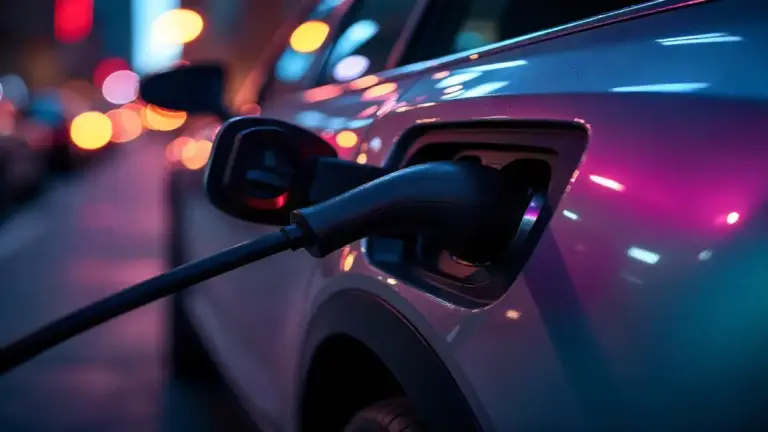
Charging Port Issues The charging port and its associated electronics can occasionally fail, typically costing $500-1,000 to repair. However, this is uncommon, and most issues are covered under warranty.
Climate Control Systems The heating and cooling systems in EVs work harder than in gas cars (since they can’t rely on waste engine heat), potentially leading to higher repair costs. Budget $300-800 for major climate control repairs, though these are infrequent.

Regional Considerations and Service Networks
Your maintenance costs can vary significantly based on where you live. Urban areas with multiple EV-certified service centers tend to have competitive pricing, while rural areas might charge premium rates due to limited technician availability.
Tesla owners generally report the most predictable costs due to the company’s extensive service network and mobile service options. Other manufacturers are rapidly expanding their EV service capabilities, but availability can still be spotty in some regions.
Smart Maintenance Strategies to Minimize Costs
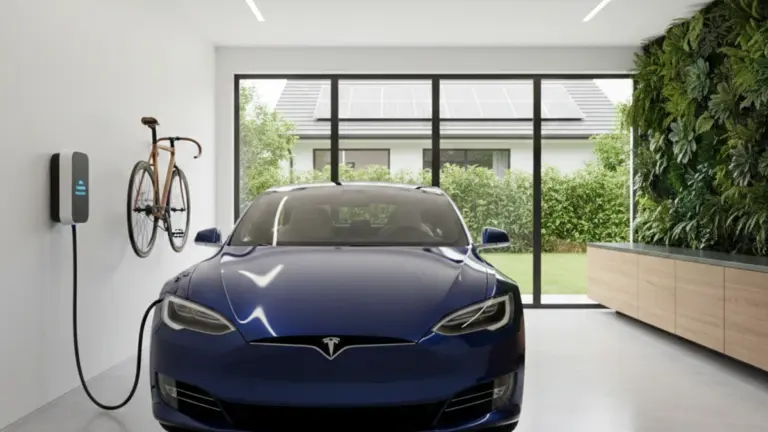
Preventive Care Keep your EV plugged in when parked – this helps maintain optimal battery temperature and health. Avoid letting the battery completely drain or stay at 100% charge for extended periods. These simple habits can significantly extend battery life.
Learn Basic DIY Tasks Unlike gas cars, many EV maintenance tasks are genuinely simple. Cabin air filter replacement, windshield washer fluid refills, and tire pressure checks are all straightforward DIY jobs that can save you service visits.
Warranty Awareness Understand what’s covered under your various warranties. Most EVs have separate warranties for the drivetrain (8-10 years), basic vehicle (3-4 years), and battery (8-10 years with capacity guarantees). Don’t pay for repairs that should be covered.
The Long-Term Financial Picture
Over 200,000 miles, a well-maintained gas vehicle might cost $25,000-35,000 in maintenance and repairs. A comparable electric vehicle typically costs $15,000-20,000, including a potential battery replacement. Even in worst-case scenarios, EVs generally cost less to maintain long-term.
Consider David, who owns both a 2018 Chevy Bolt and a 2018 Honda Civic. “After five years, I’ve spent $2,800 maintaining the Civic and $800 on the Bolt,” he reports. “The Bolt has been to the service center three times – twice for recalls that were free, and once for new tires.”
Preparing for Your EV Future
As you plan your electric vehicle ownership journey, budget approximately $300-400 annually for the first few years, gradually increasing to $800-1,000 as the vehicle ages. Set aside a separate fund for eventual battery replacement – even $50 monthly starting from year one will give you $6,000-8,000 by the time you might need it.
The maintenance landscape for electric vehicles represents a fundamental shift from the traditional automotive ownership model. Instead of frequent, small expenses, you’re looking at infrequent, predictable costs with the occasional larger expense that’s still typically less than the cumulative costs of maintaining a gas engine.
Your electric vehicle won’t eliminate all maintenance costs, but it will dramatically simplify and reduce them. Those Saturday mornings at the quick-lube place? They’re about to become a thing of the past. Your relationship with automotive maintenance is about to become a lot more predictable, a lot less frequent, and ultimately, a lot less expensive. And honestly, isn’t it about time?