By Jonathan M. Jordan
Remember the last time you took your gas car in for an oil change, and the mechanic handed you a laundry list of “recommended” services that made your wallet weep? Well, here’s some fantastic news: if you’re considering making the switch to electric, electric car maintenance is far simpler and cheaper than what you’re used to with gasoline vehicles.
I’ll be honest – when I first started researching electric vehicles, I was skeptical about the whole “low maintenance” claim. It seemed too good to be true. But after diving deep into the world of EVs and speaking with owners who’ve been driving electric for years, I discovered that maintaining an electric car really is refreshingly simple. In fact, it’s one of the best-kept secrets about EV ownership.
Let me walk you through everything you need to know about keeping your future electric ride running smoothly, without the mechanical headaches you’re probably used to.
Why Electric Cars Need Less Maintenance (It’s All About What’s Missing)
Here’s the thing that blew my mind when I first learned about it: electric cars have about 20 moving parts in their drivetrain, compared to roughly 2,000 in a traditional gasoline engine. Think about that for a moment – we’re talking about 99% fewer moving parts that can wear out, break down, or need regular attention.
Your typical gas car is essentially a controlled explosion machine. Every time you turn the key, thousands of tiny explosions happen inside the engine, creating heat, friction, and wear. That’s why you need oil changes, air filter replacements, spark plug maintenance, and all those other regular services.
An electric motor, on the other hand, works more like a giant version of the motor in your kitchen blender – it spins smoothly with minimal friction and virtually no wear. No oil to change, no spark plugs to replace, no air filters to clean. It’s elegantly simple.
But don’t worry – this doesn’t mean your car is maintenance-free (wouldn’t that be nice?). There are still some important things to keep an eye on, and I’ll show you exactly what those are.
The Big Difference: What You Won’t Need to Worry About Anymore
Let’s start with the good news – here’s a list of traditional car maintenance tasks you can cross off your to-do list forever:
Oil changes are completely eliminated. No more wondering if you can squeeze another thousand miles out of that oil, no more choosing between conventional and synthetic, and definitely no more oil change shop upselling attempts.
Transmission maintenance becomes irrelevant because most EVs use single-speed transmissions or direct drive systems. Gone are the days of transmission fluid changes, filter replacements, or worrying about that scary grinding noise.
Engine air filters, fuel filters, and spark plugs simply don’t exist in electric cars. Your EV doesn’t need to breathe or create sparks to function.
Exhaust system repairs become a thing of the past since there’s no exhaust system at all. No more worrying about mufflers, catalytic converters, or emissions testing in most areas.
The average gas car owner spends about $1,200 per year on maintenance and repairs. Early studies suggest EV owners spend roughly half that amount. That’s real money staying in your pocket.
Essential Electric Car Maintenance: The Short List You Actually Need
Now, let’s talk about what you do need to maintain. Don’t panic – it’s a surprisingly short list, and most of these items are things you’re already familiar with from traditional cars.
Battery Care is your most important consideration, but it’s easier than you might think. Modern EV batteries are designed to last 8-10 years or more with minimal intervention. The key is avoiding extreme temperatures when possible and not regularly charging to 100% unless you’re taking a long trip. Think of it like your smartphone – you probably don’t charge it to 100% every single night, and the same principle applies here.
Most manufacturers recommend keeping your daily charge between 20% and 80% for optimal battery health. The good news? Many EVs now have built-in settings that automatically manage this for you.
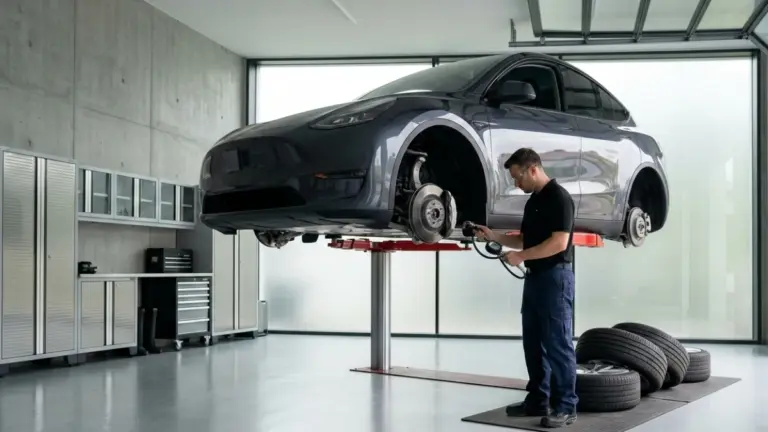
Brake maintenance is still necessary, but here’s where it gets interesting – your brakes will likely last much longer than in a traditional car. EVs use regenerative braking, which means the electric motor does most of the work of slowing you down, converting that energy back into battery charge. Your actual brake pads barely get used except for final stops or emergency situations.
Some EV owners report their brake pads lasting 100,000 miles or more. That’s roughly three times longer than typical gas car brakes.
Tire care remains important, though EVs do present some unique considerations. Electric cars are typically heavier than their gas counterparts due to the battery weight, which can lead to slightly faster tire wear. Plus, the instant torque delivery can be tough on tires if you’re heavy on the accelerator (and trust me, that instant acceleration is addictive).
Regular tire rotations, proper inflation, and alignment checks will help maximize tire life. Many EV owners find that investing in quality tires designed for electric vehicles pays off in the long run.
Your Simple EV Maintenance Schedule
Here’s what a realistic maintenance schedule looks like for most electric cars – and I promise it’s much simpler than what you’re used to:
Every Month:
- Check tire pressure (this affects both range and tire wear)
- Inspect tires for unusual wear patterns
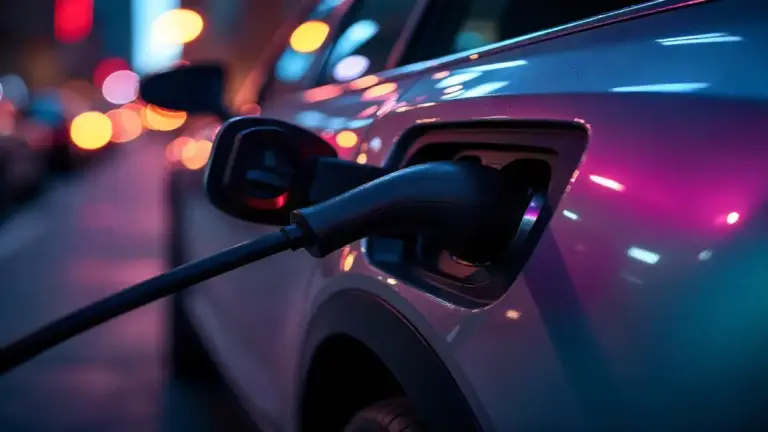
- Clean charging port contacts if needed
Every 6 Months:
- Test all lights and replace bulbs as needed
- Check windshield wipers and washer fluid
- Inspect exterior and interior for any issues
- Update software if your car doesn’t do it automatically
Annually:
- Professional inspection of high-voltage systems (usually covered under warranty)
- Brake system inspection (even though they’ll likely be fine)
- Cabin air filter replacement
- Coolant system check for the battery and motor
Every 2-3 Years:
- Comprehensive battery health check
- Replace cabin air filter if not done annually
- Inspect suspension components
Notice what’s missing from this list? No oil changes, no tune-ups, no major service intervals. Most of these tasks are simple inspections rather than actual replacements or repairs.
Red Flags: When to Seek Professional Help
Even though EVs are generally reliable, there are some warning signs you should never ignore. If you notice any of these issues, it’s time to contact a qualified EV technician:
Charging problems like significantly reduced charging speed, error messages during charging, or the car not charging at all. These could indicate battery or charging system issues that need professional diagnosis.
Unusual noises are rare in EVs, so if you hear grinding, squealing, or other mechanical sounds, pay attention. While the motor itself should be nearly silent, issues with cooling pumps, air conditioning, or other auxiliary systems can still occur.
Dashboard warning lights should always be taken seriously, especially any high-voltage system warnings. Modern EVs have sophisticated diagnostic systems that can catch problems early.
Significant range reduction beyond what you’d expect from weather or driving conditions might indicate battery degradation or other system issues.
Finding the Right Service Provider
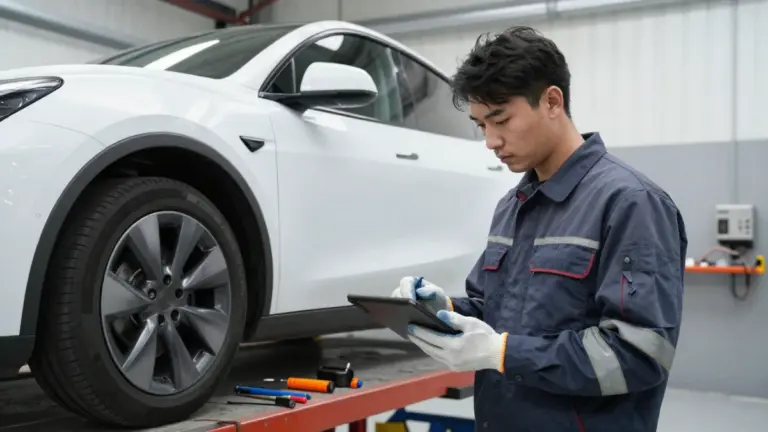
Here’s something many new EV owners don’t realize: not every mechanic can work on electric cars. High-voltage systems require special training and certification for safety reasons.
Your best options are typically:
- Authorized dealership service centers
- Independent shops certified for EV repair
- Mobile EV service providers (yes, they’ll come to your home!)
Before choosing a service provider, ask about their EV certification and experience. A good EV technician should be able to explain their qualifications and show you their high-voltage safety equipment.
The Bottom Line: Embrace the Simplicity
The transition to electric car ownership represents more than just a change in how you fuel up – it’s a complete shift toward simpler, more predictable vehicle maintenance. Instead of dreading those surprise repair bills and complicated service intervals, you’ll find yourself with more time and money to enjoy the actual driving experience.
Yes, there are still things to maintain, and yes, you should take them seriously. But the overall maintenance burden is dramatically reduced compared to traditional vehicles. Most EV owners I’ve spoken with describe their maintenance experience as “boring” – and in the automotive world, boring maintenance is exactly what you want.
If you’re still on the fence about electric vehicles, don’t let maintenance concerns hold you back. The reality is far simpler and more affordable than you might expect. Your future self will thank you for making the switch – both when you’re silently gliding past gas stations and when you realize how much simpler your relationship with car maintenance has become.
Ready to take the plunge? Start by researching EVs that fit your needs and budget. The maintenance savings alone might surprise you with how quickly they add up.