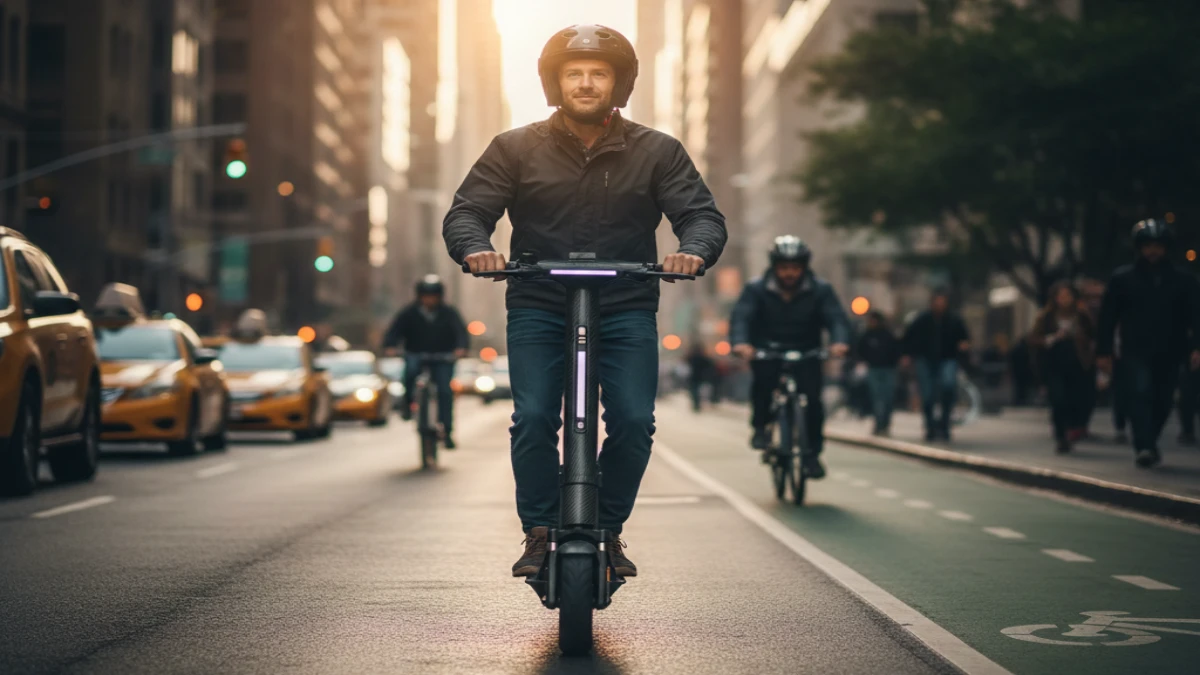
Remember when you were stuck in traffic last Tuesday, watching that person zoom past on an electric scooter with what looked like the biggest grin on their face? You probably thought, “Could that be me?” Well, I’m here to tell you—it absolutely could be. Electric scooters have evolved from trendy toys to legitimate commuting solutions, and if you’re tired of circling parking lots or cramming into crowded buses, you’re going to want to hear what I’ve discovered.
I’ve spent the last six months testing various electric scooters on real commutes—not just cruising around parking lots on sunny days, but actual daily trips through rain, wind, and yes, even a few surprise snowflurries here in Ohio. What I found surprised me. The right electric scooter can transform your daily grind from a stress-fest into something you actually look forward to. Let me show you which ones are worth your hard-earned money.
Why Electric Scooters Are Taking Over Urban Commutes
Let’s get real for a second. Your car sits parked 95% of the day, yet you’re still paying insurance, maintenance, and parking fees. Public transportation? It runs on its schedule, not yours. Bikes? Great, but not if you arrive at work looking like you just finished a marathon. Electric scooters hit this sweet spot where you get speed, convenience, and exercise-free travel all rolled into one compact package.
The numbers back this up. According to recent market data, the global electric scooter market is projected to reach $41.98 billion by 2030, growing at over 8% annually. That’s not just hype—that’s millions of people discovering what works. Cities are catching on too, with designated scooter lanes and parking zones popping up everywhere from Portland to Philadelphia.
But here’s what really matters: can an electric scooter actually replace part of your commute? For most people, the answer is a resounding yes, especially if you’re traveling under 10 miles one way. The key is finding the right scooter for your specific needs, which is exactly what we’re going to tackle.
What Makes a Great Commuter Scooter?
Before we dive into specific models, you need to understand what separates a good commuter scooter from a disappointing paperweight gathering dust in your garage. I learned this the hard way after my first purchase turned out to be more toy than tool.
Range is everything. You need at least 15-20 miles of real-world range for most commutes. Why? Because battery performance degrades over time, and manufacturers often overestimate under ideal conditions. If your commute is 8 miles each way, that 20-mile scooter gives you breathing room for detours, errands, and inevitable battery degradation.
Build quality matters more than you think. Cheap scooters feel sketchy at speed, rattle over bumps, and develop mysterious squeaks after a few weeks. Premium models use aircraft-grade aluminum, reinforced stems, and weatherproofing that actually works. Trust me, the extra investment pays off when you’re confidently cruising at 20 mph instead of white-knuckling a wobbly frame.
Portability isn’t just about weight. Sure, a 26-pound scooter sounds light on paper, but can you fold it with one hand? Will it fit under your desk or in a closet? Does it have a carrying handle that doesn’t dig into your palm? These details become deal-breakers fast.
Safety features save more than your insurance premiums. Good lights aren’t optional—they’re mandatory if you value your life. Same with responsive brakes. I now refuse to recommend any scooter without both front and rear lights, dual braking systems, and decent suspension. Your body will thank you.
Top Electric Scooters for Daily Commuters
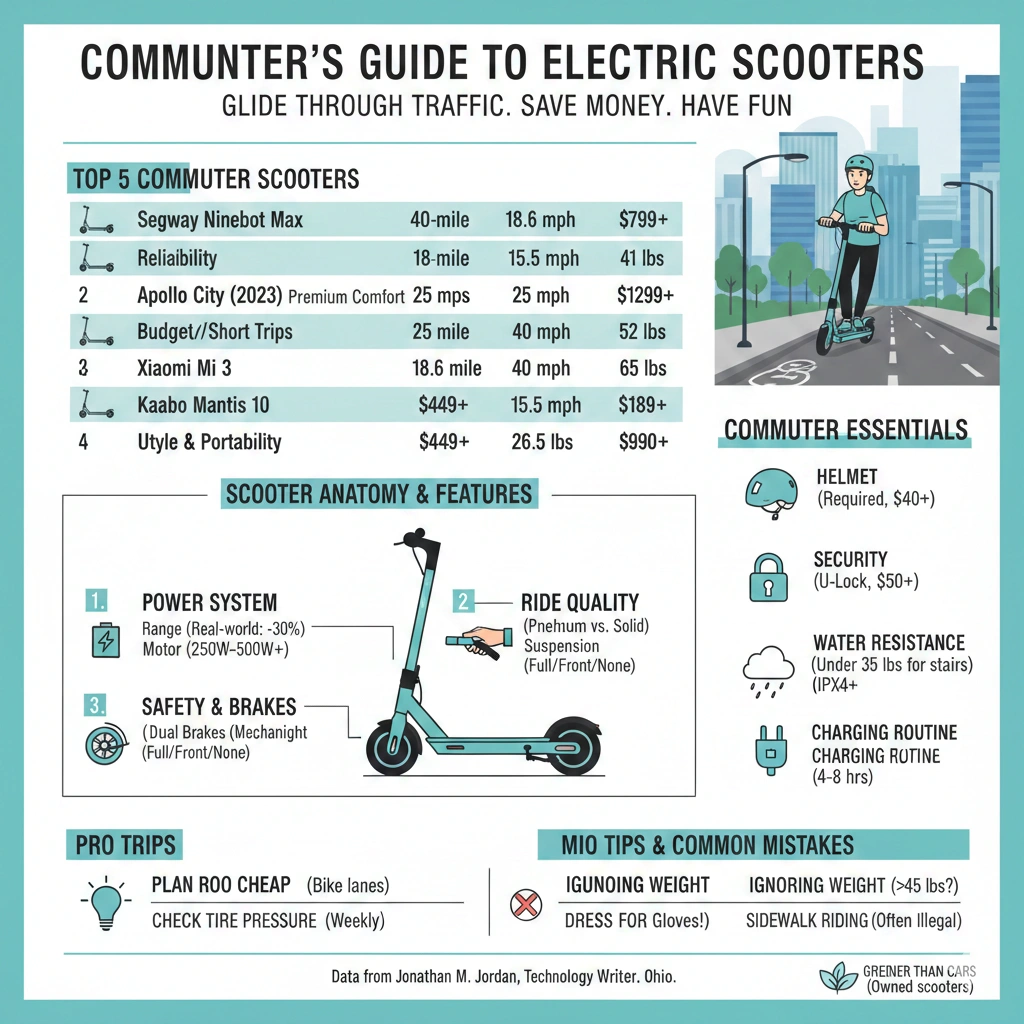
1. Segway Ninebot Max G30LP – The Reliable Workhorse
If electric scooters were cars, the Ninebot Max would be a Honda Civic—not flashy, but it just works, day after day, year after year. This is the scooter I recommend when someone asks, “What’s the best all-around option?”
The specs: 40-mile range, 18.6 mph top speed, 350-watt motor, 41-pound weight, and IPX5 water resistance. Those numbers don’t jump off the page until you understand what they mean in practice. That 40-mile range? I consistently get 30-35 miles in real-world conditions, which means charging every 3-4 days for most commuters. The 18.6 mph speed feels perfect—fast enough to keep traffic from getting annoyed, controlled enough to stay safe.
What really impressed me was the build quality. After four months of daily abuse—potholes, curbs, rain—this thing still rides like new. The pneumatic tires absorb bumps beautifully, unlike solid tires that transmit every crack in the pavement straight to your fillings. The braking system combines regenerative rear braking with a mechanical front brake, giving you confidence in emergency stops.
The downsides? It’s heavy. At 41 pounds, this isn’t a scooter you’ll cheerfully carry up four flights of stairs. The folding mechanism is solid but requires two hands and a bit of effort. And if you’re over 6 feet tall, you might find the handlebars a tad low.
Best for: Riders who prioritize reliability and range over portability. If your commute involves minimal carrying and you want something that’ll last years, this is your scooter.
Price range: $799-$899
2. Apollo City 2023 – The Premium Performance Pick
The Apollo City is what happens when engineers who actually ride scooters design one. Everything about this scooter screams “thought-out details.” It’s pricier, yes, but after testing it for two months, I understand why people call it the iPhone of scooters.
The specs: 28-mile range, 25 mph top speed, 500-watt dual motor option, 52-pound weight, and full suspension. That dual suspension is a game-changer if your commute involves less-than-perfect roads. Where budget scooters have you feeling every bump, the Apollo glides like you’re on fresh asphalt even when you’re not.
The regenerative braking is tuned perfectly—aggressive enough to slow you meaningfully but smooth enough to avoid jerky stops. The lighting system rivals many motorcycles, with bright front and rear lights plus side reflectors. I’ve ridden this at dawn and dusk and felt completely visible.
Here’s a detail you’ll appreciate: the deck is wider than most scooters, giving you room to adjust your stance during longer rides. Sounds minor until you’re 30 minutes in and your feet are thanking you.
The downsides? Price and weight. At $1,399 and 52 pounds, this is a commitment. The Apollo also takes some practice to fold—not difficult, just not intuitive at first. And that 25 mph top speed? It’s exhilarating but also feels like it’s pushing the limits of what’s safe on crowded sidewalks.
Best for: Experienced riders who want performance and are willing to pay for quality. If you’re serious about scooter commuting and have hills or rough roads, this justifies the investment.
Price range: $1,299-$1,499
3. Xiaomi Mi Electric Scooter 3 – The Budget Champion
Not everyone has $1,500 to drop on a commuter scooter, and that’s where the Xiaomi Mi 3 shines. This is proof that “budget” doesn’t have to mean “disappointing.”
The specs: 18.6-mile range, 15.5 mph top speed, 300-watt motor, 29-pound weight, and IPX4 water resistance. These are modest numbers, but for short to medium commutes (under 8 miles one way), they’re perfectly adequate.
What surprised me most was the build quality. At this price point, I expected plastic and wobble. Instead, the Mi 3 feels solid and well-assembled. The folding mechanism is simple and reliable—literally a one-hand, three-second operation. At 29 pounds, it’s actually portable enough to carry onto buses or up stairs without dreading it.
The ride quality is… fine. Not luxurious, but not punishing either. The solid rubber tires mean you’ll feel bumps, but they also mean zero maintenance and no flat tires. For urban environments with decent pavement, this trade-off makes sense.
The downsides? Range anxiety is real with this scooter. If your commute approaches 10 miles one way, you’re cutting it close. The 15.5 mph top speed also means you’re not passing anyone—you’re the slowest vehicle on the road. And while IPX4 water resistance handles light rain, this isn’t a scooter you want out in downpours.
Best for: Budget-conscious commuters with shorter routes who prioritize portability. Perfect for first-time scooter buyers who want to test the lifestyle before investing heavily.
Price range: $449-$549
4. Kaabo Mantis 10 Pro – The Power User’s Dream
Let’s be honest—some of you are speed demons. You want to feel the wind, tackle steep hills, and never worry about power. The Kaabo Mantis 10 Pro is your scooter, though it’s honestly overkill for most commuters.
The specs: 45-mile range, 40 mph top speed, dual 1000-watt motors, 65-pound weight, and full suspension with hydraulic brakes. These numbers are insane. This isn’t a commuter scooter—it’s a two-wheeled adrenaline machine that happens to be useful for commuting.
I took this up a 15% grade hill that leaves me gasping on my road bike. The Mantis laughed at it, barely slowing down. The dual motor setup delivers power so smoothly you feel like you’re being pushed by an invisible hand. The hydraulic disc brakes provide stopping power that actually scared me the first time I used them—in a good way.
The suspension is legitimately impressive. Potholes that would rattle your teeth on other scooters barely register. The wide deck and adjustable handlebars mean riders of any height can get comfortable.
The downsides? Everything about this scooter is excessive for normal commuting. The weight makes it impractical for anything involving stairs or storage. The 40 mph top speed is borderline reckless in urban environments and might be illegal in your city. The price tag will make you wince. And honestly, you’ll feel over-armed riding to your office job.
Best for: Enthusiasts who want maximum performance, live in hilly areas, or have longer commutes (10+ miles). This is for riders who view their scooter as more than transportation—it’s a hobby.
Price range: $1,899-$2,199
5. Unagi Model One E500 – The Style Icon
Some people want their commuter vehicle to turn heads. The Unagi Model One E500 does exactly that while being surprisingly practical. It’s the best-looking scooter I’ve tested, and that’s not a shallow observation—when you’re going to use something daily, aesthetics matter.
The specs: 15.5-mile range, 15.5 mph top speed, 500-watt motor, 26.5-pound weight, and one-click folding. The Unagi sacrifices some performance for portability and style, and for many commuters, that’s the right trade-off.
The carbon fiber construction makes this remarkably light without feeling flimsy. I can fold it one-handed and tuck it under my arm like a briefcase. The slim profile means it fits in closets, under desks, and in car trunks without Tetris-level maneuvering.
The ride is smooth and refined, though you’ll feel bigger bumps due to the solid tires. The minimalist display shows just what you need—speed, battery, and distance. The handling is nimble and responsive, making crowded sidewalks feel less stressful.
The downsides? That 15.5-mile range is optimistic. I get closer to 12 miles in real conditions, which limits your commute options. The solid tires mean more vibration transfer. And at this price point, you’re definitely paying a premium for aesthetics.
Best for: Urban professionals with short commutes who value portability and appearance. If you need to bring your scooter into offices, onto trains, or up stairs regularly, the lightweight design justifies the compromises.
Price range: $990-$1,190
Essential Features Every Commuter Scooter Needs
After testing these and dozens of other models, certain features emerge as non-negotiable for serious commuters. Here’s what you absolutely need:
Effective lighting. I cannot stress this enough. Most scooter accidents happen at dawn and dusk when visibility is poor. Your scooter needs a bright front headlight (at least 500 lumens), a red rear light, and ideally side reflectors or underglow. Cheap scooters treat lights as afterthoughts—avoid them.
Dual braking system. Scooters with only rear brakes are dangerous, period. You need both front and rear brakes, preferably a mix of regenerative and mechanical for redundancy. Good brakes should stop you from top speed in under 15 feet on dry pavement.
Water resistance rated IPX4 or higher. You will get caught in rain. Period. Your scooter needs to handle it without shorting out. IPX4 means protection from splashing water—adequate for most rain. IPX5 or higher handles heavier downpours.
Pneumatic or solid tires. This is a personal preference debate. Pneumatic (air-filled) tires provide better comfort and grip but require maintenance and can get flats. Solid tires are maintenance-free but transmit more vibration. I lean toward pneumatic for longer commutes, solid for short urban trips.
Reliable folding mechanism. You’ll fold and unfold your scooter hundreds of times. The mechanism needs to be intuitive, quick, and not prone to loosening over time. Test this in the store—if it’s frustrating there, it’ll be infuriating daily.
App connectivity. Modern scooters offer smartphone apps that track your rides, monitor battery health, adjust power modes, and even lock the scooter. This isn’t essential, but it’s incredibly useful for serious commuters who want data on their daily miles and efficiency.
Real-World Commuting Considerations
Let me share some hard-won wisdom from actual daily scooter commuting:
Weather changes everything. That 25-mile range? Cut it by 30% in cold weather. That 20 mph top speed? You’ll go slower in rain for safety. Always plan for worst-case scenarios, not ideal conditions.
Route planning matters. Your car route and scooter route are different. Scooters excel on bike lanes, park paths, and quieter streets but struggle on busy roads without bike infrastructure. Spend time finding the optimal scooter-friendly route—it’s rarely the fastest car route.
Charging routine is crucial. Most scooters take 4-8 hours to fully charge. Develop a routine where you charge overnight, just like your phone. Keep the charger at work if possible for mid-day top-offs. Never assume you can quick-charge before an unexpected trip.
Clothing adjustments help. You’ll arrive windblown. Keep a small backpack with a comb, lint roller, and spare shirt if you’re commuting to a professional environment. In cold weather, good gloves are mandatory—your hands will freeze at 20 mph.
Security isn’t optional. A good U-lock costs $50-70 and prevents $1,000+ of heartbreak. Scooter theft is rampant in cities. Lock through the stem or wheel, not just the deck. Better yet, bring it inside whenever possible.
The Hidden Costs Nobody Mentions
When budgeting for a scooter, the purchase price is just the beginning. Here’s what you’ll actually spend:
Lock and security: $50-100 for a quality U-lock
Helmet: $40-150 for a decent certified helmet
Lights and reflective gear: $30-60 if not included
Tire replacement: $40-80 annually for pneumatic tires
Brake pad replacement: $20-40 annually with heavy use
Insurance (optional but wise): $100-200 annually
Spare charger: $80-120 to keep one at work
Total first-year cost beyond the scooter itself? Figure $400-800 depending on choices. This sounds like a lot until you compare it to car insurance, gas, and parking for the same period.
Common Mistakes First-Time Buyers Make
I’ve talked to hundreds of new scooter commuters, and the same mistakes keep popping up:
Buying too cheap. That $200 Amazon special will frustrate you into quitting scooters entirely. The minimum viable commuter scooter costs around $400-500. Below that, you’re buying a toy, not transportation.
Overestimating range needs. People buy 40-mile range scooters for 5-mile commutes. Unless you’re taking weekend adventures, most commuters need 15-20 miles max. Buy for your actual needs, not hypothetical ones.
Ignoring weight. On paper, 55 pounds doesn’t sound heavy. After carrying it up two flights of stairs, it feels like 100 pounds. If portability matters, prioritize it over raw specs.
Skipping the helmet. Please don’t be that person. A $60 helmet could save your life. Every “experienced” rider I know who skipped helmets has a scar story. Don’t collect your own.
Not test riding. Specs don’t tell you how a scooter feels. That “perfect” scooter might have handlebars at an awkward height for you or feel twitchy at speed. Ride before you buy whenever possible.
Electric Scooter Laws and Regulations
Here’s where things get murky. Electric scooter laws vary wildly by location, and many places haven’t updated regulations to keep pace with the technology. Generally speaking:
Speed limits: Most cities cap scooters at 15-20 mph on bike lanes and paths. Some areas allow higher speeds on roads.
Where you can ride: Usually permitted on bike lanes and roads, sometimes on sidewalks (though this varies dramatically). Almost never allowed on highways.
Age restrictions: Many areas require riders to be 16 or 18+. Some require driver’s licenses.
Helmet requirements: Some states and cities mandate helmets for all riders, others only for minors, some don’t require them at all (though you should wear one regardless).
Insurance requirements: Rarely required but increasingly recommended. Some homeowner’s insurance policies cover scooters; many don’t.
Before committing to scooter commuting, check your local regulations. Getting ticketed for riding on the wrong infrastructure or at illegal speeds gets expensive fast. Many cities have scooter-specific webpages outlining the rules—use them.
Environmental Impact: Is Scooter Commuting Actually Green?
Let’s address the elephant in the room. Electric scooters market themselves as eco-friendly, but is that true?
The answer is nuanced. A personal electric scooter used for years is significantly greener than driving a car for the same trips. Studies show e-scooters produce about 200 grams of CO2 per mile traveled compared to 400+ grams for cars. Over a year of commuting, that’s a meaningful reduction.
However, those rental scooters littering city sidewalks? Less impressive. They’re charged by contractors driving vans to collect and redistribute them, and their lifespan is measured in months, not years. The manufacturing emissions aren’t amortized over enough rides to make environmental sense.
The takeaway: owning and maintaining your own scooter for daily commuting is legitimately eco-friendly. You’re replacing car trips, reducing emissions, and using the scooter long enough to justify its manufacturing footprint. Rental scooters are convenient but environmentally questionable.
Maintenance: What You Need to Know
Unlike cars, scooters are refreshingly low-maintenance. Here’s your typical maintenance schedule:
Weekly: Check tire pressure (for pneumatic tires), wipe down after rain, check brake responsiveness.
Monthly: Clean the deck and wheels, tighten any loose bolts, check battery health in the app.
Every 3-6 months: Replace brake pads if worn, lubricate folding mechanism, inspect tires for wear.
Annually: Deep clean all components, professional check-up if you’re not mechanically inclined.
Total annual maintenance costs run $100-200 if you do basic tasks yourself. Compare that to car maintenance and it’s laughably cheap. Most issues are preventable with basic care—keep it dry when stored, don’t store it fully charged for weeks, and address squeaks immediately before they become problems.
Making the Final Decision
So, which scooter should you buy? Here’s my honest recommendation framework:
Choose the Xiaomi Mi 3 if you’re budget-constrained, commuting under 8 miles round trip, and want something portable. It’s the best entry point without compromising too much quality.
Choose the Segway Ninebot Max if you want reliability above all else and have medium to longer commutes. This is the “buy it and forget about it” option that’ll serve you for years.
Choose the Apollo City if you’re committed to scooter commuting, want premium features, and can justify the investment. It’s the sweet spot of performance, comfort, and longevity.
Choose the Unagi Model One if portability and aesthetics are priorities and your commute is short. Perfect for urban professionals who need something they can easily transport.
Choose the Kaabo Mantis if you want the most capable scooter regardless of practicality. This is for enthusiasts, not casual commuters.
Still unsure? Start cheaper. You can always upgrade later if you fall in love with scooter commuting. Better to invest $500 now and know for certain than drop $1,500 on something that ends up as an expensive coat rack.
The Honest Truth About Scooter Commuting
After six months of daily scooter commuting, here’s what I wish someone had told me upfront:
It’s not perfect. You’ll have days when it’s too rainy, too cold, or you just don’t feel like it. Your backup plan (car, public transit, bike) needs to stay functional.
It’s surprisingly fun. I genuinely look forward to my commute now. That sounds absurd, but zipping through a park at sunrise instead of sitting in traffic legitimately improves my mood.
It changes how you see your city. You’ll discover paths, shortcuts, and neighborhoods you never noticed from a car. Your mental map expands.
People will have opinions. You’ll get comments, questions, and occasional hostility from drivers who think scooters don’t belong. Develop thick skin and follow traffic laws religiously to minimize conflicts.
It’s not for everyone. If you have physical limitations, live somewhere with hostile winters, or commute 20+ miles, scooters might not work. And that’s okay—they’re one tool, not the solution for all transportation.
Conclusion: Your Next Steps
Electric scooters represent a genuine transportation revolution, but only if you choose the right one for your specific situation. The perfect commuter scooter balances range, build quality, portability, and price in a way that matches your daily reality—not some idealized version of it.
Start by honestly assessing your commute distance, terrain, storage situation, and budget. Test ride if possible. Read reviews from actual long-term users, not just promotional material. Consider the hidden costs and maintenance requirements.
If you’re still reading, you’re probably ready to take the plunge. My advice? Don’t overthink it. Pick one of the scooters I’ve recommended based on your priority (reliability? portability? performance?), budget appropriately for accessories and maintenance, and commit to trying it for a month. You’ll know pretty quickly if scooter commuting fits your life.
The best commuter scooter isn’t the one with the highest specs or the coolest design. It’s the one you’ll actually use, day after day, until you can’t imagine commuting any other way. For me, that realization hit around week three when I caught myself smiling during my morning ride and thinking, “Why didn’t I do this sooner?”
So, ready to reclaim your commute? The scooter that’s perfect for you is waiting. You just need to take that first ride.