Remember when every phone had a different charger? You’d visit a friend’s house, your battery dying, and they’d say “I’ve got a charger!” only to pull out something completely incompatible with your device. Frustrating, right? Well, that’s been the electric car world for the past decade—until now.
Something remarkable happened in 2023 that’s quietly revolutionizing how we’ll charge electric vehicles in North America. Tesla’s charging connector, which they’ve renamed the North American Charging Standard (NACS), went from being “that Tesla thing” to becoming the industry standard practically overnight. Ford kicked things off in May 2023, and within months, nearly every major automaker followed like dominoes. GM, Rivian, Mercedes-Benz, Nissan, Hyundai, Honda—even the holdouts eventually joined the party.
But why should you care? Whether you’re driving an EV now, considering one, or just watching from the sidelines, this shift is about to make electric car ownership significantly better. Let me walk you through what’s actually happening and why it matters for your driving future.
The Charging Mess We’ve Been Living With
Let’s be honest: EV charging in North America has been unnecessarily complicated. While Tesla owners have enjoyed their sleek, reliable Supercharger network since 2012, everyone else has been stuck with the Combined Charging System (CCS). Nothing against CCS technically—it works—but the experience has been, shall we say, inconsistent.
I’ve talked to countless non-Tesla EV owners who share similar war stories. You pull up to a CCS fast charger, and it’s a coin flip whether it’ll work properly. The plug is heavy and awkward (seriously, it feels like you’re wielding a small appliance). The payment systems are a maze of different apps and RFID cards. And don’t even get me started on reliability—studies have shown that CCS chargers have failure rates ranging from 15% to 25%, depending on the network.
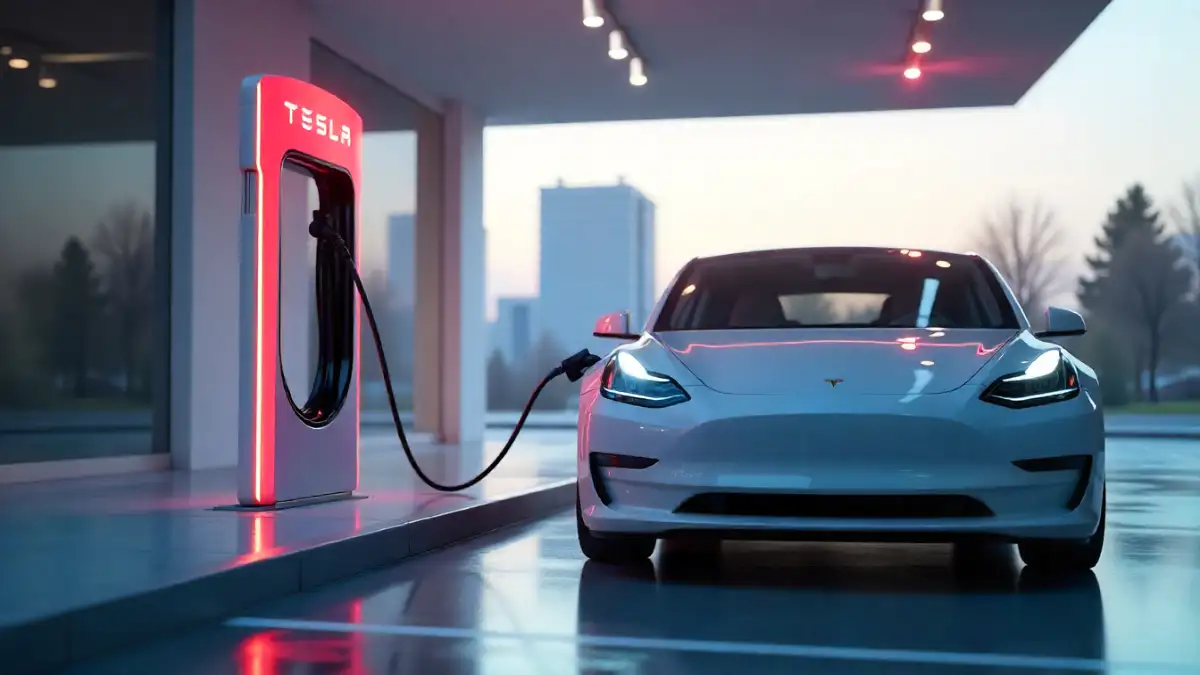
Meanwhile, Tesla owners pull up to a Supercharger, plug in their car (which the charger already recognizes), and grab coffee while it charges. No apps, no swiping cards, no praying the charger decides to cooperate today. The plug itself? Small, lightweight, elegant—designed by people who actually thought about the human holding it.
This disparity created two Americas: Tesla owners living in charging paradise and everyone else making it work with duct tape and determination.
Why NACS Suddenly Won Everyone Over
So what makes Tesla’s connector special enough that the entire industry said “fine, we’ll use yours”? It’s not just one thing—it’s a perfect storm of practical advantages.
It’s physically better. Pick up a NACS plug and then pick up a CCS plug, and you’ll immediately understand. The NACS connector is about half the size and weight. It’s easier to handle, easier to store on the charger, and crucially, easier to plug in when it’s dark and raining and you just want to get charging and get home. It might sound superficial, but user experience matters. If we want mainstream EV adoption, we need charging to be as easy as pumping gas—actually, easier.
The network is proven. Tesla’s Supercharger network isn’t just big; it’s reliable. With over 45,000 individual charging stalls across North America, it dwarfs any other fast-charging network. More importantly, it works. Tesla has had over a decade to refine the hardware, software, and maintenance protocols. When a Supercharger goes down, Tesla knows about it immediately and fixes it quickly because it’s their network, their responsibility, their reputation.
The technology handles everything you need. NACS supports both AC charging at home (up to 19.2 kW) and DC fast charging on the road (currently up to 250 kW, with 500+ kW capability built into the spec for future vehicles). It’s not a compromise connector—it genuinely handles the full spectrum of EV charging needs in a single, simple plug design.
It’s actually open. In November 2022, Tesla made the NACS design freely available to other manufacturers with no royalties or licensing fees. This wasn’t charity—it was strategic brilliance. Tesla understood that becoming the standard would benefit everyone, including themselves. More NACS vehicles mean more customers for their charging network, which they’re opening to other brands anyway.
What’s Actually Changing (And When)
Here’s where this affects your real life. The transition is happening in waves, and understanding the timeline helps you make smarter decisions about EV purchases.
For current EV owners (non-Tesla): You’re not left behind. Automakers and charging networks are providing NACS adapters for existing CCS vehicles. Ford started shipping free adapters to their customers in early 2024, with other manufacturers following suit. These adapters let your current EV access Tesla’s Supercharger network—essentially doubling or tripling your fast-charging options overnight. If you own a current EV, contact your manufacturer about adapter availability. Many are offering them free or heavily subsidized.
For new EV buyers in 2024-2025: This is the transitional period. Some new EVs are still shipping with CCS ports plus a NACS adapter, while others (particularly from early adopters like Ford and GM) are beginning to ship with native NACS ports starting in 2025 model year vehicles. When shopping for an EV right now, ask specifically about the charging port and what adapter solutions are available. Don’t let this be an afterthought—it significantly affects your charging experience.
For future EV buyers (2026 and beyond): By 2026-2027, virtually all new EVs sold in North America will have NACS ports built in. The transition will be largely complete, and we’ll finally have that “one plug fits all” simplicity we’ve been missing. You’ll walk up to almost any fast charger in North America, and it’ll just work with your car. No adapters, no confusion, no ecosystem lock-in.
The Real Winners Here (Spoiler: It’s You)
This standardization creates benefits that ripple through the entire EV ecosystem in ways you’ll feel every day.
Charging becomes predictable. No more playing charging network roulette. You’ll have access to the most reliable, extensive fast-charging network in North America, regardless of what EV you choose. Planning road trips becomes as simple as it is in a gas car—find charging stations along your route and stop when needed. The anxiety of “will this charger work?” largely disappears.
Competition improves everything. Tesla’s Supercharger network getting 30-40% more potential customers (from other brands) creates massive incentive for them to expand and improve. Simultaneously, CCS networks like Electrify America and EVgo can’t just give up—they’re retrofitting locations with NACS connectors and upping their reliability game to stay competitive. You win either way because everyone’s fighting to provide you better service.
Your EV choice opens up. Before NACS adoption, some people bought Teslas primarily for Supercharger access, even if another EV suited their needs better. Now that constraint is disappearing. You can choose the EV that genuinely fits your preferences—whether that’s a Hyundai Ioniq 5, Ford F-150 Lightning, BMW i4, or yes, still a Tesla—knowing you’ll have great charging access regardless.
Resale values stabilize. Think about it: would you rather buy a used EV that can charge at 15,000 locations or 45,000+ locations? NACS adoption helps protect the value of both current and future EVs because they’re not locked into a shrinking charging ecosystem. Your investment is more secure.
What About the Holdouts and International Markets?
You might wonder about Stellantis (Chrysler, Jeep, Dodge) and what’s happening outside North America. Fair questions.
Stellantis has been quieter about NACS adoption, but the writing’s on the wall. When virtually every competitor has switched and the market clearly prefers one standard, holdouts eventually follow. It’s a matter of when, not if. If you’re considering a Stellantis EV, ask your dealer specifically about their NACS transition plans before buying.
Internationally, this is specifically a North American solution. Europe already standardized on CCS Type 2 years ago, and it’s working well there. China uses GB/T standards. These regional differences are okay—the important thing is having one standard within each market, and North America finally does.
Tesla is actually adapting too. They’re manufacturing CCS adapters for their vehicles in Europe and offering CCS retrofits in some markets. The company understands that flexibility matters, and they’re playing ball with regional standards worldwide.
The Bumps Still Ahead
Let’s be real: this transition won’t be perfectly smooth. There are legitimate questions and challenges ahead.
The transitional period is awkward. For the next 2-3 years, we’ll have adapters floating around in trunks, some chargers with multiple cables, and occasional confusion about what plugs into what. It’s the messy middle of any technological transition. Keep your adapter stored somewhere you’ll remember (not buried in your trunk under the emergency kit), and maybe attach a bright-colored tag to it.
Software and payment integration takes time. Tesla’s Superchargers recognize Teslas automatically and bill the owner’s account. Getting that seamless experience working for every brand requires software integration, payment system updates, and coordination between manufacturers and charging networks. Early reports from Ford and GM owners using Superchargers have been mostly positive, but there have been occasional hiccups with billing or charge session initiation. These will smooth out over time as the bugs get worked out.
Not every Supercharger is open yet. Tesla is gradually opening their network to other brands, but it’s not flipping a switch. They’re rolling it out location by location, ensuring their existing customers aren’t negatively impacted by increased demand. When planning trips in a non-Tesla EV with a NACS adapter, check which specific Supercharger locations are open to your brand—not all are available yet.
Power-sharing might mean slower charging. Supercharger stalls often share power between adjacent spots. If the network suddenly serves 40% more vehicles, peak times might mean slower charging speeds as power gets divided among more cars. Tesla is addressing this by upgrading stations and building new V4 Superchargers with more power capacity, but it’s something to be aware of during busy travel periods.
What You Should Do Right Now
Enough context—let’s talk action steps based on your situation.
If you currently own a non-Tesla EV: Contact your vehicle manufacturer today about NACS adapter availability. Many are providing them free or at minimal cost to existing owners. Get on the list if there’s a waitlist. Once you have your adapter, test it at a nearby Tesla Supercharger (check which ones are open to your brand first) well before you actually need it for a trip. Familiarize yourself with the process in a low-stakes situation.
If you’re shopping for an EV right now: Ask every dealer specifically about the charging port (NACS or CCS) and what adapter solutions come with the vehicle. Factor this heavily into your decision. A 2024 EV with CCS plus a NACS adapter gives you the best of both worlds right now. A 2025 model with native NACS is even better for long-term ownership. Don’t let a good deal on a CCS-only vehicle without adapter support tempt you—you’ll regret the limited charging options.
If you’re planning to buy an EV in 2026+: Relax. By then, this will largely be a solved problem. NACS will be standard, networks will be mature, and the transition will be mostly complete. Focus on finding the right vehicle for your needs without worrying much about charging infrastructure—it’ll be there.
If you’re an EV skeptic watching from the sidelines: This development should actually interest you. One of the legitimate criticisms of EVs has been charging infrastructure inconsistency. NACS standardization directly addresses that concern. If you’ve been waiting for EVs to “be ready,” this is a significant step in that direction.
The Bigger Picture: What This Says About EV Maturity
Step back for a moment and consider what just happened. The entire auto industry—companies that typically move with glacial slowness and fight standards tooth-and-nail to protect their own ecosystems—came together and agreed on something in mere months. That’s extraordinary.
It signals that EVs have crossed a threshold. They’re no longer experimental technology or niche products. They’re mainstream enough that interoperability and user experience matter more than proprietary control. It’s the same maturity curve we saw with smartphones moving to USB-C, or computers standardizing on Bluetooth.
This is what the beginning of the end of the awkward EV early-adopter phase looks like. The infrastructure is getting sorted out. The standards are aligning. The experience is improving. We’re moving from “EVs work if you’re willing to figure things out” to “EVs just work.”
Looking Forward: What’s Next?
NACS standardization is just one piece of a larger transformation happening in EV charging right now.
We’re seeing massive infrastructure investment. The U.S. government is funding the National Electric Vehicle Infrastructure (NEVI) program with $5 billion for charging networks. Many of these new chargers will support both CCS and NACS, at least initially, before eventually settling on NACS as the primary standard.
Charging speeds keep climbing. Tesla’s V4 Superchargers support charging speeds over 250 kW, and the NACS specification can handle even higher rates as battery technology improves. Today’s EV might add 200 miles in 15 minutes; tomorrow’s might do 300 miles in the same time.
Home charging is becoming more sophisticated. Level 2 NACS charging at home will become the norm, with smarter systems that optimize charging times based on electricity rates and grid demand. Your EV will charge when power is cheapest and cleanest, automatically.
Destination charging is expanding. Hotels, shopping centers, and workplaces are installing chargers, and NACS standardization makes these installations simpler and more useful for everyone. The charger at your hotel will work with your rental EV, no matter the brand.
The Bottom Line
Here’s what you really need to know: NACS adoption is the best thing that’s happened to EV charging infrastructure in North America since, well, since Tesla built the Supercharger network in the first place.
It’s not perfect yet. The transition will be bumpy in spots. There will be adapters to keep track of and occasional confusion about which chargers work with which cars. But we’re moving in the right direction—toward simplicity, reliability, and universal access.
Whether you’re an EV owner today or considering becoming one tomorrow, this standardization makes your life easier. One plug. Tens of thousands of reliable chargers. No ecosystem lock-in. No compatibility lottery. Just plug in, charge up, and get on with your day.
That’s not just better for EV owners—it’s better for everyone who cares about cleaner air, quieter streets, and a more sustainable transportation future. Because the easier we make EV ownership, the more people will make the switch.
And honestly? It’s about time charging an electric car became as simple as it should have been all along.
So what’s your charging situation? Are you waiting for a NACS adapter for your current EV? Trying to time your next vehicle purchase around the transition? Or maybe you’re just glad someone finally figured out we all needed to use the same plug? Whatever your perspective, the charging landscape is improving, and that’s something we can all appreciate.