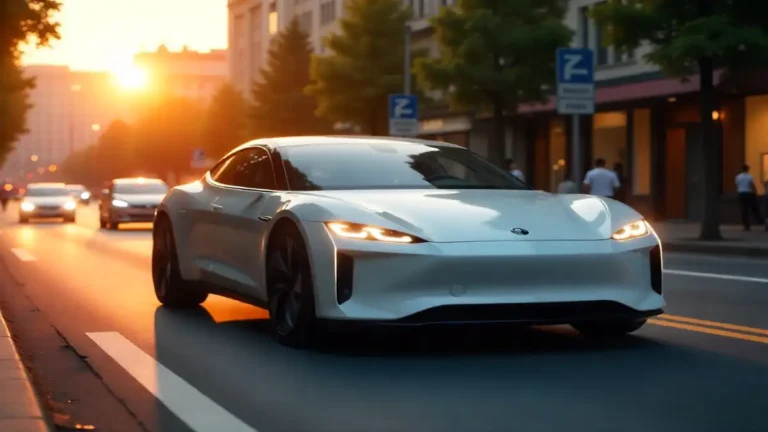
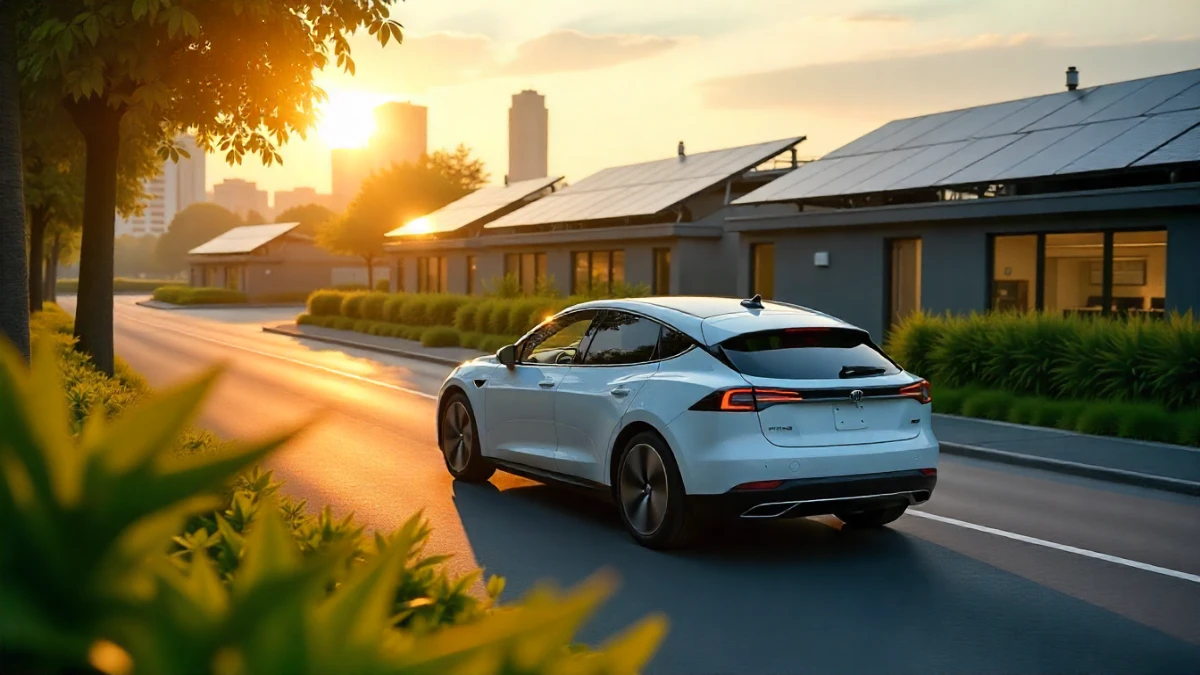
Picture this: You’re driving through your neighborhood on a crisp morning, and the only sound you hear is the gentle hum of wind passing by your windows. This quiet experience reflects how electric vehicles are shaping sustainable transportation, offering a cleaner, quieter alternative to traditional gas-powered cars. No engine roar, no exhaust fumes—just pure, efficient motion. This isn’t a scene from a sci-fi movie; it’s the daily reality for millions of electric vehicle owners worldwide.
But here’s the kicker: those quiet morning drives are part of something much bigger than personal convenience. They’re a meaningful step toward reducing emissions and building a transportation future that protects the planet while keeping us moving forward.
Why Sustainable Transportation Matters More Than Ever
Let’s get real for a moment. Transportation accounts for roughly 27% of greenhouse gas emissions in the United States alone, with personal vehicles responsible for the lion’s share of that number. That’s not just a statistic—it’s the reality of billions of tailpipes pumping CO2 into the atmosphere every single day.
I remember talking to my neighbor last summer while he was washing his decade-old sedan. “I know it’s not great for the environment,” he admitted, “but what choice do I have?” That question stuck with me because, honestly, for years, he was right. The choice was limited. You drove a gas car or… well, you drove a gas car.
But things have changed dramatically. Electric vehicles have evolved from niche curiosities into legitimate, practical alternatives that address one of our most pressing environmental challenges. The average EV produces about half the emissions of a comparable gas vehicle over its lifetime, even when you account for battery production and the current electricity grid mix. As our power grids continue incorporating more renewable energy—solar, wind, hydro—that advantage only grows.
Here’s what makes this particularly exciting: unlike many environmental solutions that require sacrifice or compromise, EVs often provide a better driving experience. We’re not asking people to give something up; we’re offering them something genuinely superior in many ways. That’s a game-changer for sustainability.
The Technology That Makes It Work
You’ve probably heard someone compare EV batteries to smartphone batteries, and honestly, it’s not a terrible analogy—but it doesn’t tell the whole story. Modern electric vehicle batteries are engineering marvels that would make Tony Stark jealous.
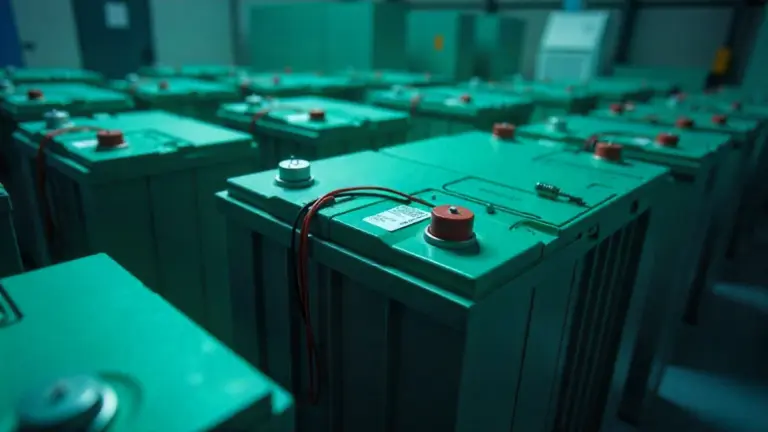
Most EVs today use lithium-ion battery packs, similar in principle to your phone but scaled up dramatically. We’re talking about battery packs containing thousands of individual cells, weighing between 1,000 and 1,800 pounds, and storing enough energy to power your home for several days. The Tesla Model 3 Long Range, for instance, packs a 75 kWh battery that can push the car over 350 miles on a single charge. The Ford F-150 Lightning’s battery can even serve as a backup power source for your home during outages—try doing that with a gas tank.
But here’s where it gets interesting: battery technology isn’t standing still. Solid-state batteries are on the horizon, promising faster charging, longer ranges, and improved safety. Companies like QuantumScape and Toyota are racing to bring these next-generation batteries to market within the next few years. We’re talking about potential ranges exceeding 500 miles and charging times under 15 minutes. That’s approaching gas-station convenience.
The electric motor itself is beautifully simple compared to internal combustion engines. While a traditional engine has hundreds of moving parts—pistons, valves, timing belts, the works—an electric motor typically has about a dozen. This simplicity translates directly into reliability and lower maintenance. No oil changes, no transmission fluid, no spark plugs to replace. My friend who made the switch two years ago jokes that his main maintenance task is remembering to top off the windshield washer fluid.
And then there’s regenerative braking, which sounds fancy but is essentially your EV being smart about energy. Every time you slow down, the motor reverses function and becomes a generator, feeding electricity back into the battery. It’s like getting a refund every time you brake. This extends your range and dramatically reduces wear on your brake pads—some EV owners go 100,000 miles or more before needing new brakes.

The Real-World Ownership Experience
Let me address the elephant in the room: range anxiety. It’s the most common concern I hear, and it’s completely understandable. The fear of running out of charge in the middle of nowhere is real, at least psychologically. But here’s what the data actually shows: the average American drives about 40 miles per day. Even entry-level EVs like the Nissan Leaf offer ranges around 150 miles, with mid-range options like the Hyundai Ioniq 5 pushing 300+ miles. Most EV owners quickly realize that range anxiety is more myth than reality.
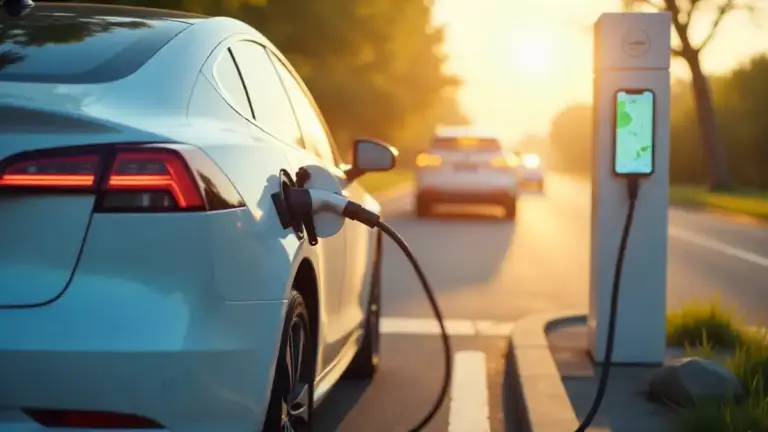
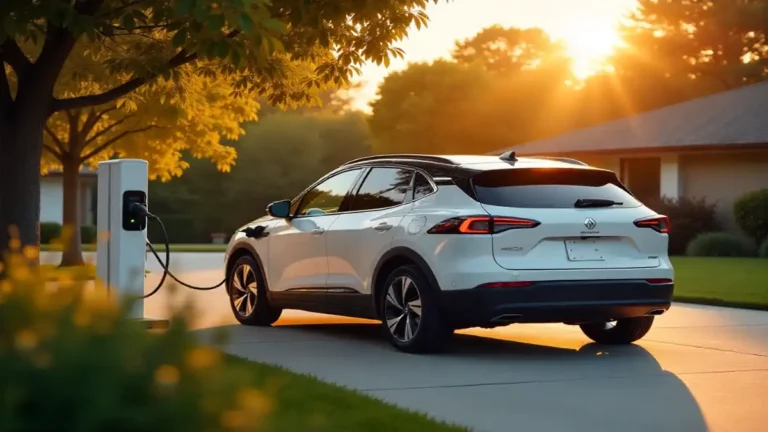
That said, charging infrastructure is crucial, and this is where things get interesting. Home charging is the secret weapon that most people don’t initially consider. Imagine never having to stop at a gas station for your daily driving. You plug in when you get home (takes about five seconds), and you wake up to a “full tank” every morning. For about 80% of EV owners who can charge at home, this becomes their primary charging method. It’s weirdly liberating.
For longer trips, the public charging network has expanded dramatically. There are now over 140,000 public charging ports in the U.S., with networks like Tesla’s Supercharger (now opening to other brands), Electrify America, and EVgo blanking major highways and urban areas. Yes, charging takes longer than pumping gas—typically 20-45 minutes for an 80% charge at a fast charger. But here’s my honest take: on road trips, those charging stops often align perfectly with meal breaks or bathroom stops you’d make anyway. It requires a slight mental adjustment, but it’s far from the ordeal some people imagine.
Cost is another big factor, and the math here is more favorable than many realize. Yes, EVs typically cost more upfront—anywhere from $5,000 to $15,000 more than comparable gas vehicles. But operational costs tell a different story. Electricity costs roughly one-third to one-quarter the price of gasoline per mile. Maintenance costs are dramatically lower—studies suggest EV owners save about $4,600 over the vehicle’s lifetime on maintenance alone. Federal tax credits up to $7,500 (and additional state incentives in many areas) help bridge that initial price gap significantly.
I watched my cousin meticulously track her costs after switching to a Chevy Bolt. After one year, she calculated she’d saved $1,200 on fuel and $300 on maintenance compared to her previous Honda Civic. “I’m basically driving for free compared to what I used to spend,” she told me. That’s not an exaggeration for many owners.
The Environmental Impact: Beyond the Tailpipe
Here’s where things get nuanced, and honestly, it’s important to discuss this fairly. Critics often point to battery production and electricity generation as offsetting the environmental benefits of EVs. They’re not entirely wrong to raise these concerns, but the full picture is more encouraging.
Battery production is energy-intensive, no doubt about it. Manufacturing an EV battery generates more emissions than building a conventional engine. But this is a one-time cost that gets amortized over the vehicle’s lifetime. Studies consistently show that EVs break even on total lifecycle emissions within 1-3 years of driving, after which they’re cleaner for the rest of their operational life.
The electricity grid question is more complex but equally important. “You’re just moving emissions from the tailpipe to the power plant,” skeptics argue. There’s partial truth here—if your EV charges exclusively from coal power, the environmental benefit is minimal (though still positive). However, even on today’s grid mix, which includes coal, natural gas, nuclear, and renewables, EVs produce significantly fewer lifetime emissions. As the grid continues its transition to renewable energy—solar and wind now provide over 20% of U.S. electricity and growing—every EV on the road automatically becomes cleaner without any changes to the car itself. That’s a future-proof investment.
Battery recycling is emerging as a crucial piece of the sustainability puzzle. Companies like Redwood Materials (founded by Tesla’s former CTO) are building sophisticated battery recycling facilities that can recover over 95% of materials like lithium, cobalt, and nickel. These recovered materials can be remanufactured into new batteries, creating a circular economy that dramatically reduces the need for new mining operations. We’re still in the early stages, but the trajectory is clear and promising.
And let’s not forget about oil. Every EV on the road represents one less vehicle dependent on petroleum extraction, refining, and transportation—processes that come with their own substantial environmental costs, from offshore drilling accidents to pipeline leaks to refinery emissions.

Market Trends and the Path Forward
The automotive industry is undergoing its most dramatic transformation since Henry Ford’s assembly line. Major manufacturers aren’t just dipping their toes in the EV market—they’re diving headfirst. General Motors has committed to phasing out gas-powered vehicles by 2035. Volkswagen is investing over $100 billion in EV development. Ford has split its operations into separate divisions for gas and electric vehicles, signaling that this isn’t a side project—it’s the future.
The numbers back this up. In 2023, EV sales in the U.S. grew by over 50% compared to the previous year, representing about 7.6% of all new vehicle sales. That might not sound massive, but consider this: it took smartphones four years to reach similar market penetration, and we all remember how quickly they became ubiquitous after that tipping point. Norway, often a bellwether for transportation trends, saw EVs account for over 80% of new car sales in 2023. The momentum is building.
Price parity is on the horizon. Bloomberg predicts that EVs will reach price parity with gas vehicles (without subsidies) by 2025-2026 in most markets. Battery costs have already dropped by nearly 90% over the past decade, and they’re continuing to fall. When you combine equal purchase prices with lower operating costs, the economic argument for gas vehicles largely evaporates.
But here’s what really excites me about the future: innovation isn’t slowing down. We’re seeing developments in wireless charging systems that let you charge while parked without plugging in. Vehicle-to-grid technology could turn every EV into a mobile power bank that stabilizes the electrical grid and provides backup power during emergencies. Advanced battery chemistries promise to eliminate range anxiety entirely. And autonomous driving technology is being developed primarily for electric platforms because the integration is more seamless.
The charging infrastructure is scaling up rapidly. The U.S. government has committed $7.5 billion to build out a national EV charging network, with the goal of 500,000 chargers by 2030. Private companies are investing billions more. Tesla alone is adding thousands of Supercharger stalls annually. The “chicken and egg” problem of charging infrastructure is resolving itself, and it’s happening faster than most people realize.
Addressing the Challenges Head-On
I’d be doing you a disservice if I painted EVs as a perfect solution with zero drawbacks. They’re not. Let’s talk honestly about the challenges that remain.
Apartment dwellers and renters face legitimate obstacles. Without a dedicated parking spot and charging access, EV ownership becomes significantly more complicated. Some landlords are installing chargers, and legislation in several states now requires or incentivizes charging infrastructure in new multi-unit developments, but we’re not there yet. This is a real equity issue that needs policy solutions.
Cold weather performance is another valid concern. Battery chemistry doesn’t like extreme cold, and EVs can lose 20-40% of their range in freezing temperatures. Preheating the car while still plugged in helps, but there’s no denying that winter driving requires more planning in very cold climates. Battery technology improvements are addressing this, but it’s an ongoing challenge.
The used EV market is still developing. Battery degradation concerns make some buyers nervous about purchasing older EVs, though data suggests batteries hold up better than many feared—most retain 80-90% capacity after 150,000 miles. Battery warranties (typically 8 years or 100,000 miles) provide some protection, but the long-term value proposition of used EVs remains somewhat uncertain.
And yes, the initial cost barrier is real. Even with incentives, EVs remain out of reach for many families operating on tight budgets. This will improve as prices fall and more affordable models enter the market, but right now, EVs skew toward middle and upper-middle-class buyers. This is something the industry and policymakers need to address to ensure the transition to sustainable transportation is equitable and accessible.
Conclusion
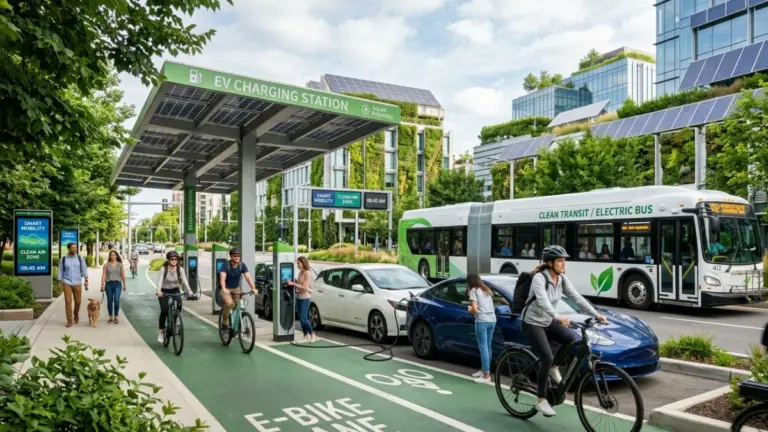
So, are electric vehicles the complete answer to sustainable transportation? Not entirely—nothing ever is. They’re one crucial piece of a larger puzzle that includes better public transit, bike-friendly cities, remote work options, and rethinking how we design communities to reduce the need for driving in the first place.
But here’s what EVs absolutely represent: a massive step forward. They’re proof that we can address environmental challenges without sacrificing convenience, performance, or the freedom that personal transportation provides. Every EV on the road is a small vote for cleaner air, quieter neighborhoods, and a more stable climate. And unlike many environmental initiatives that require collective sacrifice, this one often comes with genuine personal benefits—lower costs, better performance, and less hassle.
If you’re considering making the switch, my advice is simple: test drive one. Really spend time with it. Talk to actual owners about their experiences. Calculate your specific use case with charging options and daily driving patterns. You might be surprised at how well an EV fits your life.
And if you’re not quite ready yet? That’s okay too. This transition is happening gradually, and the technology and infrastructure are improving every month. The EV you might buy in three years will be better and cheaper than what’s available today. But keep watching this space, because the revolution in sustainable transportation isn’t coming—it’s already here, humming quietly down your street.
The road ahead is electric, and honestly, that’s pretty exciting.