
Picture this: you’re silently gliding down the highway in your electric car, feeling pretty smug about your zero-emission ride, when suddenly you notice that familiar vibration through the steering wheel. Your tires are trying to tell you something, and trust me, you’ll want to listen. Here’s the thing about electric vehicles – they’re absolutely incredible machines, but they put your tires through a completely different kind of workout than traditional gas cars do.
If you’ve recently made the switch to electric or you’re thinking about it, understanding how to care for your EV’s tires isn’t just about saving money (though you definitely will). It’s about safety, performance, and getting the most out of your electric driving experience. Let’s dive into what makes EV tire care unique and how you can keep those wheels rolling smoothly for thousands of miles to come.
Why Electric Cars Are Harder on Tires
Your electric car might whisper-quiet compared to that old gas guzzler, but don’t let the peaceful ride fool you – there’s some serious physics happening down where rubber meets road. Electric motors deliver their full torque instantly, unlike gas engines that need to build up power. When you press that accelerator pedal, you’re unleashing maximum twisting force immediately. It’s like the difference between gradually turning up a wrench versus giving it one powerful, sudden twist.
This instant torque is fantastic for merging onto highways and leaving gas cars in your dust at traffic lights, but it also means your tires are constantly dealing with more aggressive acceleration forces. Add to that the fact that most electric vehicles weigh 1,000 to 1,500 pounds more than their gas counterparts – thanks to those hefty battery packs – and you’ve got a recipe for increased tire wear.
The weight issue isn’t just about the extra pounds pressing down on your tires, either. That battery weight is typically mounted low in the vehicle, which actually improves handling and stability. However, it also means your tires are working harder during every turn, brake, and acceleration. Think of it like carrying a heavy backpack while hiking – you can still walk the trail, but every step requires more effort from your legs.
The Art of Proper Tire Pressure Management
Here’s where many electric car owners miss a crucial opportunity to extend their tire life and maximize their driving range. Proper tire pressure isn’t just important for EVs – it’s absolutely critical. Under-inflated tires don’t just wear out faster; they also increase rolling resistance, which directly impacts your car’s efficiency and range.
Check your tire pressure at least once a month, and do it when the tires are cold – meaning the car hasn’t been driven for at least three hours. Temperature changes affect tire pressure significantly, with tires losing about 1-2 PSI for every 10-degree drop in temperature. During seasonal transitions, you might find yourself adjusting pressure more frequently.
Your car’s recommended tire pressure is usually found on a sticker inside the driver’s door frame or in your owner’s manual. Don’t rely on the numbers molded into the tire sidewall – those represent maximum pressure, not optimal pressure for your specific vehicle. Many electric vehicles run slightly higher tire pressures than gas cars to optimize efficiency, so don’t assume you know the right number just because you’ve owned cars before.
Consider investing in a quality digital tire pressure gauge and a portable air compressor. The convenience of checking and adjusting pressure at home means you’re more likely to stay on top of this crucial maintenance task. Some newer electric vehicles even have individual tire pressure monitoring systems that alert you to specific tire pressure changes, making this job easier than ever.
Rotation Strategies That Actually Work for EVs
Traditional tire rotation wisdom doesn’t always apply perfectly to electric vehicles, especially if your EV has different-sized tires front and rear (which many performance-oriented electrics do). The standard front-to-back, side-to-side rotation pattern works great for most electric cars with uniform tire sizes, but you’ll want to adapt your approach based on your specific vehicle and driving patterns.
For most electric vehicles, rotating tires every 6,000 to 8,000 miles strikes the right balance between preventing uneven wear and avoiding unnecessary hassle. However, pay attention to your actual wear patterns rather than blindly following a schedule. If you notice the front tires wearing significantly faster than the rears (common with front-wheel-drive EVs due to that instant torque), you might benefit from more frequent rotations.
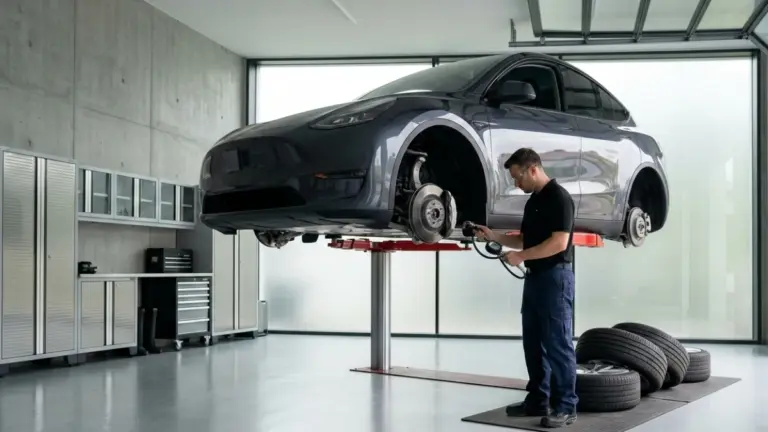
When you do rotate, take the opportunity to inspect each tire carefully. Look for unusual wear patterns that might indicate alignment issues, under-inflation, or suspension problems. Electric cars’ instant torque can sometimes reveal alignment issues more quickly than gas cars, so staying vigilant about tire condition pays dividends.
If your electric vehicle has directional tires or significantly different front and rear sizes, traditional rotation isn’t possible. In these cases, focus extra attention on monitoring wear rates and be prepared to replace tires in axle sets rather than individually. It might seem more expensive upfront, but maintaining balanced traction is crucial for both safety and optimal performance.
Choosing the Right Tires for Your Electric Journey
Not all tires are created equal when it comes to electric vehicles, and this is one area where doing your homework really pays off. Many tire manufacturers now offer EV-specific tires designed to handle the unique demands of electric vehicles. These specialized tires typically feature reinforced sidewalls to handle the extra weight, compounds optimized for low rolling resistance, and tread patterns designed to minimize road noise (since you can actually hear tire noise in a quiet electric car).
Low rolling resistance is particularly important for electric vehicles because it directly impacts your range. A set of tires with high rolling resistance can reduce your vehicle’s efficiency by 10-15%, which translates to noticeably shorter driving range between charges. However, don’t sacrifice safety for efficiency – the best EV tires balance low rolling resistance with excellent wet and dry traction.
Consider your driving patterns when selecting replacement tires. If you do mostly city driving with lots of stop-and-go traffic, prioritize tires with excellent wear resistance and good low-speed handling. Highway commuters might want to focus on low rolling resistance and comfort features that minimize road noise and vibration.
All-season tires work well for most electric vehicle owners, but if you live in an area with serious winter weather, don’t try to make all-seasons work year-round. The extra weight of electric vehicles makes them more challenging to control on snow and ice, so proper winter tires become even more important than they were with gas cars.

Driving Habits That Extend Tire Life
The beautiful thing about electric cars is that they naturally encourage some tire-friendly driving habits, while also making it easier to develop some tire-wearing ones. The key is understanding which of your driving behaviors help your tires and which ones hurt them, then adjusting accordingly.
Regenerative braking is your friend when it comes to tire longevity. By letting the car slow down through regen rather than friction braking, you reduce heat buildup in the tires and maintain more consistent tire temperatures. Many electric vehicles allow you to adjust regenerative braking strength – experiment with higher settings to see if you can comfortably do most of your slowing without touching the brake pedal.
However, that instant torque that makes electric cars so fun can also be hard on tires if you’re not mindful. Resist the temptation to floor the accelerator at every opportunity, especially from a standstill. Gradual acceleration not only extends tire life but also maximizes your vehicle’s range. Think of it as a zen approach to driving – smooth, deliberate inputs that work with the car rather than fighting against it.
Pay attention to your cornering habits, too. The low center of gravity in most electric vehicles makes them feel incredibly stable in turns, which can tempt you to take corners faster than you might in a gas car. While the car can handle it, your tires will thank you for maintaining reasonable cornering speeds, especially during the first few thousand miles when new tires are still breaking in.
Making Your Investment Last
Taking care of your electric car’s tires isn’t just about following a maintenance schedule – it’s about understanding that these components are working harder than ever before and need your attention to perform their best. By staying on top of pressure checks, rotating regularly, choosing the right replacement tires, and adapting your driving style to work with your EV’s characteristics, you can significantly extend tire life while maintaining the safety and performance you expect.
Remember, good tire maintenance isn’t just about saving money on replacements, though that’s certainly a nice benefit. Properly maintained tires improve your car’s efficiency, extend its range, enhance safety in all weather conditions, and help you get the most enjoyment out of the electric driving experience. Your future self – and your wallet – will thank you for the attention you pay to those four critical contact patches that keep you connected to the road.
The transition to electric driving represents an exciting shift in how we think about transportation, and with a little knowledge and attention to detail, your tires can be reliable partners in that journey for many thousands of miles to come.
Roy K. Miller is an EV expert passionate about electric mobility, green technology, and the future of transportation. He helps readers and drivers make smarter choices while sharing insights and updates on the latest developments in the EV world.