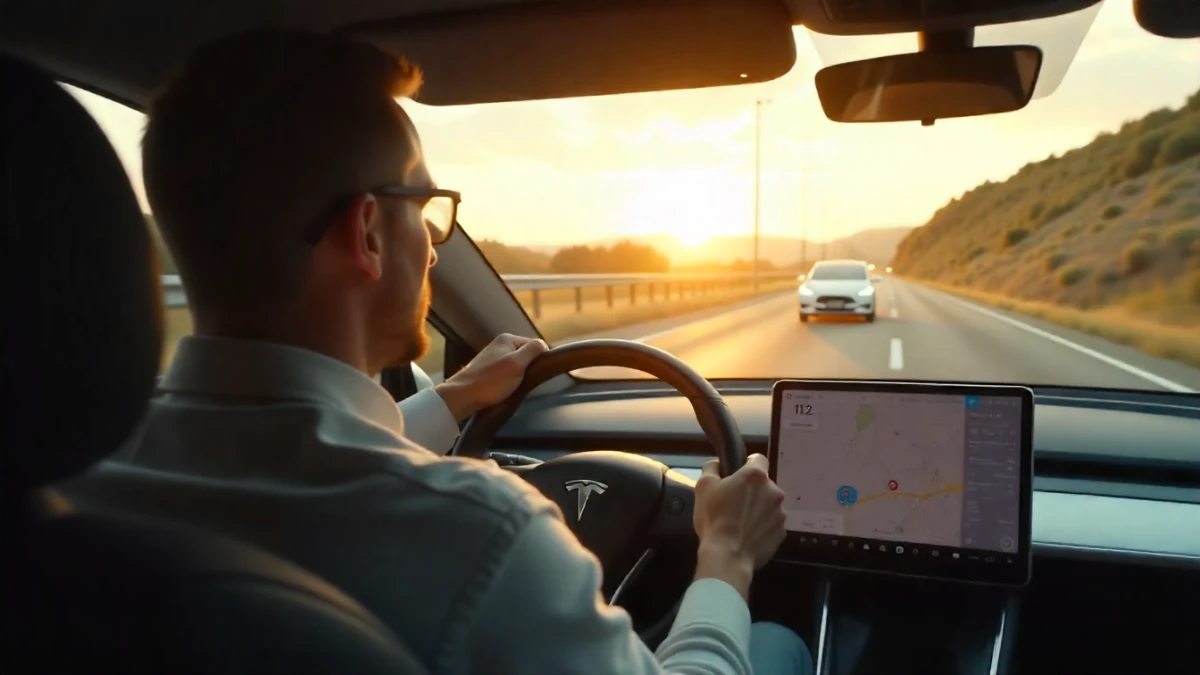
I still remember the exact moment I experienced the electric car experience. I was merging onto the highway in a borrowed Tesla Model 3, and I pressed the accelerator like I would in any normal car. What happened next fundamentally changed my relationship with driving forever.
The car didn’t accelerate—it launched. No engine roar, no gear changes, no drama. Just instant, relentless, almost absurd thrust that pinned me to the seat while the world outside blurred. My hands tightened on the wheel. My eyes widened. And somewhere in my brain, a switch flipped that has never flipped back.
That was three years ago. I’ve been driving electric ever since, and honestly? Gas cars now feel like driving in slow motion through molasses.
The Acceleration That Ruins You for Everything Else
Let’s talk about that instant torque for a second, because it’s not just marketing hype—it’s physics, and it’s glorious.
Traditional gas engines need to rev up through their power band. They have sweet spots, usually somewhere between 3,000 and 6,000 RPM, where the power comes alive. Below that? You’re waiting. You downshift, the transmission thinks about it, the engine climbs the rev range, and then you get your power.
Electric motors? They deliver maximum torque from zero RPM. The moment you touch that accelerator, all the power is right there. No waiting, no building, no drama. It’s like the difference between asking politely and flipping a switch.
Even a modest EV like the Nissan Leaf, which nobody would call a performance car, will embarrass plenty of gas vehicles off the line. My current ride, a Hyundai Ioniq 5, produces 320 horsepower and 446 lb-ft of torque. It hits 60 mph in 4.5 seconds. That’s sports car territory, but it feels effortless—almost casual—in a way that sports cars never do.
You know what’s wild? After a while, this becomes your baseline. You forget that most cars don’t drive like this. Then you rent a gas car on vacation, press the pedal expecting that immediate response, and… nothing happens. You press harder. The engine gets loud and angry. Eventually, you accelerate, but it feels delayed, like there’s a lag between your intention and the car’s response.
It’s genuinely jarring. It’s like going from a solid-state drive back to a spinning hard disk. Technically it works, but why would you ever want to?
The Serenity of Silence
The second revelation hit me on a quiet morning drive through the countryside.
I had the windows down, the radio off, and I was just… listening. Except there was nothing to listen to. No engine drone, no exhaust rumble, no mechanical symphony of explosions happening under the hood. Just wind noise, tire hum, and the occasional chirp of birds I could actually hear over the sound of my car.
This is when I realized: I’d been shouting over my engine for my entire driving life.
Every gas car, even the quiet ones, has a constant background noise. You tune it out, the same way you tune out the hum of your refrigerator, but it’s always there. Your brain is always filtering it, always working to focus your attention past it. Phone conversations require a little more volume. Podcasts need to be turned up. Passengers lean in slightly to be heard.
In an EV, conversations happen at normal volume. You can listen to music at lower levels and hear every instrument clearly. My kids in the back seat no longer need to shout “Dad! Dad! DAD!” three times before I hear them. (Though honestly, sometimes I miss that excuse.)
But here’s the thing that surprised me most: the silence makes you a calmer driver. Without the visceral feedback of engine noise, you naturally drive smoother. You’re not getting that auditory excitement that makes you want to push harder, rev higher, be more aggressive. You just… glide. It’s meditative in a way I never expected from driving.
My wife noticed it first. “You don’t seem as stressed after your commute anymore,” she said one evening. She was right. Fifty minutes of near-silence, even in traffic, is fundamentally different than fifty minutes of engine noise and exhaust smell.
One-Pedal Driving: The Feature That Changes Everything
Okay, this one sounds weird until you experience it, and then you’ll wonder how you ever drove any other way.
Most modern EVs have a regenerative braking mode that’s strong enough to bring the car to a complete stop without ever touching the brake pedal. You just lift off the accelerator, and the electric motor reverses, capturing kinetic energy to recharge the battery while simultaneously slowing the car down.
The first time you try it, it feels too aggressive, almost uncomfortable. “This thing stops too hard!” I complained on day one. By day three, I’d adjusted my driving style. By day seven, I was addicted.
Now, I drive almost exclusively with one pedal. Accelerator down, car goes. Accelerator up, car stops. The brake pedal is basically just for emergencies and the final few feet of parking. My right foot just glides back and forth on a single pedal, and I’m completely in control of the car’s speed.
You know that moment in traffic where someone brakes ahead of you, so you brake, which makes the person behind you brake, creating that accordion effect? One-pedal driving virtually eliminates that. You can modulate your speed so smoothly that you barely disrupt traffic flow. You learn to time your approach to red lights so perfectly that they turn green just as you arrive, without ever coming to a complete stop.
It sounds small, but it fundamentally changes how you interact with the car. Driving becomes more like flying—you’re controlling momentum more than you’re controlling speed. It’s intuitive in a way that two-pedal driving never quite is.
My father borrowed my car recently for a weekend. When he brought it back, he said, “That one-pedal thing? I get it now. My car feels broken.”
The Gas Station Epiphany
Here’s a moment you don’t appreciate until it’s gone: never going to gas stations again.
I was six months into EV ownership when I happened to pull into a convenience store that shared a lot with a gas station. While I was inside grabbing coffee, I watched through the window as person after person pulled up to pumps, got out in the cold, stood there holding a nozzle, staring at the climbing numbers, waiting.
And it hit me: I never do that anymore. Ever.
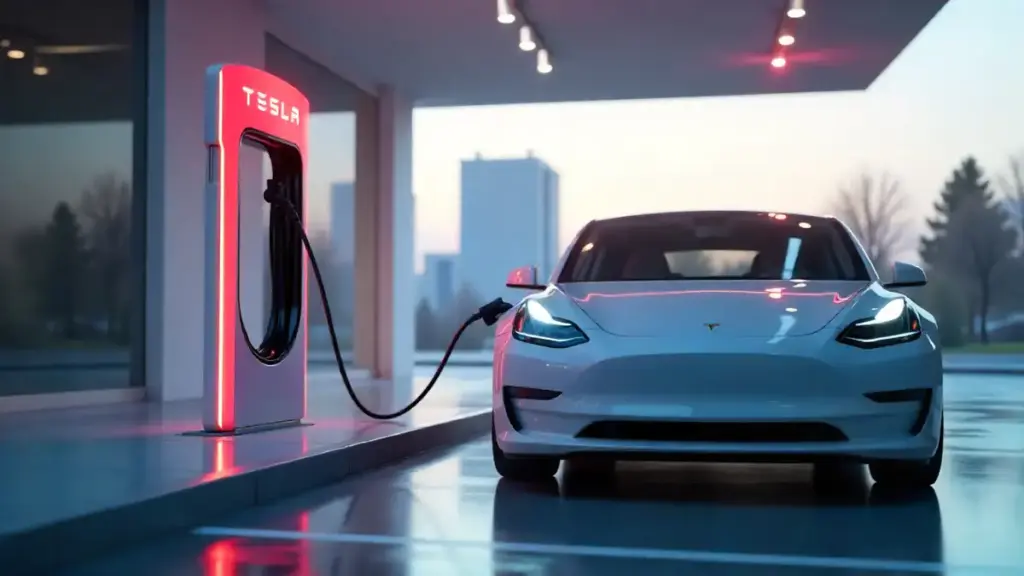
I plug in at home about twice a week, usually while I’m unloading groceries or putting the kids to bed. The “fueling” happens while I’m doing literally anything else. I wake up every morning to a full “tank.” I never wonder if I need to stop for gas before work, never get annoyed at gas prices on the highway, never stand in the rain holding a disgusting pump handle that thousands of other people have touched.
The freedom is profound. You don’t realize how much mental bandwidth those little gas station stops consume until they’re gone. The slight anxiety of “do I have enough to make it home?” The calculation of “should I fill up now or can I wait until prices drop?” The annoyance of “I’m already running late and now I need gas.” All of it, just… gone.
Sure, road trips require more planning. You need to find charging stations, and stops are longer. I won’t pretend that’s not a compromise. But for 90% of your driving—the daily stuff, the routine errands, the regular commute—you’re living in a world where refueling is something that happens in the background of your life, not an interruption to it.
My neighbor still drives a gas car. I saw him leaving for the gas station last week at 7 AM because he’d forgotten to fill up and was almost empty. I was pulling out of my driveway with 100% charge, coffee in hand, already running my heater. He looked at my car with the kind of envy usually reserved for people with vacation homes.
The Moment You Stop Making Excuses for Gas Cars
There’s a fascinating cognitive shift that happens when you’ve been driving electric for a while. You stop defending the limitations of EVs and start questioning why gas cars are the way they are.
Why should cars be loud? Why is it normal to sit in a vehicle that’s constantly exploding fossil fuels inches from your body? Why do we accept that cars need thousands of moving parts that require constant maintenance? Why is it okay that they spew toxic fumes that poison the air we breathe?
These aren’t rhetorical questions—they’re things I genuinely wondered before I went electric, but I accepted them as inevitable. “That’s just how cars work,” I’d have told you. Now, they feel absurd.
I took a gas rental car last month for a work trip. Within ten minutes, I’d made a list in my head: “Needs to warm up before heat works. Interior smells like exhaust. Hesitates when merging. Check engine light is on—apparently this is fine? Needs oil change in 500 miles. Brake pedal feel is mushy.”
None of these things bothered me before I drove electric. They were just… normal. The smell of exhaust was “car smell.” The delay in power delivery was just how acceleration worked. The maintenance schedule was responsible ownership.
Now? They’re annoyances I’m no longer willing to tolerate. The baseline has shifted. Electric isn’t a compromise anymore—it’s the standard. Gas cars are the ones making excuses.
You Can’t Unknow What You Know
Here’s the truth: you can intellectually understand the benefits of electric cars all day long. You can read about torque curves, efficiency ratings, and total cost of ownership until your eyes glaze over. But none of that matters until you actually drive one for a week.
Because switching to an EV isn’t a logical decision—it’s an emotional one dressed up in practical clothing. It’s not about spreadsheets and break-even calculations. It’s about that first time you punch it on an on-ramp and laugh out loud because your brain can’t process what just happened. It’s about pulling into your garage and plugging in instead of planning tomorrow’s gas station stop. It’s about driving through your neighborhood early in the morning without waking anyone up.
The moment I knew I could never go back wasn’t one moment—it was a thousand small moments that accumulated until gas cars stopped making sense. Until the sound of an engine became noise instead of music. Until waiting for power felt like lag instead of character. Until stopping for gas felt like an imposition instead of routine.
I don’t miss gas stations. I don’t miss oil changes. I don’t miss the smell, the noise, or the hesitation. What I miss is being able to test drive new gas cars without being disappointed by them.
The shift is permanent. You don’t go from electric back to gas the same way you don’t go from streaming back to cable TV. Once you know what the future feels like, the past loses its appeal.
So if you’re curious about EVs but haven’t driven one yet, do yourself a favor: find a friend with one, or book a test drive, or rent one for a weekend. Give yourself a week with an EV, and see if you can go back. I’d bet money you can’t.
Because once you feel that instant torque, that serene silence, that effortless one-pedal glide through traffic—once you truly experience what electric driving feels like—you’ll have your own moment. That moment when you realize you’ve crossed a line you didn’t even know was there.
And there’s no going back.