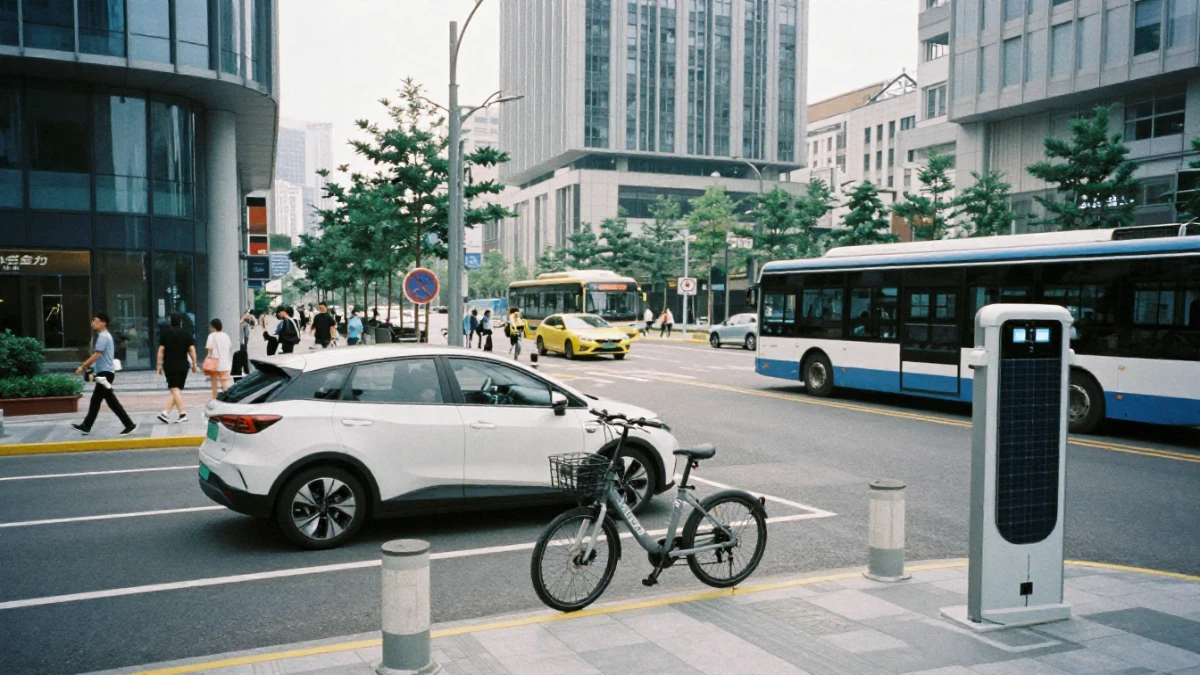
Picture this: You’re sitting in traffic, watching your gas gauge drop while your stress levels climb. Meanwhile, somewhere in Copenhagen, a commuter breezes past gridlock on an electric bike, arriving at work energized instead of exhausted. In Barcelona, a family hops on a quiet electric bus, and in California, neighbors share an EV through a car-sharing app, cutting their transportation costs in half. What if I told you that sustainable transportation isn’t just about swapping your gas car for an electric one—it’s about reimagining how we move through the world entirely?
You’ve probably heard plenty about electric vehicles (and yes, we’ll talk about those), but sustainable transportation is so much bigger than what’s parked in your driveway. It’s about finding smarter, cleaner ways to get where you need to go—whether that’s across town or across the country. And here’s the exciting part: you don’t need to overhaul your entire life to make a meaningful difference. Let’s explore the sustainable transportation options that actually work for real people with real lives.
What Makes Transportation “Sustainable” Anyway?
Before we dive into specific options, let’s clear up what we mean by “sustainable transportation.” It’s not just about zero emissions (though that’s certainly part of it). Sustainable transportation considers the full picture: carbon footprint, energy efficiency, resource use in manufacturing, urban space consumption, and even health impacts.
Think about it this way: a gasoline car releases about 4.6 metric tons of carbon dioxide per year. That’s like the weight of three cars being pumped into our atmosphere annually from just one vehicle. Sustainable alternatives aim to slash that number dramatically—or eliminate it entirely.
But here’s what makes this really interesting: sustainability isn’t one-size-fits-all. The most sustainable choice for a rural family of five looks completely different from the best option for a city-dwelling professional. Your perfect sustainable transportation solution depends on where you live, how you live, and what matters most to you. Let’s break down your options.
Electric Vehicles: The Gateway to Green Driving
Let’s start with the option that’s probably on your radar: electric vehicles. And I get it—when most people think “sustainable transportation,” EVs are the first thing that comes to mind. There’s good reason for that.
Modern electric cars like the Tesla Model 3, Hyundai Ioniq 6, or Chevrolet Equinox EV have completely shattered the old stereotypes. We’re talking 250-350 miles of range, charging times that fit into a lunch break, and performance that’ll make you forget you’re driving an eco-friendly vehicle. My neighbor recently switched to an EV and can’t stop talking about the instant torque—he says it’s like driving a totally different class of vehicle.
The sustainability story with EVs is compelling. Even when you account for battery production (which, yes, has an environmental cost), an EV produces about 60% fewer emissions over its lifetime compared to a gas car. In areas with clean electricity grids, that number jumps even higher. Plus, EVs are incredibly efficient—they convert about 77% of electrical energy into motion, compared to just 12-30% for gasoline engines. That’s like getting three times the value from every unit of energy.
But let’s be honest about the challenges. The upfront cost can sting—though federal tax credits up to $7,500 and state incentives help significantly. Charging infrastructure, while improving rapidly with over 60,000 public charging stations now in the U.S., still isn’t as ubiquitous as gas stations. And if you live in an apartment without dedicated parking, home charging gets complicated.
Here’s my take: If you drive regularly, have access to home charging, and can afford the initial investment, an EV makes tremendous sense. You’ll save money on fuel (about $1,000-$1,500 annually), enjoy virtually maintenance-free driving, and significantly reduce your carbon footprint. But it’s not the only sustainable game in town.
E-Bikes and Electric Scooters: The Urban Mobility Revolution
Now let’s talk about something that’s absolutely exploding in popularity: electric bicycles and scooters. I’ll be straight with you—I was skeptical until I tried one. Now I’m a total convert.
E-bikes aren’t just regular bikes with a battery slapped on. These are sophisticated mobility tools that amplify your pedaling power, turning a sweaty 10-mile commute into an enjoyable cruise. You arrive feeling refreshed, not exhausted. And the numbers are remarkable: e-bike sales have grown by over 240% in recent years, with the global market expected to hit $120 billion by 2030.
Why the enthusiasm? For starters, they’re incredibly efficient. An e-bike uses about 20 watt-hours per mile—compared to an EV’s 250-400 watt-hours. That’s like comparing a sip to a gulp. They’re also fantastically practical for urban environments. You dodge traffic, skip the parking struggle, and get some exercise in the process. Plus, many cities now have protected bike lanes, making cycling safer and more appealing than ever.
The cost factor is huge too. While a quality e-bike might run you $1,500-$4,000, that’s still a fraction of any car’s price. And your ongoing costs? Essentially nothing beyond occasional maintenance and a few cents of electricity for charging. One of my colleagues replaced half her car trips with an e-bike and calculated she saves about $300 monthly on gas, parking, and car maintenance.
Electric scooters occupy a similar niche—perfect for shorter trips, incredibly portable, and increasingly sophisticated. Modern models offer 20-40 mile ranges and fold down small enough to stash under your desk or carry onto public transit.
The practical reality: E-bikes and scooters work brilliantly for trips under 10 miles in decent weather. They’re perfect complements to public transit—ride to the station, fold it up, hop on the train. But they’re not replacing your car for grocery shopping with three kids or road-tripping to visit family. That’s okay. Sustainability isn’t about perfection; it’s about making better choices when you can.
Public Transportation: The Underrated Sustainability Champion
Here’s something that might surprise you: public transportation is often the single most sustainable transportation choice available. A full bus takes 40 cars off the road. A commuter train? Potentially hundreds.
I know, I know—public transit has an image problem in many parts of the U.S. Unreliable schedules, limited routes, uncomfortable conditions. But here’s what’s changing: cities are massively investing in modern, electric public transit. Los Angeles just added hundreds of electric buses to their fleet. Seattle’s light rail expansion is connecting neighborhoods that were previously car-dependent. Even smaller cities are rolling out electric bus rapid transit systems.
The sustainability math is stunning. Taking public transit instead of driving alone can reduce your carbon footprint by 20 pounds of CO2 daily—that’s 4,800 pounds annually, equivalent to not driving for an entire month every year. Public transit also produces 76% less greenhouse gas per passenger mile than single-occupancy vehicles.
Beyond environmental benefits, there’s the social sustainability angle. When you’re not white-knuckling through traffic, you can read, work, or simply decompress. That’s time back in your day. And economically? The average American household spends about $10,000 annually on car ownership. Transit passes typically run $1,200-$2,400 per year. That’s real money for vacations, savings, or just breathing room in your budget.
The catch? Public transit only works if it actually serves where you need to go, when you need to go there. For suburban and rural residents, it’s often simply not viable. That’s a policy issue that needs addressing, but it doesn’t change your immediate reality.
Smart approach: If you have decent transit options, try incorporating them strategically. Maybe you drive on grocery days but take the train downtown for work. Mix and match based on what actually works for your life.
Car-Sharing and Ride-Pooling: Rethinking Vehicle Ownership
Here’s a radical thought: what if you didn’t own a car at all?
Before you click away, hear me out. Car-sharing services like Zipcar, Turo, and Getaround have completely changed the economics of vehicle access. Why pay for a depreciating asset that sits unused 95% of the time when you could pay only for the miles you actually drive?
The sustainability case is straightforward: Studies show that each shared vehicle replaces 9-13 privately owned cars. That’s fewer cars manufactured, less parking infrastructure needed, and reduced urban sprawl. When people pay directly for each trip, they also drive more thoughtfully—combining errands, choosing closer destinations, and considering alternative transportation for shorter trips.
The financial math is eye-opening too. Between loan payments, insurance, maintenance, parking, and depreciation, the average car costs about $9,000-$12,000 yearly. If you drive less than 10,000 miles annually, car-sharing might save you thousands. A friend in San Francisco ditched his car three years ago and uses a combination of transit, e-bike, and occasional car shares. He calculates he saves $6,000 yearly while having access to vehicles whenever truly needed.
Ride-pooling (think UberPool or Lyft Shared) offers another angle—splitting rides with others heading the same direction. It’s not quite as sustainable as public transit, but it’s far better than everyone driving separately. Some cities are now integrating ride-pooling into their public transit apps, creating seamless multimodal journeys.
Reality check: Car-sharing works best in urban areas with good density and infrastructure. If you live somewhere you need a car daily, or if you have specific needs (child car seats, hauling equipment, spontaneous long trips), traditional ownership might still make more sense. But it’s worth running the numbers—you might be surprised.
Walking: The OG Sustainable Transportation
Let’s not overlook the obvious: walking. It produces zero emissions, costs nothing, improves your health, and connects you with your community in ways that driving never will. The average American could walk about 40% of the trips they currently drive—we’re talking trips under one mile.
Think about it: that coffee run, dropping something at a neighbor’s house, hitting the corner store. These sub-mile trips are actually horrible for your car (engines need time to warm up efficiently) and collectively make up a huge portion of urban emissions.
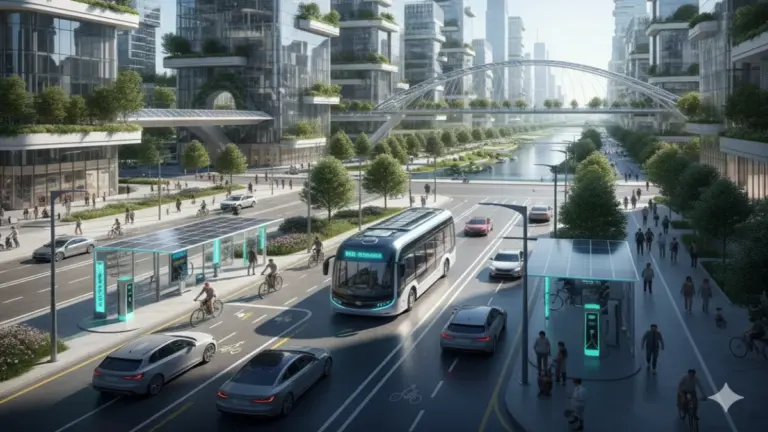
The “15-minute city” concept gaining traction worldwide aims to ensure everything you need—groceries, schools, healthcare, parks—is within a 15-minute walk or bike ride. Paris is retrofitting entire neighborhoods around this idea. While most American cities weren’t built this way, many neighborhoods already have more walkable infrastructure than residents realize.
I started walking to my local coffee shop instead of driving last year. It takes ten minutes longer. But I’ve met neighbors I’d never encountered, noticed businesses I’d always zoomed past, and genuinely arrive more relaxed. Plus, those 2,000 extra steps daily add up—I’ve lost weight without changing anything else.
Multimodal Transportation: The Smartest Approach
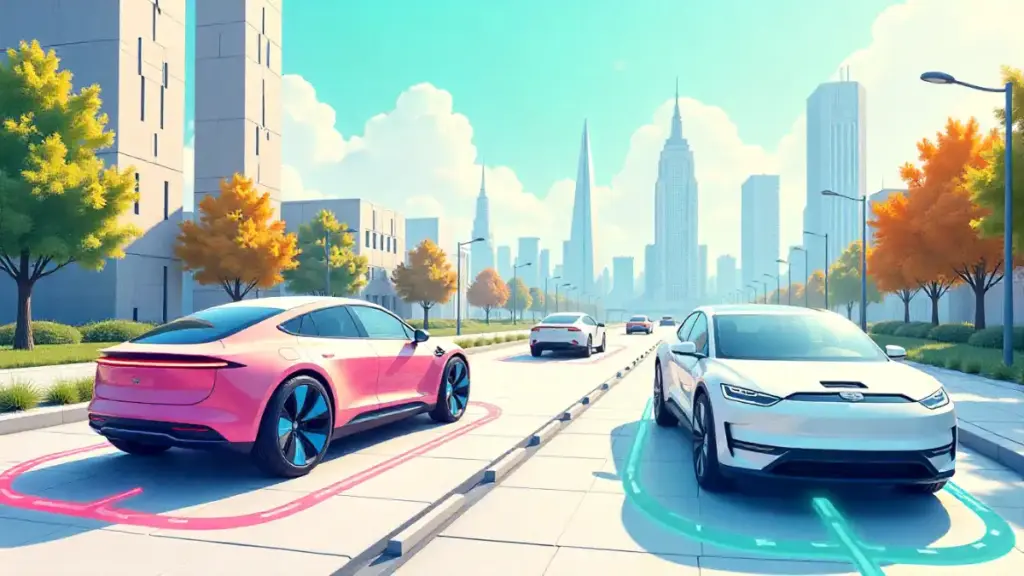
Here’s the truth that the sustainable transportation movement sometimes forgets to mention: you don’t have to choose just one option. The smartest, most sustainable approach is multimodal—using different transportation methods for different purposes.
Maybe that looks like: e-bike for your work commute, EV for family trips and weekend errands, public transit for downtown events, walking for neighborhood activities, and car-sharing for that occasional need to haul something large. You’re not locked into any single solution.
This flexibility is actually more sustainable than dogmatic adherence to one method. Why? Because it allows you to make the optimal choice for each situation, which means you’re more likely to stick with it long-term. Sustainability that fits your real life beats theoretical perfection you’ll abandon in frustration.
Modern technology makes multimodal transportation easier than ever. Apps like Transit, Citymapper, and Google Maps now integrate all available options—showing you whether driving, public transit, biking, or some combination gets you there fastest. Some cities are experimenting with “mobility as a service” subscriptions that bundle transit passes, bike shares, and car shares into one monthly payment.
Making Your Sustainable Transportation Plan
So how do you actually transition to more sustainable transportation? Start by honestly assessing your current transportation patterns. Track your trips for a week—where you go, how far, how often. You’ll probably discover patterns you hadn’t noticed.
Then ask yourself:
- Which trips could I walk or bike if I had the right equipment?
- Which routes have good public transit coverage?
- How often do I actually need a personal vehicle versus just being used to having one?
- What’s my budget for transportation, really, when I add everything up?
Start small. Don’t try to revolutionize your entire transportation life overnight. Pick one regular trip—maybe your commute, maybe weekend coffee runs—and experiment with a sustainable alternative for a month. See how it feels. Adjust. Build from there.
Consider your circumstances honestly. If you’re a parent of young children, your needs are different than a solo urban professional. If you live in a rural area, your options look different than someone in a city center. Sustainable transportation should enhance your life, not make it harder. Find the solutions that work for you, not someone else’s ideal.
The Road Ahead
The future of sustainable transportation is incredibly exciting. We’re seeing innovations everywhere: electric air taxis being tested in urban areas, hydrogen fuel cell vehicles gaining traction for long-haul applications, autonomous vehicle technology promising to make car-sharing even more efficient, and infrastructure investments finally catching up to our climate goals.
But here’s what matters right now: you don’t need to wait for some future technology to make more sustainable transportation choices. The options exist today. They’re accessible, affordable (often more so than what you’re currently doing), and increasingly convenient.
Every trip you take without burning fossil fuels matters. Not just for carbon emissions, though that’s crucial. But for air quality in your community, for reducing traffic congestion, for your own physical and mental health, and for demonstrating that sustainable transportation isn’t some fringe lifestyle—it’s just good sense.
You don’t need to be perfect. You don’t need to sell your car tomorrow (unless that genuinely works for you). You just need to be a little bit better, a little more thoughtful, about how you move through the world.
So here’s my challenge to you: Look at your calendar for next week. Pick just one trip—one!—where you could try a more sustainable option. Bike to that appointment. Take the bus downtown. Walk to the grocery store for just the essentials. See how it feels.
I’m betting you’ll surprise yourself. And who knows? Maybe in a year, you’ll be the one evangelizing to friends about how ditching your car was the best decision you ever made. Or maybe you’ll just be someone who drives a little less, bikes a little more, and feels good about the choices they’re making.
Either way, you’re part of the solution. And that, my friend, is worth celebrating.