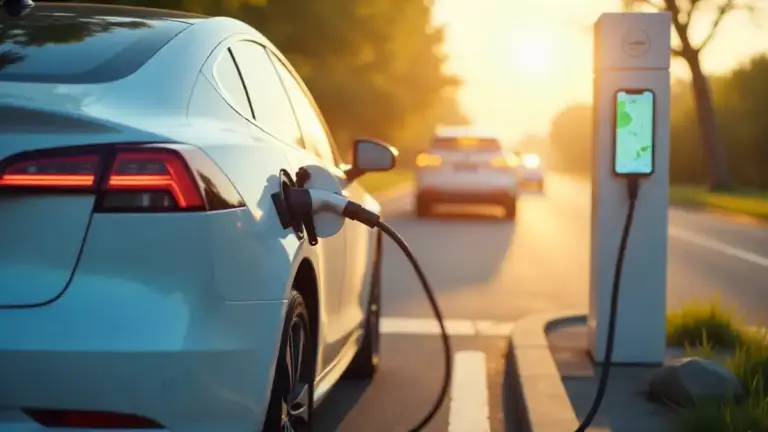
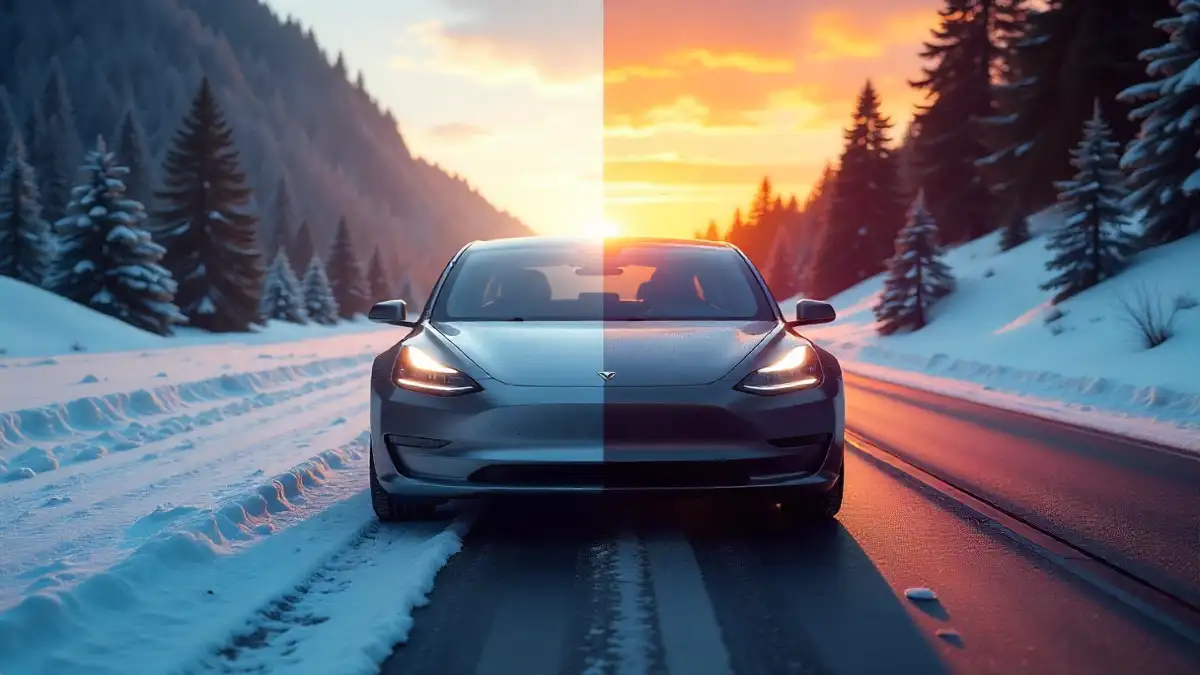
Picture this: It’s a crisp winter morning, and you’re about to embark on a road trip in your electric car. You notice your range has dropped overnight, illustrating the temperature impact EV battery range can have on your driving. If you’re an EV owner, you’ve probably experienced this firsthand.
Here’s the thing about electric vehicles that many people don’t fully grasp until they live with one: your car’s battery is a lot like you. Just as you perform better in comfortable temperatures and struggle in extreme heat or cold, your EV’s battery pack has its own comfort zone. Understanding this relationship between temperature and performance isn’t just interesting trivia – it’s essential knowledge that can save you from being stranded and help you maximize your investment.
The Science Behind Temperature Sensitivity
Let’s start with the basics. Your electric car’s battery is essentially a giant collection of lithium-ion cells, similar to what’s in your smartphone, just thousands of times larger. These batteries operate through chemical reactions that move lithium ions between electrodes. When temperatures drop or soar, these chemical processes slow down or become less efficient, directly impacting how much energy your battery can deliver and accept.
Think of it like honey in a jar. At room temperature, honey flows smoothly. Put it in the refrigerator, and it becomes thick and sluggish. Heat it up too much, and it becomes runny but can also degrade. Your battery chemistry works similarly – there’s a sweet spot where everything flows just right, typically between 60-80°F (15-27°C).
Most EV manufacturers design their battery packs with thermal management systems for exactly this reason. These systems work like your home’s HVAC unit, heating or cooling the battery to keep it in its optimal temperature range. However, this climate control comes at a cost – it uses some of your stored energy, reducing your available driving range.
Winter’s Harsh Reality on EV Range
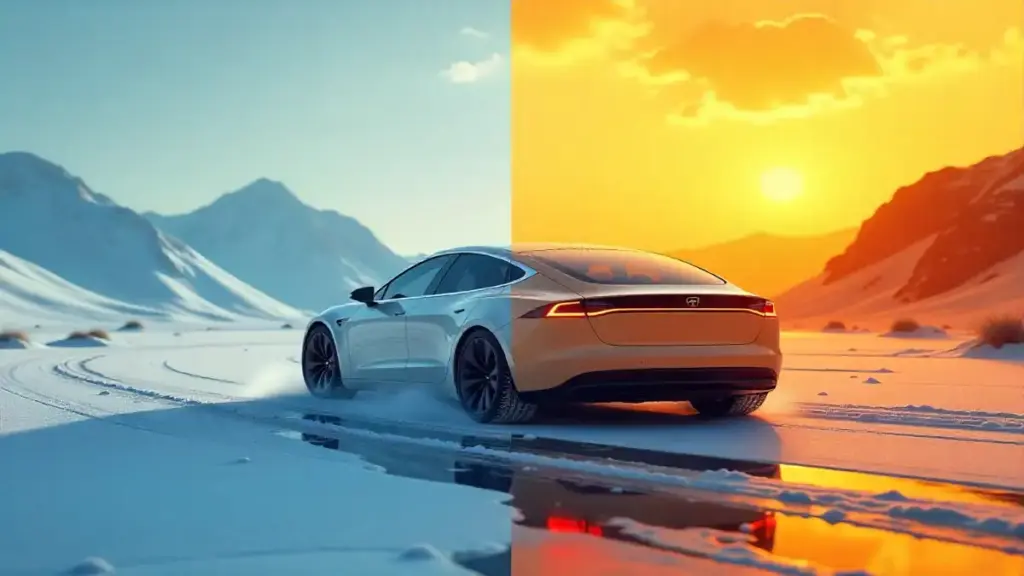
Cold weather is probably the biggest nemesis of electric car range, and I’m not just talking about slightly chilly days. When temperatures drop below freezing, you might see your range decrease by 20-40% compared to mild weather conditions. In extreme cold – think -10°F (-23°C) – some EVs can lose up to 50% of their range.
Why does this happen? Several factors work against you simultaneously. First, the battery chemistry slows down significantly in cold temperatures, reducing the amount of energy it can deliver. It’s like trying to squeeze ketchup from a cold bottle – everything just moves more slowly. The battery’s internal resistance increases, meaning more energy is wasted as heat instead of powering your wheels.
But here’s what many people don’t consider: your comfort systems become energy vampires in winter. Your heater, heated seats, heated steering wheel, and defrosters all draw power from the same battery that moves your car. Unlike a gasoline car that generates waste heat from the engine, your EV has to create heat from scratch using electricity.
I learned this lesson the hard way during my first winter with an electric car. I was commuting in a Nissan Leaf, and what should have been a 45-minute drive turned into a white-knuckle experience as I watched my range indicator drop faster than the temperature outside. That day taught me that winter EV driving requires a completely different mindset.
Summer Heat: A Different Kind of Challenge
While winter gets most of the attention for range reduction, hot weather presents its own unique challenges for electric vehicles. Extreme heat – anything above 95°F (35°C) – can reduce your range by 10-20%, though this is typically less dramatic than winter’s impact.
High temperatures affect batteries in several ways. The chemical reactions inside the battery can become too active, leading to increased internal resistance and reduced efficiency. More concerning for long-term ownership is that sustained high temperatures can cause permanent degradation to your battery cells, potentially shortening your battery’s overall lifespan.
Your car knows this, which is why it works overtime to keep the battery cool. The thermal management system runs more frequently in hot weather, using energy that would otherwise go toward driving range. Plus, just like in winter, your comfort systems become energy drains – air conditioning can reduce your range significantly, especially in stop-and-go traffic where you’re not benefiting from aerodynamic efficiency.
Here’s something that surprised me: parking in direct sunlight on a hot day can affect your next drive before you even start the car. Your EV might need to cool down its battery pack before you begin driving, using stored energy that reduces your available range. Some smart EVs will even start cooling themselves if they detect extreme temperatures while parked and connected to a charger.
Smart Strategies for Cold Weather Driving
The good news is that you’re not powerless against winter’s range-reducing effects. With some planning and smart driving habits, you can minimize temperature impacts and drive confidently year-round.
Preconditioning is your secret weapon. Most modern EVs allow you to warm up the cabin and battery while the car is still plugged in. This means you start your journey with a comfortable interior and an optimized battery, without using any of your driving energy. I make it a habit to set my car to precondition 15-20 minutes before I leave, and it makes an enormous difference in both comfort and range.
When driving in cold weather, consider using heated seats and steering wheel instead of cranking up the cabin heater. Heating your body directly is much more energy-efficient than heating the entire cabin air. You might feel a bit like you’re in a spaceship at first, but you’ll appreciate the extra miles this strategy provides.
Parking strategically can also help. Whenever possible, park in a garage or at least out of the wind. A car parked in a garage might start the day 20-30 degrees warmer than one left outside, giving you a significant head start on range preservation.
Beating the Summer Heat
Summer driving strategies focus on different priorities. Pre-cooling your car while it’s plugged in is just as valuable as preconditioning in winter. Starting your trip with a cool cabin means your air conditioning doesn’t have to work as hard during your drive.
Consider adjusting your charging habits during extremely hot weather. If possible, charge during cooler parts of the day – early morning or late evening. Batteries charge more efficiently when they’re not fighting against high ambient temperatures. Some EV owners even adjust their charging schedules seasonally, taking advantage of time-of-use electricity rates while also being gentler on their batteries.
Parking in shade becomes crucial during summer months. If you can’t find shade, consider using a windshield sunshade or window tinting to reduce heat buildup inside the cabin. The less heat your car absorbs while parked, the less energy it needs to cool down when you return.
Maximizing Battery Longevity Across All Seasons
Temperature impacts aren’t just about today’s drive – they affect your battery’s long-term health. Extreme temperatures, both hot and cold, can cause permanent capacity loss over time. The good news is that modern EVs are designed with sophisticated battery management systems that protect against the worst effects.
Try to keep your battery charge between 20-80% for daily driving. This sweet spot minimizes stress on the battery cells, regardless of temperature. When you know extreme weather is coming, having a fuller charge (up to 90%) can provide buffer against range reduction, but don’t make this your daily habit.
If you live in an area with extreme temperatures, consider your parking situation when choosing an EV. Cars that spend their lives in climate-controlled garages will maintain their battery health much longer than those exposed to temperature extremes day after day.
Planning for Real-World Conditions
The most important thing to remember is that EPA range estimates are based on ideal conditions – about 72°F with minimal use of climate control systems. Real-world driving rarely matches these conditions, so always plan with a buffer, especially during extreme weather.
Modern EVs are getting better at predicting real-world range based on current conditions. Pay attention to your car’s range estimates, but also learn to interpret them. If your car shows reduced range on a cold morning, that’s normal – not a sign something is wrong.
Consider downloading apps or using websites that track real-world EV efficiency in your area. Fellow EV owners often share their experiences with different models in various weather conditions, providing valuable insights for your own driving.
Looking Forward: Technology Improvements
The EV industry recognizes temperature sensitivity as a key challenge and is actively working on solutions. Newer battery chemistries are becoming more temperature-tolerant, and thermal management systems are becoming more efficient. Some manufacturers are experimenting with heat pumps for cabin heating, which are much more efficient than traditional resistive heaters.
Solid-state batteries, still in development, promise to be less sensitive to temperature variations while offering higher energy density. These next-generation batteries could significantly reduce the temperature-related range anxiety that affects current EVs.
Your Temperature-Smart EV Future
Understanding how temperature affects your electric car isn’t about accepting limitations – it’s about becoming a more informed and confident EV owner. Yes, your range will vary with the weather, but knowing what to expect and how to respond makes all the difference.
Every EV owner develops their own strategies for dealing with temperature extremes. Some become experts at route planning with charging stops, others master the art of efficient climate control, and many simply learn to appreciate the quiet reliability of electric driving regardless of the weather outside.
The key is to embrace these characteristics as part of the EV ownership experience rather than fighting against them. Your electric car is a sophisticated machine that’s working hard to optimize performance and protect its battery in all conditions. By understanding and working with these systems, you’ll get the most out of your EV year-round while ensuring it serves you reliably for many years to come.
Remember, every challenge with EV ownership is matched by unique benefits – instant torque in snow, quiet operation for early morning departures, and the satisfaction of driving without emissions regardless of the weather. Temperature sensitivity is just one piece of the puzzle in the fascinating world of electric mobility.
Roy K. Miller is an EV expert passionate about electric mobility, green technology, and the future of transportation. He helps readers and drivers make smarter choices while sharing insights and updates on the latest developments in the EV world.