You’ve probably heard about the generous tax credits for buying a new electric car, right? But here’s something that doesn’t get nearly enough attention: there are actually some pretty compelling incentives for buying a used EV, too. And honestly? For many people, that’s where the real sweet spot is.
Think about it. A used electric car has already taken that initial depreciation hit, often comes with proven reliability, and now—thanks to some recent policy changes—can qualify for federal tax credits and various state incentives. It’s like getting the best of both worlds: a more affordable entry point into electric driving and financial incentives that can knock thousands off your purchase price.
Let me walk you through everything you need to know about used EV incentives. Whether you’re shopping for your first electric car or considering adding another to your garage, understanding these programs could save you serious money.
The Federal Used EV Tax Credit: Your Starting Point
The Inflation Reduction Act changed the game for used EV buyers in 2023 by introducing a federal tax credit specifically for pre-owned electric vehicles. This isn’t some tiny consolation prize, either—we’re talking about a credit worth up to $4,000, or 30% of the sale price, whichever is less.
But before you get too excited, there are some eligibility boxes you’ll need to check. First, income limits apply: your modified adjusted gross income needs to be under $150,000 if you’re married filing jointly, $112,500 for heads of household, or $75,000 for single filers. The good news? These limits are more generous than the new EV credit, which makes sense since used cars are naturally more accessible.
The vehicle itself has specific requirements, too. It must be at least two model years old, cost less than $25,000, and be purchased from a licensed dealer—sorry, private party sales don’t qualify. The car also needs to have a battery capacity of at least 7 kilowatt-hours and must not have already been claimed for this credit by a previous owner. You can only claim this credit once every three years, so choose wisely.
Here’s a practical example: let’s say you find a 2021 Nissan Leaf at a dealership for $18,000. You’d qualify for a $4,000 credit (since 30% of $18,000 is $5,400, but the credit caps at $4,000). That effectively brings your cost down to $14,000—a price point that’s hard to beat for reliable electric transportation.
State and Local Incentives: The Hidden Goldmine
While the federal credit gets most of the attention, state and local incentives can sometimes be even more valuable—and they often stack on top of federal benefits. The programs vary wildly depending on where you live, so it’s worth doing some homework specific to your area.
California, unsurprisingly, leads the pack with its Clean Vehicle Rebate Project. Even for used EVs, you might qualify for rebates ranging from $1,000 to $4,000, depending on your income level. Colorado offers up to $2,500 for used EVs through its Electric Vehicle Tax Credit program. Connecticut provides a $3,000 rebate for used EVs priced under $50,000—notice that higher price cap compared to the federal limit.
Pennsylvania takes an interesting approach with its Alternative Fuel Vehicle Rebate Program, offering up to $2,000 for used EVs. Oregon provides rebates up to $2,500, with bonus amounts for lower-income buyers. Even states you might not expect, like Vermont and Massachusetts, have programs worth exploring.
Then there are utility company incentives, which people often overlook entirely. Many electric utilities offer rebates or special charging rates for EV owners, regardless of whether the car is new or used. For instance, Southern California Edison offers rebates on home charging equipment installation, while Austin Energy in Texas provides time-of-use rates that can significantly reduce your charging costs.
Some municipalities go even further. The city of Denver, for example, has offered additional rebates on top of state incentives. Local air quality management districts sometimes have their own programs, particularly in areas working to reduce emissions. These can add hundreds or even thousands more to your savings.
Understanding the Point-of-Sale Credit Change
Here’s something that makes the used EV credit even more attractive: starting in 2024, eligible buyers can transfer the credit to the dealer at the point of sale. What does that mean for you? Instead of waiting until tax season to claim your credit as a reduction in your tax liability, you can get the discount applied directly to your purchase price.
This is huge, especially if you’re working with a tight budget. Rather than needing to finance the full $18,000 for that Nissan Leaf and then waiting months to get $4,000 back at tax time, you can finance just $14,000 from day one. Lower financing amount means lower monthly payments and less interest paid over the life of the loan.
The dealer handles the paperwork to claim the credit from the IRS and gives you the instant discount. You’ll still need to meet all the eligibility requirements, and the dealer will verify this before processing the sale. Not every dealer participates in this program yet, so it’s worth asking when you’re shopping around.
There’s a small catch to be aware of: if you transfer the credit to the dealer but it turns out you weren’t eligible (maybe your income was higher than you thought, or there was another disqualifying factor), you’ll be responsible for repaying that amount to the IRS. So be honest and accurate when providing your eligibility information.
Making Sure Your Vehicle Qualifies
Not every used electric car on the lot will qualify for these incentives, so it’s important to do your due diligence before falling in love with a particular vehicle. The federal credit requires VIN verification through the IRS and Department of Energy databases, and dealers should be able to help you check this.
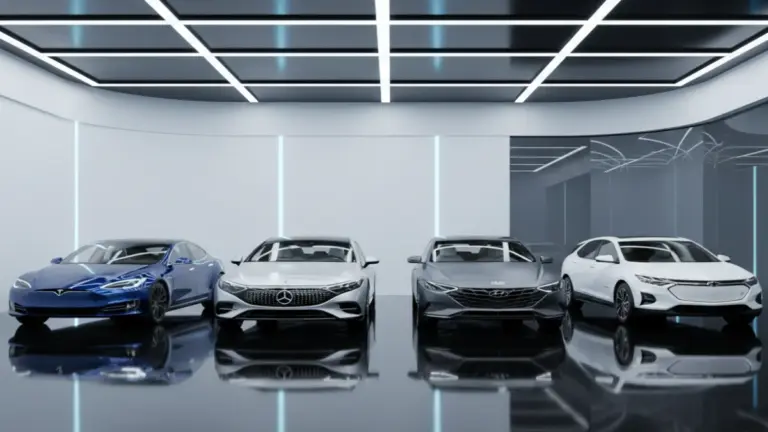
Battery capacity is one technical requirement that sometimes trips people up. The vehicle needs at least a 7 kWh battery, which rules out most plug-in hybrids when it comes to the federal credit. Pure electric vehicles like the Nissan Leaf, Chevrolet Bolt, Tesla Model 3, or Volkswagen ID.4 will easily meet this requirement, but you’ll want to verify if you’re looking at older or less common models.
The two-model-year rule is straightforward but important. In 2025, you’d need to purchase a vehicle from 2023 or earlier. This requirement exists partly to ensure the vehicle has had time to depreciate and partly to prevent people from flipping new EVs for the used credit.
Remember that $25,000 price cap. In today’s market, this actually opens up quite a few options, especially among earlier-generation EVs that have depreciated significantly. First-generation Nissan Leafs, Chevy Bolts from 2017-2019, BMW i3s, and Fiat 500es are all commonly available under this threshold. You might even find some used Tesla Model 3s or Chevy Bolt EUVs approaching this range, particularly if they have higher mileage.

Strategic Shopping: Maximizing Your Incentives
Smart shopping means more than just finding a car that qualifies—it means finding the best possible deal when you factor in all available incentives. Start by researching what’s available in your state and local area. The federal credit is a given, but those stackable state incentives can make a dramatic difference in your final cost.
Timing can matter, too. Some state programs have limited funding that gets depleted throughout the year, operating on a first-come, first-served basis. If you’re in one of these states, shopping earlier in the fiscal year (often July 1st for state budgets) can increase your chances of securing those funds.
Don’t forget to negotiate. The existence of these incentives doesn’t mean you shouldn’t haggle on the car’s price. In fact, you might find that used EV prices are particularly negotiable right now, as dealers adjust to changing market conditions and some buyers remain unaware of these incentive programs. A dealer eager to move inventory might be willing to come down on price, especially if you’re a qualified buyer who can take advantage of the point-of-sale credit.
Consider the total cost of ownership beyond just the purchase price and incentives. Used EVs often come with significantly lower maintenance costs than gas cars—no oil changes, fewer brake jobs thanks to regenerative braking, and generally simpler drivetrains. Factor in your local electricity rates versus gas prices to calculate your fuel savings. Sometimes a slightly more expensive EV that qualifies for incentives and has better efficiency will cost less overall than a cheaper option.
Also, look into whether your workplace offers EV charging or reimbursement programs. Some employers are adding these perks, which can further reduce your operating costs.
Beyond Purchase Incentives: Charging and Rebate Programs
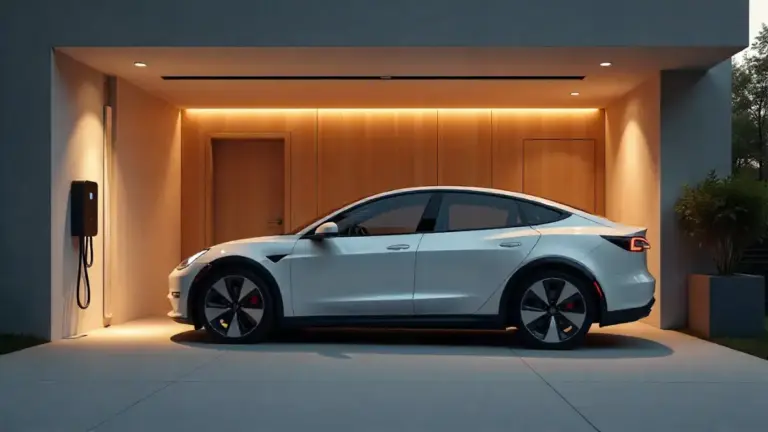
The savings don’t stop once you’ve bought the car. Many states and utilities offer incentives for home charging equipment installation, regardless of whether your EV is new or used. This is separate from the vehicle purchase incentives and can make setting up convenient home charging much more affordable.
For instance, the federal government offers a 30% tax credit (up to $1,000) for home EV charger installation costs. Many states and utilities stack their own rebates on top of this. You might end up paying just a fraction of the total cost for a Level 2 home charging station.
Some utilities also offer special electricity rates for EV owners—time-of-use rates that make overnight charging remarkably cheap. In some areas, charging your EV overnight could cost the equivalent of less than $1 per gallon of gas. These programs are typically available to any EV owner, regardless of whether you bought new or used.
Don’t overlook grants and programs for workplace charging, either. While these don’t directly benefit you financially, having free or subsidized charging at work can dramatically reduce your operating costs. Some employers are installing Level 2 chargers and offering charging as a free employee benefit.
The Bottom Line: Real-World Savings Examples
Let’s put this all together with some real-world scenarios to show you what these incentives can actually mean for your wallet.
Scenario 1: The Budget-Conscious Commuter You’re single, making $65,000 a year, and living in Colorado. You find a 2020 Nissan Leaf SV with 35,000 miles priced at $16,500 at a licensed dealer. You qualify for the $4,000 federal credit and Colorado’s $2,500 state credit. Your effective price drops to $10,000. Add in a utility rebate of $500 for installing a home charger, and you’re looking at a nearly-new electric car for less than many used gas cars cost.
Scenario 2: The Family Upgrade You’re married with a combined income of $130,000, living in California. You find a 2021 Chevy Bolt EUV for $24,500. After the $4,000 federal credit and California’s $2,000 rebate (income-dependent), you’re down to $18,500. Your utility offers $1,000 toward home charging equipment. Total effective cost: $17,500 for a roomy, practical EV with modern features and over 200 miles of range.
Scenario 3: The Opportunistic Buyer You’re in Pennsylvania with an income of $90,000. You discover a dealer offering a certified pre-owned 2019 BMW i3 for $17,000. Federal credit: $4,000. Pennsylvania rebate: $2,000. Effective price: $11,000 for a premium electric vehicle. The dealer even throws in a home charging station installation, which you can claim an additional tax credit on.
These aren’t hypothetical fantasy scenarios—these are the kinds of deals that savvy shoppers are finding right now.
Taking Action: Your Next Steps
Ready to start shopping for a used EV? Here’s how to move forward strategically. First, check your eligibility for the federal credit based on your income and how recently you claimed any EV credit. Then research your state and local incentives—the Department of Energy’s Alternative Fuels Data Center website is an excellent starting point.
Create a realistic budget that factors in not just the purchase price, but also insurance, registration, and any charging equipment you might need. Remember that many of these incentives come as tax credits or rebates after purchase, so understand your cash flow situation.
When you start shopping, work with dealers who are familiar with the used EV credit program and can process point-of-sale transfers. Don’t be shy about asking questions—a good dealer will be happy to help you maximize your incentives.
Get pre-approved for financing if needed, but make sure your lender understands you might be using the point-of-sale credit to reduce the amount you need to borrow. Some lenders are more experienced with this than others.
Finally, don’t rush. The used EV market is evolving quickly, with more inventory becoming available as early-generation EVs come off leases and first-generation batteries prove their durability. Take time to find the right vehicle that qualifies for maximum incentives.
The switch to electric driving has never been more accessible, especially in the used market. With federal credits, state rebates, and utility incentives all potentially stacking together, you might be surprised at how affordable electric mobility can be. That used EV you’ve been eyeing? It might be more within reach than you think.