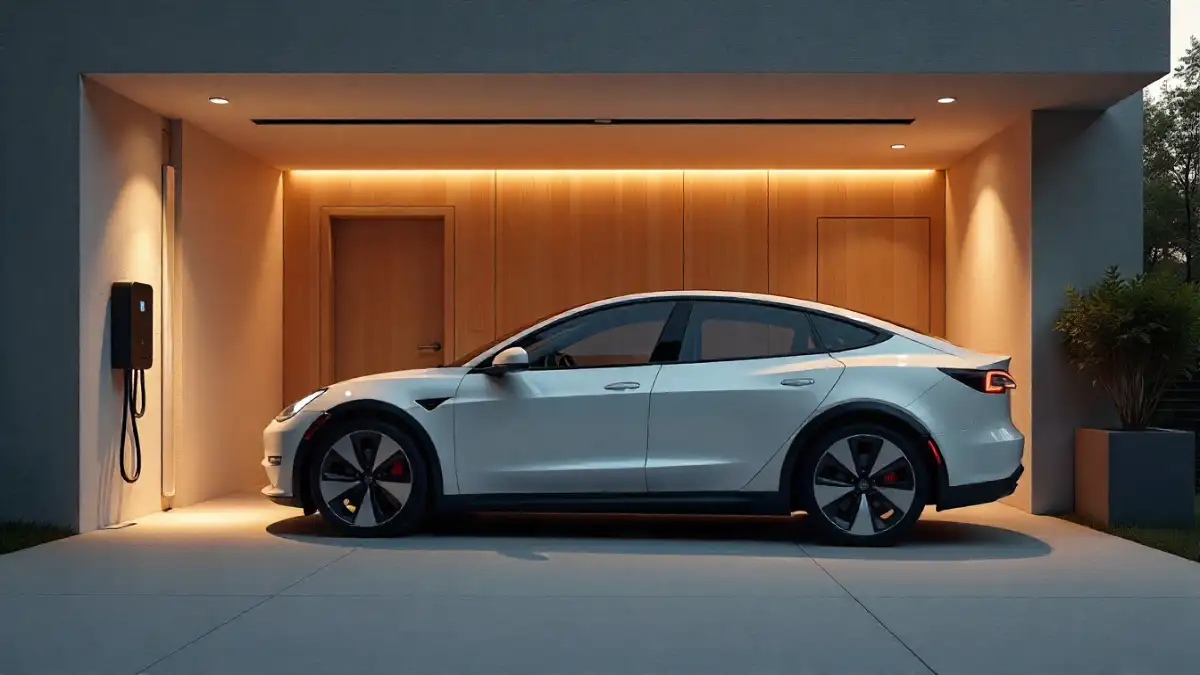
So, you’ve taken the plunge and ordered an electric car—congratulations! Now comes the practical question every new EV owner faces: how much will a home electric car charger installation actually cost? Trust me, I’ve been there, and the answer isn’t as straightforward as you might hope. But don’t worry—I’m going to break down every dollar and cent so you know exactly what you’re getting into.
Here’s the thing: installing a home EV charger isn’t like plugging in your toaster. There’s equipment to buy, electricians to hire, and possibly some upgrades to your home’s electrical system. But before you start panicking about the price tag, let me tell you this—it’s probably more affordable than you think, especially when you factor in the long-term savings and available incentives. Let’s dive into the real costs and what influences them.
Understanding Your Charging Options: Level 1 vs. Level 2
Before we talk numbers, you need to understand what you’re actually buying. Not all EV chargers are created equal, and your choice will significantly impact your installation cost.
Level 1 Charging is the simplest option—it’s basically just plugging your car into a standard 120-volt household outlet. The good news? It costs you nothing extra because you already have these outlets. The bad news? It’s painfully slow, adding only about 3-5 miles of range per hour of charging. If you have a short commute and can leave your car plugged in overnight, this might work for you. But for most people, it’s like filling a swimming pool with a garden hose—technically possible, but frustratingly inefficient.
Level 2 Charging is where things get interesting. These chargers use a 240-volt circuit (like your dryer or oven) and can add 25-30 miles of range per hour. This is what most EV owners end up installing, and it’s what we’ll focus on for the rest of this breakdown. It’s the sweet spot between convenience and cost.
The Equipment: What You’re Actually Buying
Let’s start with the charger itself—technically called an “Electric Vehicle Service Equipment” or EVSE, though everyone just calls it a charger. Prices vary wildly depending on features and brand, but here’s what you can expect:
Budget-friendly options start around $300-$500. These are basic, reliable units that get the job done without any fancy bells and whistles. They’ll charge your car just fine, but don’t expect WiFi connectivity or smartphone apps.
Mid-range chargers run between $500-$800. This is where you start seeing smart features like app control, charging schedules, and energy monitoring. Brands like ChargePoint, JuiceBox, and Grizzl-E dominate this space, and honestly, this is where I’d recommend most people shop. You get quality and convenience without breaking the bank.
Premium units can cost $800-$1,200 or more. These often come with longer cables (useful if your parking spot isn’t right next to your electrical panel), faster charging speeds, and sleeker designs. Some even integrate with home energy management systems. Are they worth it? That depends on how much you value those extra features.
One important note: some EV manufacturers, like Tesla, sell their own branded chargers. While these can be convenient, don’t feel locked in—most EVs can use any Level 2 charger with the right adapter or built-in connector.
Installation Costs: Where Things Get Interesting
Here’s where the real variability comes in. The cost to install your charger depends heavily on your home’s existing electrical setup and where you want the charger mounted.
Best-case scenario: Your garage already has a 240-volt outlet near where you park, and your electrical panel has capacity to spare. In this case, you’re looking at $250-$500 for a basic installation. An electrician will mount the charger, connect it to the existing circuit, and you’re done. Simple.
Typical scenario: You need a new 240-volt circuit run from your electrical panel to your charging location. This is the situation most homeowners face, and it’ll cost you $750-$1,500 on average. The price depends on the distance from your panel to your charger (more cable = more money) and whether the electrician needs to drill through walls or run conduit outside.
Challenging scenario: Your electrical panel doesn’t have enough capacity for a Level 2 charger, or it’s outdated and needs upgrading. Panel upgrades can add $1,500-$3,000 to your total cost. This sounds scary, but consider it an investment in your home—you’re essentially modernizing your electrical system, which can benefit you beyond just EV charging.
Worst-case scenario: You need significant electrical work, like upgrading your service from 100 amps to 200 amps, or running a very long cable from your panel to a detached garage. In rare cases, this could push your total installation cost to $3,000-$5,000 or more.
Let me give you a real-world example: My neighbor installed a ChargePoint Home Flex charger last year. His garage was about 40 feet from his electrical panel, and he needed a new circuit installed. He paid $600 for the charger and $1,200 for installation—$1,800 total. Not cheap, but not outrageous either.
Hidden Costs You Might Not Expect
Beyond the charger and basic installation, there are a few other potential expenses to keep in mind:
Permits and inspections: Most jurisdictions require electrical permits for this type of work, typically costing $50-$200. Your electrician should handle this, but make sure it’s included in their quote.
Dedicated circuit breaker: If you’re adding a new circuit, you’ll need a breaker, which usually runs $50-$150 depending on the amperage.
Hardwired vs. plug-in: Some chargers are hardwired directly into your electrical system, while others use a plug (usually a NEMA 14-50 outlet, like a dryer plug). Plug-in installations are often cheaper and give you more flexibility to take the charger with you if you move.
Weatherproofing: If your charger is mounted outside, you might need weatherproof enclosures or additional protection, adding another $100-$300.
Load management systems: If you have multiple EVs or want to balance your home’s energy usage, you might invest in a load management system. These can cost $500-$1,000 extra but can be worth it for homes with limited electrical capacity.
Government Incentives: Your Financial Lifeline
Here’s the good news that makes everything more palatable: you probably won’t pay full price for your installation.
Federal Tax Credit: The Inflation Reduction Act provides a federal tax credit covering 30% of the cost of purchasing and installing a Level 2 charger, up to $1,000. This applies to installations through 2032. So if your total cost is $1,800, you’d get $540 back (or the full $1,000 if your costs are higher).
State and local incentives: Many states offer additional rebates or credits. California, for example, has offered rebates up to $500 through various programs. New York, Colorado, and Massachusetts also have generous incentives. Check the Database of State Incentives for Renewables & Efficiency (DSIRE) for what’s available in your area.
Utility company programs: This is the incentive people often miss. Many electric utilities offer rebates, discounted chargers, or even free installation for EV owners. Some utilities also provide special EV charging rates with lower electricity costs during off-peak hours. Call your utility company—you might be surprised what they offer.
When you stack these incentives, your out-of-pocket costs can drop significantly. That $1,800 installation I mentioned? With a $1,000 federal credit and a $300 utility rebate, your real cost is down to $500.
DIY Installation: Should You Go That Route?
I know what some of you are thinking: “I’m pretty handy—can I just install this myself and save a thousand bucks?”
The honest answer: please don’t, unless you’re a licensed electrician. Working with 240-volt circuits is genuinely dangerous if you don’t know what you’re doing. Beyond the safety concerns, many jurisdictions require licensed electricians for this work, and your homeowner’s insurance might not cover damage from unpermitted DIY electrical work. Plus, many EV charger warranties require professional installation.
That said, you can save money by doing the prep work yourself—like deciding on the charger location, clearing the area, and even running conduit if you’re comfortable with that. Just leave the actual electrical connections to the pros.
Calculating Your Total Investment
Let’s put this all together with a realistic example for an average homeowner:
- Charger: $650 (mid-range Level 2 unit)
- Installation: $1,100 (new 40-foot circuit run)
- Permit: $75
- Total upfront cost: $1,825
Now subtract incentives:
- Federal tax credit: -$547 (30% of total)
- State/utility rebate: -$400 (varies by location)
- Your actual cost: $878
Suddenly, that doesn’t look so bad, does it? And remember, you’re eliminating gas station visits and potentially saving thousands per year in fuel costs.
Is It Worth It? The Long-Term Perspective
Here’s my take after watching dozens of friends and neighbors go through this process: yes, it’s absolutely worth it for most EV owners.
Think about it this way: if you drive 12,000 miles per year and electricity costs $0.13 per kWh while gas costs $3.50 per gallon, you’ll save roughly $1,000-$1,500 annually on fuel. Your charger installation pays for itself in less than a year, and then you’re just pocketing savings month after month.
Beyond the financial math, there’s the convenience factor. You wake up every morning with a “full tank.” No more gas station detours, no more standing in the cold pumping fuel. Your car charges while you sleep, and for many people, that lifestyle change is priceless.
Final Thoughts and Next Steps
Installing a home EV charger is one of those investments that feels expensive upfront but quickly proves its value. While costs typically range from $800 to $2,500 after incentives, what you’re really buying is convenience, savings, and the freedom to charge on your own terms.
Here’s what I recommend you do next:
First, get at least three quotes from licensed electricians in your area. Prices vary significantly, and you want to ensure you’re getting fair pricing and quality work.
Second, research all available incentives—federal, state, local, and utility programs. Don’t leave money on the table.
Third, think about your future needs. If you might buy a second EV in a few years, or if you plan to upgrade to a vehicle with faster charging capabilities, spend a little extra now for a higher-amperage installation. It’s cheaper than upgrading later.
And finally, don’t let the cost analysis paralyze you. Yes, installing a home charger requires an upfront investment, but it’s one of the smartest moves you’ll make as an EV owner. Trust me—six months from now, you’ll wonder how you ever lived without it.