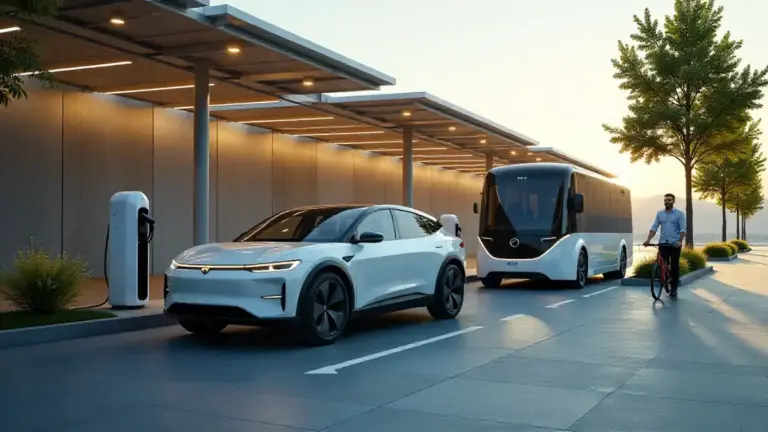
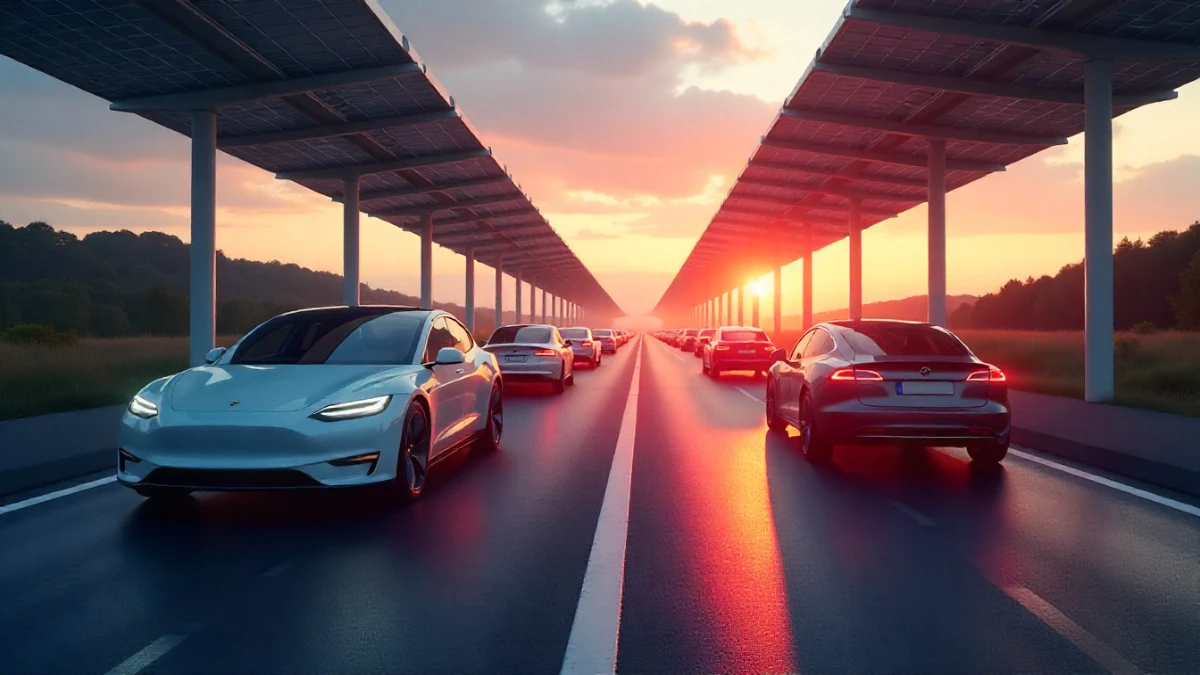
Remember when electric vehicles felt like something out of a sci-fi movie? Well, here we are in 2025, and electric mobility is reshaping how the world moves. EVs are everywhere—except, it seems, in the plans that governments made for us. The big question on everyone’s mind isn’t whether EVs are the future anymore. It’s whether electric mobility in 2025 is moving fast enough to meet the ambitious deadlines politicians promised just a few years ago.
You’ve probably heard about the EU’s 2035 combustion engine ban. Maybe you’ve read about similar targets in other countries. But if you’ve been following the news lately, you might have noticed something interesting: there’s a growing tension between what policymakers want and what’s actually happening on the ground. Let’s dig into whether the electric revolution is genuinely on track—or if we’re about to hit some serious speed bumps.
The Policy Puzzle: Ambitious Targets Meet Political Reality
The European Union has committed all 27 member states to phasing out new combustion engine car sales by 2035, with interim targets including a 55% emissions reduction for new cars by 2030. That’s a massive undertaking. We’re talking about fundamentally transforming how an entire continent moves around.
But here’s where it gets complicated. The EU has launched a call for evidence to gather feedback on whether the combustion engine ban should be reassessed, with consultation closing shortly after a strategic dialogue in September 2025. In other words, the very people who set these targets are now asking whether they’re actually achievable.
Why the hesitation? Industry stakeholders and certain lawmakers argue that maintaining combustion engine technology could provide Europe with a strategic competitive advantage, especially given China’s growing dominance in electric vehicle manufacturing. It’s a fair point. When you look at the competitive landscape, China isn’t just leading—they’re lapping the competition.
Major German carmakers including Volkswagen and BMW, backed by Berlin, are seeking flexibility on the 2035 deadline and specific carveouts, while Italy’s government has also lined up in opposition to the ban. Meanwhile, France and Spain have been fighting to defend the EU’s pivot to electric vehicles, arguing that Europe can’t hit its climate targets if it fails to shift people away from petrol and diesel cars.
What’s happening here is what I call “policy whiplash”—that uncomfortable feeling when reality doesn’t quite match the vision. European automakers are struggling with high production costs, Chinese competition, and consumer hesitancy, all while trying to meet increasingly strict emissions standards.
The Infrastructure Story: Building Faster, But Is It Fast Enough?
Now, let’s talk about something that affects you directly if you’re considering an EV or already driving one: charging infrastructure. Because what good is an electric car if you can’t charge it conveniently?
The good news? The number of public charging points in Europe grew more than 35% in 2024 compared to 2023, reaching just over 1 million, with the Netherlands having the largest national network at over 180,000 points, followed by Germany with 160,000 and France with 155,000. That’s substantial growth by any measure.
The Alternative Fuels Infrastructure Regulation mandates the installation of fast-charging stations for cars and vans of at least 150 kW every 60 km along the TEN-T core road network by 2025, with each station offering a minimum total power output of 400 kW, increasing to 600 kW by 2027. On paper, that sounds great—comprehensive coverage, fast charging, standardized infrastructure.
But here’s the reality check: Critics argue the EU lacks sufficient charging stations and point to network vulnerability, making plans to completely replace internal combustion engines unrealistic and potentially harmful. The infrastructure is growing, yes, but is it growing fast enough to support the aggressive adoption targets?
In the United States, the picture is similarly mixed. Deployment of new fast charging ports is on record pace in 2025, with forecasts predicting 16,700 ports will open this year—2.4 times as many as opened in 2022. At the current growth rate, the number of US fast charging ports will surpass 100,000 in 2027, nearly four times the number in 2022.
Impressive numbers, right? But here’s the twist: While there have been numerous articles about the need for more charging infrastructure, the real issue isn’t just “more” but siting stations to fill charging deserts in rural areas and reduce congestion in the busiest urban markets. It’s not just about quantity—it’s about strategic placement.
The technology is evolving rapidly too. Smart charging and energy management solutions are enabling optimal use of private and public infrastructure, while vehicle-to-grid technology allows EVs to act as “batteries on wheels,” receiving renewable energy during off-peak hours and offloading it during peak demand periods. This kind of innovation could be a game-changer for grid stability and making EVs more economically attractive.
Consumer Adoption: The Enthusiasm Gap
Here’s where things get really interesting. Because at the end of the day, all the policies and infrastructure in the world won’t matter if people don’t actually want to buy EVs.
Global EV sales tell a story of dramatic regional differences. In 2025, Norway leads with more than 80% of new car sales being battery electric vehicles, while Hong Kong, Denmark, and Myanmar also record shares above 55%. These aren’t just good numbers—they’re transformational.
Mainland China reached 50% market share for new energy vehicles in 2025, overtaking internal combustion engine vehicles for the first time, with sales exceeding the combined total of the EU’s five largest markets. China has essentially reached the tipping point where EVs are the default choice, not the alternative.
But not everywhere is moving at the same speed. In the United States, battery electric vehicles make up just 7.5% of new sales, with new energy vehicles representing 9% overall, and volumes have plateaued and slightly declined from 10% in early 2025 to 9% by midyear.
Why the hesitation in some markets? Affordability remains the primary concern, with battery electric vehicles being 10% to 75% more expensive than conventional internal combustion engine vehicles depending on geographic location and vehicle type, combined with higher costs for tires, repairs, and potential battery replacement.
Consumer barriers differ by region, with German buyers disproportionately citing limited travel range as the top concern, while mainland Chinese and Indian consumers point to charging time, and in South Korea, charging time is tied with concerns over the safety of the technology itself. These aren’t universal concerns—they’re specific to local contexts and priorities.
There’s also a policy uncertainty factor that’s creating consumer anxiety. In the United States, proposed legislation would end the Clean Vehicle Tax Credit, which may result in consumers rushing to purchase EVs before the credit is removed, with a dampening effect on sales expected only once the tax credit is repealed. When people don’t know what incentives will be available next year, they tend to hesitate or rush decisions—neither of which is ideal for sustainable market growth.
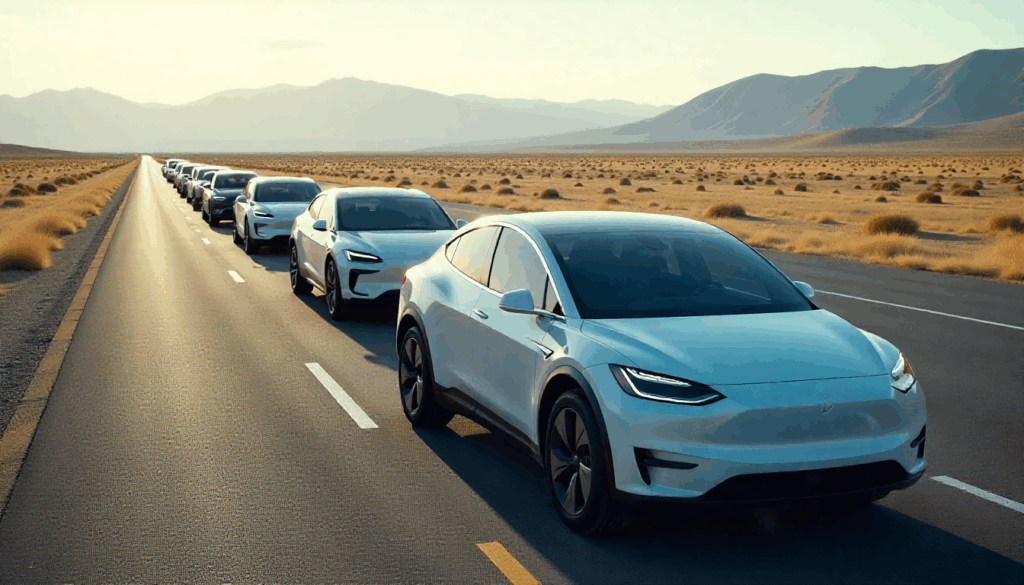
The Great Disconnect: Where Policy and Progress Diverge
So, are policy goals and real-world progress finally aligned? The honest answer is: it’s complicated.
On one hand, global EV sales reached a record 2.1 million units in September 2025, marking the first time monthly sales exceeded 2 million, representing 20% month-over-month growth and 26% year-over-year growth. Electric vehicles are projected to account for approximately 24% of global new car sales in 2025—a milestone previously expected for 2030. We’re actually ahead of schedule in some ways.
But dig deeper, and you’ll find significant regional disparities. BloombergNEF has reduced its long-term passenger EV adoption outlook for the first time largely due to various policy changes in the US, with the revised outlook resulting in 14 million fewer cumulative EV sales between 2025 and 2030 than previously projected. That’s not a minor adjustment—it’s a fundamental recalibration.
The infrastructure build-out is accelerating, but at current EV sales levels, manufacturers would need to stop producing 2.5 million combustion vehicles or face penalties from the European Commission, and some European countries have unsuccessfully sought to delay the regulation’s application. The regulations are forcing change faster than some industry players can comfortably adapt.
Here’s the uncomfortable truth: we’re in a transition period where different parts of the system are moving at different speeds. Infrastructure is racing to catch up with policy ambitions. Consumer adoption is growing but not uniformly. And policymakers are starting to question whether their original timelines were realistic.
What This Means for You
If you’re considering buying an EV, what should you take away from all this?
First, understand that the transition is happening—just not necessarily on the exact timeline governments originally promised. Industry analysts forecast global EV sales will reach 40.1 million units by 2030, accounting for approximately 43% of all new vehicle sales. The direction is clear, even if the exact path isn’t.
Second, infrastructure is improving rapidly in many areas. The global EV charging station market is projected to surge from USD 28.47 billion in 2025 to USD 76.31 billion by 2032. More charging options are coming, and they’re getting faster and smarter.
Third, pay attention to your local market. A 2035 combustion engine ban might sound dramatic, but remember: you’ll still be able to buy second-hand petrol or diesel cars after 2035, with the ban only applying to new vehicles coming off manufacturing lines. The transition won’t happen overnight.
And fourth, stay informed about policy changes in your region. Incentives and regulations are evolving, and what’s true today might change tomorrow. That’s not necessarily a bad thing—it’s just the reality of a major technological and societal transition.
The Road Ahead: Optimism with Realistic Expectations
Look, I’m an optimist about electric mobility’s future. The technology is genuinely impressive, the environmental benefits are real, and the driving experience is fantastic. But I also believe in being honest about where we are versus where we hoped to be.
Are policy goals and real-world progress aligned in 2025? In some places—like China, Norway, and parts of Europe—yes, remarkably so. In others, like the United States and various developing markets, there’s still a significant gap between ambition and reality.
The good news is that the gap is closing. Global EV sales reached 9.1 million units in the first six months of 2025, up 28% year-over-year. Infrastructure investment is accelerating. Battery costs are falling. More affordable models are hitting the market.
But we need to be realistic about the challenges. Infrastructure gaps remain, particularly in rural areas. Consumer concerns about cost, range, and charging convenience are valid. And political uncertainty is creating market volatility in some regions.
The electric vehicle revolution is happening, but it’s not happening in a straight line. There will be policy adjustments, market corrections, and regional variations. That’s not failure—it’s the messy reality of transforming a century-old industry.
The question isn’t whether we’ll get there. It’s how quickly we can build the infrastructure, develop the technology, and create the policies that make electric mobility accessible and practical for everyone. In 2025, we’re closer than ever before, but we’re not quite there yet.
And you know what? That’s okay. Progress rarely follows a perfectly scripted timeline. What matters is that we’re moving in the right direction, learning from our mistakes, and adapting our strategies based on real-world results rather than political wishful thinking.
The charge toward a cleaner future continues. It’s just taking a bit more time—and a bit more flexibility—than the original roadmap suggested.