The electric vehicle market in 2025 is growing smarter, not slower. Global EV sales hit 21.6 million, charging networks expanded rapidly, and battery breakthroughs are making EVs cheaper and faster to charge. While subsidies fade, adoption continues rising thanks to better infrastructure, affordable models, and a booming used EV market—making 2025 a turning point for mainstream electric driving.
If you’ve been watching the electric vehicle space lately, you’ve probably noticed the headlines swinging between “EVs are taking over!” and “EV growth is cooling off!” So which is it? The honest answer is: both — and neither tells the complete story.
Here’s what I can tell you with confidence after following this industry for years: the global EV market is undergoing a fascinating and healthy maturation. The era of subsidized, hype-driven adoption is giving way to something more durable — a genuine shift in how the world buys, charges, and thinks about vehicles. By the time you finish this article, you’ll have a clear, grounded picture of where the EV market stands in 2025, what’s driving change, and what to watch as we head toward 2030 and beyond.
The Big Picture: Record Sales, But a More Complicated Story
Let’s start with the headline numbers, because they are genuinely impressive.
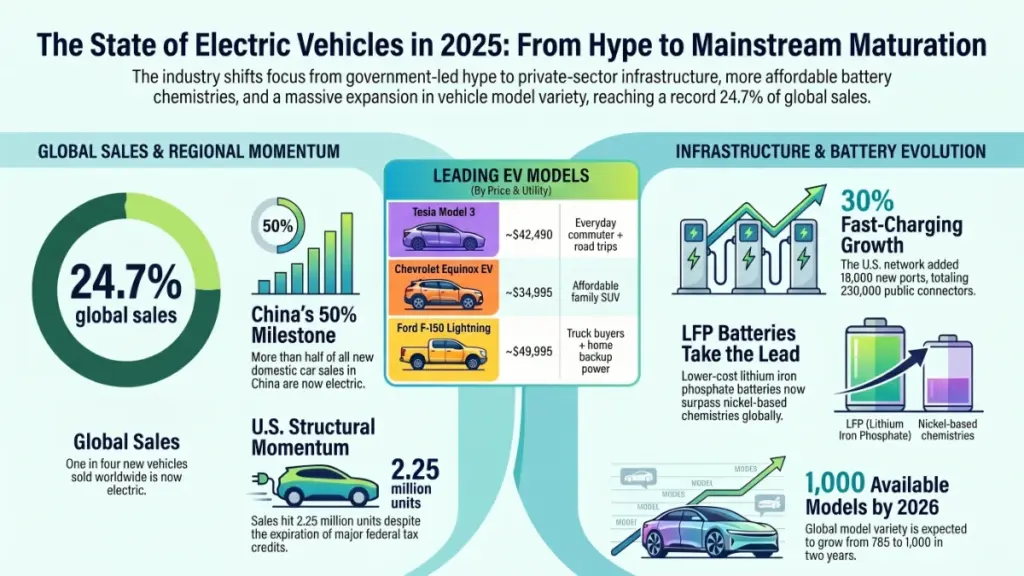
Global EV sales hit approximately 21.6 million vehicles in 2025, with EVs now accounting for roughly 24.7% of new car sales worldwide — about one in four new vehicles sold on the planet. To put that in perspective: just five years ago, that figure was closer to one in twenty. This isn’t a niche technology story anymore. It’s a mainstream automotive transformation.
But here’s the nuance that the simple headlines miss: growth is slowing its pace, not reversing. Early 2025 saw global EV sales running about a third ahead of early 2024 figures, before momentum normalized later in the year. Think of it less like a stumble and more like a runner settling into a sustainable stride after a sprint.
The three dominant markets — China, Europe, and the United States — still account for around 95% of all global EV sales. But the story within each market is strikingly different, and understanding those differences matters whether you’re a consumer, investor, or just a curious reader trying to make sense of your next vehicle purchase.
China: The Undisputed Leader
China is in a category of its own. The country has crossed a staggering milestone, with EV market share exceeding 50% of new domestic car sales. That means, right now, more than half of new vehicles sold in the world’s largest auto market are electric. Chinese automaker BYD continues to set the pace — not just in volume, but in technology, with its Super-e platform capable of delivering around 400 km of range in just five minutes of charging, thanks to next-generation silicon carbide chips and 1,000V architecture. That kind of charging speed would have seemed like science fiction just a few years ago.
Europe: Policy-Driven but Uneven
Europe’s picture is more complicated. EV adoption grew in 14 of the 27 EU member states in 2024, but stalled or declined in others — particularly Germany and France — largely because government purchase subsidies were reduced or eliminated. This is actually an important signal: markets where EVs grew without incentives proved that organic consumer demand exists; markets that faltered remind us that infrastructure and price parity still matter enormously for mainstream buyers.
The United States: Catching Its Breath
The U.S. market is mid-adjustment. After years of growth turbocharged by the federal $7,500 EV tax credit under the Inflation Reduction Act, the expiration of those credits created a brief headwind in late 2025. Yet quarterly growth remained robust — U.S. EV sales in Q3 2025 were up 40% year-over-year, with an estimated 2.25 million total U.S. EV sales projected for the full year. EVs now represent about 9.1% of total U.S. vehicle sales in 2025, and forecasters project that rising to 11.8% in 2026 and 26% by 2030.
That trajectory is significant. It suggests the U.S. market is building structural momentum — not just riding government incentives.
Charging Infrastructure: The Story Nobody’s Telling Loudly Enough
Ask most EV skeptics what holds them back, and charging anxiety usually tops the list. That’s understandable — it was a real problem as recently as 2022. But 2025 brought genuinely good news on this front that deserves more attention.
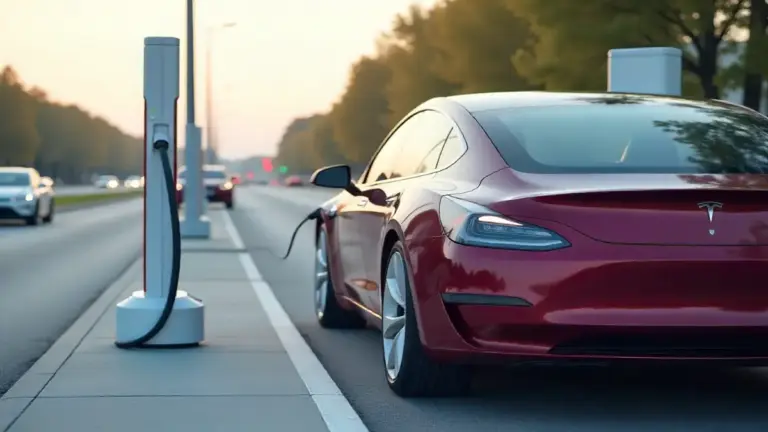
The U.S. fast-charging network expanded by more than 30% in 2025, with over 18,000 new ports installed. The country now has approximately 230,000 public charging connectors online — a figure that represents a massive leap from just a few years ago. Crucially, 2025 was described by industry insiders as the “first year where the private sector started to meet the needs of the consumer” in charging deployment, signaling that market forces — rather than government mandates alone — are now sustaining infrastructure buildout.
What’s Changing in Charging Technology
Beyond raw numbers, the type of charging available is evolving rapidly. A few developments worth knowing about:
- Ultra-fast charging: Charging times are shrinking from hours to 30 minutes or less. BYD’s benchmark-setting 5-minute charge for 400 km of range is a China-first development, but it points toward where the global market is headed.
- LFP batteries gaining ground: In 2025, lithium iron phosphate (LFP) battery deployments surpassed nickel-based chemistries for the first time globally. LFP batteries are cheaper, safer, and have longer cycle lives — a win for everyday consumers. Ford, GM, Tesla, and Rivian are all increasingly adopting them.
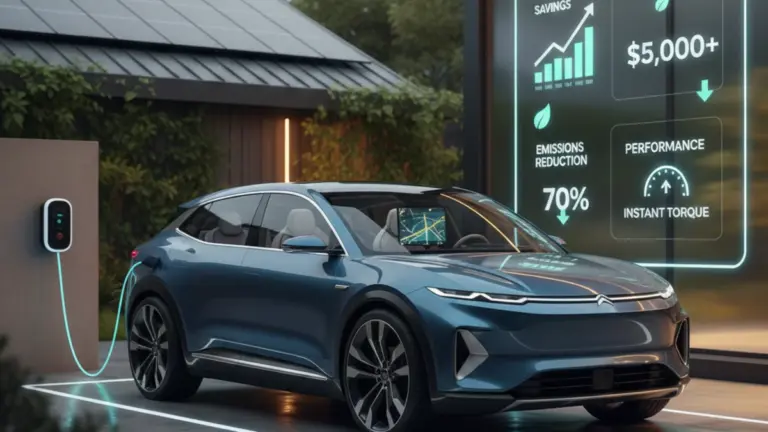
- Vehicle-to-grid (V2G) technology: This is the hidden revolution in the charging story. Bidirectional charging means your EV can eventually act as a home battery, sending power back to the grid during peak demand. For fleet operators and homeowners with solar panels, this could fundamentally change the economics of owning an electric vehicle.
- Hybrid fueling stations: In 2025, stations offering EV charging alongside hydrogen and traditional fuels began moving from concept to implementation, especially along major highway corridors.
The charging anxiety that defined early EV conversations is giving way to something more nuanced: a conversation about which charging solution best fits your lifestyle, not whether charging is even possible.
Battery Technology: The Engine Behind Everything
If there’s one factor that will determine how quickly EVs become universal, it’s battery technology. And on that front, 2025 delivered some of the most exciting advances in years.
CATL, the world’s largest battery manufacturer, announced the second generation of its Shenxing battery with even higher charging speeds than its predecessor, building on BYD’s breakthrough earlier in the year. These aren’t incremental tweaks — they represent a step-change in what passenger EV batteries can do.
Meanwhile, the shift toward solid-state batteries continued its slow but steady march from laboratory to showroom. While no mainstream solid-state EVs have reached full production scale yet, early road tests are underway and the technology promises higher energy density, faster charging, and improved safety compared to current lithium-ion designs. Expect the first commercially viable solid-state EV offerings to emerge in the 2026–2028 window.
Smart thermal management is another quiet revolution. New adaptive charging systems — including temperature-controlled smart charging — are optimizing battery efficiency in real-world conditions, extending battery longevity and improving cold-weather performance, which has long been a complaint among EV owners in northern climates.
Here’s a useful analogy: think of today’s EV battery evolution like the jump from spinning hard drives to solid-state drives in computers. The old technology worked fine; the new technology is faster, lighter, and more durable. Once costs come down, there’s no going back.
Market Dynamics: Affordability, New Entrants, and the Used EV Revolution
One of the most consequential shifts in 2025 is the democratization of EV choice. In 2024, consumers had access to 785 electric car models globally — a 15% increase from the previous year. Forecasters expect that number to hit 1,000 available models by 2026. That diversity matters enormously: more models across more price points means more buyers can find an EV that actually suits their needs and budget.
The Affordable EV Push
Automakers have finally gotten serious about sub-$35,000 electric vehicles for the American market. Competitive pressure from Chinese brands like BYD — whose EV lineup starts at prices that would be impossible from legacy Western automakers — has accelerated this effort significantly. Even if Chinese vehicles face tariff barriers in the U.S., their very existence forces American and European manufacturers to compete on price.
The Used EV Market: The Smartest Play Right Now
Here’s something worth highlighting if you’re considering your first electric vehicle: the used EV market in 2025 offers exceptional value. Battery technology has improved dramatically, range anxiety is less of a concern on newer used models, and prices have come down as the market matures. For a buyer who doesn’t need the latest features, a 2022–2023 used EV can deliver outstanding value — especially with lingering incentives in some states for used EV purchases.
Government Spending Is Declining (And That’s Actually Okay)
In 2017, government subsidies accounted for about 20% of total spending on electric cars globally. By 2024, that figure had dropped to under 7%, even as total consumer spending on EVs reached $560 billion. This is an important milestone: EVs no longer need government life support to drive sales. The market is increasingly self-sustaining.
Comparing the Top EV Models: A Quick Reference
| Model | Range (EPA est.) | Starting Price | Charging (DC Fast) | Best For |
|---|---|---|---|---|
| Tesla Model 3 | Up to 358 miles | ~$42,490 | 170 kW | Everyday commuter + road trips |
| Chevrolet Equinox EV | Up to 319 miles | ~$34,995 | 150 kW | Affordable family SUV |
| Ford F-150 Lightning | Up to 320 miles | ~$49,995 | 155 kW | Truck buyers, V2H capability |
| Hyundai IONIQ 6 | Up to 361 miles | ~$38,615 | 220 kW | Long-range efficiency seekers |
| Rivian R1T | Up to 410 miles | ~$69,900 | 220 kW | Adventure and off-road use |
Prices and specs vary by trim. Always verify current figures at manufacturer websites.
What to Watch: Key Trends Shaping 2026 and Beyond
The EV market doesn’t stand still. Here are the developments I’m watching most closely heading into the back half of the decade:
- Solid-state battery commercialization: The first production vehicles with solid-state batteries will likely reach consumers by 2027. When they do, expect another leap in range, charging speed, and battery longevity.
- V2G becoming mainstream: Vehicle-to-grid technology is moving from pilot programs to real commercial deployments, especially for fleet operators. This could turn EV ownership into a genuine revenue opportunity for some drivers.
- Regional divergence widening: China’s 50%+ EV share represents a future the U.S. and Europe are both working toward — but at different speeds, shaped by policy, infrastructure, and consumer preferences.
- EV long-haul trucking: The commercial fleet electrification story is just getting started. Electric vans and delivery trucks are the fastest-growing EV segment, and logistics companies are investing heavily. This has enormous downstream implications for charging infrastructure.
- Long-term projections remain bullish: EVs are expected to exceed 80% of global new car sales by 2040, according to current forecasts. Fleet electrification (all the existing vehicles on the road) will take longer, but the direction is clear.
Final Thoughts: Where Does This Leave You?
If you’ve been on the fence about going electric, 2025 and 2026 represent a genuinely compelling moment. Charging infrastructure is more robust than it’s ever been. Battery technology is delivering real-world improvements in range, longevity, and cold-weather performance. Model options span almost every segment and price point. And for patient shoppers, the used EV market has never offered better value.
That said, the right EV purchase still depends on your specific situation — your daily drive, your access to home charging, and your realistic road-trip patterns. No single model is perfect for everyone.
Here are your key takeaways:
- Global EV sales hit 21.6 million in 2025 — one in four new cars worldwide is now electric
- The U.S. market remains on a strong growth trajectory, even post-tax credit expiration
- Charging networks expanded over 30% in 2025, driven increasingly by private investment
- LFP batteries and ultra-fast charging are reshaping the cost and convenience calculus
- The used EV market offers serious value for first-time buyers
- Long-term outlook remains bullish — 80%+ global EV sales share projected by 2040
The electric transition isn’t a question of if anymore. It’s a question of when — and for a growing number of drivers, that when is right now.
Sources:
- International Energy Agency (IEA), Global EV Outlook 2025 — iea.org
- EV Volumes, 2025 Global EV Sales Data & Forecasts — ev-volumes.com
- Morgan Lewis, 2025 US Electric Vehicle Landscape — morganlewis.com
- CALSTART, Top 10 EV Battery Trends in 2025 — calstart.org
- Battery Technology / Informa Markets, America’s EV Charging Expansion — batterytechonline.com
- Virta Global, The Global Electric Vehicle Market in 2025 — virta.global