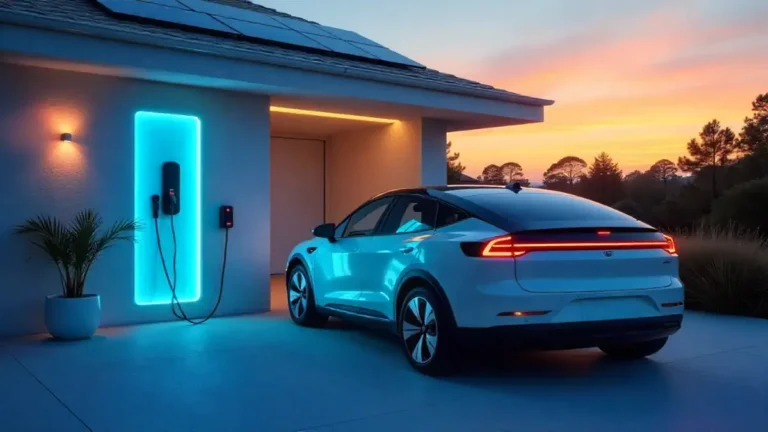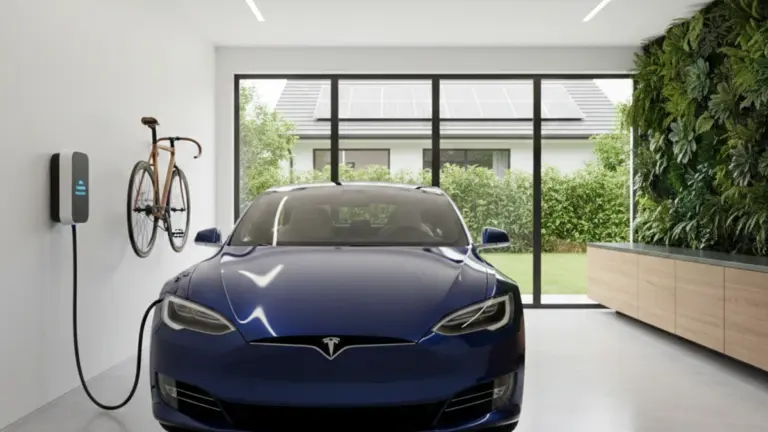
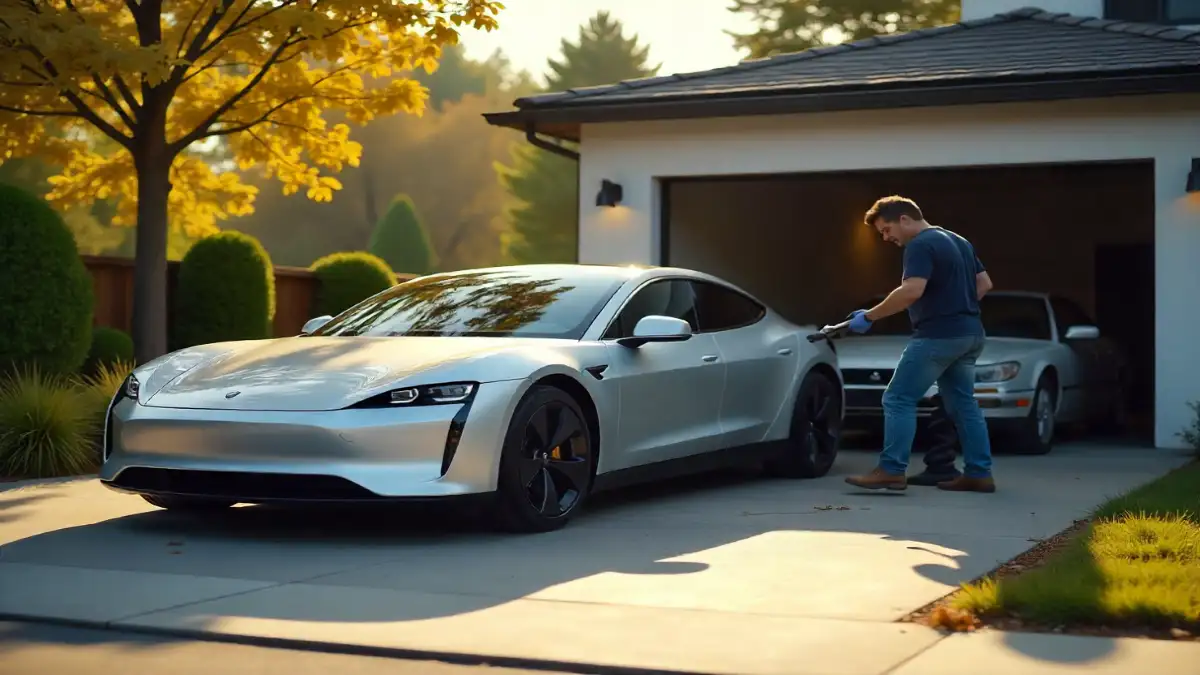
Picture this: you’re standing in your driveway on a Saturday morning, coffee in hand, watching your neighbor wrestle with an oil change under the hood of his gas-powered sedan. Meanwhile, your electric vehicle sits quietly beside you, requiring far less electric car maintenance than a traditional car. Sound too good to be true? It’s not – and it’s one of the most compelling reasons to consider making the switch to electric.
If you’ve been curious about electric cars but worried about maintenance costs and complexity, you’re in for a pleasant surprise. The reality is that EVs require significantly less upkeep than traditional vehicles, and understanding what’s involved can help you make a more informed decision about your next car purchase.
The Big Picture: Why EVs Need Less Maintenance
Let’s start with the fundamentals. Your typical gasoline car is essentially a controlled explosion machine with thousands of moving parts working in harmony. Every time you turn the key, pistons fire, valves open and close, oil circulates, and exhaust gases flow through complex systems. It’s remarkable engineering, but it also means lots of wear and tear.
Electric vehicles, on the other hand, are elegantly simple. At their heart is an electric motor with just one moving part – the rotor. No pistons, no valves, no timing belts, no spark plugs. Think of it like comparing a Swiss watch to a digital clock. Both tell time, but one has hundreds of tiny gears while the other runs on simple electronics.
This fundamental difference translates directly to your wallet and your weekend schedule. According to the U.S. Department of Energy, electric vehicle owners typically spend about half as much on maintenance compared to conventional vehicle owners. That’s not just marketing fluff – it’s physics and engineering working in your favor.
What You’ll Never Have to Deal with Again
Here’s where EV ownership gets exciting for anyone who’s ever dreaded that maintenance reminder light. All those routine services that have been draining your time and money? Most of them simply don’t exist with electric cars.
https://costaoils.com/the-evolution-of-motor-oils-from-conventional-to-full-synthetic-costa-oil/Oil changes are history. No more sitting in waiting rooms every 3,000 to 7,500 miles. No more checking oil levels or worrying about leaks staining your driveway. Electric motors don’t use engine oil because there’s no internal combustion to lubricate.
Transmission troubles become extinct. Most EVs use single-speed transmissions or direct drive systems. No more transmission fluid changes, no clutch replacements, no worrying about shifting problems. The power delivery is smooth and immediate, every time.
Exhaust system repairs disappear. Without combustion, there are no exhaust fumes and no need for mufflers, catalytic converters, or tailpipes to rust and fail. Your EV runs whisper-quiet without any of these components.
Spark plug and air filter replacements vanish. These common maintenance items simply don’t exist in the electric world. The clean, efficient operation of electric motors eliminates the need for combustion-related components entirely.
I recently spoke with Maria, a Tesla Model 3 owner from California who made the switch two years ago. “I used to budget $200 every month for car maintenance,” she told me. “Now I spend maybe $50 every few months on basics like tire rotations. It’s honestly jarring how little my car needs.”
What Maintenance Actually Remains
Now, before you think EVs are completely maintenance-free magical machines, let’s talk about what you’ll still need to handle. The good news? It’s a surprisingly short list, and most items are things you’re already familiar with.
Tires still wear out just like any vehicle. In fact, EVs can be a bit harder on tires due to their instant torque delivery and often heavier weight from the battery pack. You’ll want to rotate them regularly and keep an eye on alignment. Some EV owners find they need to replace tires slightly more frequently than they did with their gas cars, but the trade-off in fuel savings more than compensates.
Brakes last much longer thanks to regenerative braking systems that use the electric motor to slow the car, converting kinetic energy back into electricity. Instead of wearing down brake pads every 25,000-40,000 miles, many EV owners report getting 70,000-100,000 miles from their brake pads. When you do need brake service, though, it’s the same familiar process you’re used to.
Air conditioning and heating systems still require occasional attention. The main difference is that EV climate systems often use heat pumps instead of traditional heating elements, making them more efficient but potentially more complex to service when needed.
Cabin air filters need regular replacement, just like in conventional cars. This is typically a simple, inexpensive service that keeps your interior air clean and your HVAC system running efficiently.
The Battery Question Everyone Asks
Let’s address the elephant in the room: battery maintenance and replacement. This is often the first concern people voice about EV ownership, and it’s completely understandable given how expensive phone battery replacements can be.
The reality is more reassuring than you might expect. Modern EV batteries are engineered for longevity, with most manufacturers offering warranties of 8 years or 100,000+ miles. Tesla reports that their Model S and Model X retain over 90% of their battery capacity even after 200,000 miles.
Battery maintenance is largely passive – the car’s sophisticated management system handles charging optimization, temperature control, and cell balancing automatically. Your main job is simply to follow good charging practices: avoid consistently charging to 100% for daily use, don’t let the battery sit at extremely low charge levels for extended periods, and try to park in moderate temperatures when possible.
Think of it like caring for a high-quality laptop battery, but with much more advanced management systems protecting your investment. The battery isn’t something you actively maintain so much as something you use thoughtfully.
Software Updates: Your Car Gets Better Over Time
Here’s something truly unique about modern EVs: they often improve through software updates delivered wirelessly to your car. While this isn’t traditional “maintenance,” it’s worth understanding how these updates work.
Many EVs receive regular over-the-air updates that can improve performance, add new features, enhance safety systems, or optimize battery management. It’s like your car is constantly evolving and improving, sometimes while you sleep in your garage.
These updates typically happen automatically when your car is parked and connected to Wi-Fi, though you can usually control when they install. Some owners report improvements in range, acceleration, or even entirely new features appearing after updates.
Cost Comparisons That Matter
Let’s talk numbers because that’s often what drives decision-making. The average gasoline car owner spends approximately $1,200 annually on maintenance and repairs, according to AAA data. This includes oil changes, filter replacements, brake work, transmission service, and unexpected repairs.
EV maintenance costs typically run $300-600 annually, focusing mainly on tire maintenance, brake inspections (not replacements), and basic systems checks. Over the life of a vehicle, this difference can easily amount to $10,000 or more in savings.
Consider the experience of David, a Nissan Leaf owner from Texas: “In three years of ownership, my total maintenance costs have been two tire rotations, a cabin air filter, and one set of windshield wipers. My old Honda Civic cost me more in oil changes alone during the same period.”
Finding the Right Service Provider
As EV adoption grows, finding qualified service providers becomes easier, but it’s still worth planning ahead. Most routine maintenance can be handled by traditional auto service shops – after all, tires are tires, and brakes are largely familiar technology.
For more specialized EV service, many owners rely on manufacturer-certified technicians, especially during warranty periods. Some independent shops are also investing in EV training and equipment as demand grows.
Mobile service is becoming increasingly popular for EVs, with some manufacturers offering technicians who come to your home or office for routine maintenance. This convenience factor often offsets any premium in cost.
The Environmental Bonus
Beyond personal savings, reduced maintenance requirements mean fewer resources consumed over your vehicle’s lifetime. No oil changes mean no used motor oil disposal. Longer-lasting brake pads mean less material waste. It’s a nice additional benefit that aligns with the environmental motivations many people have for choosing electric in the first place.
Making the Transition
If you’re considering an EV but feeling overwhelmed by the change, remember that the maintenance learning curve is actually easier, not harder. You’ll have fewer systems to worry about, fewer scheduled services to remember, and more predictable costs.
The key is shifting your mindset from reactive maintenance (fixing things when they break) to proactive care (optimizing battery health and monitoring the few systems that do require attention). It’s actually more straightforward than traditional car ownership once you adjust to the simplicity.
Start by researching the specific maintenance requirements for any EV model you’re considering. Manufacturer websites and owner forums are excellent resources for understanding real-world maintenance experiences. Don’t hesitate to ask current EV owners in your area about their experiences – most are enthusiastic about sharing what they’ve learned.
Looking Forward
Electric vehicle maintenance represents a fundamental shift toward simplicity and predictability in car ownership. While the initial learning curve might feel different, the reduced complexity, lower costs, and increased convenience quickly become apparent.
The transition to electric isn’t just about changing how your car is powered – it’s about changing your entire relationship with vehicle ownership. Less time in service bays means more time enjoying the smooth, quiet, responsive driving experience that makes EVs so appealing in the first place.
Whether you’re motivated by cost savings, environmental concerns, or simply the appeal of cutting-edge technology, understanding the maintenance reality of EVs removes one more barrier to making the switch. The future of transportation isn’t just cleaner and more efficient – it’s also refreshingly simple to maintain.