If you’re considering an electric car—or already driving one—you’ve probably wondered about the batteries. Sure, EVs produce zero tailpipe emissions, but what about the environmental cost of making those massive battery packs? And what happens when they reach the end of their life? These are exactly the questions I get asked most often, and they deserve honest, detailed answers.
Here’s the straightforward truth: electric car battery production does have environmental impacts, primarily through mining and manufacturing processes, but these are increasingly offset by cleaner production methods, longer battery lifespans, and emerging recycling technologies. Over their full lifecycle, EVs still come out ahead of gasoline vehicles in terms of total emissions—and the gap is widening as our electric grids get cleaner and battery recycling improves.
In this article, you’ll discover what really goes into making an EV battery, the environmental concerns that matter most, how the industry is addressing them, and what happens to batteries after they’ve powered their last mile. Whether you’re weighing the environmental merits of going electric or just curious about the whole story, you’ll leave with a clearer picture of where we are—and where we’re heading.
The Raw Materials Behind EV Batteries: What Goes Into the Pack?
Let’s start at the beginning. Modern electric vehicle batteries—specifically the lithium-ion cells that power most EVs today—require several key materials, each with its own environmental footprint.
Critical Battery Components
The typical EV battery pack contains:
- Lithium: Extracted primarily from brine deposits in South America or hard rock mining in Australia
- Cobalt: Mined largely in the Democratic Republic of Congo, often under concerning labor and environmental conditions
- Nickel: Sourced globally, with major production in Indonesia, Philippines, and Russia
- Graphite: Both natural (mined) and synthetic varieties used for anodes
- Manganese and aluminum: Supporting materials for various battery chemistries
Different battery chemistries use varying amounts of these materials. For example, Tesla’s newer lithium iron phosphate (LFP) batteries eliminate cobalt entirely, while many automakers are reducing cobalt content in their nickel-manganese-cobalt (NMC) batteries from 20% down to 5% or less.
The Mining Reality
Here’s where environmental concerns get real. Lithium extraction from brine pools in Chile and Argentina uses enormous amounts of water—approximately 500,000 gallons per ton of lithium—in some of the driest regions on Earth. This can affect local water supplies and ecosystems. Hard rock lithium mining in Australia is less water-intensive but requires significant energy and creates substantial waste rock.
Cobalt mining carries both environmental and ethical burdens. Beyond habitat disruption and water pollution, artisanal cobalt mining in the DRC has been linked to child labor and hazardous working conditions. Major automakers now source from certified mines and increasingly favor low-cobalt or cobalt-free chemistries.
Nickel production, particularly in Indonesia where production has exploded, often involves deforestation and generates toxic waste. A 2024 study found that nickel processing can produce sulfur dioxide emissions that contribute to acid rain.
The important context: While these impacts are serious, they represent a one-time environmental cost during production. Gasoline vehicles, by contrast, require continuous petroleum extraction and refining throughout their operational lives—roughly 300-500 barrels of crude oil over a typical vehicle’s lifetime.
Battery Manufacturing: The Energy-Intensive Process
Once raw materials reach the factory, turning them into functional battery cells requires substantial energy. This is often where critics point when questioning EVs’ environmental credentials.
Manufacturing’s Carbon Footprint
Battery cell production is energy-intensive, involving:
- Material processing: Refining lithium, cobalt, and nickel into battery-grade chemicals
- Cell manufacturing: Coating, assembly, and formation in controlled environments
- Pack assembly: Integrating cells with cooling systems and electronic management
Studies show that manufacturing a typical 75-80 kWh battery pack generates roughly 5-10 tons of CO2 equivalent. That’s substantial—about the same as driving a gas car for 20,000-40,000 miles, depending on fuel efficiency.
But here’s the crucial detail everyone should know: this manufacturing carbon footprint varies enormously based on the energy source. A battery produced in China using coal-heavy electricity might generate 175 kg CO2 per kWh of battery capacity. The same battery made in Sweden or Iceland using renewable energy? As low as 50-60 kg CO2 per kWh.
The Industry Is Cleaning Up Manufacturing
The good news is that battery manufacturers are aggressively reducing production emissions:
- Tesla’s Nevada Gigafactory runs primarily on renewable energy from on-site solar and purchased wind power
- Northvolt in Sweden produces batteries with 90% lower carbon footprint than the industry average using hydroelectric power
- CATL in China, the world’s largest battery maker, has committed to carbon-neutral manufacturing by 2025
- LG Energy Solution targets 100% renewable energy across all sites by 2030
As production scales and shifts to cleaner energy grids, manufacturing emissions continue to drop. A 2024 analysis found that battery production emissions have decreased by roughly 40% since 2018, and further improvements are projected.
Lifecycle Emissions: The Big Picture That Matters Most
You can’t evaluate battery environmental impact by looking only at production. The relevant question is: How does the total lifetime environmental footprint of an EV compare to a gasoline vehicle?
The Break-Even Point
Multiple lifecycle analyses consistently reach the same conclusion: electric vehicles produce lower total emissions than comparable gas cars, even when you account for battery production.
A comprehensive 2024 study from the International Council on Clean Transportation found:
- In the United States (with the current grid mix), an EV breaks even with a comparable gas car after approximately 13,000-21,000 miles of driving
- In regions with cleaner grids like California or the Pacific Northwest, break-even happens even faster—sometimes under 10,000 miles
- Over a typical 200,000-mile vehicle lifetime, an EV produces 50-70% fewer total emissions than a gas vehicle
And this advantage grows every year. As electricity grids incorporate more renewable energy, EVs get cleaner automatically. A gasoline car’s emissions stay constant throughout its life. An EV driven in 2020 produces less emissions per mile in 2025 simply because the grid is cleaner—no modifications needed.
Real-World Context
Let me put this in perspective. If you drive an EV for 150,000 miles on the average U.S. grid, you’ll save approximately 40-50 tons of CO2 compared to driving a 30-mpg gas car. That initial 5-10 ton manufacturing debt gets paid back many times over.
And if you charge using home solar panels or deliberately choose renewable energy plans? The emissions advantage becomes overwhelming.
Battery Lifespan: Longer Than You Think
One common misconception deserves clearing up: EV batteries last much longer than most people realize, which significantly improves their environmental profile.
How Long Do They Actually Last?
Current data shows:
- Most EV batteries retain 80-85% capacity after 200,000 miles of use
- Tesla Model 3 and Model Y batteries show an average of less than 10% degradation after 200,000 miles
- Manufacturers typically warranty batteries for 8 years or 100,000-150,000 miles, but actual lifespan extends well beyond warranty periods
- Many EV batteries will outlast the vehicles they’re installed in
What this means environmentally: Because batteries last so long, their production impact gets amortized over many more miles than early critics assumed. If a battery serves 300,000 miles instead of 100,000 miles, that manufacturing carbon footprint is spread three times thinner per mile driven.
Additionally, battery management systems have improved dramatically. Modern EVs actively protect battery health through thermal management, charge rate limitations, and optimized charging algorithms.
The Second Life Revolution: Batteries Beyond Cars
Here’s something exciting that often gets overlooked: when an EV battery drops to 70-80% capacity and is no longer ideal for automotive use, it’s still perfectly functional for less demanding applications.
Repurposing Rather Than Recycling
Instead of immediately recycling batteries, manufacturers and third parties are creating lucrative second-life markets:
- Home energy storage: Retired Nissan LEAF batteries power thousands of homes through systems like xStorage
- Grid-scale storage: Johan Cruijff Arena in Amsterdam uses 148 repurposed Nissan LEAF batteries for stadium power management
- Commercial backup power: Warehouses and data centers use second-life EV batteries for emergency power systems
- EV charging stations: Some fast-charging networks use old EV batteries to buffer grid load
This second life extends the useful service of battery materials by another 10-15 years, further reducing the environmental cost per useful year. It also delays the need for recycling, allowing recycling technologies time to mature.
BMW, Nissan, General Motors, and others have active second-life battery programs. As the first wave of mass-market EVs reaches end-of-life (mostly post-2030), expect this market to explode.
Battery Recycling: From Waste to Resource
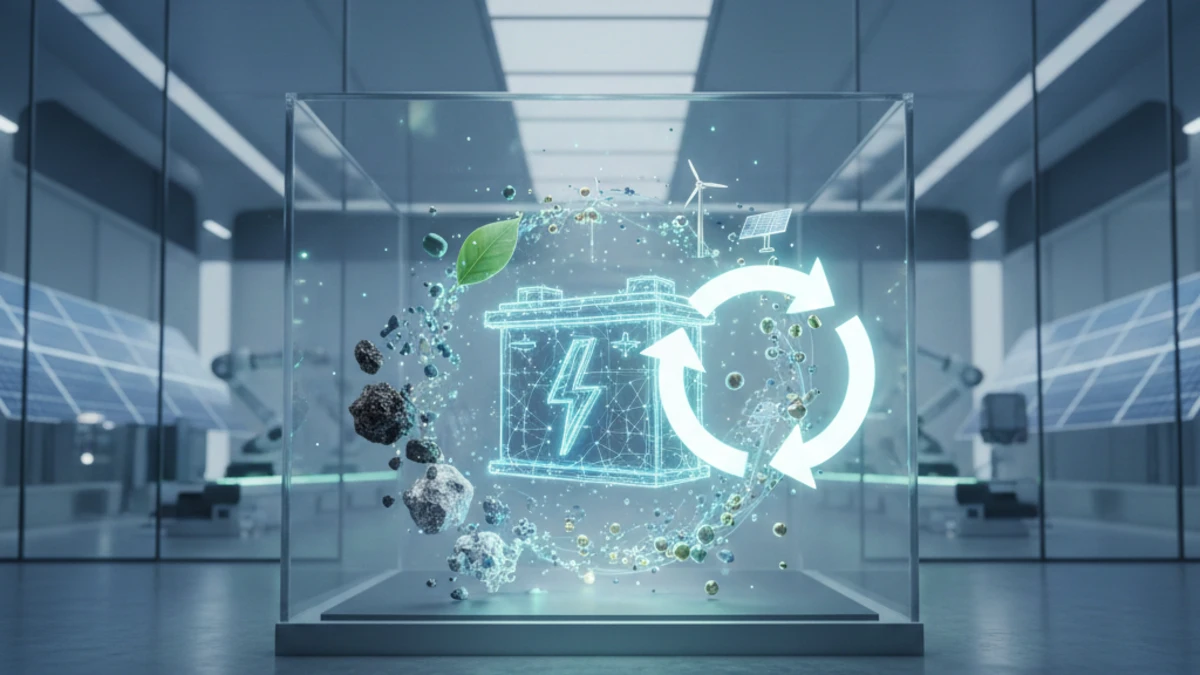
Eventually, even second-life applications end. That’s when recycling becomes critical—and this is where things get genuinely promising.
Current Recycling Capabilities
Today’s battery recycling processes can already recover:
- 95%+ of cobalt
- 95%+ of nickel
- 90%+ of copper
- 80-90% of lithium (though this was historically more challenging)
Two primary recycling methods exist:
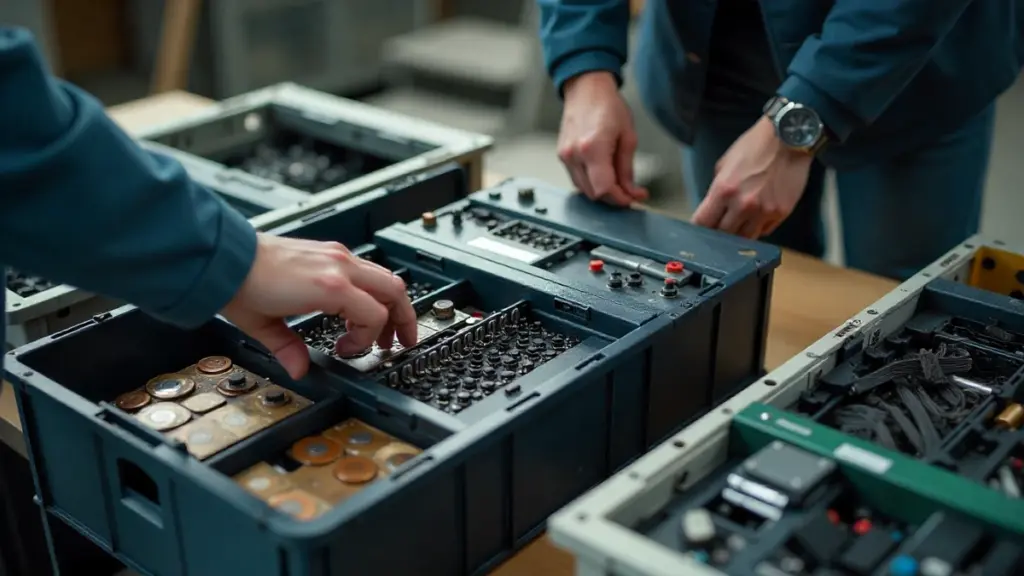
Pyrometallurgy (smelting): Burns batteries at high temperatures to recover metals. Energy-intensive but handles various battery types easily. Historically lost lithium but newer processes capture it.
Hydrometallurgy (chemical processing): Uses chemical solutions to selectively dissolve and recover materials. More energy-efficient and better lithium recovery, but requires more sorting upfront.
Leading companies like Redwood Materials (founded by Tesla’s former CTO), Li-Cycle, and Ascend Elements are pioneering advanced recycling that recovers materials at near-battery-grade purity—meaning recycled materials can go directly back into new batteries without downcycling.
The Economics Are Improving
For years, battery recycling struggled economically because virgin materials were cheaper. That’s changing:
- Lithium prices spiked to over $80,000/ton in 2022 (before settling to $10,000-15,000/ton in 2024-2025)
- Cobalt prices remain volatile but generally elevated
- Nickel costs fluctuate with global supply concerns
Result: Recycled battery materials are increasingly cost-competitive with newly mined materials. Redwood Materials has secured contracts to supply recycled materials to Panasonic and Toyota. When recycling becomes profitable rather than just environmentally responsible, it scales rapidly.
Regulatory Push Toward Circularity
Governments are accelerating this transition:
- European Union: Requires batteries sold in the EU to contain minimum percentages of recycled content by 2030 (16% cobalt, 6% lithium, 6% nickel)
- China: Mandates automakers establish battery recycling systems
- United States: The Bipartisan Infrastructure Law allocated $3 billion for battery material processing and recycling
These regulations ensure that recycling infrastructure develops in parallel with EV adoption, not as an afterthought.
Emerging Battery Technologies: Solving Tomorrow’s Problems Today
The battery industry isn’t standing still. Several emerging technologies promise to further reduce environmental impact:
Cobalt-Free and Low-Cobalt Batteries
- LFP (Lithium Iron Phosphate): Already mainstream in China and spreading globally. No cobalt, lower cost, extremely safe, excellent cycle life. Trade-off: lower energy density.
- LMFP (Lithium Manganese Iron Phosphate): Next-gen LFP with improved energy density
- High-nickel NMC: Reduces cobalt content from 20% to 5% or less while maintaining performance
Tesla now uses LFP in many Standard Range vehicles. Ford is adopting LFP for Mustang Mach-E and F-150 Lightning. The trend is clear.
Sustainable Mining Initiatives
- Direct lithium extraction (DLE): New technologies extract lithium from brine with 90% less water and faster processing
- Ethical cobalt sourcing: Blockchain tracking and third-party auditing to ensure responsible mining
- Urban mining: Extracting materials from electronic waste rather than virgin ore
Several companies are commercializing DLE in the United States, reducing dependency on South American brine pools.
Solid-State Batteries
Though still 3-5 years from mass production, solid-state batteries promise:
- Higher energy density (meaning fewer materials for the same range)
- Potentially longer lifespans
- Possible elimination of certain rare materials
- Safer chemistry with less thermal management needed
Toyota, Nissan, and QuantumScape are investing billions in this technology.
Comparing Apples to Apples: EV Batteries vs. Oil Industry Environmental Impact
Let’s address the elephant in the room: critics often scrutinize EV battery production while ignoring the environmental toll of the petroleum industry.
The Oil Industry’s Footprint
Gasoline vehicle ownership requires:
- Continuous oil extraction: Drilling, fracking, offshore platforms, tar sands—all with substantial environmental impacts
- Refining: Energy-intensive process producing significant emissions and toxic byproducts
- Transportation: Pipelines, tanker ships, trucks—with spill risks throughout
- Ongoing emissions: 400+ grams CO2 per mile for the vehicle’s entire life
- Waste: Used oil, filters, fluids requiring disposal
A single gas car consumes roughly 350-500 barrels of crude oil over its lifetime. The extraction, transportation, refining, and distribution of this oil carries enormous environmental costs—habitat destruction, water contamination, spills, emissions—that continue throughout the vehicle’s life.
The Key Difference
Battery production is a one-time environmental cost with improving recycling. Oil consumption is a continuous environmental cost with no recovery. It’s the difference between building a factory (batteries) and operating a factory forever (gasoline).
What Can Consumers Do?
You’re not powerless in this equation. Here are practical ways to minimize the environmental impact of your EV ownership:
When Buying:
- Consider EVs from manufacturers committed to sustainable production (check renewable energy use in factories)
- LFP battery vehicles avoid cobalt entirely if that’s a priority for you
- Support brands with transparent, ethical supply chains
During Ownership:
- Charge during off-peak hours when renewable energy is more prevalent
- If possible, install solar panels or choose renewable energy plans
- Practice battery-healthy charging habits to maximize lifespan: avoid extreme temperatures, don’t chronically charge to 100% unless needed
- Keep your EV longer—the environmental amortization improves with every mile
At End-of-Life:
- Work with manufacturers or certified recyclers for battery disposal
- Inquire about second-life programs if your battery is replaced early
- Never dispose of EV batteries in landfills
The Bottom Line: Progress, Not Perfection
Let’s be clear-eyed about this: EV battery production has environmental impacts that we shouldn’t minimize or ignore. Mining operations affect ecosystems. Manufacturing requires energy. These are real concerns deserving serious attention and ongoing improvement.
But here’s the essential truth: when you examine the complete lifecycle, electric vehicles are substantially better for the environment than gasoline vehicles—and they’re getting better every year while gas cars remain static.
The electric vehicle industry is roughly where solar panels were 15 years ago: already beneficial but rapidly improving. Battery production emissions have dropped 40% in six years. Recycling is transitioning from experimental to economically viable. New battery chemistries reduce or eliminate problematic materials. Manufacturing is shifting to renewable energy.
The question isn’t whether EVs are perfect—they’re not. The question is whether they’re better than the alternative, and overwhelmingly, the answer is yes. Every credible lifecycle analysis reaches the same conclusion.
If you’re holding off on an EV because of battery environmental concerns, know this: waiting for a perfectly clean solution means continuing to drive a vehicle that’s demonstrably worse for the environment. The best time to switch to electric was yesterday. The second-best time is today.
The batteries powering the electric revolution aren’t just about cleaner transportation—they’re about building circular systems where materials flow from use to reuse to recycling. We’re not there yet, but the trajectory is unmistakable. And unlike the petroleum industry, where a century of optimization has plateaued environmental performance, battery technology is still in its exponential improvement phase.
That’s genuinely exciting—and it should give us all confidence that choosing electric today is choosing the right side of environmental progress.