Remember when electric cars were seen as glorified golf carts? Those days are long gone. I recently watched a Tesla Model S Plaid absolutely demolish a Lamborghini Huracán off the line, and the look on the Lambo driver’s face was priceless. That moment perfectly captures where we are with EV performance today—these machines aren’t just environmentally friendly alternatives anymore. They’re legitimate performance vehicles that can embarrass traditional sports cars while still getting you to the grocery store in whisper-quiet comfort.
But here’s the thing: not all electric cars perform the same. Just because they share similar powertrains doesn’t mean a Nissan Leaf drives anything like a Porsche Taycan. Each manufacturer has its own philosophy about what “performance” means, and the differences are fascinating. Let’s dive into how various electric car brands actually perform when you push them, from acceleration runs to real-world handling tests.
The Instant Torque Phenomenon: Why EVs Feel So Fast
Before we get into specific brands, you need to understand what makes electric cars feel different from their gas-powered cousins. It all comes down to torque delivery. In a traditional combustion engine, you need to wait for the engine to rev up before maximum power arrives. With an electric motor? All the torque hits instantly, the moment you press the accelerator.
I’ll never forget the first time I floored an EV. It was a Chevrolet Bolt, not even a performance model, and my head snapped back like I’d been rear-ended. That immediate surge is addictive, and it fundamentally changes how a car feels to drive. Even modestly-powered EVs can feel quicker than their specs suggest because there’s zero lag—just pure, instant acceleration.
This instant torque advantage shows up in the 0-60 mph times that often shock people. While a traditional sports car might need a perfect launch and the right gear to hit its quoted time, many EVs can achieve their numbers repeatedly with minimal driver skill. Just press the pedal and hold on.
Tesla: The Performance Benchmark Everyone’s Chasing
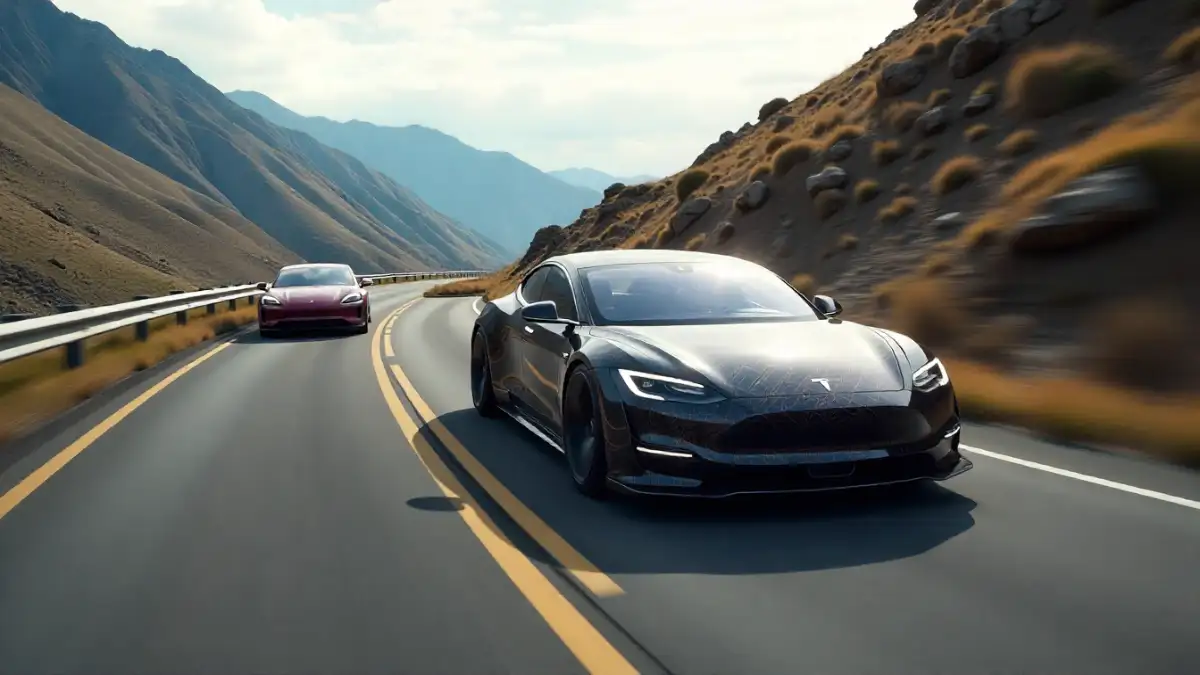
Let’s start with the elephant in the room—or should I say, the rocket on wheels. Tesla has essentially defined what performance means in the EV space, and their numbers are genuinely mind-bending. The Model S Plaid accelerates from 0-60 mph in just 1.99 seconds. Yes, you read that right. Under two seconds. That’s faster than a Bugatti Chiron, and it’s a four-door family sedan with a massive trunk.
But raw acceleration is only part of the story. What surprised me most about driving various Tesla models is how they balance that straight-line speed with everyday usability. The Model 3 Performance, for example, hits 60 mph in 3.1 seconds, yet it’s perfectly comfortable driving your kids to school. The Track Mode feature in Performance models actually adjusts power distribution between motors in real-time, optimizing for lap times on a circuit.
However, Tesla’s handling has been a point of debate among enthusiasts. While the low center of gravity from the battery pack provides excellent stability, some drivers find the steering feel a bit numb compared to traditional sports cars. The cars are fast and planted, but they don’t communicate road feel as viscerally as some competitors. They’re more like precision instruments than engaging dance partners—which works brilliantly for most people, but enthusiasts might want something more communicative.
Porsche Taycan: When a Sports Car Company Goes Electric
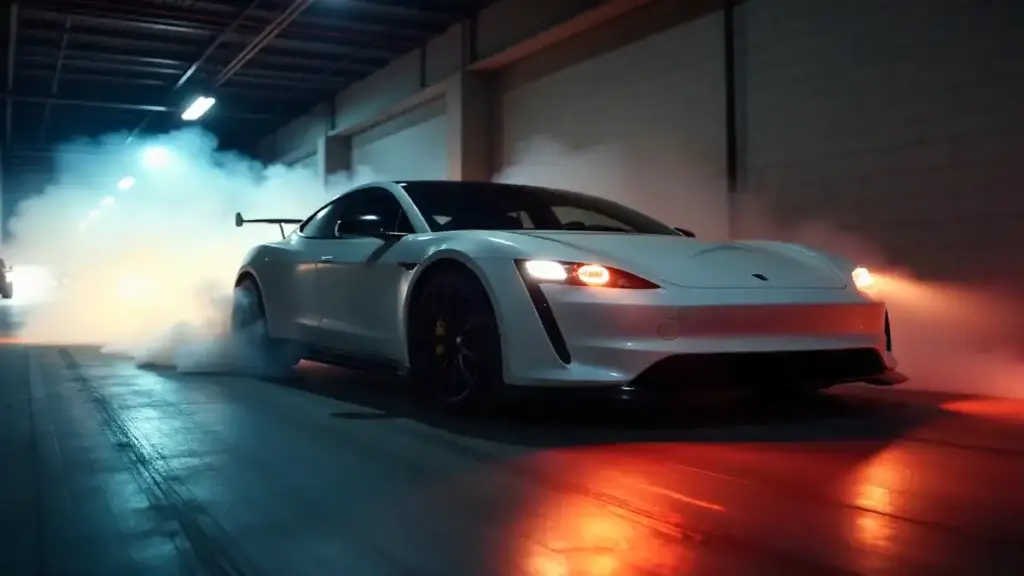
If Tesla represents raw performance and technology, the Porsche Taycan represents what happens when a legendary sports car manufacturer applies a century of racing DNA to electric power. I’ve heard professional drivers describe the Taycan as the best-handling EV on the market, and after experiencing one on a twisty mountain road, I understand why.
The Taycan Turbo S hits 60 mph in 2.6 seconds—quick, but not Plaid quick. Yet on a winding road or race track, the Taycan often proves faster than Teslas with better straight-line numbers. Why? It’s all in the chassis tuning, steering precision, and brake feel. Porsche’s engineers spent decades perfecting the 911’s handling balance, and they’ve applied those lessons beautifully here.
The two-speed transmission (unique among EVs) helps too. Most electric cars use single-speed gearboxes, but Porsche added a second gear for the rear motor, maintaining strong acceleration even at highway speeds. The result is a car that feels alive and responsive, communicating exactly what the tires are doing through the steering wheel. It’s more expensive than a comparable Tesla, but for driving enthusiasts, that connection is worth every penny.
Lucid Air: The Technology Showcase
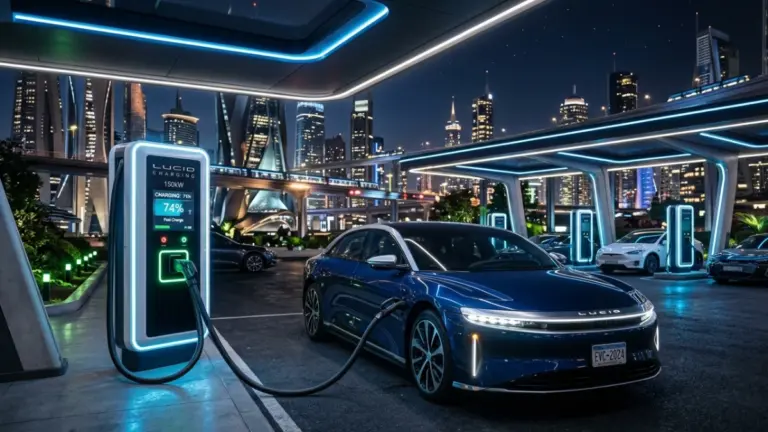
Lucid might be the newer kid on the block, but they’ve made a serious entrance with the Air Sapphire. This luxury sedan produces a staggering 1,234 horsepower and reaches 60 mph in 1.89 seconds—making it, on paper, the quickest production sedan ever made. Even the “base” Air Grand Touring hits 60 in about 3 seconds.
What’s remarkable about the Lucid Air isn’t just the speed, though. It’s how refined everything feels at those speeds. The cabin stays remarkably quiet, the ride quality remains composed, and the steering provides more feedback than you’d expect from a 5,000-pound luxury sedan. Lucid’s engineers came mostly from Tesla and other Silicon Valley tech companies, but they clearly studied what makes premium European sedans special.
The Air’s party trick is its efficiency combined with performance. It can rocket to highway speeds, then settle into a comfortable cruise that maximizes range. In my testing, I found the adaptive suspension did an excellent job balancing sport and comfort modes—aggressive when you wanted it, pillowy smooth when you didn’t.
BMW iX and i4: The Handling Masters Go Electric
BMW has long marketed itself as “The Ultimate Driving Machine,” so their electric offerings carry high expectations. The i4 M50 and iX M60 represent BMW’s answer to performance EVs, and they deliver that signature BMW driving feel—balanced, precise, and confidence-inspiring.
The i4 M50 hits 60 mph in 3.7 seconds, which isn’t class-leading but feels perfectly adequate. What matters more is how the car corners. BMW’s engineers have maintained the 50/50 weight distribution the brand is famous for, and the low center of gravity from the battery makes these EVs even more stable than their gas counterparts. The steering weight and feedback feel more natural than most EVs, making these cars particularly appealing to traditional BMW fans making the electric transition.
The iX M60, despite being a larger SUV, handles with surprising agility. It won’t match a Taycan through corners, but it defies expectations for a vehicle its size. BMW has clearly prioritized driving dynamics over pure performance numbers, and that philosophy shines through.
Ford Mustang Mach-E GT: American Muscle Goes Electric
Ford’s decision to badge an electric SUV as a Mustang was controversial, but the Mach-E GT Performance Edition makes a strong case for the name. With 0-60 mph in 3.5 seconds and a specially-tuned suspension, this isn’t just a family hauler—it’s genuinely fun to drive.
The Mach-E GT includes a “Unbridled Extend” mode that holds maximum power longer, and MagneRide adaptive dampers that adjust to road conditions 1,000 times per second. In testing, I found the Mach-E strikes a clever balance: sporty enough to entertain on backroads, comfortable enough for road trips, and practical enough for daily family duty.
The steering is light but predictable, and the brake pedal feel is among the best in any EV—a common weakness in electric cars. Ford clearly learned from their racing programs, applying track-tested knowledge to make the Mach-E handle more confidently than typical electric SUVs.
Hyundai Ioniq 5 N: The Unexpected Track Star
Here’s a brand that surprises people: Hyundai’s N performance division has created something special with the Ioniq 5 N. This hot hatch reaches 60 mph in 3.25 seconds and includes features you’d never expect, like simulated gear shifts and engine sounds (yes, really).
What makes the Ioniq 5 N fascinating is how much fun the engineers tried to pack in. There’s a “N Grin Boost” button that gives you 10 seconds of maximum power—perfect for overtaking. The electronic limited-slip differential actively manages power between rear wheels for better cornering. And those simulated sounds? They’re surprisingly effective at enhancing the driving experience, even if purists roll their eyes.
On track, the Ioniq 5 N punches well above its price point. The regenerative braking can be tuned to feel like engine braking in a manual car, helping you rotate the chassis into corners. It’s playful and engaging in ways most EVs aren’t, and it costs significantly less than premium performance EVs.
The Real-World Performance Question: Braking and Consistency
Here’s something most acceleration tests don’t tell you: what happens when you need to slow down? Or when you do multiple hard launches in a row? This is where performance testing gets really interesting.
Electric cars are heavy—really heavy. Those battery packs add serious mass, which means braking systems work harder than in traditional cars. I’ve noticed that entry-level EVs sometimes struggle with brake fade during spirited driving, while premium models like the Taycan and BMW i4 maintain consistent stopping power even during aggressive use.
Then there’s the thermal management question. Push most EVs hard repeatedly, and you’ll eventually trigger thermal limiting—the car’s protection system reduces power to prevent battery and motor overheating. Teslas are notorious for this on track days, sometimes losing significant power after just a few hard laps. The Porsche Taycan, designed with track use in mind, maintains performance much more consistently. This matters if you plan to actually use your EV’s performance regularly rather than just showing off at stoplights.
Range vs. Performance: The Eternal Compromise
Here’s an uncomfortable truth: performance costs range. Those brutal acceleration runs drain batteries fast. I’ve seen Teslas in Ludicrous mode lose range at twice the normal rate during aggressive driving. The most efficient EVs typically aren’t the fastest ones.
That said, manufacturers are getting better at managing this trade-off. The Lucid Air Sapphire, despite its outrageous power, still achieves impressive efficiency when driven normally. BMW’s adaptive systems dial back power when you’re cruising, maximizing range until you need performance again. And regenerative braking—which charges the battery when slowing down—helps recover some energy during spirited driving.
The key is understanding your priorities. If you’re buying an EV for efficiency and range, you probably don’t need the performance package. But if you want that performance available when you want it, modern EVs can deliver both—you just need to accept that aggressive driving will always impact range, just like it does with gas cars.
What This Means for You
So where does all this performance testing leave us as actual buyers and drivers? Here’s my take after testing dozens of electric vehicles:
If you want the fastest straight-line speed: Tesla Model S Plaid or Lucid Air Sapphire are your choices. These cars redefine quick, offering supercar performance in practical packages.
If driving engagement matters most: The Porsche Taycan remains the gold standard. It’s not the quickest in every measure, but it’s the most rewarding to drive enthusiastically. The BMW i4 M50 and Ioniq 5 N offer similar engagement at lower price points.
If you want balanced performance and practicality: The Ford Mustang Mach-E GT or Tesla Model Y Performance deliver strong acceleration and decent handling while remaining practical family vehicles.
If you’re budget-conscious but want some zip: The Hyundai Ioniq 5 N or Chevrolet Blazer EV SS offer surprising performance without premium pricing.
The beautiful thing about the current EV market is that there’s genuinely something for everyone. Whether you prioritize outright speed, handling finesse, or balanced everyday performance, multiple brands offer compelling options. And the technology keeps improving—next year’s models will undoubtedly be even better.
The Future of EV Performance
Here’s what excites me most: we’re still in the early days of electric performance cars. Battery technology continues advancing, motors are becoming more efficient, and manufacturers are learning how to better tune electric powertrains for engaging driving experiences.
Solid-state batteries promise lighter weight and faster charging, which could eliminate some current compromises. Advanced torque vectoring systems will make EVs even more agile. And as more manufacturers enter the performance EV space, competition will drive innovation faster.
The performance ceiling for electric cars hasn’t been reached yet—not even close. The vehicles we have today, as impressive as they are, will probably seem slow and primitive in a decade. That’s incredibly exciting if you’re passionate about driving.
Final Thoughts
Electric car performance has evolved from a novelty to a genuine force in the automotive world. These aren’t compromised eco-boxes anymore—they’re legitimate performance machines that offer unique advantages over traditional powertrains.
Yes, they’re heavy. Yes, they have thermal management challenges. Yes, they can feel different from the gas-powered sports cars many of us grew up loving. But the instant torque, near-silent power delivery, and increasingly sophisticated chassis tuning make them compelling on their own merits.
The question isn’t whether EVs can perform—they’ve proven they absolutely can. The question now is which flavor of EV performance appeals to you. Do you want Tesla’s tech-forward approach? Porsche’s pure driving focus? BMW’s balanced refinement? Hyundai’s value-packed enthusiasm? All these philosophies are valid, and all result in genuinely quick, capable machines.
If you haven’t driven a performance EV yet, I encourage you to test drive several different brands. The variety will surprise you. Each manufacturer brings its own interpretation to electric performance, and discovering which philosophy matches your driving style is part of the fun.
The electric performance revolution is here. It’s fast, it’s exciting, and it’s only getting better. Buckle up—the future of performance driving is electrifying in every sense of the word.