Have you ever wondered what happens when millions of us plug in our electric cars at the same time? It’s a question that keeps grid operators up at night—and one that deserves a thoughtful answer as we transition to electric mobility. The relationship between EVs and our electricity infrastructure is more nuanced than you might think, and understanding it is crucial for anyone considering an electric vehicle or curious about our energy future.
Let me be honest with you: yes, adding millions of electric cars to the grid presents challenges. But here’s the exciting part—it also creates opportunities we never had with gas-powered vehicles. Unlike your traditional car, an EV can actually become part of the energy solution, not just another demand on the system. Let’s dive into how this all works and what it means for you as a driver and energy consumer.
The Reality of EV Charging Demand
First, let’s put things in perspective. Charging your electric car isn’t quite like running your clothes dryer—though the comparison gets made often. A typical EV adds about 3,000 to 4,000 kilowatt-hours (kWh) to your annual electricity consumption. That sounds like a lot, right? It roughly doubles the average American household’s electricity use.
But here’s what most people don’t realize: it’s not the total amount of electricity that concerns grid operators—it’s when you use it. Think of the electrical grid like a highway system. The roads can handle everyone’s daily travel needs, but if everyone tried to drive during the exact same hour, you’d have gridlock. The same principle applies to electricity.
The problem scenario goes like this: Everyone drives home from work around 6 PM, plugs in their EV immediately, and boom—you’ve got a massive spike in demand right when the grid is already stressed from people cooking dinner, running air conditioning, and firing up their evening activities. In grid-speak, this is called “peak demand,” and it’s expensive to manage because utilities need to have extra power plants standing by just for these moments.
A study by the National Renewable Energy Laboratory found that unmanaged EV charging could increase peak demand by 25% in some neighborhoods by 2030. That’s not a small bump—it would require significant infrastructure upgrades in some areas. But notice I said “unmanaged charging.” That word makes all the difference.
How Grid Strain Actually Happens
Let me walk you through what grid strain looks like in practical terms. Your local electrical infrastructure has three main components: the power plants generating electricity, the high-voltage transmission lines carrying it long distances, and the distribution network bringing it to your home. Each of these can become a bottleneck.
At the neighborhood level, you’ve got transformers on poles or in green boxes that step down the voltage for residential use. These transformers were typically sized for existing loads when they were installed—sometimes decades ago. When multiple homes on the same transformer suddenly start charging EVs simultaneously, you’re asking that equipment to handle much more than it was designed for.
I talked to a utility engineer in California who described finding a neighborhood transformer running at 130% of its rated capacity during evening hours once several residents bought Teslas. The transformer was literally overheating. This doesn’t mean the grid can’t handle EVs—it means we need to be smarter about how and when we charge them.
The good news? Most grid infrastructure has plenty of capacity during off-peak hours, typically late night to early morning. Your local grid between midnight and 5 AM is like that highway at 3 AM—wide open and ready for traffic. The challenge is simply shifting EV charging to match when capacity is available.
Smart Charging: The Game-Changing Solution
This is where things get really interesting. Smart charging technology allows your EV to communicate with the grid and adjust its charging behavior based on grid conditions, electricity prices, and your personal needs. It’s like having a personal assistant that ensures your car is charged when you need it while helping stabilize the grid and saving you money.
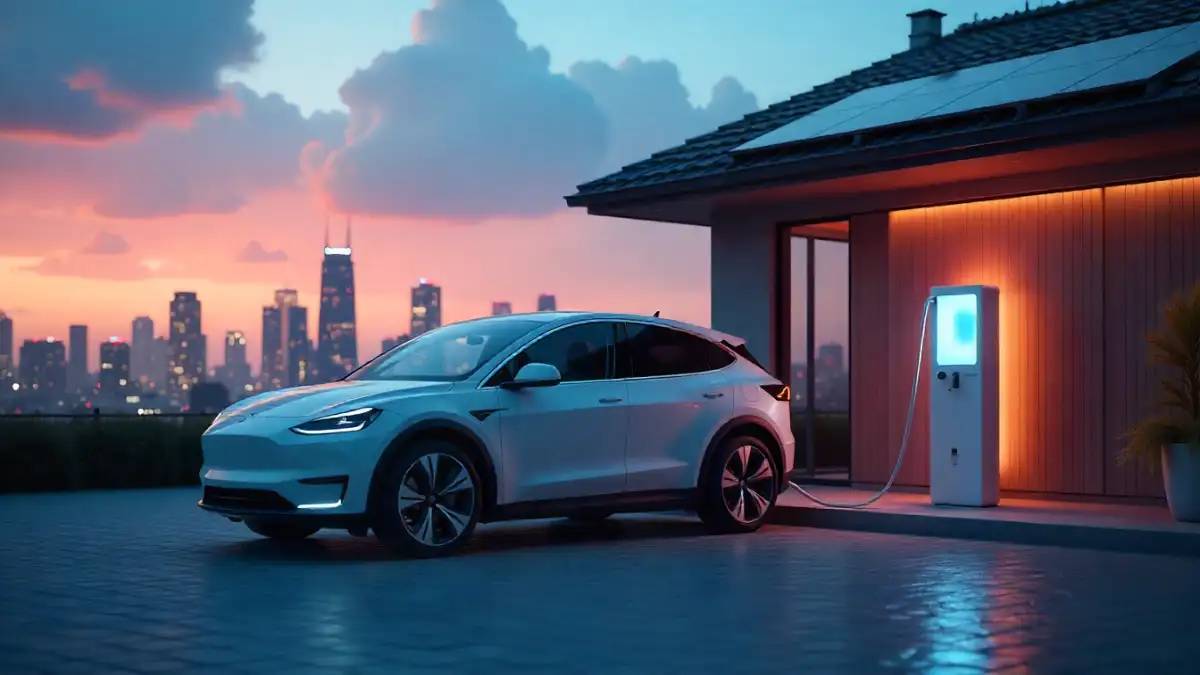
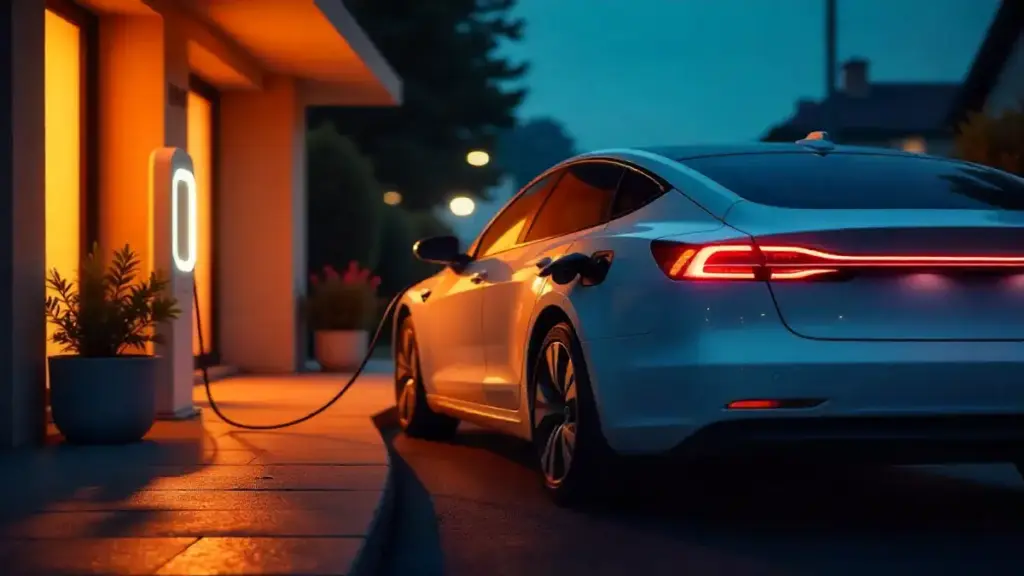
Here’s how it works in practice: You plug in your car when you get home at 6 PM and tell the system you need it charged by 7 AM. Instead of immediately drawing maximum power, the smart charging system waits until electricity demand drops later in the evening, then charges your car during those off-peak hours. You wake up to a full battery, you’ve paid less for electricity, and the grid didn’t experience any additional stress during peak hours.
Many modern EVs come with this capability built-in, and if yours doesn’t, smart home chargers can provide the same functionality. Companies like ChargePoint, Wallbox, and Emporia offer Level 2 home chargers with scheduling features that let you take advantage of time-of-use electricity rates while avoiding peak hours.
Some utilities are getting even more sophisticated. Pacific Gas & Electric’s EV rate plan, for example, offers electricity for as little as 25 cents per kWh during off-peak hours versus nearly 50 cents during peak times. That difference adds up—you could save $500 to $800 annually just by charging strategically. And you’re helping the grid at the same time. It’s genuinely a win-win.
Vehicle-to-Grid: When Your Car Becomes a Power Source
Now let’s talk about something that sounds like science fiction but is increasingly becoming reality: bidirectional charging, also known as vehicle-to-grid (V2G) technology. This allows your EV to not only draw power from the grid but also feed power back when needed.
Imagine this scenario: It’s a hot summer afternoon, air conditioners are running full blast, and the grid is straining to meet demand. Your EV, sitting in your garage with an 80% charge, could discharge some of its battery power back to the grid, helping prevent brownouts while earning you credits on your electricity bill. Once demand subsides, your car charges back up during cheap off-peak hours.
Ford’s F-150 Lightning already offers this capability, and it’s impressive in action. During a power outage, this truck can power an entire home for up to three days. But the real potential lies in using thousands or millions of EVs as distributed energy storage for the grid. California’s grid operator, CAISO, has already run successful V2G pilot programs with school bus fleets.
The economics are compelling. A 2023 study by Lawrence Berkeley National Laboratory estimated that widespread V2G adoption could provide $1,000 to $2,000 in annual value per vehicle through grid services while reducing the need for expensive power plants that only run during peak demand periods. Your car essentially becomes a mobile power bank that earns money while parked.
Renewable Energy and EV Charging: A Perfect Partnership
Here’s something that gets me excited: EVs and renewable energy are incredibly synergistic. Solar and wind power are fantastic, but they have an obvious limitation—they generate electricity when nature provides sun and wind, not necessarily when we need it most. This is where EVs can be transformative.
During the middle of a sunny day, solar panels generate massive amounts of electricity. Sometimes there’s more clean energy being produced than the grid can use immediately. Without storage, that excess energy goes to waste or requires utilities to actually pay people to take it (yes, this really happens—look up “negative electricity prices”). But what if millions of EVs were soaking up that excess solar power?
Smart charging systems can be programmed to prioritize charging when renewable energy is abundant. Some utilities and third-party apps already offer “green charging” modes that automatically charge your car when the grid has the highest percentage of renewable energy. You’re not just driving an electric car—you’re driving on sunshine or wind.
California has pioneered this approach. The state’s “Electric Vehicle Infrastructure Project” incentivizes businesses to install chargers that specifically draw power during solar production hours. One logistics company I read about charges its delivery van fleet between 10 AM and 3 PM, when their rooftop solar is generating maximum power. They’ve essentially cut their fuel costs to near-zero while reducing grid strain.
What This Means for You as an EV Owner
So what’s the practical takeaway? If you own an EV or are considering one, you’re part of this evolving energy ecosystem whether you think about it or not. The good news is that making grid-friendly charging choices is usually the economically smart choice too.
Start by checking if your utility offers time-of-use rates for EV owners—most do. Then set your car or home charger to take advantage of those cheaper off-peak hours. This single step handles probably 80% of the grid impact issue while saving you money. Most EVs make this incredibly easy with scheduling features in their apps.
If you’re installing a home charger, consider a smart charger even if it costs a bit more upfront. The ability to monitor and control charging remotely, optimize for cost and grid impact, and potentially participate in utility incentive programs makes them worth the investment. I’ve seen smart chargers pay for themselves in energy savings within two years.
And keep an eye on V2G developments. As more vehicles and chargers support bidirectional charging, and as utilities develop programs to compensate vehicle owners for grid services, your EV could evolve from an expense into a revenue-generating asset. It’s still early days, but the technology and regulatory frameworks are advancing quickly.
The Road Ahead: Infrastructure and Innovation
Looking forward, utilities and governments are investing billions in grid upgrades to accommodate electric vehicles. The U.S. Infrastructure Investment and Jobs Act allocated $7.5 billion specifically for EV charging infrastructure, including grid improvements. Many utilities are proactively upgrading transformers and distribution networks in areas where EV adoption is growing.
But infrastructure isn’t just about upgrading existing systems—it’s about reimagining them. Some neighborhoods are experimenting with local microgrids that combine solar panels, battery storage, and EV chargers into neighborhood energy networks. Others are exploring dynamic load management systems that automatically balance charging across multiple vehicles and households.
The technology is moving fast too. Newer EV models are becoming more grid-aware, with features that respond to grid signals and price fluctuations automatically. Charging speeds are improving, meaning vehicles can take advantage of shorter windows of cheap electricity. And battery technology advances mean EVs will increasingly serve as mobile storage units that stabilize rather than strain the grid.
Conclusion: A Challenge That’s Actually an Opportunity
Yes, charging millions of electric cars will impact the electrical grid—there’s no getting around that basic reality. But calling it simply a “problem” misses the bigger picture. This is actually one of the most exciting opportunities in energy management we’ve had in decades.
Unlike every other major increase in electricity demand we’ve faced, this one comes with built-in flexibility. Your EV doesn’t care exactly when it charges overnight, as long as it’s ready when you need it. That flexibility, multiplied across millions of vehicles and managed with smart technology, turns a potential problem into a solution for grid stability, renewable energy integration, and even your personal finances.
The key is awareness and participation. By understanding how your charging habits affect the grid and taking advantage of smart charging tools and time-of-use rates, you’re not just saving money—you’re actively contributing to a more stable, sustainable energy system. Your car becomes part of the infrastructure rather than just another load on it.
So next time you plug in your EV, remember: you’re not just refueling a vehicle. You’re participating in the transformation of how we generate, distribute, and consume energy. And with the right approach, that transformation benefits everyone—including you, the grid, and the planet we’re all trying to protect.