The Transportation Revolution Is Already Here—Are You Ready?
Remember when electric cars were those quirky, golf-cart-looking things that made people smile politely but never actually consider buying? Well, if you haven’t checked in lately, you’re in for a surprise. We’re not just talking about a few Tesla sedans quietly humming down California highways anymore. In 2025, electric mobility has become a full-blown transportation revolution that’s reshaping how we move through cities, commute to work, and even think about vehicle ownership itself.
Here’s something that might surprise you: electric vehicles aren’t just competing with traditional cars anymore—they’re redefining what transportation means. From electric bikes zipping through bike lanes to autonomous electric shuttles quietly serving entire neighborhoods, the shift toward sustainable transportation is happening faster than most people realize. And the really interesting part? The innovations driving this change aren’t just about batteries and motors. They’re about reimagining our entire relationship with how we get from point A to point B.
So what’s actually happening in 2025, and why should you care? Let’s dive into the trends, technologies, and market shifts that are transforming transportation right before our eyes.
The Charging Infrastructure Boom: Finally Solving the Range Anxiety Problem
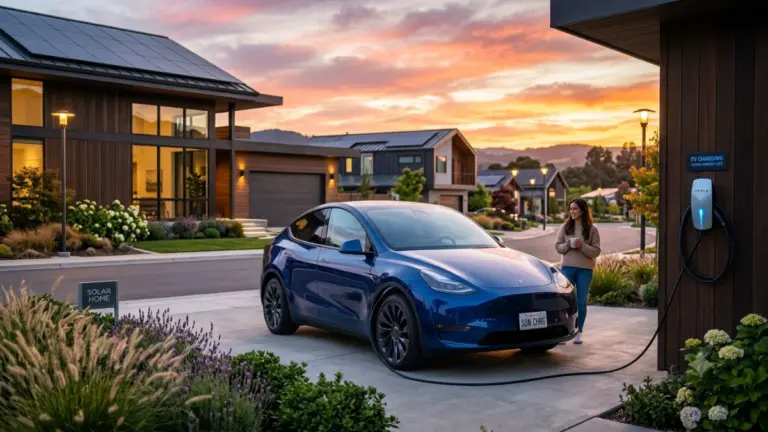
You know what’s been the biggest complaint about electric vehicles for years? “But where will I charge it?” It’s a legitimate concern, and honestly, it was a real problem. But here’s the thing—2025 looks dramatically different from even two years ago.The charging network has exploded. The United States now has nearly 196,000 public charging ports—more than six times the number available a decade ago. And we’re not slowing down. Industry forecasts predict that 16,700 new fast-charging ports will open in 2025 alone, and the US is on track to surpass 100,000 fast charging ports by 2027.
What’s even more impressive is the quality of the infrastructure. In Europe, regulations now require fast-charging stations of at least 150 kW every 60 kilometers along major road networks, with each station offering a minimum total power output of 400 kW. That’s not trickle charging—that’s getting you back on the road during a coffee break.
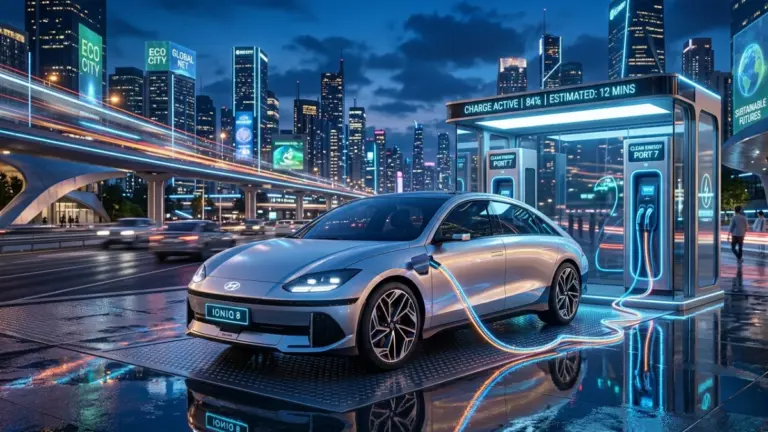
And it’s not just about quantity. The newest charging stations are getting seriously smart. Many now feature 8, 10, or even 12+ charging stalls per location, reducing wait times and congestion. Reliability has improved too, with the U.S. Reliability Index climbing from 81.2 to 82.6 points in early 2025, meaning fewer “sorry, out of order” experiences when you pull up to charge.
The global picture is even more striking. The worldwide EV charging station market is projected to grow from $28.47 billion in 2025 to $76.31 billion by 2032, with major investments flowing into fast-charging corridors from South Korea to Brazil. If you’ve been holding off on an EV because of charging concerns, the infrastructure gap is closing faster than you might think.
Beyond Cars: The Electric Mobility Ecosystem Is ExplodingHere’s what might surprise you even more: electric cars are just one piece of a much larger puzzle. The real story in 2025 is about electric mobility—a completely different concept.
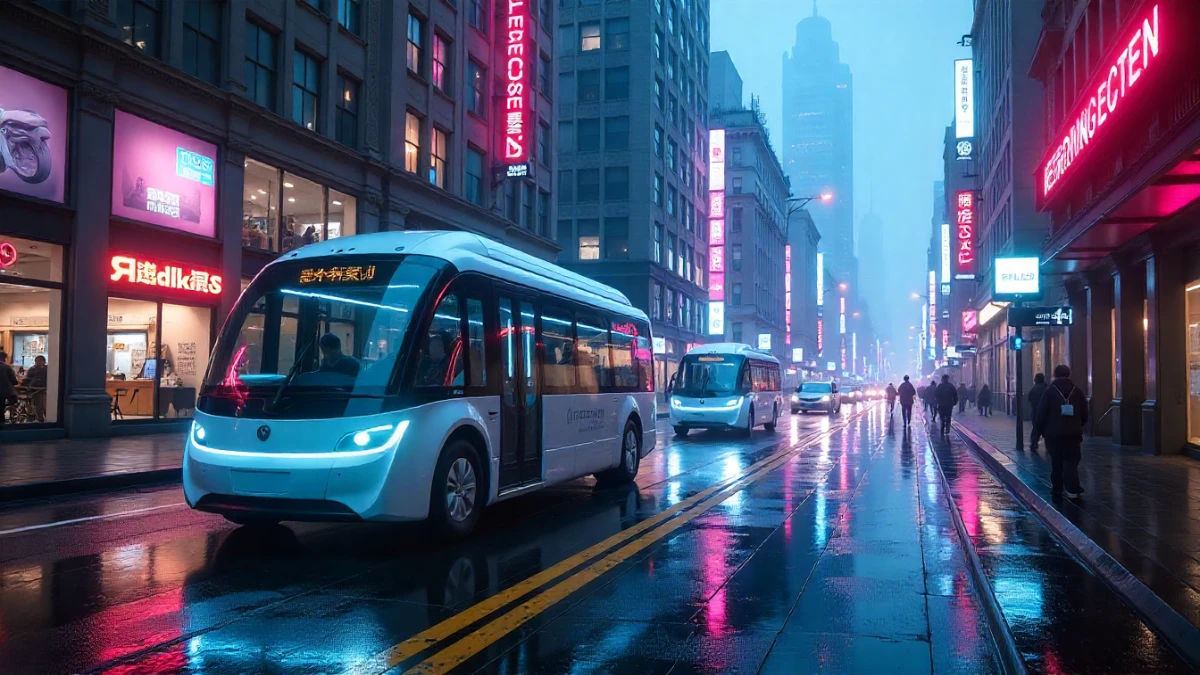
Think about your last trip to a busy downtown area. Did you see electric scooters parked on corners? E-bikes whizzing past traffic? Maybe even electric cargo bikes making deliveries? That’s the micromobility revolution, and it’s growing even faster than the EV market. The global micromobility market is projected to reach $91.2 billion by 2030, with a growth rate of 14.5%.
What makes this particularly interesting is how it’s changing transportation patterns. A 2025 survey found that 46% of global respondents indicated they were open to replacing their private vehicles with other transportation options over the next ten years. We’re not just talking about swapping gas cars for electric ones—people are rethinking whether they need a personal car at all.
Electric bikes have become serious transportation tools, not just recreational toys. Lime alone reported nearly 156 million global trips in 2023, showing just how mainstream these alternatives have become. In cities from Paris to Singapore, the combination of e-bikes, e-scooters, electric buses, and shared EVs is creating entirely new mobility ecosystems.
And here’s the kicker: this isn’t just about reducing emissions (though it does that beautifully). It’s about giving cities back to people. When transportation doesn’t require massive parking lots and wide highways, urban spaces can be redesigned for walking, cycling, and community spaces. That’s a fundamentally different vision of what cities could look like.
The Technology Race: Who’s Leading the Electric Charge?If you’ve been watching the EV space, you’ve witnessed something remarkable: the complete reshuffling of industry leadership. Tesla, once the undisputed king of electric vehicles, is facing serious competition—and losing ground fast.
BYD now commands nearly 20% of the world’s EV market, making it the largest player globally, while Tesla has slipped to third place with a 7.7% market share. Think about that for a moment. The company that essentially created the modern EV market is no longer even in second place.
What’s particularly fascinating is how BYD pulled this off. It’s not just about making cheaper cars (though affordability definitely plays a role). BYD has developed 1,000-kW ultra-fast charging technology with 10C charging rate batteries that can add 400 kilometers of range in just five minutes—significantly outperforming Tesla’s Supercharger network. That’s a game-changer. Imagine grabbing a coffee and coming back to a car that’s essentially fully charged.
But the competition goes beyond just these two giants. Chinese brands like Geely have experienced explosive growth, with some achieving triple-digit sales increases and taking a 5.6% global market share. Meanwhile, traditional automakers aren’t sitting idle—Volkswagen has become Europe’s top-selling EV brand, and GM has significantly increased its U.S. market presence.
The strategic approaches are fascinating too. While Tesla focuses on a handful of premium models, BYD offers an extensive lineup spanning multiple price points and vehicle types. Traditional automakers are leveraging their manufacturing expertise and dealer networks. It’s become a genuine technology race, with innovations in batteries, charging speeds, autonomous driving, and manufacturing efficiency happening at breakneck pace.
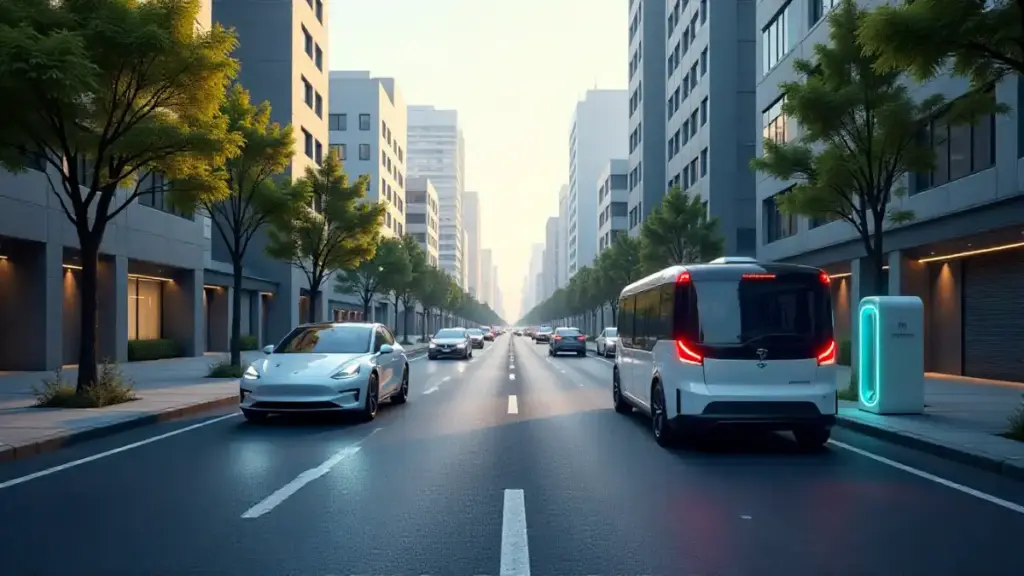
Green Tech Innovations: Beyond Just Swapping the EngineHere’s where things get really exciting: the electric mobility revolution isn’t just about replacing gas with batteries. It’s about fundamentally reimagining how transportation works using a whole suite of green technologies.
By the end of 2025, it’s projected there will be 85 million EVs on the road globally, with 73% being pure battery electric vehicles. But the innovation goes far deeper than just the number of cars. We’re seeing breakthroughs across multiple fronts that are transforming the entire transportation ecosystem.
Battery technology continues advancing at breakneck speed. Beyond BYD’s ultra-fast charging systems, researchers are developing solid-state batteries that promise even greater energy density and safety. Meanwhile, hydrogen fuel cell technology is gaining traction for applications where pure electric doesn’t make sense—like long-haul trucks, buses, and even maritime shipping.
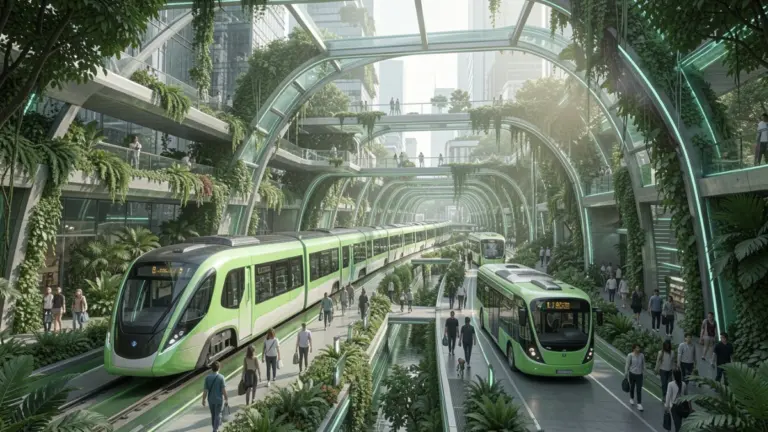
But perhaps the most transformative innovations are in how these technologies integrate with broader urban systems. Cities like San Francisco and Singapore are pioneering approaches that combine AI-powered traffic management, autonomous vehicles, and even air taxis to create seamless mobility ecosystems. Imagine a system where your route is optimized in real-time, switching you between an e-bike, an autonomous shuttle, and light rail—all coordinated by AI to get you where you need to go with minimal environmental impact.
Industry executives predict that by 2025, their companies will be spending more on EVs than internal combustion vehicles, with 62% saying their organizations will no longer sell gas-powered vehicles after 2035. This isn’t just talk—it’s capital allocation shifting in real time.
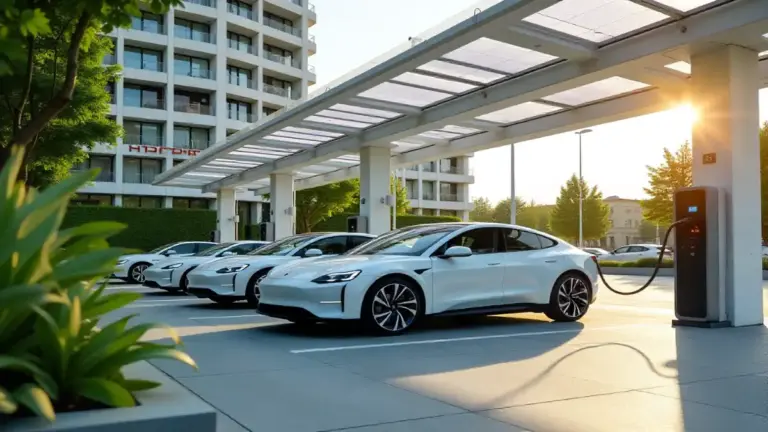
The really clever part? Many of these solutions are being powered by renewable energy. Electric buses charged by solar panels. Charging stations integrated with wind farms. Vehicle-to-grid technology that lets parked EVs store excess renewable energy and feed it back when needed. It’s not just about clean vehicles—it’s about creating an entire clean energy ecosystem where transportation, power generation, and urban infrastructure work together.
What This Means for You: The Road Ahead
So where does all this leave us? If you’re trying to make sense of the electric mobility landscape in 2025, here’s what you need to know.
First, the infrastructure concerns that once plagued EVs are rapidly fading. Whether you’re in the U.S., Europe, or Asia, charging networks are expanding at unprecedented rates with faster, more reliable equipment. The “where will I charge it?” question has largely been answered.
Second, competition is making EVs better and more affordable. BYD’s success isn’t just about one company winning—it’s proof that real competition drives innovation. We’re seeing better batteries, longer ranges, faster charging, and more affordable options across the board. The market is maturing, and consumers are the beneficiaries.
Third, think beyond just cars. The most exciting mobility innovations might not involve owning a personal vehicle at all. E-bikes for daily commutes, shared electric scooters for short trips, autonomous shuttles for predictable routes, and traditional EVs when you need them—this multimodal approach is becoming the norm in forward-thinking cities.
Fourth, this transformation is accelerating, not slowing down. Yes, there are headwinds—economic uncertainty, policy changes, supply chain challenges. But the fundamental trajectory is clear. Companies expect to completely phase out internal combustion engines after 2041, and given how quickly things are moving, that timeline might even be conservative.
Finally, and perhaps most importantly, sustainable mobility isn’t just an environmental feel-good story anymore. It’s becoming the economically rational choice. When operating costs are lower, maintenance is simpler, and urban environments are cleaner and quieter, the case for electric mobility makes itself.
The future of transportation isn’t something far off on the horizon—it’s happening right now on streets around the world. From the ultra-fast charging stations popping up along highways to the e-bikes zipping through city centers to the fierce competition driving innovation, 2025 is proving to be a pivotal year in the mobility revolution.
Are you ready to be part of it?