Buying the right e-bike starts with choosing the correct class, not the biggest motor. For most riders, a Class 1 pedal-assist e-bike with a 500–750Wh battery and hydraulic disc brakes offers the best balance of performance, range, safety, and value. Consider your terrain, commute distance, battery needs, and service support before making a purchase.
Shopping for an electric bicycle can feel like shopping for a car. Motors range from 250 to 750 watts. Batteries claim anywhere from 20 to over 100 miles of range. Prices swing from under $1,000 to well past $5,000. So which one is right for you?
Here’s the short answer. For most riders, a Class 1 pedal-assist bike works best. Pair it with a 500–750Wh battery and hydraulic disc brakes. That combination hits the sweet spot of cost, legality, and everyday usability. But your answer may differ. It depends on your commute, your terrain, and how you plan to use the bike.
I’ve covered electric mobility for years. The questions I hear most aren’t about brand names. They’re about watts, classes, and whether a bigger battery is worth the extra money. This guide walks through what actually matters before you buy. It also tells you what you can safely ignore.
Understanding E-Bike Classes
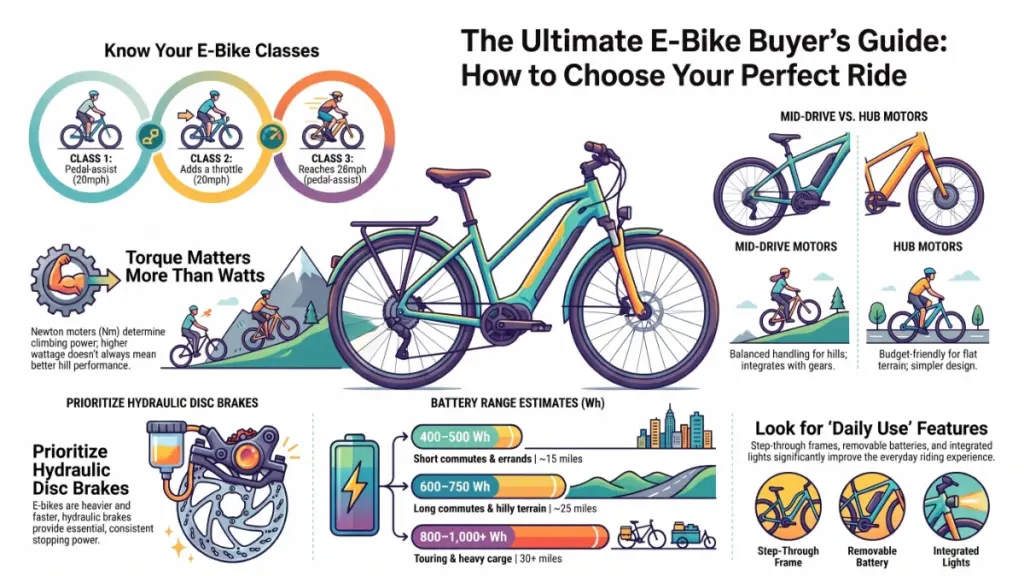
Before you fall for a spec sheet, learn the three-class system. It governs e-bikes across the United States. Manufacturers and advocacy groups built it to separate bicycles from mopeds. More than 40 states now use it.
The Three Classes, Explained Simply
- Class 1: Pedal-assist only, capped at 20 mph, no throttle. This feels closest to a regular bicycle. It’s welcome on the widest range of bike paths and trails.
- Class 2: Pedal-assist plus a throttle, also capped at 20 mph. It suits stop-and-go city riding. You can also cruise without pedaling if you want.
- Class 3: Pedal-assist only, capped at 28 mph. Commuters like it for keeping pace with car traffic. Many cities restrict it to roads and bike lanes, not shared paths.
Why the Wattage Cap Matters
All three classes cap out at 750 watts of continuous motor power under federal rules. A few states allow more. That 750W figure means continuous rated output. It doesn’t include short bursts of peak power. Many motors can hit two to seven times that number briefly.
Manufacturers must label each bike’s class, top speed, and motor wattage. You’ll usually find this near the crank or head tube. Modifying a bike past its labeled class isn’t legal, even if it’s technically possible.
Outside the US, rules get stricter. EU regulations cap standard pedelecs at 250 watts. Assist stops around 15.5 mph. These bikes count as regular bicycles, so no license or insurance is required. Cross that threshold, and the bike becomes a moped in the eyes of the law.
Bottom line: if you’re unsure which class fits your life, start with Class 1. It has no throttle-related access restrictions. It also holds the largest share of the market, and for good reason.
Watts, Torque, and Why Bigger Isn’t Always Better
It’s tempting to assume a 750W motor beats a 250W one. In practice, torque matters more, especially on hills. Torque is measured in Newton-meters, or Nm.
A lower-wattage mid-drive motor with strong torque can out-climb a higher-wattage hub motor. Here’s why:
- Mid-drive motors sit at the bike’s bottom bracket. This keeps weight centered and low. The ride feels balanced and natural.
- Hub-drive motors sit inside the wheel itself. They give more of a “pushed along” feeling. They can also make fixing a flat tire trickier.
If you live somewhere hilly, prioritize torque and a mid-drive system. If your rides stay mostly flat and budget is tight, a hub motor works just fine.
How Much Battery Do You Actually Need?
Battery capacity is measured in watt-hours, or Wh. Think of it as your fuel tank size. Here’s a simple way to estimate range: expect roughly 10 Wh per mile on flat ground with mixed assist. Hills, cold weather, cargo, and heavy throttle use will all shrink that number.
| Battery Size | Best For |
|---|---|
| 400–500 Wh | Short commutes under 15 miles, errands, casual riding |
| 600–750 Wh | Longer commutes, hilly neighborhoods, cargo runs |
| 800–1,000+ Wh | Touring, very hilly terrain, heavy cargo loads |
A good rule of thumb: plan for your round-trip distance, then add a 25% buffer. That way you won’t arrive home on fumes. Most batteries take three to five hours to fully charge. Daily commuters sometimes buy a second battery or a spare charger for the office.
Expect a battery to last three to five years. That’s roughly 500 to 1,000 charge cycles before capacity noticeably drops.
Brakes, Frame, and the Details People Skip
E-bikes are heavier than regular bikes. They also hold speed longer. That makes stopping power more important here than on a standard bicycle. Hydraulic disc brakes are worth the upgrade if your budget allows. They offer more consistent stopping, especially in wet conditions.
A few other details make a real difference in daily use:
- Step-through frames are easier to mount and dismount. This helps if you carry panniers or wear regular clothes instead of cycling gear.
- Removable batteries let you charge indoors without hauling the whole bike inside.
- Wider tires add comfort and stability on rough pavement, though they cost you some efficiency.
- Suspension, even just a seatpost or fork, smooths out cracked pavement.
- Integrated lights are a small feature that meaningfully improves visibility and safety.
Test rides matter more with e-bikes than with regular bicycles. Assist “feel” varies a lot between torque-sensor and cadence-sensor systems. If a shop or brand offers a test ride, take it before you commit to anything.
Direct-to-Consumer vs. Local Bike Shop
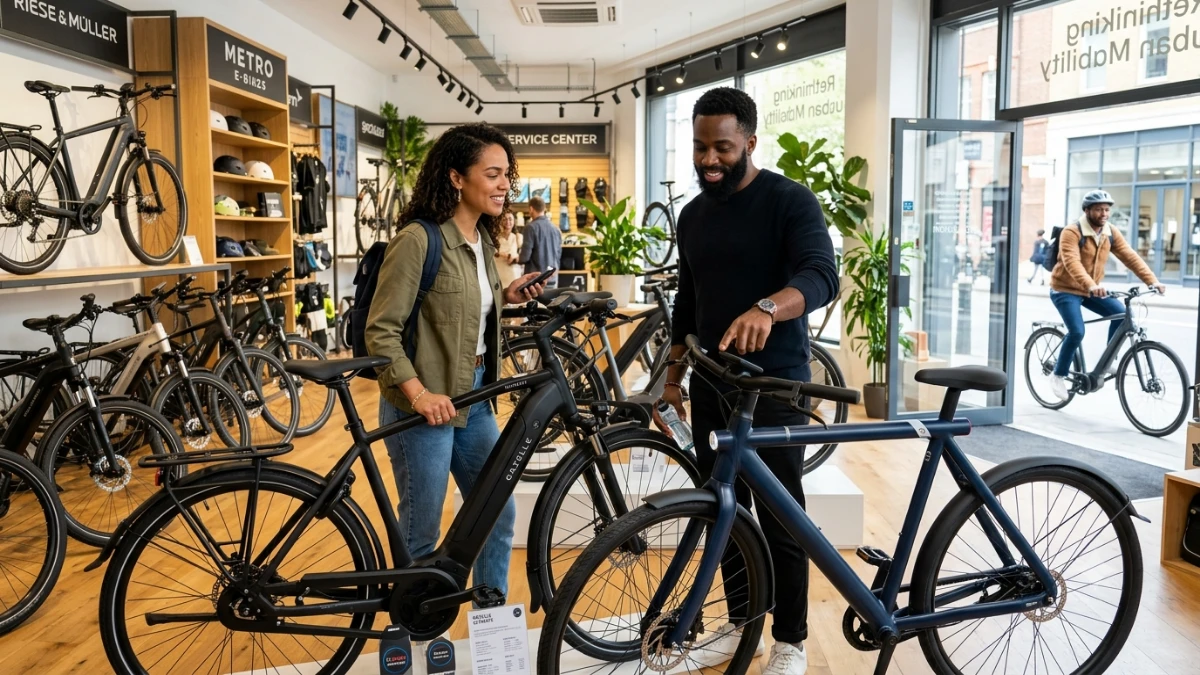
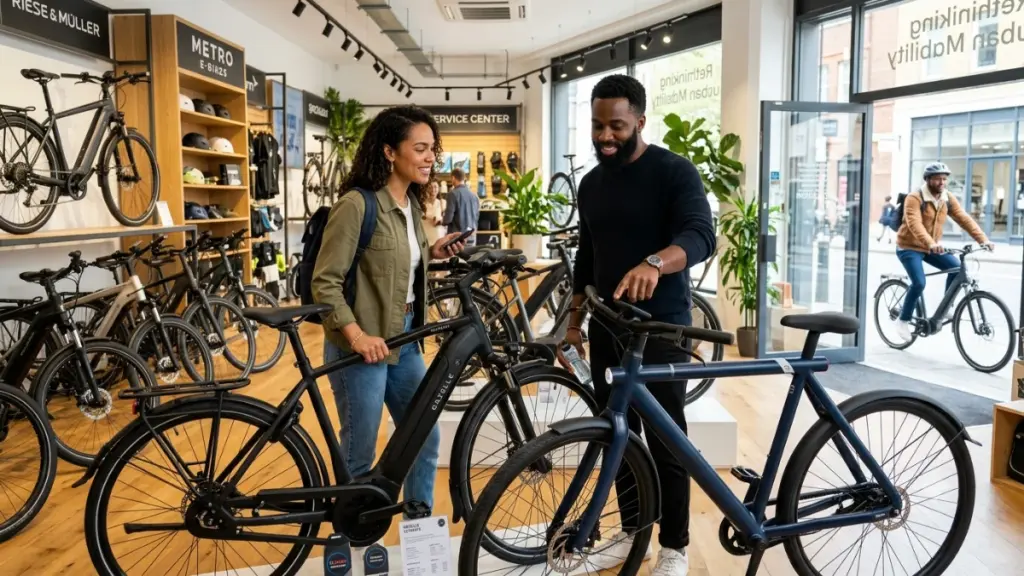
One of the bigger decisions is where you buy. Direct-to-consumer brands ship the bike straight to your door. They often require some assembly on your end. In exchange, they typically undercut bike-shop prices by cutting out a retail margin.
You give up in-person fitting and immediate service with this route. You also lose professional assembly. A traditional bike shop costs more upfront. It’s worth it if you’re new to bike maintenance, want a proper fit, or like having somewhere local to bring the bike.
If you go direct-to-consumer, budget for assembly. That means either your own time or a local shop’s labor fee.
What to Check Before You Pay
Whichever route you choose, look for these three things:
- A warranty covering electrical components for at least one to two years, with a longer guarantee on the frame
- Local rebates or tax incentives, which a growing number of cities and states now offer
- Reviews or forums confirming the brand actually honors its warranty when something breaks
Common Questions Before You Buy
Is a 750W motor overkill? Not always. It makes sense for heavier riders, cargo hauling, or fat-tire bikes fighting extra rolling resistance. A lighter rider on flat terrain often needs only 250W or 500W.
Do I need a license or insurance? Most states require neither for Class 1 or Class 2 e-bikes. Class 3 sometimes carries a minimum age requirement or extra rules. Check your state’s regulations before buying.
Are e-bikes worth the cost? If you’re replacing car trips, the math works out fast. Think commuting, errands, or school runs. Fuel, parking, and maintenance savings add up quickly. If you’d only ride occasionally, a cheaper e-bike, or even a traditional bicycle, may serve you just as well.
Key Takeaways
- Start with class, not wattage. Class 1 is the most flexible, widely accepted choice for most riders.
- Torque matters more than watts if you’re dealing with hills or cargo.
- Match your battery to your actual commute, not the biggest number on the spec sheet.
- Don’t skip the brakes and frame details. They affect daily comfort and safety more than most buyers expect.
- Compare warranty and service support, not just the sticker price, between direct-to-consumer and local shop options.
Buying an electric bicycle isn’t about chasing the biggest numbers. It’s about matching the motor, battery, and class to how you’ll actually ride. Take a test ride if you can. Check your local class regulations. Then pick the setup that fits your commute, not just the flashiest spec sheet. Once you’ve narrowed it down, the next step is simple: get on one and ride.